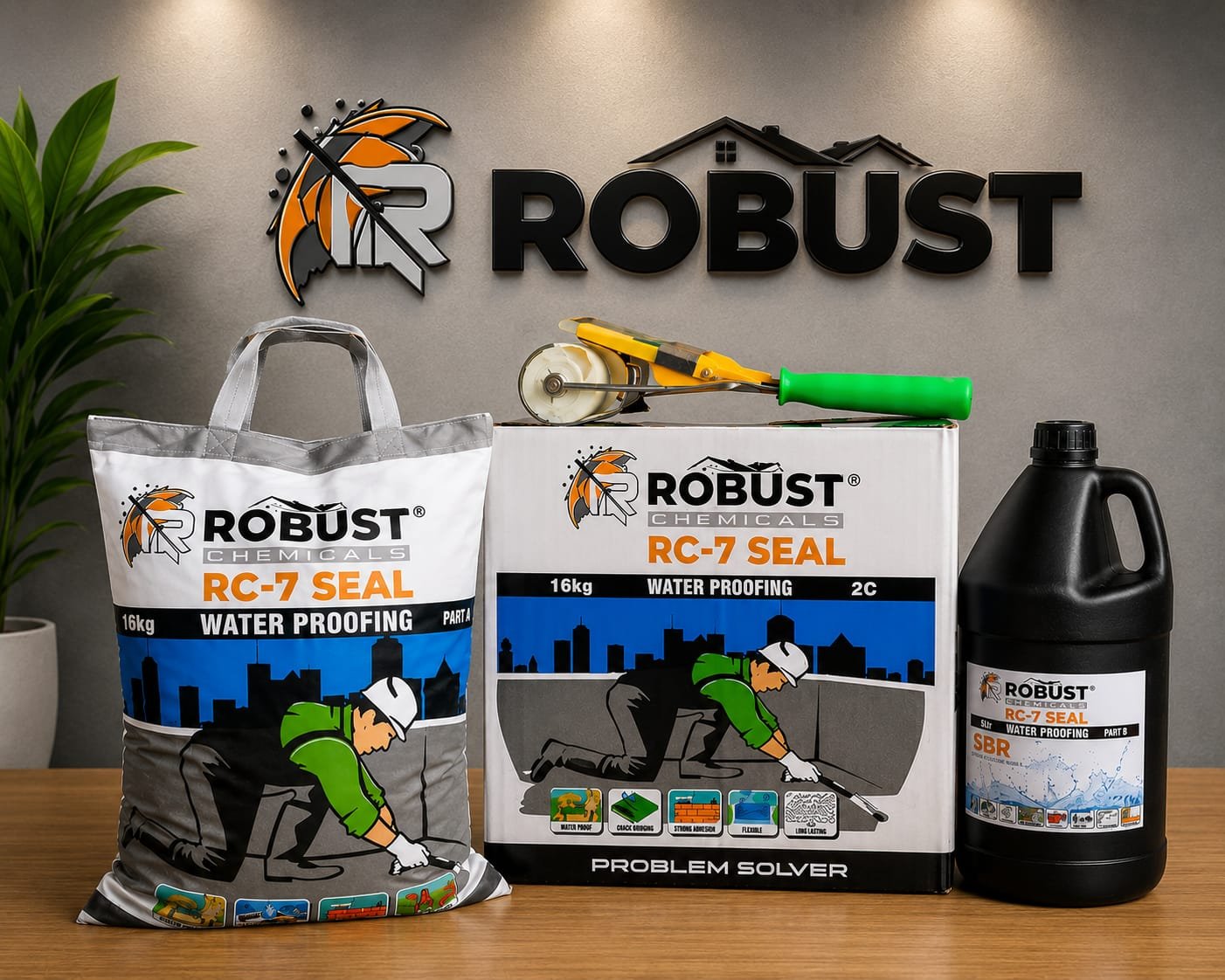
Original price was: ₨ 4,300.₨ 4,000Current price is: ₨ 4,000.
Robust RC-7 is a high-performance waterproofing product designed to protect your spaces from leakage and seepage. Its durable formulation creates a strong barrier that safeguards walls and surfaces against water damage, ensuring long-lasting protection.
Description
Robust RC-7 Seal Product Overview
Robust RC-7 is a high-performance waterproofing product designed to protect your spaces from leakage and seepage. Its durable formulation creates a strong barrier that safeguards walls and surfaces against water damage, ensuring long-lasting protection.
Whether it’s side walls in living areas, basements prone to dampness, or washrooms exposed to constant moisture, Robust RC-7 provides reliable defense and peace of mind. Easy to apply and highly effective, it keeps your interiors dry, secure, and free from structural damage caused by water intrusion.
Choose Robust RC-7 for a strong, lasting solution to all your waterproofing needs.
1. Product Overview
RC‑7 Seal is described as a high‑performance, polymer‑modified, cementitious (or hybrid cementitious/liquid) waterproofing coating developed by Robust Construction Chemicals. Facebook+3Robust Construction Chemical+3Robust Construction Chemical+3
It is designed for use on concrete, masonry, plaster, brick, and other structural substrates, to provide a flexible, durable, seamless barrier that resists water ingress from both positive and negative side hydrostatic pressure. Robust Construction Chemical+1
According to the manufacturer, the product can be applied on roofs, terraces, balconies, basements, water tanks, retaining walls, and other structures where waterproofing and durability are required. Robust Construction Chemical+1
In short: it is positioned as a “one‑coat barrier” (though in reality it will typically require two coats) that merges the strength of a cementitious system with the flexibility and adhesion of polymer modification.
2. Composition and Mechanism of Action
2.1 Composition
From the supplier’s description:
-
Cementitious binder base (cement + mineral fillers) combined with polymer modifiers (acrylic, styrene‑acrylic, or similar) to enhance adhesion, flexibility and durability. Robust Construction Chemical+1
-
Nano‑modified additives / waterproofing agents (crystalline / hydrophilic/hydrophobic) that penetrate into micro‑pores and micro‐cracks to block capillaries and reduce permeability. Robust Construction Chemical+1
-
Water‑based liquid component, making the product non‑solvent, low‑VOC. Robust Construction Chemical+1
-
Possibly aggregate or filler‑enhanced powder component (if indeed two‑component) though the manufacturer text describes a “two‑component cementitious coating system” in one of their blog pages. Robust Construction Chemical
2.2 Mechanism of Action
-
Physical barrier: The coating forms a seamless film over the substrate, reducing water ingress by covering surface pores and forming a continuous layer.
-
Crystalline / pore‑blocking action: Nano additives form insoluble crystalline networks in capillary voids and micro‑cracks, thereby blocking water movement. (Manufacturer claims deep penetration of micro‑cracks/pores) Robust Construction Chemical+1
-
Polymeric reinforcement: The polymer content gives the film elasticity (crack‑bridging capability), adhesion to substrate (avoiding delamination), and durability (resistance to weather, UV, chemical attack) rather than brittle ceramic coating.
-
Breathability / vapour permeability: The product claims to allow internal vapour to escape while retaining impermeability to external liquid water. Robust Construction Chemical
-
Protection of substrate: By preventing ingress of water, chlorides, sulfates and CO₂ (carbonation) to the reinforcement/structure, it extends performance and durability of the underlying concrete or masonry. Robust Construction Chemical+1
3. Key Properties & Performance Attributes
Here are important properties (based on supplier’s published specs) and how they translate into performance benefits.
| Property | Typical Value / Description* | Performance Benefit |
|---|---|---|
| Appearance | Milky white liquid / two‑component when mixed. Robust Construction Chemical+1 | Easy to spread; visibility ensures coverage. |
| Base | Acrylic polymer emulsion + cementitious binder. Robust Construction Chemical+1 | Provides flexibility and adhesion plus structural strength. |
| pH | 8–9 (approx) for liquid component. Robust Construction Chemical | Slightly alkaline – compatible with concrete substrate. |
| Coverage | ~15‑18 sq.ft per kg per coat (approx 1.5‑1.7 m²/kg) for one coat on typical surface. Robust Construction Chemical | Helps cost estimation & material take‑off. |
| Drying Time | 4‑6 hours between coats; full cure 24‑48 hours. Robust Construction Chemical+1 | Allows reasonably quick turnaround. |
| Crack‑Bridging / Flexibility | Claims to bridge micro‑cracks up to ~2 mm (in blog). Robust Construction Chemical | Useful for structures subject to movement/thermal expansion. |
| Positive & Negative pressure resistance | Product claims to perform under both positive‑side and negative‑side water pressure. Robust Construction Chemical+1 | Broadens application – e.g., internal seepage as well as external rainfall. |
| UV & Chemical Resistance | Claims UV stability, alkali/salt resistance. Robust Construction Chemical+1 | Suitable for exposed roofs/terraces, industrial environments. |
| Non‑toxicity / Safe for potable water | Water‑based, no harmful solvents, safe for water tanks. Robust Construction Chemical | Valuable when targeting potable tanks, residential applications. |
*Values are from manufacturer’s technical/design literature; independent lab test data may vary.
Additional Performance Considerations
-
Because the coating penetrates into the substrate, it helps reduce permeability of the concrete/masonry itself, not just forming a film.
-
The flexibility and polymer modification help accommodate substrate movement (thermal, settlement) without cracking the waterproofing layer prematurely.
-
By retaining breathability, the coating allows moisture vapour from within the structure to escape, reducing risk of blistering, delamination, or moisture‐trapping failures.
-
Durability in harsh environments: the claim of resistance to chlorides, carbonation and alkalis indicates use in coastal or industrial zones.
-
Easy application (brush, roller, spray) helps labor cost and speed of installation. Robust Construction Chemical+1
4. Application & System Details
4.1 Surface Preparation
Proper surface prep is critical for performance; for RC‑7 Seal the manufacturer specifies:
-
Remove dust, loose particles, laitance, oil, grease, paint, previous coatings, curing compounds, efflorescence. Robust Construction Chemical
-
The substrate must be structurally sound, free of active cracks wider than the bridging capacity or subject to future large movement.
-
Repair visible cracks or voids using appropriate repair mortars (e.g., Robust Crack Filler) or pre‑treatment with injection if needed. The manufacturer mentions filling cracks before application. Robust Construction Chemical
-
Ensure substrate is dry (or suitably damp but no standing water) before application; free from rising damp or constant ingress before the coating is applied.
-
For very porous surfaces, pre‑priming is recommended: e.g., diluted RC‑7 with water (1:1) to seal the substrate and reduce suction. Robust Construction Chemical
-
Protect adjacent areas (glass, metal, painted surfaces) from overspray or splashes.
4.2 Mixing
According to the manufacturer:
-
RC‑7 Seal is apparently a two‑component coating (liquid polymer + powder binder) in one blog post. Robust Construction Chemical
-
Mix the components thoroughly in a clean container using slow‑speed drill (300–400 rpm) until a lump‑free, homogeneous slurry is achieved. (Standard practice for polymer modified cementitious coatings)
-
Work life of the mix should be considered (though not explicitly specified by the manufacturer); apply within recommended pot‑life.
-
Ensure mixed material has uniform consistency and no segregation of binder/filler.
4.3 Application
-
Apply the first coat with brush, roller or spray equipment in one direction (say longitudinal). Robust Construction Chemical+1
-
After the first coat dries (approx 4‑6 hrs per data), apply the second coat perpendicular to the first (cross‑coat) to ensure complete film coverage and uniform thickness. Robust Construction Chemical
-
Typical overall thickness target: The blog suggests 1‑1.5 mm total thickness (two coats) for optimum performance. Robust Construction Chemical
-
During application avoid puddling or ponding of the material; ensure uniform film thickness.
-
In corners, joints, changes in plane, protrusions: ensure that coating is extended sufficiently; use reinforcement fabric (if recommended) on movement joints or where differential movement expected (though I don’t see explicit mention in RS‑7 literature, good practice).
-
After final coat, the curing or drying period must be respected — no direct water exposure until full cure achieved (24‑48 hrs per manufacturer). Robust Construction Chemical
4.4 Specific Situations
-
In basements/retaining walls (negative side): apply the coating inside the structure facing water ingress; ensure substrate is dry to the extent possible and that behind wall drainage and crack repair are done. RC‑7 Seal is claimed to handle negative pressure. Robust Construction Chemical
-
On roofs/terraces: ensure slope is adequate, surface is clean, cracks are repaired, and water pooling is eliminated. Application recommended before final finishing (tiles, screed). Consider protective topping if traffic exposure expected.
-
In potable water tanks: ensure the earlier surface has been cleaned, the coating is approved for water contact (manufacturer claims non‑toxic), allow full cure before water filling.
-
In new construction vs repair: On new slabs allow proper curing of concrete (usually minimum 28 days) unless fast‑track; on repair surfaces ensure old coatings/paints removed and that substrate is prepared.
4.5 Post‑Application and Finishing
-
After the cure period, the coated surface may be over‑coated, tiled, painted, or left as the finished surface depending on design. Manufacturer claims over‑coating or tiling can be done after curing. Robust Construction Chemical
-
If tiling is done, use flexible adhesive/mortar compatible with the coating; ensure that the waterproofing layer is not penetrated by fasteners or joints unless suitably detailed.
-
Where exposed to UV or traffic, consider protective top‑coat or screed layer to protect the waterproofing film from wear, chemical exposure, impact.
-
Periodic inspection of the waterproofed area is recommended: look for physical damage (cracks, punctures), standing water, signs of ingress (damp spots) to address maintenance proactively.
5. Specification Guidance
For inclusion in tender documents, specifications or method statements, you might adopt the following template:
5.1 Materials
-
The coating shall be a polymer‑modified cementitious waterproofing slurry (two‑component) capable of positive and negative hydrostatic pressure resistance, with crack‑bridging ability of ≥2 mm, breathable film formation, and adhesion to concrete ≥ (insert value e.g. 1.0 MPa) when tested to ISO/ASTM standards.
-
The coating must be non‑solvent, water‑based, low‑VOC, and safe for contact with potable water.
-
Manufacturer: Robust Construction Chemicals; product: RC‑7 Seal, or equivalent subject to approval.
-
Supply sufficient material to complete the works including primer (if required), main coating (two coats), and all accessories (mixing, reinforcement fabric, detail sealants).
5.2 Substrate Preparation
-
Ensure substrates are clean, sound, free of laitance, oil, grease, loose particles, dust.
-
Repair all cracks wider than 0.3 mm or those active, using appropriate injection or repair mortar.
-
Remove previous coatings/paintings where adhesion is suspect.
-
For new concrete surfaces, allow minimum 28 day cure unless manufacturer allows earlier application; ensure surface moisture content is within stated tolerance.
-
For very porous substrates, apply a primer coat (1:1 dilution of coating with water) before full coats.
5.3 Application
-
Mix components in clean container with slow speed drill until homogeneous.
-
Apply first coat at (specify rate) e.g., 1.0‑1.2 kg/m² (or approx 0.07 kg/ft²) depending on surface; allow minimum 4 hours drying (at standard conditions) before second coat.
-
Apply second coat perpendicular to first at similar rate, to achieve total dry film thickness of approximately 1.0‑1.5 mm (or 2.0 mm for parking or heavy duty).
-
Maintain temperature during application within manufacturer’s specified range (typically +5 °C to +35 °C) and relative humidity < 85%.
-
Protect from rain, frost, direct sunlight during curing period (min 24‑48 hrs) before exposure to water or traffic.
-
On junctions (wall‑floor, up‑stands, penetrations) extend coating up minimum 150 mm beyond the change in plane, and use appropriate reinforcement or sealant if movement joint is present.
5.4 Performance Testing
-
After curing, carry out adhesion test (pull‐off) on coated sample area.
-
Carry out water ponding test (for roofs/water tanks) for 24 hours to verify no leakage.
-
Visually inspect for pinholes, holidays, film defects; repair as necessary by applying additional coat or patching.
-
Documentation: Provide manufacturer’s technical data sheet, MSDS, batch certificates, shelf life, mixing instructions.
5.5 Maintenance & Warranty
-
Provide inspection schedule: annually visual inspection, after extreme events.
-
Provide warranty period (e.g., 5‑10 years) subject to compliance with installation instructions.
-
On damage, clean the area, lightly abrade surrounding film, re‑apply coat (or patch) as per manufacturer.
6. Integration with Other Systems & Considerations
Because your company deals with waterproofing and heat‑proofing chemicals, it is relevant to examine how RC‑7 Seal integrates with other systems or where special considerations apply.
6.1 Compatibility with Other Products
-
The manufacturer explicitly mentions that RC‑7 Seal is compatible with other Robust products such as SBR Latex (for bonding/repair mortars), Bitumen Primer, Water Stopper admixtures. Robust Construction Chemical
-
If a topping screed, tile adhesive, or paint is applied over the waterproofing, ensure the over‐coating is compatible (no solvent attack, no rigidity mismatch) and surfaces are primed/treated if required.
-
If thermal insulation (heat‑proofing) is applied (e.g., foam board, EPS sheet, polyurethane spray) above the waterproofing layer, ensure that the insulation board does not damage or puncture the waterproofing film, and that drainage or vapour control layers are considered.
6.2 Thermal / Movement Joints
-
The coating has flexibility and crack‑bridging ability, but if the substrate has movement joints, expansion joints or large structural movements (e.g., large settlement, slab‑wall junctions) then reinforcement fabric or joint sealants must be detailed. RC‑7 Seal alone may not accommodate large opening movements.
-
In roof/terrace assemblies with heat‑proofing (e.g., insulation, reflective coatings), ensure that the waterproofing layer (RC‑7 Seal) is installed prior to insulation (if specified) and that the insulation does not trap moisture under the waterproofing layer. Installation sequencing is key.
6.3 Environment & Exposure Conditions
-
In marine/coastal environments or where salt spray is present, the chemical resistance of the coating is beneficial; nevertheless verify salt contamination in substrate and possible need for additional corrosion inhibitors.
-
In heavy traffic or vehicular areas (roof parking), consider a protective screed or wear layer over RC‑7 Seal to avoid mechanical damage.
-
In hot climates (like Pakistan), high UV, intense heat cycles can cause substrate movement; ensure film thickness and polymer content are suitable. RC‑7 Seal claims UV stability. Robust Construction Chemical
6.4 Substrate Conditions & Moisture
-
If applied to new concrete which may still be drying, ensure moisture content is within manufacturer’s requirement; normally moisture ≤ 6% by weight is advisable (check with manufacturer).
-
Consider rising damp, groundwater exposure: RC‑7 Seal is claimed to work under hydrostatic pressure; but drainage behind retaining walls, proper substrate detailing remain critical.
-
For water‐retaining tanks: ensure that the concrete has adequate cover and reinforcement and that substrate repairs (cracks, blowholes) are done before coating.
7. Quality Assurance, Testing & Specification Compliance
7.1 Pre‑Installation Checks
-
Check that product has not expired (manufacturer states shelf life ~12 months in sealed container). Robust Construction Chemical
-
Verify batch certificates, comply with manufacturing QA (Robust claims strict quality control) Robust Construction Chemical+1
-
Ensure ambient temperature and humidity at site are within acceptable limits for application.
-
Contractor should submit method statement, sequence of works, QA/QC plan, mixing protocol, coverage rate, cure period.
7.2 On‑Site Testing
-
After first coat drying, check for uniform film thickness; use dry film thickness (DFT) gauge or wet film monitoring if applicable.
-
After full cure, perform adhesion (pull‑off) test: typical for polymer modified coatings is >1 MPa (check and record).
-
Ponding test (for roofs, terraces, water tanks) for minimum 24 hours and check for leakage/damp patches.
-
Visual inspection under lighting for holidays, pinholes, insufficient coverage; conduct torch‑light inspection if necessary.
-
If required by specification: water permeability test (ASTM C‑1305 or similar) on test panel.
7.3 Documentation
-
Provide certificate of compliance with standards (if applicable) e.g., ISO 9001 manufacturer, or testing to ASTM/EN standards.
-
Manufacturer’s technical data sheet and Material Safety Data Sheet (MSDS) to be provided.
-
Record mixing batch number, substrate temperature, ambient temperature, relative humidity, moisture content of substrate, date/time of application of coats, drying/curing time.
-
Provide as‑built records: area covered, quantity used, number of coats, photographs of key details (joints, corners, up‑stands).
-
Provide warranty documentation if offered by manufacturer.
7.4 Performance Verification & Maintenance
-
At handover, provide maintenance schedule: periodic inspections, cleaning of surface, repair of minor damages.
-
Specify that any subsequent drilling/penetration through the waterproofing film (for pipes, services) must be fully sealed with compatible system to maintain integrity.
-
Life expectancy: Manufacturer claims “years of protection” but specify expected design life (e.g., 10‑20 years) in contract; maintenance may extend further.
8. Specification
Below is a sample specification excerpt for RC‑7 Seal that could be inserted into project documentation:
Waterproofing Coating
The waterproofing coating shall be a polymer‑modified cementitious waterproofing slurry system designed for both positive and negative side water pressure, capable of bridging substrate cracks up to 2 mm, allowing vapour permeability whilst preventing liquid water ingress. The system shall be non‑solvent, water‑based, low VOC and safe for potable water contact.The materials shall be supplied by a single manufacturer (Robust Construction Chemicals) as the “RC‑7 Seal” system. The system shall be applied strictly in accordance with manufacturer’s instructions.
Surface Preparedness
Substrate surfaces shall be clean, sound, free from dust, laitance, oil, grease, previous coatings, curing compounds and efflorescence. Loose and deteriorated concrete shall be removed and repaired. Structural cracks, joints and penetrations shall be treated prior to application. For very porous surfaces, a primer coat (diluted 1:1) shall be applied.Application
The two‑component coating shall be mixed in a clean container with a slow‑speed drill until lump‑free. The first coat shall be applied at approx. 1 kg/m² in one direction. After drying approx. 4–6 hrs, a second coat shall be applied at right angles to the first, to achieve a total DFT of ~1.0–1.5 mm. Coating shall be allowed to cure for min 24 hrs (typical) before exposure to water or trafficking.Performance Requirements
Upon curing, the coating shall bond to the substrate with minimum pull‑off strength of 1.0 MPa (or per test). The system shall withstand positive and negative hydrostatic pressure, permeation resistance ≤ (insert value) and crack‑bridging ability up to 2 mm. The coating must be UV stable, alkali/salt resistant and safe for potable water.Quality Assurance
The contractor shall provide manufacturer’s technical data sheet, MSDS, batch certificates, mixing records, coverage achieved, and testing results (adhesion, ponding). A full warranty of (5/10) years shall be provided.Maintenance & Handover
On completion, provide an inspection and maintenance checklist. The client shall inspect annually for signs of damage, standing water or failure. Any damage shall be repaired using the same manufacturer’s approved repair system to maintain warranty.
9. Advantages, Limitations & Practical Considerations
9.1 Advantages
-
Combines the mechanical robustness of cementitious coatings with flexibility and adhesion of polymer modifiers.
-
Good for a wide range of applications (roofs, basements, tanks) – versatility is a key selling attribute.
-
Non‑toxic, water‑based, low VOC, safe for potable water – advantage for residential/industrial & green building projects.
-
Breathability ensures internal moisture can escape, reducing risk of blistering/delamination – a benefit versus purely impermeable coatings.
-
Local manufacturing (in Pakistan) may mean better logistics, availability and competitive cost compared to imported products.
-
Easy application (brush, roller, spray) means less specialized labour or equipment.
9.2 Limitations / Considerations
-
While claim is crack‑bridging up to ~2 mm, for larger structural cracks or movement joints, the coating alone may not suffice; such cases need reinforcement fabric or joint sealants.
-
For areas subject to heavy traffic or mechanical wear (roof parking, industrial floors) the coating may require a protective wear layer.
-
Surface preparation is vital: poor substrate prep will reduce performance dramatically – make sure contractor understands.
-
Cure period and environmental conditions matter: applying in cold or humid weather may slow cure or reduce performance; likewise direct sunlight/heat may affect film formation.
-
Coverage depends heavily on substrate texture and porosity; estimations must include allowances. The manufacturer’s figure (15‑18 sq ft/kg per coat) is indicative. Robust Construction Chemical
-
Long‑term performance is affected by substrate movement, structural settlement, and external factors; waterproofing alone cannot compensate for poor design or drainage.
-
Unlike membrane systems, if the coating is punctured or the film integrity is compromised, repair must be done carefully to restore continuity.
9.3 Practical Tips for Contractors / Applicators
-
Always do a small test patch to check adhesion and finish before full application, especially if substrate is non‑standard (old concrete, painted, etc).
-
Maintain ambient conditions: avoid application when substrate temperature is <5 °C or >40 °C unless manufacturer allows. Avoid direct sunlight on exposed surfaces during application (which may cause rapid drying and film cracking).
-
Ensure sufficient ventilation if application is in enclosed space (though product is low VOC, but good practice).
-
Keep records: substrate moisture level, ambient temp/humidity, date/time of coats, batch number of product, quantity used, coverage achieved. These help warranty claims.
-
When detailing penetrations, drains, up‑stands, ensure that waterproofing layer is flashed properly, extend coating up vertical surfaces and integrate with other systems (insulation, floor screed, tiling).
-
For new construction, coordinate with other trades: after waterproofing apply protective screed/insulation before tiling or finishing; avoid damage by workers.
10. Market Positioning & Your Business Implications
Since you have a waterproofing and heat‑proofing chemicals company in Pakistan (based in Lahore, Punjab), here are some strategic points:
-
Product differentiation: RC‑7 Seal’s claims of polymer‑modified, crystalline additive, non‐toxic, potable water safe can be emphasized in your marketing and technical literature.
-
Target segments: Residential (roofs, terraces, balconies, bathrooms), commercial (basement parking, terraces, water tanks), industrial (retaining walls, wastewater tanks, chemical‑exposed areas).
-
Combination with heat‑proofing: Since you offer heat proofing, you can propose combined systems: waterproofing (RC‑7 Seal) + thermal insulation/reflective coatings. Emphasize synergy: dry roof improves insulation effectiveness; water ingress undermines insulation.
-
Local climate relevance: Pakistan climate includes heavy monsoon rains (Punjab/Sindh), high UV exposure, temperature swings. Emphasize RC‑7 Seal’s UV‑resistance, crack‑bridging, durability under heat/cold cycles.
-
Competitive advantage: Local manufacturing means shorter lead times, lower cost, easier technical support and warranty management. Use this to compete with imported systems.
-
Training & contractors: Provide applicator training, site supervision, quality assurance to ensure proper application—successful results build reputation and repeat business.
-
After‑sales service/warranty: Given that waterproofing is a long‑term investment, offering warranties (5‑10 yrs) supported by documentation builds trust.
-
Integration of product portfolio: Use RC‑7 Seal as one component in your broader system (waterproofing + heatproofing + repair + coatings). Offer full system solutions rather than just product supply.
11. Summary
In summary: RC‑7 Seal is a versatile, high‑performance polymer‑modified cementitious waterproofing coating that addresses many of the challenges faced in modern construction: leakage, dampness, structural movement, chemical attack, durability and ease of application. For your business, it represents a strong product to include in your waterproofing portfolio for Pakistan’s market — especially as you already handle heat‑proofing.
By ensuring correct specification, surface preparation, application and integration with other systems, you can achieve durable outcomes, differentiating your offering from competitors. The key is to treat it not as a simple paint, but as a system requiring workmanship, QA, and detailing.
1. Product Overview
RC‑7 Seal is described as a high‑performance, polymer‑modified, cementitious (or hybrid cementitious/liquid) waterproofing coating developed by Robust Construction Chemicals. Facebook+3Robust Construction Chemical+3Robust Construction Chemical+3
It is designed for use on concrete, masonry, plaster, brick, and other structural substrates, to provide a flexible, durable, seamless barrier that resists water ingress from both positive and negative side hydrostatic pressure. Robust Construction Chemical+1
According to the manufacturer, the product can be applied on roofs, terraces, balconies, basements, water tanks, retaining walls, and other structures where waterproofing and durability are required. Robust Construction Chemical+1
In short: it is positioned as a “one‑coat barrier” (though in reality it will typically require two coats) that merges the strength of a cementitious system with the flexibility and adhesion of polymer modification.
2. Composition and Mechanism of Action
2.1 Composition
From the supplier’s description:
-
Cementitious binder base (cement + mineral fillers) combined with polymer modifiers (acrylic, styrene‑acrylic, or similar) to enhance adhesion, flexibility and durability. Robust Construction Chemical+1
-
Nano‑modified additives / waterproofing agents (crystalline / hydrophilic/hydrophobic) that penetrate into micro‑pores and micro‐cracks to block capillaries and reduce permeability. Robust Construction Chemical+1
-
Water‑based liquid component, making the product non‑solvent, low‑VOC. Robust Construction Chemical+1
-
Possibly aggregate or filler‑enhanced powder component (if indeed two‑component) though the manufacturer text describes a “two‑component cementitious coating system” in one of their blog pages. Robust Construction Chemical
2.2 Mechanism of Action
-
Physical barrier: The coating forms a seamless film over the substrate, reducing water ingress by covering surface pores and forming a continuous layer.
-
Crystalline / pore‑blocking action: Nano additives form insoluble crystalline networks in capillary voids and micro‑cracks, thereby blocking water movement. (Manufacturer claims deep penetration of micro‑cracks/pores) Robust Construction Chemical+1
-
Polymeric reinforcement: The polymer content gives the film elasticity (crack‑bridging capability), adhesion to substrate (avoiding delamination), and durability (resistance to weather, UV, chemical attack) rather than brittle ceramic coating.
-
Breathability / vapour permeability: The product claims to allow internal vapour to escape while retaining impermeability to external liquid water. Robust Construction Chemical
-
Protection of substrate: By preventing ingress of water, chlorides, sulfates and CO₂ (carbonation) to the reinforcement/structure, it extends performance and durability of the underlying concrete or masonry. Robust Construction Chemical+1
3. Key Properties & Performance Attributes
Here are important properties (based on supplier’s published specs) and how they translate into performance benefits.
| Property | Typical Value / Description* | Performance Benefit |
|---|---|---|
| Appearance | Milky white liquid / two‑component when mixed. Robust Construction Chemical+1 | Easy to spread; visibility ensures coverage. |
| Base | Acrylic polymer emulsion + cementitious binder. Robust Construction Chemical+1 | Provides flexibility and adhesion plus structural strength. |
| pH | 8–9 (approx) for liquid component. Robust Construction Chemical | Slightly alkaline – compatible with concrete substrate. |
| Coverage | ~15‑18 sq.ft per kg per coat (approx 1.5‑1.7 m²/kg) for one coat on typical surface. Robust Construction Chemical | Helps cost estimation & material take‑off. |
| Drying Time | 4‑6 hours between coats; full cure 24‑48 hours. Robust Construction Chemical+1 | Allows reasonably quick turnaround. |
| Crack‑Bridging / Flexibility | Claims to bridge micro‑cracks up to ~2 mm (in blog). Robust Construction Chemical | Useful for structures subject to movement/thermal expansion. |
| Positive & Negative pressure resistance | Product claims to perform under both positive‑side and negative‑side water pressure. Robust Construction Chemical+1 | Broadens application – e.g., internal seepage as well as external rainfall. |
| UV & Chemical Resistance | Claims UV stability, alkali/salt resistance. Robust Construction Chemical+1 | Suitable for exposed roofs/terraces, industrial environments. |
| Non‑toxicity / Safe for potable water | Water‑based, no harmful solvents, safe for water tanks. Robust Construction Chemical | Valuable when targeting potable tanks, residential applications. |
*Values are from manufacturer’s technical/design literature; independent lab test data may vary.
Additional Performance Considerations
-
Because the coating penetrates into the substrate, it helps reduce permeability of the concrete/masonry itself, not just forming a film.
-
The flexibility and polymer modification help accommodate substrate movement (thermal, settlement) without cracking the waterproofing layer prematurely.
-
By retaining breathability, the coating allows moisture vapour from within the structure to escape, reducing risk of blistering, delamination, or moisture‐trapping failures.
-
Durability in harsh environments: the claim of resistance to chlorides, carbonation and alkalis indicates use in coastal or industrial zones.
-
Easy application (brush, roller, spray) helps labor cost and speed of installation. Robust Construction Chemical+1
4. Application & System Details
4.1 Surface Preparation
Proper surface prep is critical for performance; for RC‑7 Seal the manufacturer specifies:
-
Remove dust, loose particles, laitance, oil, grease, paint, previous coatings, curing compounds, efflorescence. Robust Construction Chemical
-
The substrate must be structurally sound, free of active cracks wider than the bridging capacity or subject to future large movement.
-
Repair visible cracks or voids using appropriate repair mortars (e.g., Robust Crack Filler) or pre‑treatment with injection if needed. The manufacturer mentions filling cracks before application. Robust Construction Chemical
-
Ensure substrate is dry (or suitably damp but no standing water) before application; free from rising damp or constant ingress before the coating is applied.
-
For very porous surfaces, pre‑priming is recommended: e.g., diluted RC‑7 with water (1:1) to seal the substrate and reduce suction. Robust Construction Chemical
-
Protect adjacent areas (glass, metal, painted surfaces) from overspray or splashes.
4.2 Mixing
According to the manufacturer:
-
RC‑7 Seal is apparently a two‑component coating (liquid polymer + powder binder) in one blog post. Robust Construction Chemical
-
Mix the components thoroughly in a clean container using slow‑speed drill (300–400 rpm) until a lump‑free, homogeneous slurry is achieved. (Standard practice for polymer modified cementitious coatings)
-
Work life of the mix should be considered (though not explicitly specified by the manufacturer); apply within recommended pot‑life.
-
Ensure mixed material has uniform consistency and no segregation of binder/filler.
4.3 Application
-
Apply the first coat with brush, roller or spray equipment in one direction (say longitudinal). Robust Construction Chemical+1
-
After the first coat dries (approx 4‑6 hrs per data), apply the second coat perpendicular to the first (cross‑coat) to ensure complete film coverage and uniform thickness. Robust Construction Chemical
-
Typical overall thickness target: The blog suggests 1‑1.5 mm total thickness (two coats) for optimum performance. Robust Construction Chemical
-
During application avoid puddling or ponding of the material; ensure uniform film thickness.
-
In corners, joints, changes in plane, protrusions: ensure that coating is extended sufficiently; use reinforcement fabric (if recommended) on movement joints or where differential movement expected (though I don’t see explicit mention in RS‑7 literature, good practice).
-
After final coat, the curing or drying period must be respected — no direct water exposure until full cure achieved (24‑48 hrs per manufacturer). Robust Construction Chemical
4.4 Specific Situations
-
In basements/retaining walls (negative side): apply the coating inside the structure facing water ingress; ensure substrate is dry to the extent possible and that behind wall drainage and crack repair are done. RC‑7 Seal is claimed to handle negative pressure. Robust Construction Chemical
-
On roofs/terraces: ensure slope is adequate, surface is clean, cracks are repaired, and water pooling is eliminated. Application recommended before final finishing (tiles, screed). Consider protective topping if traffic exposure expected.
-
In potable water tanks: ensure the earlier surface has been cleaned, the coating is approved for water contact (manufacturer claims non‑toxic), allow full cure before water filling.
-
In new construction vs repair: On new slabs allow proper curing of concrete (usually minimum 28 days) unless fast‑track; on repair surfaces ensure old coatings/paints removed and that substrate is prepared.
4.5 Post‑Application and Finishing
-
After the cure period, the coated surface may be over‑coated, tiled, painted, or left as the finished surface depending on design. Manufacturer claims over‑coating or tiling can be done after curing. Robust Construction Chemical
-
If tiling is done, use flexible adhesive/mortar compatible with the coating; ensure that the waterproofing layer is not penetrated by fasteners or joints unless suitably detailed.
-
Where exposed to UV or traffic, consider protective top‑coat or screed layer to protect the waterproofing film from wear, chemical exposure, impact.
-
Periodic inspection of the waterproofed area is recommended: look for physical damage (cracks, punctures), standing water, signs of ingress (damp spots) to address maintenance proactively.
5. Specification Guidance
For inclusion in tender documents, specifications or method statements, you might adopt the following template:
5.1 Materials
-
The coating shall be a polymer‑modified cementitious waterproofing slurry (two‑component) capable of positive and negative hydrostatic pressure resistance, with crack‑bridging ability of ≥2 mm, breathable film formation, and adhesion to concrete ≥ (insert value e.g. 1.0 MPa) when tested to ISO/ASTM standards.
-
The coating must be non‑solvent, water‑based, low‑VOC, and safe for contact with potable water.
-
Manufacturer: Robust Construction Chemicals; product: RC‑7 Seal, or equivalent subject to approval.
-
Supply sufficient material to complete the works including primer (if required), main coating (two coats), and all accessories (mixing, reinforcement fabric, detail sealants).
5.2 Substrate Preparation
-
Ensure substrates are clean, sound, free of laitance, oil, grease, loose particles, dust.
-
Repair all cracks wider than 0.3 mm or those active, using appropriate injection or repair mortar.
-
Remove previous coatings/paintings where adhesion is suspect.
-
For new concrete surfaces, allow minimum 28 day cure unless manufacturer allows earlier application; ensure surface moisture content is within stated tolerance.
-
For very porous substrates, apply a primer coat (1:1 dilution of coating with water) before full coats.
5.3 Application
-
Mix components in clean container with slow speed drill until homogeneous.
-
Apply first coat at (specify rate) e.g., 1.0‑1.2 kg/m² (or approx 0.07 kg/ft²) depending on surface; allow minimum 4 hours drying (at standard conditions) before second coat.
-
Apply second coat perpendicular to first at similar rate, to achieve total dry film thickness of approximately 1.0‑1.5 mm (or 2.0 mm for parking or heavy duty).
-
Maintain temperature during application within manufacturer’s specified range (typically +5 °C to +35 °C) and relative humidity < 85%.
-
Protect from rain, frost, direct sunlight during curing period (min 24‑48 hrs) before exposure to water or traffic.
-
On junctions (wall‑floor, up‑stands, penetrations) extend coating up minimum 150 mm beyond the change in plane, and use appropriate reinforcement or sealant if movement joint is present.
5.4 Performance Testing
-
After curing, carry out adhesion test (pull‐off) on coated sample area.
-
Carry out water ponding test (for roofs/water tanks) for 24 hours to verify no leakage.
-
Visually inspect for pinholes, holidays, film defects; repair as necessary by applying additional coat or patching.
-
Documentation: Provide manufacturer’s technical data sheet, MSDS, batch certificates, shelf life, mixing instructions.
5.5 Maintenance & Warranty
-
Provide inspection schedule: annually visual inspection, after extreme events.
-
Provide warranty period (e.g., 5‑10 years) subject to compliance with installation instructions.
-
On damage, clean the area, lightly abrade surrounding film, re‑apply coat (or patch) as per manufacturer.
6. Integration with Other Systems & Considerations
Because your company deals with waterproofing and heat‑proofing chemicals, it is relevant to examine how RC‑7 Seal integrates with other systems or where special considerations apply.
6.1 Compatibility with Other Products
-
The manufacturer explicitly mentions that RC‑7 Seal is compatible with other Robust products such as SBR Latex (for bonding/repair mortars), Bitumen Primer, Water Stopper admixtures. Robust Construction Chemical
-
If a topping screed, tile adhesive, or paint is applied over the waterproofing, ensure the over‐coating is compatible (no solvent attack, no rigidity mismatch) and surfaces are primed/treated if required.
-
If thermal insulation (heat‑proofing) is applied (e.g., foam board, EPS sheet, polyurethane spray) above the waterproofing layer, ensure that the insulation board does not damage or puncture the waterproofing film, and that drainage or vapour control layers are considered.
6.2 Thermal / Movement Joints
-
The coating has flexibility and crack‑bridging ability, but if the substrate has movement joints, expansion joints or large structural movements (e.g., large settlement, slab‑wall junctions) then reinforcement fabric or joint sealants must be detailed. RC‑7 Seal alone may not accommodate large opening movements.
-
In roof/terrace assemblies with heat‑proofing (e.g., insulation, reflective coatings), ensure that the waterproofing layer (RC‑7 Seal) is installed prior to insulation (if specified) and that the insulation does not trap moisture under the waterproofing layer. Installation sequencing is key.
6.3 Environment & Exposure Conditions
-
In marine/coastal environments or where salt spray is present, the chemical resistance of the coating is beneficial; nevertheless verify salt contamination in substrate and possible need for additional corrosion inhibitors.
-
In heavy traffic or vehicular areas (roof parking), consider a protective screed or wear layer over RC‑7 Seal to avoid mechanical damage.
-
In hot climates (like Pakistan), high UV, intense heat cycles can cause substrate movement; ensure film thickness and polymer content are suitable. RC‑7 Seal claims UV stability. Robust Construction Chemical
6.4 Substrate Conditions & Moisture
-
If applied to new concrete which may still be drying, ensure moisture content is within manufacturer’s requirement; normally moisture ≤ 6% by weight is advisable (check with manufacturer).
-
Consider rising damp, groundwater exposure: RC‑7 Seal is claimed to work under hydrostatic pressure; but drainage behind retaining walls, proper substrate detailing remain critical.
-
For water‐retaining tanks: ensure that the concrete has adequate cover and reinforcement and that substrate repairs (cracks, blowholes) are done before coating.
7. Quality Assurance, Testing & Specification Compliance
7.1 Pre‑Installation Checks
-
Check that product has not expired (manufacturer states shelf life ~12 months in sealed container). Robust Construction Chemical
-
Verify batch certificates, comply with manufacturing QA (Robust claims strict quality control) Robust Construction Chemical+1
-
Ensure ambient temperature and humidity at site are within acceptable limits for application.
-
Contractor should submit method statement, sequence of works, QA/QC plan, mixing protocol, coverage rate, cure period.
7.2 On‑Site Testing
-
After first coat drying, check for uniform film thickness; use dry film thickness (DFT) gauge or wet film monitoring if applicable.
-
After full cure, perform adhesion (pull‑off) test: typical for polymer modified coatings is >1 MPa (check and record).
-
Ponding test (for roofs, terraces, water tanks) for minimum 24 hours and check for leakage/damp patches.
-
Visual inspection under lighting for holidays, pinholes, insufficient coverage; conduct torch‑light inspection if necessary.
-
If required by specification: water permeability test (ASTM C‑1305 or similar) on test panel.
7.3 Documentation
-
Provide certificate of compliance with standards (if applicable) e.g., ISO 9001 manufacturer, or testing to ASTM/EN standards.
-
Manufacturer’s technical data sheet and Material Safety Data Sheet (MSDS) to be provided.
-
Record mixing batch number, substrate temperature, ambient temperature, relative humidity, moisture content of substrate, date/time of application of coats, drying/curing time.
-
Provide as‑built records: area covered, quantity used, number of coats, photographs of key details (joints, corners, up‑stands).
-
Provide warranty documentation if offered by manufacturer.
7.4 Performance Verification & Maintenance
-
At handover, provide maintenance schedule: periodic inspections, cleaning of surface, repair of minor damages.
-
Specify that any subsequent drilling/penetration through the waterproofing film (for pipes, services) must be fully sealed with compatible system to maintain integrity.
-
Life expectancy: Manufacturer claims “years of protection” but specify expected design life (e.g., 10‑20 years) in contract; maintenance may extend further.
8. Specification Example Text (400‑word excerpt)
Below is a sample specification excerpt for RC‑7 Seal that could be inserted into project documentation:
Waterproofing Coating
The waterproofing coating shall be a polymer‑modified cementitious waterproofing slurry system designed for both positive and negative side water pressure, capable of bridging substrate cracks up to 2 mm, allowing vapour permeability whilst preventing liquid water ingress. The system shall be non‑solvent, water‑based, low VOC and safe for potable water contact.The materials shall be supplied by a single manufacturer (Robust Construction Chemicals) as the “RC‑7 Seal” system. The system shall be applied strictly in accordance with manufacturer’s instructions.
Surface Preparedness
Substrate surfaces shall be clean, sound, free from dust, laitance, oil, grease, previous coatings, curing compounds and efflorescence. Loose and deteriorated concrete shall be removed and repaired. Structural cracks, joints and penetrations shall be treated prior to application. For very porous surfaces, a primer coat (diluted 1:1) shall be applied.Application
The two‑component coating shall be mixed in a clean container with a slow‑speed drill until lump‑free. The first coat shall be applied at approx. 1 kg/m² in one direction. After drying approx. 4–6 hrs, a second coat shall be applied at right angles to the first, to achieve a total DFT of ~1.0–1.5 mm. Coating shall be allowed to cure for min 24 hrs (typical) before exposure to water or trafficking.Performance Requirements
Upon curing, the coating shall bond to the substrate with minimum pull‑off strength of 1.0 MPa (or per test). The system shall withstand positive and negative hydrostatic pressure, permeation resistance ≤ (insert value) and crack‑bridging ability up to 2 mm. The coating must be UV stable, alkali/salt resistant and safe for potable water.Quality Assurance
The contractor shall provide manufacturer’s technical data sheet, MSDS, batch certificates, mixing records, coverage achieved, and testing results (adhesion, ponding). A full warranty of (5/10) years shall be provided.Maintenance & Handover
On completion, provide an inspection and maintenance checklist. The client shall inspect annually for signs of damage, standing water or failure. Any damage shall be repaired using the same manufacturer’s approved repair system to maintain warranty.
9. Advantages, Limitations & Practical Considerations
9.1 Advantages
-
Combines the mechanical robustness of cementitious coatings with flexibility and adhesion of polymer modifiers.
-
Good for a wide range of applications (roofs, basements, tanks) – versatility is a key selling attribute.
-
Non‑toxic, water‑based, low VOC, safe for potable water – advantage for residential/industrial & green building projects.
-
Breathability ensures internal moisture can escape, reducing risk of blistering/delamination – a benefit versus purely impermeable coatings.
-
Local manufacturing (in Pakistan) may mean better logistics, availability and competitive cost compared to imported products.
-
Easy application (brush, roller, spray) means less specialized labour or equipment.
9.2 Limitations / Considerations
-
While claim is crack‑bridging up to ~2 mm, for larger structural cracks or movement joints, the coating alone may not suffice; such cases need reinforcement fabric or joint sealants.
-
For areas subject to heavy traffic or mechanical wear (roof parking, industrial floors) the coating may require a protective wear layer.
-
Surface preparation is vital: poor substrate prep will reduce performance dramatically – make sure contractor understands.
-
Cure period and environmental conditions matter: applying in cold or humid weather may slow cure or reduce performance; likewise direct sunlight/heat may affect film formation.
-
Coverage depends heavily on substrate texture and porosity; estimations must include allowances. The manufacturer’s figure (15‑18 sq ft/kg per coat) is indicative. Robust Construction Chemical
-
Long‑term performance is affected by substrate movement, structural settlement, and external factors; waterproofing alone cannot compensate for poor design or drainage.
-
Unlike membrane systems, if the coating is punctured or the film integrity is compromised, repair must be done carefully to restore continuity.
9.3 Practical Tips for Contractors / Applicators
-
Always do a small test patch to check adhesion and finish before full application, especially if substrate is non‑standard (old concrete, painted, etc).
-
Maintain ambient conditions: avoid application when substrate temperature is <5 °C or >40 °C unless manufacturer allows. Avoid direct sunlight on exposed surfaces during application (which may cause rapid drying and film cracking).
-
Ensure sufficient ventilation if application is in enclosed space (though product is low VOC, but good practice).
-
Keep records: substrate moisture level, ambient temp/humidity, date/time of coats, batch number of product, quantity used, coverage achieved. These help warranty claims.
-
When detailing penetrations, drains, up‑stands, ensure that waterproofing layer is flashed properly, extend coating up vertical surfaces and integrate with other systems (insulation, floor screed, tiling).
-
For new construction, coordinate with other trades: after waterproofing apply protective screed/insulation before tiling or finishing; avoid damage by workers.
10. Market Positioning & Your Business Implications
Since you have a waterproofing and heat‑proofing chemicals company in Pakistan (based in Lahore, Punjab), here are some strategic points:
-
Product differentiation: RC‑7 Seal’s claims of polymer‑modified, crystalline additive, non‐toxic, potable water safe can be emphasized in your marketing and technical literature.
-
Target segments: Residential (roofs, terraces, balconies, bathrooms), commercial (basement parking, terraces, water tanks), industrial (retaining walls, wastewater tanks, chemical‑exposed areas).
-
Combination with heat‑proofing: Since you offer heat proofing, you can propose combined systems: waterproofing (RC‑7 Seal) + thermal insulation/reflective coatings. Emphasize synergy: dry roof improves insulation effectiveness; water ingress undermines insulation.
-
Local climate relevance: Pakistan climate includes heavy monsoon rains (Punjab/Sindh), high UV exposure, temperature swings. Emphasize RC‑7 Seal’s UV‑resistance, crack‑bridging, durability under heat/cold cycles.
-
Competitive advantage: Local manufacturing means shorter lead times, lower cost, easier technical support and warranty management. Use this to compete with imported systems.
-
Training & contractors: Provide applicator training, site supervision, quality assurance to ensure proper application—successful results build reputation and repeat business.
-
After‑sales service/warranty: Given that waterproofing is a long‑term investment, offering warranties (5‑10 yrs) supported by documentation builds trust.
-
Integration of product portfolio: Use RC‑7 Seal as one component in your broader system (waterproofing + heatproofing + repair + coatings). Offer full system solutions rather than just product supply.
11. Summary
In summary: RC‑7 Seal is a versatile, high‑performance polymer‑modified cementitious waterproofing coating that addresses many of the challenges faced in modern construction: leakage, dampness, structural movement, chemical attack, durability and ease of application. For your business, it represents a strong product to include in your waterproofing portfolio for Pakistan’s market — especially as you already handle heat‑proofing.
By ensuring correct specification, surface preparation, application and integration with other systems, you can achieve durable outcomes, differentiating your offering from competitors. The key is to treat it not as a simple paint, but as a system requiring workmanship, QA, and detailing.
Additional information
| Weight | 16 kg |
|---|
Related products
-
Sale!
Robust Self Flow 0336-5585447
Original price was: ₨ 2,800.₨ 2,500Current price is: ₨ 2,500. Add to cart -
Sale!
ROBUST CONCRETE PLASTICIZER ADMIXTURE 0336-5585447
Original price was: ₨ 55,000.₨ 52,500Current price is: ₨ 52,500. Add to cart -
Sale!
Robust termite control 03365585447
Original price was: ₨ 4,500.₨ 4,300Current price is: ₨ 4,300. Add to cart -
Sale!
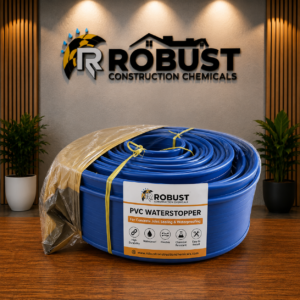
Best WATER STOPPER PVC waterproofing 03365585447
Original price was: ₨ 16,000.₨ 15,000Current price is: ₨ 15,000. Add to cart