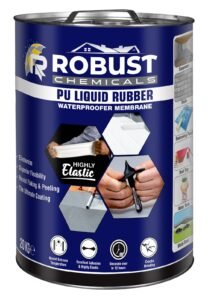
Basement Waterproofing Chemicals – PU Liquid Rubber
1. Introduction
Water is one of the most damaging elements to concrete and masonry structures. Over time, even small leaks or dampness can compromise the integrity of foundations and basements, leading to corrosion of reinforcement, mold growth, and structural weakening. Basement waterproofing is therefore an essential process in ensuring the durability and longevity of any building, particularly in areas with high groundwater levels or poor drainage systems.
Among the various technologies available today, Polyurethane (PU) Liquid Rubber has emerged as one of the most effective and versatile waterproofing solutions. It offers seamless, flexible, and durable protection against water ingress, making it ideal for below-grade waterproofing applications such as basements, foundations, retaining walls, and tunnels.
2. Understanding Basement Waterproofing
Basement waterproofing is the process of preventing water penetration into the underground portions of a structure. Basements are often exposed to hydrostatic pressure, groundwater seepage, and moisture migration through the concrete pores. Without proper protection, this moisture can cause:
-
Concrete deterioration and cracking
-
Rusting of steel reinforcement
-
Growth of mold and mildew
-
Damp odors and unhealthy indoor air quality
-
Structural instability over time
The goal of a waterproofing system is to create a continuous, watertight barrier that resists both positive (external) and negative (internal) water pressure. Modern waterproofing systems use advanced chemical formulations that bond with concrete to form impermeable layers or membranes.
3. Types of Basement Waterproofing Systems
Several types of waterproofing materials are commonly used for basements:
-
Cementitious Waterproofing – Rigid, easy to apply, but prone to cracking with structural movement.
-
Bituminous Coating or Membrane – Economical, but less flexible and can degrade under UV exposure.
-
Crystalline Waterproofing – Penetrates concrete pores and forms crystals to block water pathways.
-
Epoxy Coating – Provides chemical resistance but limited flexibility.
-
Polyurethane (PU) Liquid Rubber – Highly flexible, seamless, durable, and effective even under extreme conditions.
Among these, PU Liquid Rubber stands out due to its superior elasticity, adhesion, and resistance to hydrostatic pressure — making it ideal for long-term basement waterproofing.
4. What is PU Liquid Rubber?
PU Liquid Rubber is a single-component or two-component polyurethane-based waterproofing membrane. It cures to form a highly elastic, seamless rubber-like coating that adheres strongly to concrete, metal, and masonry surfaces.
When applied as a liquid, it penetrates micro-cracks and forms a continuous waterproof layer with excellent flexibility. It can bridge cracks, withstand structural movement, and provide long-term protection against moisture ingress and chemical attack.
Key Characteristics
-
High elasticity (up to 600% elongation)
-
Seamless and joint-free coating
-
Excellent adhesion to concrete and steel
-
Resistance to UV, chemicals, and abrasion
-
Long-lasting and weather-resistant finish
-
Suitable for both positive and negative side waterproofing
5. Composition and Technology
PU Liquid Rubber is based on advanced polyurethane polymers that react with moisture in the air or a catalyst (in two-component systems) to form a durable elastomeric membrane.
The main ingredients typically include:
-
Polyol (base resin) – provides flexibility and durability
-
Isocyanate hardener – responsible for curing and cross-linking
-
Additives and fillers – enhance adhesion, workability, and weather resistance
Once cured, the membrane forms a continuous, flexible, rubber-like film that can stretch without breaking — even when the substrate expands or contracts due to temperature changes.
6. Surface Preparation
Proper surface preparation is the foundation of a successful waterproofing job. The surface must be:
-
Clean: Free from dust, oil, grease, and loose particles.
-
Sound: Remove weak concrete or deteriorated coatings.
-
Dry: Although PU systems can tolerate some moisture, excess water or standing moisture should be removed.
-
Repaired: Fill cracks, joints, and holes with polyurethane or epoxy-based repair material before application.
Surface priming is recommended to improve adhesion, especially on porous or dusty concrete. Manufacturers often provide PU-based primers compatible with the main membrane.
7. Application Method
The application of PU Liquid Rubber is simple but requires proper technique to ensure uniform coverage.
Step-by-Step Procedure:
-
Surface Preparation – Clean and prime the surface as described above.
-
Mixing (if two-component) – Mix both components thoroughly in the recommended ratio until a uniform consistency is achieved.
-
Application – Apply the PU Liquid Rubber using a brush, roller, or airless spray machine.
-
Coating Thickness – Typically, a minimum dry film thickness (DFT) of 1.5 to 2 mm is required for basement waterproofing.
-
Curing Time – Allow each coat to cure for 4–6 hours before applying the next coat. Full curing is achieved in 24–48 hours.
-
Protection Layer – Once the coating is cured, protect it with a geotextile fabric, cement screed, or protection board before backfilling.
Always follow manufacturer guidelines regarding temperature, humidity, and coverage rate. PU Liquid Rubber should not be applied during heavy rain or on wet surfaces unless it is specifically formulated for wet application.
8. Advantages of PU Liquid Rubber in Basement Waterproofing
PU Liquid Rubber provides several unique benefits compared to other systems:
-
Seamless Protection – No joints or seams, which are the most common failure points in sheet membranes.
-
High Flexibility – Bridges cracks up to 2 mm and adapts to structural movement.
-
Excellent Adhesion – Bonds firmly to most building materials including concrete, brick, and metal.
-
Chemical and Abrasion Resistance – Resists underground chemicals, salts, and mild acids.
-
Easy Application – Can be applied by brush, roller, or spray without special tools.
-
Fast Curing and Low VOC – Environmentally friendly and easy to handle on site.
-
Long Lifespan – Provides up to 20–25 years of waterproofing performance when properly applied.
-
Resistant to Hydrostatic Pressure – Ideal for below-grade waterproofing where pressure from groundwater is high.
9. Typical Applications
PU Liquid Rubber is widely used for:
-
Basements and Foundations
-
Retaining Walls
-
Underground Parking Areas
-
Water Tanks and Reservoirs
-
Tunnels and Lift Pits
-
Planter Boxes and Podiums
-
Terraces and Roof Decks
Its adaptability and superior bonding make it suitable for both new construction and repair projects.
10. Technical Specifications (Typical Values)
| Property | Test Method | Typical Value |
|---|---|---|
| Appearance | Liquid (black or grey) | Smooth, viscous |
| Density | ASTM D1475 | 1.20 ± 0.05 g/cm³ |
| Elongation at Break | ASTM D412 | ≥ 500% |
| Tensile Strength | ASTM D412 | ≥ 2.5 MPa |
| Adhesion to Concrete | ASTM D4541 | ≥ 1.5 MPa |
| Water Permeability | DIN 1048 | Impermeable |
| Crack Bridging | EN 1062-7 | ≥ 2 mm |
| Service Temperature | -20°C to +80°C | Stable |
| Curing Time (Touch Dry) | 4–6 hours | — |
| Full Cure | 24–48 hours | — |
(Note: Actual values depend on product formulation and environmental conditions.)
11. Common Problems and Solutions
| Problem | Possible Cause | Solution |
|---|---|---|
| Bubbles or pinholes | Moisture trapped under coating | Ensure surface is dry and use primer |
| Poor adhesion | Dirty or unprepared surface | Clean and roughen surface, use compatible primer |
| Uneven coating thickness | Improper application method | Apply in multiple coats with consistent coverage |
| Premature failure | Thin film or mechanical damage | Maintain required thickness and apply protection layer |
| Cracking after curing | Applied too thick or in high heat | Follow recommended application thickness and conditions |
12. Safety and Handling
-
Use protective gloves, goggles, and masks during mixing and application.
-
Work in a well-ventilated area to avoid inhalation of fumes.
-
Avoid contact with skin or eyes — rinse immediately with water if exposed.
-
Do not apply near open flames.
-
Store the product in a cool, dry place (10–30°C) in sealed containers.
-
Keep out of reach of children.
-
Dispose of empty containers according to local regulations.
13. Environmental and Sustainability Benefits
Modern PU Liquid Rubber systems are formulated with low-VOC (Volatile Organic Compounds), making them safer for both applicators and the environment. Their long service life also contributes to sustainable construction, reducing maintenance and material waste over time. Because the membrane forms a continuous waterproof barrier, it enhances the energy efficiency of buildings by preventing moisture-related thermal losses.
14. Maintenance and Inspection
Although PU Liquid Rubber membranes are highly durable, regular inspection ensures long-term performance:
-
Check annually for any physical damage before monsoon or rainy seasons.
-
Repair minor cracks or punctures with additional PU coating.
-
Ensure that drainage systems around the basement remain functional.
-
Avoid mechanical impacts or drilling into waterproofed surfaces.
With minimal maintenance, a PU-coated basement can remain leak-free for decades.
15. Conclusion
PU Liquid Rubber represents the next generation of waterproofing technology for basements and below-ground structures. Its unique combination of flexibility, adhesion, chemical resistance, and seamless coverage provides unmatched protection against water ingress and structural damage.
Compared to traditional systems, PU membranes offer ease of application, durability, and long-term cost savings. When applied correctly with proper surface preparation and curing, they can protect concrete structures for over 20 years without failure.
As the construction industry continues to move toward sustainable and maintenance-free designs, PU Liquid Rubber stands out as a trusted solution for architects, engineers, and contractors who seek reliability and performance in every layer of their project.
Waterproofing is essential for maintaining the structural integrity and longevity of your building. While most people associate waterproofing with basements, the roof also plays a crucial role in protecting your home from water damage. Basement waterproofing chemicals for roofs provide an effective way to prevent water seepage, leaks, and dampness, ensuring a durable and safe structure. This guide will delve into the types of waterproofing chemicals, their benefits, application methods, and why they are indispensable for your roof.
Importance of Basement Waterproofing Chemicals for Roofs
Roofs are constantly exposed to harsh weather conditions, including rain, heat, and UV rays. Without proper waterproofing, roofs can develop cracks, leaks, and water seepage issues, leading to severe problems such as mold growth, structural weakening, and interior damage. Basement waterproofing chemicals, specifically formulated to seal surfaces and prevent water infiltration, are highly effective in safeguarding your roof against these threats.
Types of Waterproofing Chemicals for Roofs
Bitumen-Based Waterproofing
Bitumen is one of the most popular waterproofing solutions due to its durability and water-resistant properties. Available in rolls, membranes, or liquid form, bitumen provides a seamless and impenetrable barrier against water. It’s suitable for both flat and sloped roofs.
Polyurethane Coatings
Polyurethane is a versatile waterproofing material that creates a seamless layer over the roof surface. It is highly elastic, making it ideal for roofs that experience thermal expansion and contraction. Polyurethane is also resistant to chemicals, UV rays, and weathering.
Cementitious Waterproofing
This is a mixture of cement, sand, and special chemicals. Cementitious coatings are easy to apply and are often used for concrete roofs. They provide excellent adhesion and can resist water penetration effectively.
Acrylic Waterproofing
Acrylic-based waterproofing chemicals are lightweight, flexible, and environmentally friendly. They form a protective layer that shields the roof from water and UV radiation. Acrylic coatings are often used in conjunction with other materials for enhanced performance.
Silicone-Based Waterproofing
Silicone waterproofing chemicals are widely used for their excellent resistance to UV rays and extreme temperatures. They offer long-lasting protection and maintain their elasticity, making them ideal for roofs exposed to harsh environmental conditions.
Key Benefits of Using Waterproofing Chemicals on Roofs
Enhanced Durability
Waterproofing chemicals protect roofs from water infiltration, thereby preventing premature wear and tear. This extends the lifespan of your roof.
Prevention of Structural Damage
Water seepage can weaken the structural components of a building. Waterproofing ensures that water does not penetrate the roof, preserving the building’s integrity.
Improved Energy Efficiency
Some waterproofing chemicals, such as reflective coatings, reduce heat absorption and improve thermal insulation, lowering energy costs.
Protection Against Mold and Mildew
Damp conditions encourage the growth of mold and mildew, which can cause health issues and damage interiors. Waterproofing chemicals create a dry environment, preventing these problems.
Cost-Effective Maintenance
Investing in waterproofing reduces the need for frequent repairs and maintenance, saving time and money in the long run.
Application of Waterproofing Chemicals
Proper application of waterproofing chemicals is crucial for achieving optimal results. Here are the general steps involved:
Surface Preparation
Ensure the roof surface is clean, dry, and free of debris, dust, or oil. Repair any existing cracks or damages before applying the waterproofing chemical.
Priming
Apply a primer to enhance the adhesion of the waterproofing chemical to the roof surface. This step is especially important for porous materials like concrete.
Application of Waterproofing Chemical
Depending on the type of chemical, apply it using a brush, roller, or sprayer. Follow the manufacturer’s instructions regarding the number of coats and drying times.
Curing
Allow sufficient time for the waterproofing chemical to cure. This ensures that the coating forms a strong and durable barrier.
Final Inspection
Inspect the roof thoroughly to ensure complete coverage and proper application. Address any missed spots or irregularities immediately.
Tips for Choosing the Right Waterproofing Chemicals
Assess the Roof Type
Different types of roofs—flat, sloped, or concrete—require specific waterproofing solutions. Identify your roof type before selecting a chemical.
Consider Environmental Factors
Take into account the weather conditions in your area. For example, roofs in regions with heavy rainfall may benefit from bitumen or silicone coatings.
Check for Compatibility
Ensure the waterproofing chemical is compatible with the existing roofing material. Incompatible materials may lead to poor adhesion and performance.
Quality and Durability
Opt for high-quality waterproofing chemicals from reputable brands. Investing in premium products ensures long-lasting protection.
Seek Professional Advice
Consult a waterproofing expert or contractor to determine the most suitable chemical for your roof. They can provide valuable insights and guidance.
Maintenance Tips for Waterproofed Roofs
Regular Inspections
Periodically inspect the roof for signs of damage, cracks, or leaks. Address issues promptly to prevent further deterioration.
Clean the Roof
Remove dirt, leaves, and debris from the roof surface to maintain the effectiveness of the waterproofing layer.
Reapply Coatings When Needed
Over time, waterproofing coatings may wear off. Reapply the chemical as recommended by the manufacturer to ensure continued protection.
Repair Damages Immediately
If you notice any cracks or punctures in the waterproofing layer, repair them immediately to prevent water infiltration.
Why Hire Professionals for Waterproofing
While some waterproofing chemicals are DIY-friendly, hiring professionals ensures a flawless application and long-lasting results. Experts have the
16. Practical Application Insights
In real-world construction, the success of basement waterproofing depends not only on the quality of materials but also on the skill of application and adherence to the correct process. PU Liquid Rubber offers remarkable flexibility in this regard, as it can be applied to both horizontal and vertical surfaces, even on irregular shapes or complex geometries. This makes it particularly suitable for modern basements that include retaining walls, columns, sump pits, or service ducts.
For new structures, PU Liquid Rubber is applied directly on the exterior surface of basement walls before backfilling. This approach prevents water from ever reaching the concrete. In renovation or repair works, it can also be applied on the interior surface, acting as a negative-side barrier that stops water ingress from the inside. The dual capability of PU systems makes them more versatile than bituminous or cementitious alternatives.
Furthermore, PU Liquid Rubber can be combined with geotextile reinforcements or fiberglass mesh in high-stress areas such as joints and corners. This reinforcement enhances the tensile strength of the membrane and prevents localized failure. For basements exposed to continuous water pressure, a protective screed or drainage board is often installed over the cured PU coating to further safeguard it from mechanical damage during backfilling.
17. Performance Comparison with Other Systems
When compared to traditional waterproofing solutions, PU Liquid Rubber consistently demonstrates superior performance:
| Feature | PU Liquid Rubber | Bituminous Coating | Cementitious Coating | Crystalline System |
|---|---|---|---|---|
| Flexibility | Excellent (up to 600%) | Poor | Moderate | Low |
| Crack Bridging | Yes | No | Limited | Limited |
| Seamless Membrane | Yes | No | Yes | No |
| Chemical Resistance | High | Moderate | Low | Moderate |
| UV Stability | Excellent | Poor | Poor | Not applicable |
| Service Life | 20–25 years | 5–10 years | 8–12 years | 15–20 years |
This comparison highlights that PU Liquid Rubber delivers longer service life, superior elasticity, and better adaptability under fluctuating conditions. While bituminous coatings may be cheaper initially, their lifespan and maintenance requirements often make PU a more cost-effective solution in the long run.
18. Why Choose PU Liquid Rubber for Robust Construction Chemicals
At Robust Construction Chemicals, PU Liquid Rubber is formulated with advanced polymer technology to meet international performance standards. It is designed to provide high tensile strength, superior elongation, and long-lasting waterproofing performance. Each batch undergoes stringent quality control testing for consistency and durability.
Robust’s PU Liquid Rubber system is trusted by engineers and architects for a wide range of commercial and residential projects. Its proven ability to withstand hydrostatic pressure, soil moisture, and structural movement makes it an essential component of any modern waterproofing design.
The company also provides technical support, on-site training, and customized waterproofing solutions, ensuring that each project benefits from both quality materials and expert application. Whether used for a small residential basement or a large infrastructure project, Robust PU Liquid Rubber ensures complete protection, peace of mind, and long-term structural durability.
necessary skills, tools, and knowledge to handle complex roofing systems and deliver high-quality workmanship.