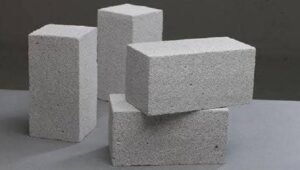
Robust Lightweight Concrete Foam (Foam Concrete Technology)
By Robust Construction Chemicals
Introduction
Lightweight Concrete Foam, often known as Foamed Concrete, Cellular Concrete, or Aerated Concrete, is an advanced cement-based material designed to produce low-density, high-performance, and thermally efficient concrete. It is created by introducing a stable, pre-formed foam into a cementitious slurry. The resulting mixture hardens into a lightweight material with air voids distributed uniformly throughout the matrix.
As part of the new generation of sustainable and energy-efficient construction materials, Lightweight Concrete Foam offers significant advantages in thermal insulation, sound absorption, fire resistance, and cost-effectiveness. Its cellular structure reduces dead load on buildings and infrastructure while maintaining adequate strength for a wide range of structural and non-structural applications.
At Robust Construction Chemicals, our FoamCrete Series of lightweight concrete foaming agents and admixtures are formulated to provide controlled density, superior stability, and excellent compatibility with cementitious materials. Whether used for roof insulation, floor leveling, void filling, trench reinstatement, or precast blocks, Lightweight Concrete Foam offers unparalleled versatility in modern construction.
Composition of Lightweight Foam Concrete
Lightweight Concrete Foam consists of four essential components:
-
Cement:
Ordinary Portland Cement (OPC 43 or 53 Grade) serves as the primary binder, ensuring strength and cohesion. -
Fine Aggregate:
Clean, well-graded sand or fly ash is used as a filler to improve workability and volume stability. -
Water:
Potable water meeting ASTM C1602 or EN 1008 standards ensures hydration and foam stability. -
Foaming Agent:
A surface-active chemical that produces stable, micro-bubbles when mixed with water and air under pressure. The foam is blended into the cement slurry to create uniform cellular concrete.
Optionally, admixtures such as retarders, accelerators, plasticizers, or fiber reinforcements can be incorporated to tailor performance characteristics.
Chemical and Physical Principles
Foam Generation and Stability
The core of the lightweight concrete foam technology lies in foam generation and bubble stability. A foaming agent—either protein-based or synthetic surfactant-based—creates billions of small, stable air bubbles when mixed with air and water in a foam generator.
When this foam is mixed with the cementitious slurry, the air bubbles act as fillers, replacing heavier aggregate and reducing the overall density.
Mechanism of Stability:
-
The surfactant molecules form a film around each air bubble, reducing surface tension and preventing coalescence.
-
The viscosity of the cement paste supports the foam, stabilizing the air voids during setting.
-
The interaction between calcium hydroxide and foam surfactant enhances the bonding of air cells within the matrix.
As the concrete hardens, these air voids remain locked in the structure, forming a lightweight yet stable material with densities ranging from 300 to 1800 kg/m³.
Classification of Lightweight Foam Concrete by Density
| Density Range (kg/m³) | Application Type | Typical Use |
|---|---|---|
| 300 – 600 | Ultra-Light Foam Concrete | Insulation, trench backfill, void filling |
| 600 – 900 | Non-Structural | Roof insulation, floor screeds |
| 900 – 1200 | Semi-Structural | Blocks, wall panels, sub-base layers |
| 1200 – 1800 | Structural | Precast panels, lightweight slabs, pavement bases |
The selection of density depends on the structural requirement, thermal resistance, and strength expectations of the project.
Key Technical Properties
| Property | Typical Value / Description |
|---|---|
| Density | 300 – 1800 kg/m³ |
| Compressive Strength | 1 – 15 MPa |
| Thermal Conductivity | 0.1 – 0.45 W/m·K |
| Fire Resistance | Excellent; non-combustible |
| Sound Absorption | 40 – 60 dB (depending on density) |
| Water Absorption | 10 – 25% by weight |
| Shrinkage | <0.1% |
| Flowability | High; self-leveling possible |
| Workability | Adjustable via foam ratio and admixture |
| Durability | Resistant to frost, fire, and biological attack |
Manufacturing Process
Lightweight Concrete Foam can be produced using two principal methods:
1. Pre-Foam Method (Preferred Industrial Process)
In this method, a stable foam is generated separately using a foam generator and mixed into the cement slurry in a controlled environment.
Steps:
-
Prepare the cement-sand-water slurry.
-
Generate foam using a foaming agent (protein or synthetic-based) mixed with air in the foam generator.
-
Mix the pre-formed foam into the slurry until uniform consistency is achieved.
-
Pour or pump the foamed concrete into molds or directly onto the application area.
This method allows precise control over density and uniform distribution of air cells.
2. Inline Method
Foam and cement slurry are introduced simultaneously into the mixing system through controlled injection.
This continuous production system is ideal for large-scale projects such as geotechnical fills and void backfilling.
Robust FoamCrete Technology
Robust Construction Chemicals manufactures a specialized FoamCrete Series of high-quality foaming agents for producing lightweight concrete foam. These agents are designed for:
-
High foam stability over 2–3 hours
-
Uniform micro-cell size (0.1–1.0 mm)
-
Compatibility with cement, fly ash, and lime
-
High yield and low collapse rate
-
Excellent consistency across densities
Robust FoamCrete can produce densities from 300 kg/m³ to 1600 kg/m³ with accurate control using our FoamCrete Generator Units.
Mix Design of Lightweight Concrete Foam
A typical mix design depends on the required density and strength. Below is a standard example:
| Component | Low Density (600 kg/m³) | Medium Density (1000 kg/m³) | High Density (1400 kg/m³) |
|---|---|---|---|
| Cement (kg/m³) | 250 | 350 | 450 |
| Fine Sand (kg/m³) | — | 300 | 700 |
| Water (L/m³) | 120 | 150 | 180 |
| Foam (L/m³) | 650 | 400 | 200 |
| Foaming Agent | 1 – 1.5% of water weight | 1 – 1.5% | 1 – 1.5% |
Adjust ratios according to desired strength and density. Fly ash can replace up to 50% of cement for cost and sustainability benefits.
Advantages of Lightweight Concrete Foam
1. Reduced Dead Load
Being up to 70% lighter than conventional concrete, it significantly reduces structural load, allowing smaller foundations and economical design.
2. Thermal Insulation
The closed-cell air bubbles act as insulators, achieving thermal conductivity as low as 0.1 W/m·K.
Ideal for roof insulation, cold storages, and energy-efficient walls.
3. Acoustic Insulation
The porous structure absorbs sound, making it excellent for auditoriums, residential partitions, and industrial enclosures.
4. Fire Resistance
Non-combustible and heat-resistant up to 1000°C, providing passive fire protection.
5. Workability
Self-compacting and flowable nature eliminates vibration needs, simplifying placement even in complex geometries.
6. Durability
Resistant to frost, shrinkage cracking, and sulfate attack. The absence of coarse aggregates minimizes stress points.
7. Eco-Friendly
Made from cement, sand, and air — with no harmful chemicals. Foam agents are biodegradable and non-toxic.
8. Cost-Effective
Lower material consumption, reduced structural load, and high productivity make it more economical for large-scale works.
Applications of Lightweight Concrete Foam
-
Roof Insulation and Slope Correction
Lightweight foam concrete provides thermal insulation and slope formation for roofs. It replaces traditional screed materials. -
Floor Leveling and Sub-Base Filling
Provides smooth, level floors over uneven substrates and reduces load on structures. -
Void and Trench Filling
Flowable foam concrete fills trenches, ducts, and abandoned pipes with minimal compaction required. -
Geotechnical Backfill
Used for embankments, retaining walls, and bridge abutments due to low lateral pressure. -
Precast Blocks and Panels
Ideal for manufacturing lightweight wall blocks, partitions, and decorative elements. -
Pavement Sub-base
Provides a light, rigid, and load-distributing base layer for roads and airfields. -
Marine and Tunnel Applications
Lightweight and non-permeable characteristics make it suitable for buoyancy fills and tunnel lining.
Application Instructions (Step-by-Step)
-
Preparation
-
Ensure mixing equipment and foam generator are clean.
-
Prepare accurate proportions of cement, sand, and water.
-
Check density calibration of the foam generator.
-
-
Foam Generation
-
Mix foaming agent (1 part) with water (40 parts) in a foam generator.
-
Generate stable foam with consistent density (70–90 g/L).
-
-
Mixing Foam with Slurry
-
Prepare the cementitious slurry separately.
-
Introduce preformed foam slowly while stirring until desired density is achieved.
-
-
Placement
-
Pour or pump directly into formwork or cavities.
-
Avoid excessive vibration (it destroys foam structure).
-
-
Curing
-
Allow to set for 24 hours.
-
Moist cure for 3–7 days depending on temperature.
-
-
Density Control
-
Check wet density using a 1L container; adjust foam volume accordingly.
-
-
Finishing
-
For screeds and roofs, finish surface with a trowel or float.
-
For blocks, demold after 24 hours and air-cure.
-
Technical Performance
-
Compressive Strength:
1–5 MPa (low-density) to 15 MPa (structural grade). -
Thermal Conductivity:
0.1–0.45 W/m·K depending on density. -
Shrinkage:
Minimal due to uniform pore structure. -
Elastic Modulus:
1–5 GPa (depends on density).
Comparison with Conventional Concrete
| Property | Conventional Concrete | Lightweight Foam Concrete |
|---|---|---|
| Density | 2400 kg/m³ | 400–1800 kg/m³ |
| Thermal Conductivity | 1.75 W/m·K | 0.1–0.45 W/m·K |
| Fire Resistance | Moderate | Excellent |
| Flowability | Low | High (Self-leveling) |
| Cost | Higher in mass structures | Lower in lightweight applications |
| Sustainability | Heavy CO₂ footprint | Energy-saving and eco-friendly |
Quality Control Tips
-
Use accurate foam density calibration (±5 g/L).
-
Maintain water-cement ratio between 0.4–0.6.
-
Avoid overmixing to prevent foam collapse.
-
Protect freshly placed foam concrete from heavy rain or direct sun.
-
Test density and compressive strength regularly.
Safety and Environmental Guidelines
-
Handle foaming agents with gloves and safety goggles.
-
Avoid skin or eye contact.
-
Dispose of foam residues and cement slurry responsibly.
-
Use biodegradable and non-toxic foaming agents only.
-
Lightweight Concrete Foam contributes to green building certifications (LEED, IGBC) due to its sustainable nature.
Storage and Shelf Life
-
Store foaming agents in cool, dry areas away from direct sunlight.
-
Shelf life: 12 months if sealed properly.
-
Keep foam generators clean to avoid chemical contamination.
Case Study: Roof Thermal Insulation (Industrial Building)
Project: Industrial roof slab in Karachi required thermal insulation and slope correction.
Solution: Robust FoamCrete (density 800 kg/m³) was pumped onto the roof with 50 mm to 150 mm thickness.
Result:
-
Reduced internal temperature by 8–10°C.
-
Provided watertight surface after applying Robust RC-7 Seal.
-
Reduced roof load by 60% compared to traditional screed.
Key Advantages for Engineers and Contractors
-
Quick and simple installation with less manpower.
-
Pumpable for long distances.
-
Excellent for renovation projects where structural load limits exist.
-
Compatible with all types of waterproofing systems.
-
Easy cutting and shaping for construction detailing.
Future of Lightweight Foam Concrete
With rising emphasis on energy-efficient and sustainable construction, lightweight foam concrete is rapidly replacing traditional screeds, blocks, and insulation materials. Its adaptability to 3D printing and modular construction makes it an essential part of future smart construction systems.
Robust Construction Chemicals continues to innovate in foam technology — improving bubble stability, strength development, and automation in foam production to meet international construction standards.
Conclusion
Lightweight Concrete Foam represents a revolutionary material that merges structural efficiency with environmental responsibility.
It reduces weight, enhances insulation, and provides long-term performance for a wide range of civil and architectural applications.
With Robust FoamCrete Technology, you achieve:
-
Consistent quality
-
Precise density control
-
Excellent foam stability
-
Compatibility with cement and fly ash
-
Proven performance in demanding site conditions
Whether you’re constructing energy-efficient roofs, lightweight blocks, or geotechnical fills, Robust Lightweight Concrete Foam ensures durability, economy, and sustainability — making it the smart choice for the future of construction.
Concrete is one of the most widely used construction materials, valued for its durability, strength, and versatility. However, its porous nature makes it susceptible to water infiltration, which can compromise the integrity of structures over time. This is where concrete waterproofing chemicals come into play, providing essential protection against moisture and prolonging the lifespan of concrete structures. In this article, we will delve into the importance, types, and benefits of these chemicals while exploring their applications and the factors to consider when choosing the right solution.
Why Concrete Waterproofing is Essential
Water can be detrimental to concrete structures, leading to issues such as:
Structural Weakening: Continuous exposure to moisture can cause cracks, spalling, and erosion in concrete, reducing its strength.
Corrosion of Reinforcement: Water ingress can lead to rusting of steel reinforcements, further compromising the structure.
Mold and Mildew Growth: Damp conditions foster the growth of mold and mildew, affecting indoor air quality and aesthetics.
Freeze-Thaw Damage: In cold climates, water trapped within the concrete can freeze, expand, and cause cracks.
Concrete waterproofing chemicals provide an effective barrier against water penetration, ensuring durability, safety, and reduced maintenance costs.
Types of Concrete Waterproofing Chemicals
There are various types of waterproofing chemicals, each designed to address specific needs and conditions:
1. Admixtures
Admixtures are added directly to the concrete mix during the batching process. They enhance the waterproofing properties of concrete by reducing its permeability.
Hydrophobic Admixtures: These repel water by forming a barrier within the concrete.
Crystalline Admixtures: These react with water and unhydrated cement particles to form insoluble crystals that block water pathways.
2. Surface Coatings
These are applied to the surface of cured concrete to create a protective layer.
Acrylic Coatings: Provide excellent adhesion and flexibility, ideal for exterior walls.
Polyurethane Coatings: Known for their durability and resistance to chemicals and abrasion.
3. Sealants
Sealants are used to fill cracks and joints in concrete, preventing water infiltration.
Silicone Sealants: Highly elastic and effective for expansion joints.
Epoxy Sealants: Provide strong adhesion and are suitable for repairing structural cracks.
4. Membranes
Waterproofing membranes are physical barriers applied to concrete surfaces.
Bituminous Membranes: Offer excellent water resistance and are commonly used in roofing and basements.
EPDM Membranes: A synthetic rubber membrane known for its flexibility and longevity.
5. Waterproofing Paints
These are specialized paints containing waterproofing agents, ideal for protecting walls and ceilings from moisture.
Benefits of Concrete Waterproofing Chemicals
Investing in concrete waterproofing chemicals offers numerous advantages:
Enhanced Durability: By preventing water ingress, these chemicals extend the lifespan of concrete structures.
Cost Savings: Reduced maintenance and repair costs make waterproofing a cost-effective solution in the long run.
Improved Aesthetics: Waterproofed surfaces are less likely to develop stains, cracks, or discoloration.
Increased Property Value: Structures protected from water damage are more appealing to potential buyers or tenants.
Environmental Benefits: By reducing the need for repairs and replacements, waterproofing contributes to resource conservation.
Applications of Concrete Waterproofing Chemicals
Concrete waterproofing chemicals are used in various residential, commercial, and industrial projects:
Residential Buildings
Basements: Prevents water seepage and dampness.
Bathrooms: Protects against water leaks and mold growth.
Roofs and Balconies: Ensures resistance to rainwater penetration.
Commercial and Industrial Projects
Bridges and Dams: Protects against water pressure and harsh environmental conditions.
Tunnels: Prevents leaks and structural damage.
Parking Decks: Shields against water, oil, and chemical spills.
Infrastructure Development
Roads and Highways: Enhances durability by preventing water-related damages.
Water Tanks and Reservoirs: Ensures water-tightness and prevents contamination.
Choosing the Right Waterproofing Chemical
Selecting the appropriate waterproofing chemical depends on several factors:
Type of Structure: The chemical should be compatible with the specific application, whether it’s a roof, wall, or basement.
Environmental Conditions: Consider factors like temperature, humidity, and exposure to chemicals or saltwater.
Ease of Application: Some chemicals require professional expertise, while others can be applied by homeowners.
Longevity: Opt for solutions that provide long-lasting protection.
Budget: Balance cost with performance and durability.
How to Apply Concrete Waterproofing Chemicals
Proper application is crucial for the effectiveness of waterproofing chemicals:
Surface Preparation: Clean the surface thoroughly to remove dirt, grease, and loose particles.
Repair Cracks: Fill any cracks or holes in the concrete using sealants or patching compounds.
Choose the Right Method: Depending on the chemical type, apply it using brushes, rollers, sprays, or by mixing it into the concrete.
Allow Adequate Curing Time: Follow the manufacturer’s instructions for drying and curing to achieve optimal results.
Periodic Maintenance: Inspect the waterproofed areas regularly and reapply as needed.
Latest Innovations in Concrete Waterproofing
The field of concrete waterproofing is continuously evolving, with new technologies enhancing effectiveness and sustainability:
Nanotechnology: Nano-sized particles penetrate deep into the concrete, providing superior water resistance.
Eco-Friendly Chemicals: Manufacturers are developing non-toxic and biodegradable waterproofing solutions.
Self-Healing Concrete: Incorporates materials that automatically repair cracks upon contact with water.