Original price was: ₨ 4,000.₨ 3,800Current price is: ₨ 3,800.
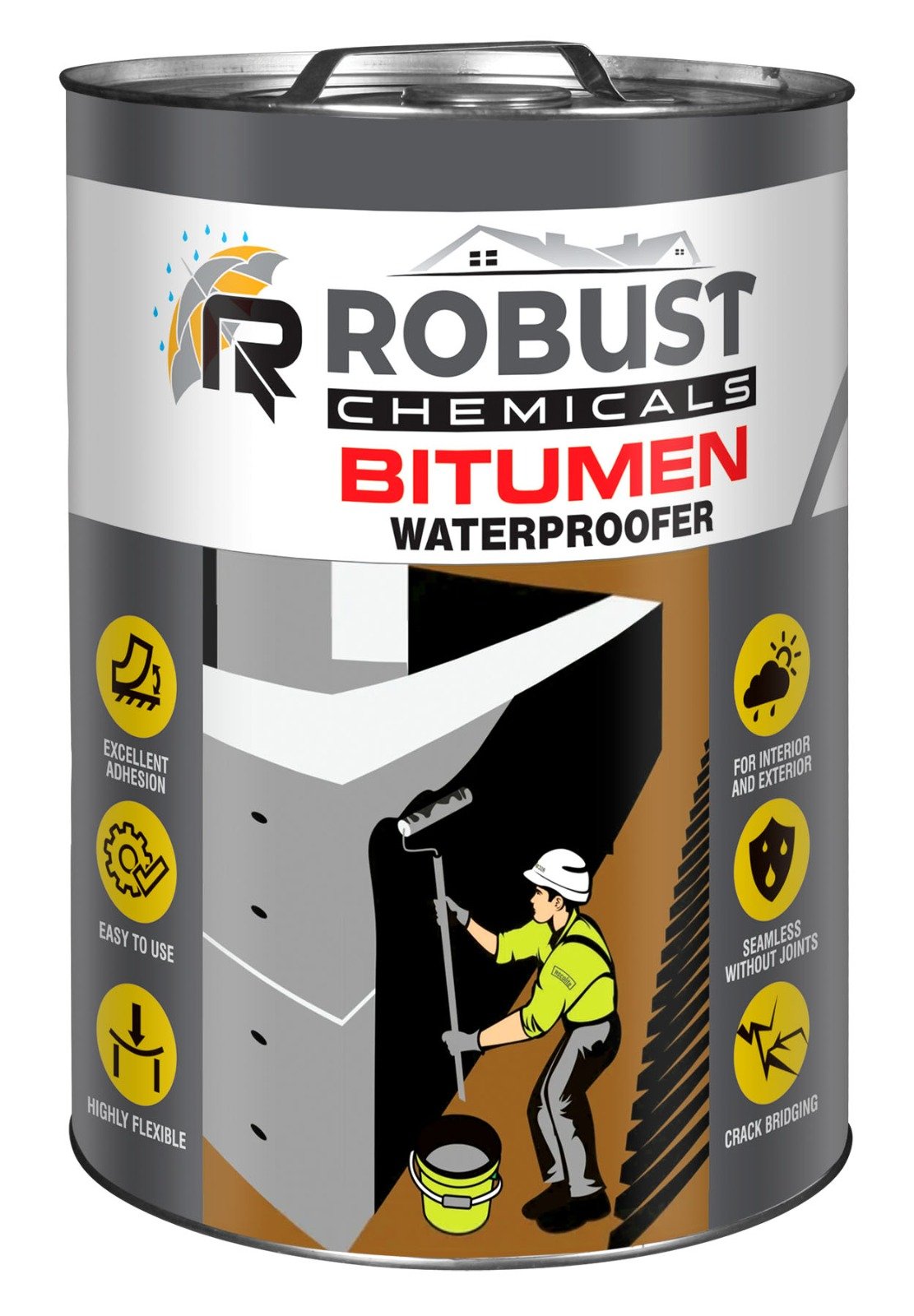
Bitumen is a versatile, durable, and cost-effective material widely used for waterproofing applications. Its excellent water resistance, adhesion properties, and ability to withstand extreme weather conditions make it ideal for protecting roofs, basements, and other structures from moisture infiltration.
Bitumen Primer Coating – Complete Detail
Introduction:
Bitumen primer coating is a high-quality, solvent-based or water-based preparatory coating used before applying bituminous waterproofing membranes, paints, or coatings. It ensures strong adhesion between the substrate (such as concrete, metal, or masonry) and the subsequent bitumen layer. This coating is an essential component in waterproofing and corrosion protection systems, particularly in roofing, basements, bridges, and foundations.
What is Bitumen Primer?
Bitumen primer is a low-viscosity bituminous solution composed of refined bitumen blended with selected solvents. It is designed to penetrate porous surfaces deeply, sealing dust and small voids, thus creating a smooth and adhesive surface for further bituminous applications like membranes or coatings.
Purpose of Bitumen Primer Coating:
-
Improves Adhesion: Creates a strong bond between substrate and bituminous membrane or coating.
-
Seals Porous Surfaces: Fills micro-cracks, pores, and dust particles on concrete and masonry.
-
Prevents Peeling: Reduces the risk of peeling or delamination of waterproofing membranes.
-
Enhances Durability: Increases the lifespan and waterproofing performance of the system.
-
Corrosion Protection: Provides initial protection to metal surfaces against corrosion and rust.
Application Areas:
-
Concrete roofs and slabs
-
Basement walls and foundations
-
Metal and concrete pipes
-
Bridge decks and underpasses
-
Damp proof courses
-
Retaining walls and culverts
-
Roof gardens and terraces
Application Procedure:
-
Surface Preparation:
-
Clean the surface thoroughly to remove dust, oil, rust, or loose particles.
-
Ensure the surface is dry before application for best adhesion.
-
-
Mixing:
-
Stir the bitumen primer well before use to ensure uniform consistency.
-
-
Application:
-
Apply the primer using a brush, roller, or spray equipment in a uniform thin coat.
-
Allow sufficient drying time (usually 4–6 hours depending on temperature and humidity).
-
-
Second Coat (if required):
-
For highly porous surfaces, apply a second coat after the first has dried completely.
-
-
Final Coating:
-
Apply bituminous waterproofing coating, membrane, or mastic once the primer has dried fully.
-
Advantages of Bitumen Primer Coating:
-
Excellent adhesion to concrete, brick, and metal.
-
Quick drying and easy to apply.
-
Compatible with all bituminous materials.
-
Enhances waterproofing performance.
-
Cost-effective surface preparation method.
-
Acts as a protective barrier against moisture and corrosion.
Technical Data (Typical):
-
Appearance: Black liquid
-
Base: Bitumen and solvent
-
Specific Gravity: 0.85–1.0
-
Drying Time: 4–6 hours (varies with weather)
-
Coverage: 4–6 m² per liter per coat
-
Application Tools: Brush, roller, or spray gun
-
Storage: Store in a cool, dry place away from heat or open flame
Precautions:
-
Apply in well-ventilated areas.
-
Keep away from fire or sparks (flammable material).
-
Avoid skin or eye contact; use protective gloves and goggles.
-
Do not apply during rain or on wet surfaces.
Conclusion:
Bitumen primer coating plays a vital role in waterproofing and protection systems. It ensures strong bonding between surfaces and bituminous layers, enhancing the effectiveness and durability of the waterproofing system. For best results, always use high-quality bitumen primer from trusted manufacturers such as Robust Construction Chemicals, ensuring long-lasting performance, superior adhesion, and complete waterproofing protection.
Description
Extended Technical and Practical Discussion on Hot Bitumen Coating
1. Understanding the Science Behind Hot Bitumen
Bitumen is a thermoplastic hydrocarbon derived from the distillation of crude oil. Its performance in waterproofing applications depends largely on penetration grade, viscosity, and softening point. When heated, bitumen becomes a free-flowing liquid that can easily penetrate and adhere to porous surfaces like concrete or brick. Upon cooling, it transforms into a hard, flexible film that seals the surface completely.
The molecular structure of bitumen allows it to maintain elasticity under varying temperatures. This property is crucial in regions like Pakistan, where hot summers and cold winters cause thermal expansion and contraction of building materials. Hot bitumen coating absorbs these stresses without cracking, ensuring continuous protection throughout the year.
2. The Role of Hot Bitumen in Modern Waterproofing Systems
Despite the emergence of newer materials like polyurethane and acrylic coatings, hot bitumen remains a cornerstone of waterproofing technology due to its proven reliability, availability, and economic efficiency. It acts as both a barrier coating and a binding medium for reinforcing fabrics or membranes.
In heavy-duty applications, engineers often use a multi-layer system combining hot bitumen with bitumen felt (also called APP or SBS membranes). Each layer bonds thermally, creating a thick, impermeable structure that resists hydrostatic pressure and weather exposure. For large infrastructure projects—such as bridges, tunnels, dams, and irrigation channels—this multi-layered bituminous system provides unmatched durability and water resistance.
3. How Hot Bitumen Ensures Long-Term Protection
When applied correctly, hot bitumen forms a continuous monolithic film that adheres to every contour of the surface. This layer eliminates weak joints or seams, which are the most common entry points for moisture in concrete structures. The coating also prevents chloride and sulfate penetration, which are major causes of reinforcement corrosion in RCC (reinforced cement concrete) structures.
Furthermore, hot bitumen acts as a vapor barrier, reducing dampness and condensation within walls or slabs. By blocking capillary rise of water, it protects flooring systems, basements, and foundations from long-term moisture damage.
4. Enhanced Bonding and Compatibility
Hot bitumen coating is fully compatible with various materials, including:
-
Cementitious substrates (foundations, concrete slabs, screeds)
-
Metal surfaces (pipes, storage tanks, steel bridges)
-
Brick masonry and stone walls
-
Bitumen membranes and roof felts
Its ability to adhere to both porous and non-porous surfaces makes it a universal choice for engineers and waterproofing professionals. In addition, the molten bitumen penetrates surface pores, creating a mechanical interlock that enhances adhesion strength far beyond what cold coatings can achieve.
5. Performance Under Extreme Conditions
Hot bitumen’s resilience under thermal stress and chemical exposure is one of its most valuable properties. It can tolerate direct exposure to intense sunlight, rainfall, and wind erosion without losing integrity. In industrial environments, where surfaces may come into contact with mild acids, alkalis, or saline water, hot bitumen continues to perform effectively.
In marine structures such as jetties or docks, hot bitumen coating is used as a protective layer against saltwater corrosion. Similarly, it is applied to underground pipelines to prevent rusting and water ingress in moist soil conditions.
6. Construction Site Application Best Practices
To achieve maximum waterproofing performance, professionals follow a strict procedure on site:
-
Temperature Control: Bitumen should be heated gradually to 160°C–180°C and maintained without overheating. Overheating can cause oxidation, reducing flexibility and adhesion.
-
Thickness Measurement: Each coat is applied at approximately 1–1.5 mm thickness, resulting in a final dry film of 2–4 mm after two to three coats.
-
Overlap and Continuity: When coating large areas, ensure overlapping strokes to avoid uncoated gaps. The coating should extend beyond joints and upstand areas for complete sealing.
-
Surface Curing: The coating must cool completely before backfilling or overlaying protective screed to avoid punctures or deformation.
-
Membrane Integration: When used with bitumen felt membranes, each felt roll is embedded in hot bitumen to form a thermally fused joint, guaranteeing 100% water tightness.
7. Integration with Reinforcement and Protection Layers
Hot bitumen coating can be combined with fiberglass mesh, polyester fabric, or jute cloth to create a reinforced waterproofing system. This reinforcement helps in controlling thermal expansion and contraction while preventing micro-cracks.
For exposed roof areas, a protective aluminum paint or solar-reflective coating is applied over the final bitumen layer. This reflective finish minimizes heat absorption, reduces surface temperature, and extends the life of the waterproofing layer.
8. Industrial Applications
-
Oil and Gas Industry: Hot bitumen is extensively used for coating steel pipelines, fuel storage tanks, and refineries to prevent corrosion and leakage.
-
Infrastructure Projects: Bridges, culverts, and tunnels are protected using multi-layer bituminous systems for structural waterproofing.
-
Transportation and Roads: In road construction, hot bitumen acts as both a binder and a sealant in asphalt pavements, ensuring smoothness and durability.
-
Water Retaining Structures: Applied on the exterior of water tanks and reservoirs to prevent seepage.
-
Power Plants and Factories: Used on floors, ducts, and cable trenches to protect from water and chemical damage.
9. Environmental and Economic Perspective
Hot bitumen is cost-effective due to its low material cost per square meter and long service life. Although modern synthetic waterproofing systems exist, few can match bitumen’s affordability and proven field performance. With proper installation, maintenance, and protection, hot bitumen coatings can last over two decades, offering exceptional value.
In terms of sustainability, manufacturers like Robust Construction Chemicals are developing improved refinery-grade bitumen with reduced emissions and enhanced thermal stability, minimizing environmental impact during heating and application.
10. Maintenance and Longevity
Routine inspection ensures the continued effectiveness of hot bitumen systems. Small cracks or punctures can be easily repaired by reheating and patching the affected area. Over time, if the coating is exposed to direct sunlight or mechanical wear, a new surface layer of hot bitumen or aluminum paint can rejuvenate the system, restoring its waterproofing capacity.
When properly maintained, the system offers excellent service life, making it one of the most sustainable waterproofing investments for long-term infrastructure protection.
11. Why Engineers Continue to Prefer Hot Bitumen
For large projects where reliability and proven performance matter most, hot bitumen remains the material of choice for waterproofing consultants and civil engineers. Its combination of low permeability, adhesion strength, and cost efficiency makes it ideal for both new constructions and rehabilitation projects.
Hot bitumen also performs exceptionally well as a base waterproofing layer beneath screeds, insulation boards, or membranes, ensuring that even if the upper layers fail, the structure remains watertight.
12. Compatibility with Robust Construction Chemicals Products
Robust Construction Chemicals manufactures a full range of bituminous waterproofing products designed to work together in an integrated system. These include:
-
Robust Bitumen Primer: For superior adhesion before hot bitumen coating.
-
Robust Hot Bitumen Coating: For primary waterproofing protection.
-
Robust Aluminum Paint: For UV protection and reflective finish.
-
Robust Bitumen Membrane (APP/SBS): For reinforced roof and foundation systems.
By combining these products, contractors can achieve a multi-layer defense system that ensures long-term waterproofing and corrosion protection for any structure.
13. Application Examples and Case Studies
-
Basement Waterproofing – Lahore:
Contractors used two coats of Robust Hot Bitumen Coating on RCC foundations and applied bitumen felt membrane reinforcement. Even after heavy monsoon rains, the basements remained completely dry, with zero leakage. -
Industrial Tank Coating – Karachi:
Steel storage tanks were treated with a double coat of Robust Hot Bitumen for corrosion resistance. After five years of service in a humid coastal environment, the coating remained intact and rust-free. -
Bridge Deck Waterproofing – Islamabad:
Before laying asphalt, engineers applied a hot bitumen tack coat followed by a polymer membrane to protect the bridge structure from water seepage and chloride attack, extending the lifespan of the bridge by decades.
14. Safety, Handling, and Quality Assurance
Hot bitumen application requires careful attention to worker safety and quality control. Robust Construction Chemicals provides guidelines, MSDS documentation, and on-site training for safe heating, handling, and application. Key safety tips include:
-
Never heat bitumen above 180°C.
-
Always use a temperature-controlled bitumen boiler.
-
Keep water away from molten bitumen.
-
Use fire-retardant clothing and protective gear.
-
Maintain fire extinguishers and sand buckets nearby.
Each batch of Robust Hot Bitumen undergoes rigorous testing for penetration, softening point, and flash point to ensure consistent performance on every project.
15. Competitive Advantage of Robust Hot Bitumen Coating
Robust Construction Chemicals has established itself as a trusted industry leader in Pakistan’s waterproofing sector. The company’s Hot Bitumen Coating stands out because it offers:
-
Refined petroleum grade bitumen for consistent quality.
-
Enhanced adhesion technology for stronger bonding.
-
Thermally stable composition that resists aging.
-
Technical support and on-site application guidance for contractors.
By choosing Robust Hot Bitumen Coating, clients gain not just a product but a complete waterproofing system backed by technical expertise, professional service, and guaranteed reliability.
Conclusion
Hot bitumen coating remains an indispensable solution for effective waterproofing, corrosion resistance, and structural protection in modern construction. Its versatility, economy, and field-proven reliability make it suitable for nearly every application—from basements and roofs to bridges and industrial plants.
Robust Hot Bitumen Coating by Robust Construction Chemicals represents the perfect balance between traditional strength and modern performance, offering unmatched adhesion, flexibility, and long-term durability. It is engineered to withstand Pakistan’s diverse climate, ensuring that every structure remains protected from water, weather, and time itself.
Choose Robust Hot Bitumen Coating—the ultimate standard for professional waterproofing excellence.
Additional information
| Weight | 15 kg |
|---|
Related products
-
Sale!
ROBUST CONCRETE PLASTICIZER ADMIXTURE
Original price was: ₨ 55,000.₨ 52,500Current price is: ₨ 52,500. Add to cart -
Sale!
Robust Epoxy flooring
Original price was: ₨ 48,000.₨ 45,000Current price is: ₨ 45,000. Add to cart -
Sale!
Robust SBR Latex
Original price was: ₨ 650.₨ 600Current price is: ₨ 600. Add to cart -
Sale!
Robust Dpc roll
Original price was: ₨ 4,100.₨ 3,800Current price is: ₨ 3,800. Add to cart