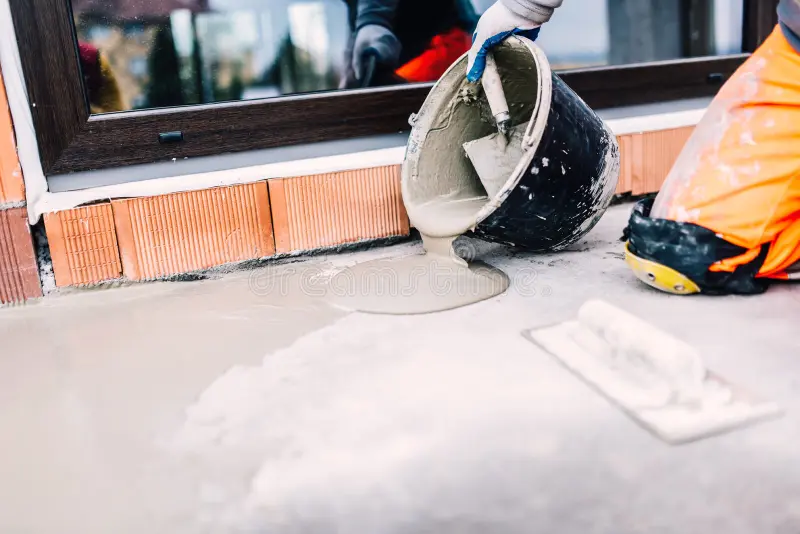
Cementitious waterproofing is one of the easiest methods of waterproofing because the materials are easily available and simple to mix and apply. It is commonly used in internal wet areas like bathrooms, kitchens, toilets, and basements, where exposure to sunlight and weather is minimal. Once applied, it forms a rigid coating that prevents water seepage. However, since it is not flexible, it is not suitable for areas exposed to expansion, contraction, or harsh weather conditions.
Liquid Waterproofing Membrane
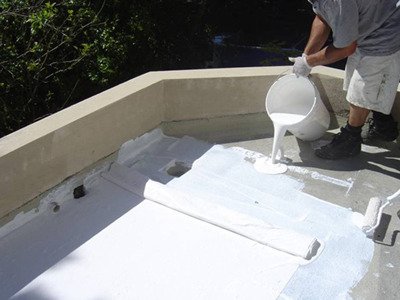
This method involves applying a thin, liquid-based coating that forms a rubber-like waterproof membrane when it dries. It is more flexible than cementitious waterproofing and can stretch to cover cracks. It is ideal for roof surfaces, balconies, terraces, and podiums. The thickness of the coating can vary depending on the application, and reinforcement fabrics can be used for added durability.
bituminous-coating
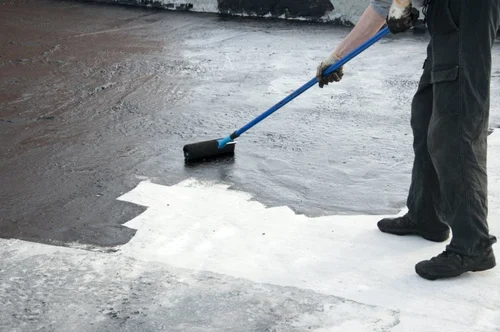
Also known as asphalt coating, this method provides a protective barrier against water. It is particularly effective on concrete surfaces and foundations. Bituminous coatings are highly resistant to water and chemicals, but they are not suitable for areas exposed to direct sunlight unless modified with polymers or other protective layers, as prolonged exposure can cause brittleness.