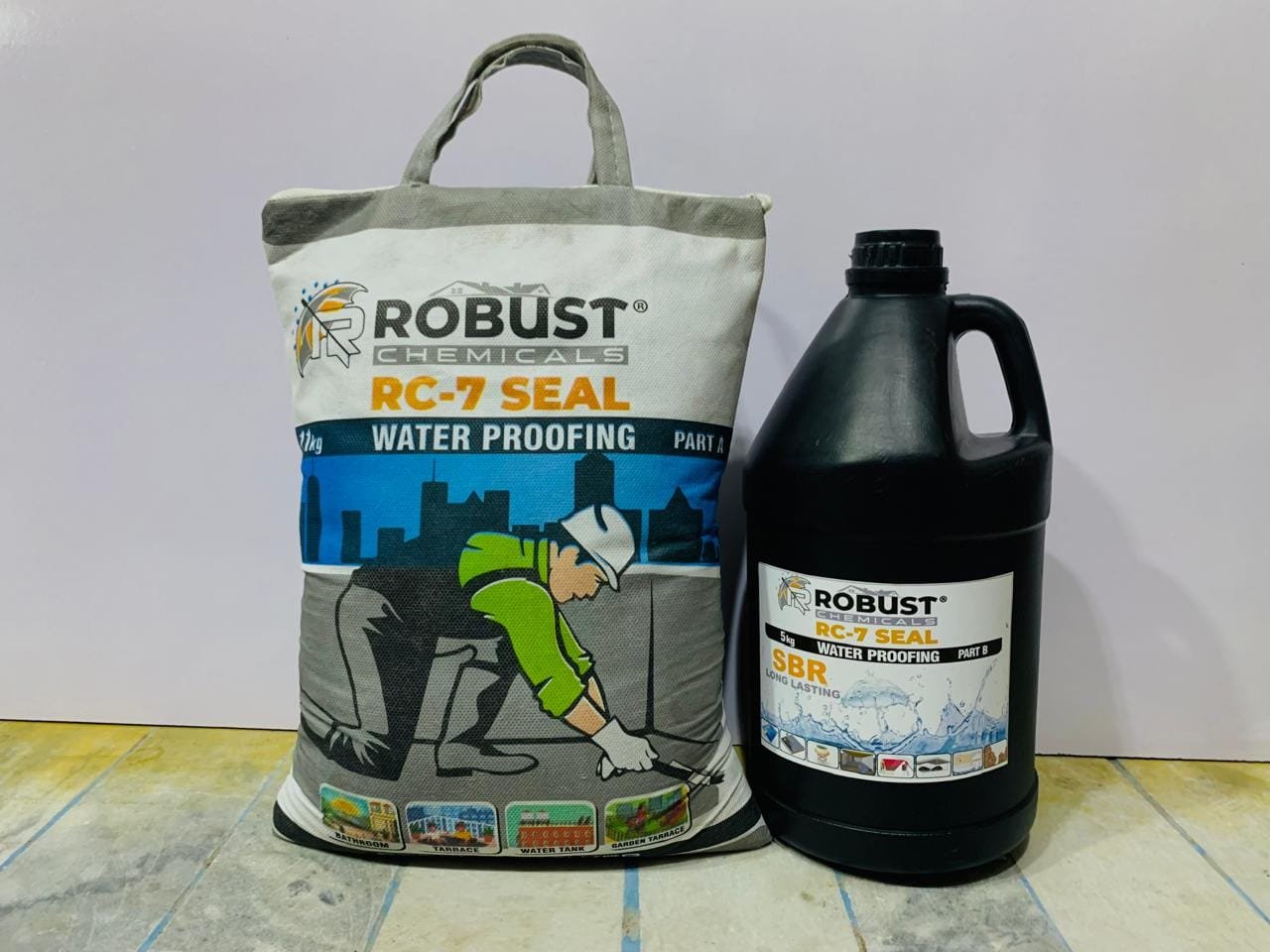
Robust Cementitious Coating – Advanced Waterproofing Technology for Modern Construction
Cementitious coating is one of the most widely used and reliable waterproofing methods in the construction industry. It is a two-component or single-component coating system made primarily from a blend of selected cement, polymer additives, and fine aggregates, designed to provide a durable, waterproof, and protective barrier over concrete and masonry surfaces.
What Is Cementitious Coating?
Cementitious coating is a cement-based waterproofing material that becomes a flexible or rigid coating after mixing with water or a liquid polymer. It is applied to both positive and negative sides of structures to resist water penetration, chemical attack, and carbonation. When cured, it forms a dense, seamless layer that adheres strongly to the substrate, protecting it from moisture ingress, seepage, and structural deterioration.
Composition of Cementitious Coating
A typical cementitious coating contains:
-
Portland Cement: Provides structural strength and durability.
-
Silica Sand / Fine Aggregates: Fills voids and enhances density.
-
Polymers / Latex Additives: Improve flexibility, adhesion, and water resistance.
-
Chemical Modifiers: Enhance bonding, setting time, and long-term performance.
-
Fibers (Optional): For crack bridging and additional reinforcement.
Types of Cementitious Coating
-
Rigid Cementitious Coating:
-
Suitable for internal wet areas like bathrooms, water tanks, and basements.
-
Typically single-component and mixed with water.
-
Less flexible but highly durable and economical.
-
-
Flexible Cementitious Coating:
-
Contains polymer modifiers or liquid latex.
-
Ideal for exterior walls, rooftops, balconies, and surfaces subject to movement or thermal expansion.
-
Offers superior adhesion and flexibility.
-
Applications of Cementitious Coating
Cementitious coatings are versatile and used across multiple sectors, including:
-
Basement waterproofing
-
Water tanks, sumps, and reservoirs
-
Balconies and terraces
-
Bathrooms, kitchens, and wet rooms
-
Retaining walls and foundation walls
-
Tunnels and culverts
-
Swimming pools
-
Potable water structures (non-toxic grade)
Advantages of Cementitious Coating
-
Easy to apply using brush, roller, or spray.
-
Excellent adhesion to concrete and masonry.
-
Seamless and joint-free waterproof layer.
-
Resistant to positive and negative water pressure.
-
Non-toxic and suitable for potable water contact.
-
High durability and resistance to chemical attack.
-
Cost-effective compared to other systems.
-
Can be overlaid with tiles, plaster, or paint.
Surface Preparation
Before applying a cementitious coating, proper surface preparation is critical:
-
Clean the Surface: Remove dust, dirt, oil, grease, loose particles, or previous coatings.
-
Repair Defects: Fill cracks, holes, and honeycombs with a repair mortar or polymer-modified material.
-
Dampen the Substrate: Surface should be moist but not wet before application to ensure good bonding.
Application Instructions
-
Mixing:
-
For two-component systems, mix the liquid polymer (Part B) with the powder (Part A) using a mechanical mixer until a smooth, lump-free consistency is achieved.
-
Do not add extra water unless specified by the manufacturer.
-
-
Application:
-
Apply the first coat using a brush or roller in one direction.
-
Allow it to dry (usually 4–6 hours) before applying the second coat perpendicular to the first.
-
For areas under hydrostatic pressure, a third coat may be recommended.
-
-
Curing:
-
Keep the coated surface moist for 2–3 days after application to prevent cracking.
-
Avoid direct sunlight or strong winds during curing.
-
-
Coverage:
-
Typically, 1.5–2 kg/m² for two coats, depending on surface conditions.
-
Precautions
-
Do not apply on surfaces with active water leakage (use a plugging compound first).
-
Avoid application during rain or freezing temperatures.
-
Ensure the substrate is sound and free from contamination.
-
Follow manufacturer’s mixing ratio strictly for consistent results.
Performance Characteristics
| Property | Description |
|---|---|
| Appearance | Grey or off-white slurry |
| Adhesion Strength | >1.0 MPa (Excellent bonding) |
| Flexibility | High (in polymer-modified systems) |
| Water Resistance | Up to 7 bar pressure |
| Chemical Resistance | Good against mild acids, alkalis, and chlorides |
| Toxicity | Non-toxic (suitable for drinking water tanks) |
Cementitious Coating in Modern Construction
In today’s construction practices, cementitious coatings have become a core component of waterproofing systems due to their cost-effectiveness and reliability. They are especially preferred for underground and wet area protection, forming an integral layer against structural degradation caused by moisture.
Many professional-grade coatings, such as those offered by Robust Construction Chemicals, combine advanced polymer technology with cementitious systems to deliver superior performance and long-lasting waterproofing. Their coatings are engineered to withstand Pakistan’s challenging climate—protecting buildings from seepage, cracks, and dampness.
Conclusion
Cementitious coating is a trusted, long-term waterproofing solution suitable for various structural and architectural applications. Its simple application, strong adhesion, and high durability make it ideal for protecting concrete from water damage and chemical exposure. When applied properly, it ensures leak-free, durable, and structurally sound buildings for years.
Cementitious Coating – Advanced Waterproofing Technology for Modern Construction
Cementitious coatings have become an integral part of waterproofing and protection systems in modern infrastructure. As buildings grow more complex and environmental challenges increase, architects and engineers require solutions that are both highly durable and cost-effective. Cementitious coatings meet these demands by providing long-lasting waterproofing, chemical resistance, and structural protection to concrete and masonry substrates.
In countries like Pakistan, where weather fluctuations—from extreme heat to heavy monsoon rains—cause significant stress on structures, cementitious coatings offer a dependable line of defense against moisture penetration, seepage, and corrosion.
Understanding the Mechanism of Cementitious Coating
Cementitious coatings form a crystalline or dense barrier on the concrete surface. When applied, the coating penetrates micro-pores and capillaries within the substrate, creating a tight matrix that resists water ingress while allowing internal moisture vapor to escape. This “breathable waterproofing” ensures that concrete remains dry and structurally strong without trapping internal dampness, which could otherwise lead to blistering or delamination.
Modern formulations by Robust Construction Chemicals include polymer modification and nano-additive technologies, enhancing adhesion, flexibility, and lifespan. These coatings chemically bond to concrete, creating an integral layer that becomes part of the substrate rather than just a surface film.
Detailed Features and Benefits
Below are in-depth features and performance benefits of advanced cementitious coatings:
1. Dual Protection (Waterproofing and Durability)
Cementitious coatings do not only prevent water ingress but also protect concrete from carbon dioxide, chlorides, and chemical attack, which cause corrosion of reinforcing steel. This dual protection greatly extends the service life of the structure.
2. Flexibility and Crack Bridging
Polymer-modified coatings exhibit excellent flexibility, capable of accommodating thermal expansion and minor structural movements without cracking. This property is particularly crucial for exposed roofs, terraces, and external walls where temperature fluctuations are high.
3. High Adhesion Strength
Thanks to polymer enhancement, cementitious coatings form a strong mechanical and chemical bond with concrete, masonry, and plastered surfaces, ensuring that they do not peel or delaminate even under pressure or vibration.
4. Non-Toxic and Safe
Cementitious coatings developed for potable water applications comply with international standards for drinking water safety. These coatings are free from harmful solvents or volatile organic compounds (VOCs), making them ideal for water tanks, reservoirs, and swimming pools.
5. UV and Weather Resistance
Although primarily used for below-grade waterproofing, flexible cementitious coatings also perform exceptionally well under UV radiation, heavy rain, and direct sunlight when properly protected or top-coated.
6. Compatibility with Other Finishes
Once cured, the surface can be easily plastered, tiled, or painted, allowing seamless integration into finishing works without affecting adhesion or performance.
7. Resistance to Hydrostatic Pressure
Cementitious coatings can withstand positive water pressure up to 7 bar or more, making them suitable for underground basements, tunnels, and retaining walls. When applied on the negative side, they still resist water ingress effectively.
Comprehensive Application Areas
Cementitious coatings are suitable for both residential and commercial projects as well as industrial and infrastructure developments. Their versatility makes them applicable in nearly every construction sector.
1. Residential Construction
-
Bathrooms, kitchens, and toilets
-
Roof slabs and balconies
-
Basements and underground car parking
-
Water tanks and sumps
2. Commercial Buildings
-
Shopping malls and office basements
-
Lift pits and foundations
-
External walls and podium decks
3. Industrial Structures
-
Water treatment plants
-
Cooling towers and effluent tanks
-
Silos and storage areas exposed to chemicals
4. Infrastructure Projects
-
Bridges and tunnels
-
Dams and canals
-
Sewage and drainage systems
-
Retaining walls and underpasses
Each of these areas faces distinct environmental and structural challenges, yet cementitious coatings—when properly applied—provide long-term, reliable protection without the need for frequent maintenance.
Step-by-Step Application Process
Proper application is the key to ensuring the coating performs effectively. Below is a detailed guide followed by professional waterproofing contractors, including those trained by Robust Construction Chemicals.
1. Surface Preparation
-
The concrete surface must be sound, clean, and free from dust, oil, and laitance.
-
Remove all loose particles using wire brushing, water jetting, or light sandblasting.
-
Repair cracks, voids, or honeycombs using polymer-modified repair mortar.
-
Wet the surface thoroughly before application, ensuring it remains damp but not waterlogged.
2. Mixing
-
For two-component coatings, pour the liquid polymer (Part B) into a clean container.
-
Slowly add the powder (Part A) while continuously mixing using a low-speed mechanical mixer.
-
Mix until a smooth, homogeneous, lump-free slurry is obtained.
-
Avoid overmixing or adding excess water, as this may weaken performance.
3. Application
-
Apply the first coat using a soft brush or roller in a uniform direction.
-
Allow the first coat to cure for 4–6 hours before applying the second coat perpendicular to the first.
-
For structures under hydrostatic pressure, apply a third coat for additional strength.
-
Ensure proper thickness (1–1.5 mm per coat) as per the project specification.
4. Curing
-
Curing is essential to prevent premature drying or cracking.
-
Mist cure for 48–72 hours or cover with moist hessian cloths.
-
Avoid exposure to strong sunlight or wind during early curing stages.
5. Protection Layer (Optional)
For exposed applications, a protective screed or topcoat may be added to shield the cementitious layer from physical damage and UV exposure.
Common Mistakes and How to Avoid Them
While cementitious coatings are easy to apply, certain errors can affect performance:
-
Applying on dirty or oily surfaces → Always clean and roughen substrate.
-
Incorrect mixing ratio → Follow manufacturer’s technical data sheet precisely.
-
Skipping surface dampening → Always pre-moisten to enhance bonding.
-
Insufficient curing → Maintain proper curing to avoid cracks or weak adhesion.
-
Applying during rain or extreme heat → Ensure moderate environmental conditions.
Professional contractors trained by Robust Construction Chemicals follow strict protocols and QA procedures to prevent these issues, ensuring maximum coating efficiency.
Technical Data (Typical Properties)
| Property | Standard Result |
|---|---|
| Appearance | Grey slurry |
| Mixing Ratio | 2.5:1 (Powder:Liquid) |
| Pot Life | 30–40 minutes |
| Adhesion to Concrete | >1.0 MPa |
| Flexural Strength | >6 N/mm² |
| Compressive Strength | >20 N/mm² |
| Water Permeability | Nil up to 7 bar |
| Toxicity | Non-toxic (Potable Water Safe) |
| Service Temperature | -10°C to +70°C |
Why Cementitious Coating Is Essential in Pakistan
Pakistan’s construction sector faces unique environmental stresses, including:
-
Intense Heat: Thermal expansion causes cracks that allow water ingress.
-
Monsoon Rains: Heavy rainfall increases risk of seepage and structural dampness.
-
Underground Moisture: In cities like Lahore, Karachi, and Islamabad, high groundwater levels threaten basements and foundations.
-
Pollution and Chemicals: Urban environments expose structures to acidic rain and contaminants.
Cementitious coatings by Robust Construction Chemicals are specially formulated to withstand these conditions. They maintain elasticity under heat, provide excellent bonding even in humid climates, and resist degradation caused by UV and pollution.
Comparison with Other Waterproofing Systems
| System | Key Features | Advantages | Limitations |
|---|---|---|---|
| Cementitious Coating | Cement-polymer based slurry | Cost-effective, breathable, easy to apply | Limited flexibility (unless polymer-modified) |
| Bituminous Membrane | Asphalt-based rolls | High resistance to hydrostatic pressure | Requires heat torch, not UV stable |
| PU (Polyurethane) Coating | Liquid-applied elastomeric membrane | Highly flexible, seamless | Higher cost, sensitive to moisture |
| Acrylic Coating | Water-based, UV resistant | Good for roofs and walls | Limited hydrostatic resistance |
| Epoxy Coating | Resin-based, chemical resistant | Excellent for industrial floors | Not breathable, costly |
Thus, cementitious coatings provide an excellent balance between performance, cost, and ease of use, especially for internal waterproofing and underground applications.
Environmental and Safety Considerations
Modern formulations are eco-friendly, with low VOC content and zero solvent emissions. This makes them safe for:
-
Indoor applications.
-
Water storage tanks.
-
Environmentally sensitive areas.
Cementitious coatings are also non-flammable, contributing to safer construction practices compared to solvent-based systems.
Maintenance and Longevity
When applied correctly, cementitious coatings last 10–15 years or more with minimal maintenance. However, periodic inspection is recommended:
-
Check for cracks, peeling, or surface damage.
-
Repair localized areas using the same coating system.
-
Avoid mechanical impact or abrasion on exposed coatings.
For longer life, applying a protective screed or tile finish above the coated layer further enhances durability.
Role of Robust Construction Chemicals
Robust Construction Chemicals is a leading manufacturer of advanced waterproofing and heatproofing solutions in Pakistan, offering a wide range of cementitious coatings formulated for both domestic and industrial applications. Each product is engineered to meet international quality standards, ensuring consistent performance, easy application, and long-term protection.
Robust’s cementitious waterproofing systems are:
-
Highly polymer-modified for flexibility and strength.
-
Tested under extreme weather conditions.
-
Supported by expert technical assistance and training programs.
The company also provides on-site application services, ensuring professional workmanship from surface preparation to final finishing, minimizing the risk of failure and maximizing the lifespan of your waterproofing investment.
Choosing the Right Cementitious Coating
Different areas require specific grades of coating:
| Area of Application | Recommended Type |
|---|---|
| Bathrooms & Kitchens | Flexible, two-component |
| Roofs & Balconies | Highly flexible polymer-modified |
| Basements & Foundations | Rigid or semi-flexible |
| Water Tanks & Pools | Non-toxic, food-grade |
| Retaining Walls | Rigid for positive side, flexible for negative side |
Selecting the correct product ensures efficiency, durability, and value for money. Robust experts provide free technical consultations to help clients select the right solution for every application.
Future of Cementitious Coatings
As construction standards evolve, cementitious coatings continue to advance with nano-polymer technology, fiber reinforcement, and crystal growth additives that enhance self-healing properties. The future of waterproofing lies in hybrid systems that combine cementitious and polymeric technologies, providing even greater performance, elasticity, and sustainability.
Robust Construction Chemicals is actively investing in R&D innovations to bring next-generation coatings to the Pakistani market—offering maximum protection at minimum cost.
Conclusion
Cementitious coating remains one of the most dependable and affordable waterproofing systems for modern construction. From basements and roofs to water tanks and tunnels, it offers superior adhesion, chemical resistance, and durability—ensuring structures remain dry, safe, and long-lasting.
For professionals seeking a trusted partner in waterproofing technology, Robust Construction Chemicals provides high-quality cementitious coatings tailored to the demanding climate and construction needs of Pakistan.
Cementitious Coating – Extended Insights and Technical Expertise
Cementitious coatings are more than just surface treatments — they are integral waterproofing barriers that enhance the structural integrity and service life of any building. In large-scale construction projects, they serve as the first line of defense against water damage, chemical corrosion, and environmental deterioration. With their simplicity, cost-efficiency, and adaptability, they have become the preferred waterproofing solution across Pakistan’s diverse construction landscape.
The Science Behind Cementitious Coating Performance
To understand why cementitious coatings perform so well, it’s essential to examine their chemical and physical behavior after application.
When mixed and applied to the substrate, the cementitious matrix undergoes hydration, forming calcium silicate hydrate (C-S-H) gel, which fills the micro-pores of concrete. Simultaneously, the polymer modifiers form a flexible film that bridges cracks and enhances adhesion. Together, these two mechanisms create a dense, semi-flexible membrane that adheres chemically to the substrate while resisting water ingress.
Moreover, nano-silica additives in advanced formulations refine the pore structure even further, increasing durability, resistance to carbonation, and surface hardness.
Cementitious Coating as a Preventive Solution
Many construction professionals in Pakistan still treat waterproofing as a reactive process—only applied after leaks appear. However, cementitious coating works best as a preventive measure, forming part of the initial construction plan. When applied at the correct stage—such as before plastering, tiling, or backfilling—it ensures complete and permanent waterproofing of the substrate.
Key preventive applications include:
-
Basement slabs before backfilling
-
Lift pits before mechanical installation
-
RCC roofs before screed placement
-
Internal tank walls before water filling
When integrated early, cementitious coatings eliminate the need for costly repairs later.
Cementitious Coating and Structural Health
One often overlooked benefit of cementitious coatings is their ability to protect steel reinforcement inside concrete. Water seepage carries chlorides and carbon dioxide, accelerating corrosion. Once steel begins rusting, it expands, cracking the surrounding concrete and weakening the structure. By blocking water and contaminants at the surface level, cementitious coatings delay or completely prevent corrosion, safeguarding structural integrity for decades.
This makes them essential for:
-
Marine and coastal structures
-
Bridges and flyovers
-
Underground parking and basements
-
Water treatment plants
Adaptability to Construction Materials
Another reason for the popularity of cementitious coatings is their excellent compatibility with various substrates:
-
Reinforced Concrete (RCC)
-
Plastered Surfaces
-
Masonry Blocks
-
Precast Panels
-
Cement Boards
Unlike bituminous or synthetic systems, they integrate naturally with the cement-based materials used throughout the structure, eliminating delamination or adhesion failure due to material incompatibility.
Quality Assurance During Application
Professional application ensures maximum performance. Robust Construction Chemicals emphasizes strict quality assurance on every project. Their technical teams follow internationally accepted procedures, including:
-
Surface Evaluation: Assess substrate condition and moisture content.
-
Primer Check: Use a bonding agent or primer if the surface is excessively porous.
-
Batch Mixing Control: Monitor mixing ratios and pot life to maintain consistency.
-
Thickness Verification: Measure each coat with a wet film gauge.
-
Final Testing: Conduct adhesion and pond tests before project handover.
These steps guarantee that the installed coating achieves its full waterproofing potential and lifespan.
Cementitious Coating for Potable Water Tanks
Potable water structures demand coatings that are non-toxic, non-leaching, and resistant to microbial growth. Robust’s food-grade cementitious coatings are certified safe for direct contact with drinking water. They resist algae formation and provide a smooth, easy-to-clean finish.
Applications include:
-
Domestic overhead and underground tanks
-
Municipal water reservoirs
-
Swimming pools and fountains
-
Desalination and purification plants
Because these coatings are free from solvents, they maintain water purity and prevent contamination.
Long-Term Maintenance and Inspection Practices
Though cementitious coatings are durable, periodic inspection ensures sustained performance. For long-term maintenance:
-
Inspect annually for cracks or surface damage.
-
Clean surfaces gently using soft brushes or low-pressure water to remove dirt or salts.
-
Repair localized failures using compatible polymer-modified mortar.
-
Avoid using acidic cleaners, as they may degrade the coating surface.
-
Recoat every 10–12 years in exposed or high-moisture conditions to ensure continuous protection.
Robust Construction Chemicals provides after-sale inspection and maintenance consultation, helping clients maintain performance for decades.
Economic Benefits of Cementitious Coatings
In construction budgeting, cementitious coatings offer a high return on investment (ROI) compared to other systems. Their low material cost, simple labor requirements, and long lifespan reduce the overall lifecycle cost of a project.
Here’s how:
-
Low initial cost: Requires only basic tools and skilled labor.
-
Minimal downtime: Quick application and fast curing minimize project delays.
-
Extended durability: Protects structural concrete from deterioration, reducing repair costs.
-
Reduced maintenance: Once cured, the coating needs minimal care.
For developers and contractors, this translates into significant cost savings and increased structural value.
Cementitious Coating for Heat and Moisture Management
In hot climates like Pakistan, surface temperature plays a vital role in waterproofing performance. Traditional bitumen coatings often soften under extreme heat, leading to cracks or peeling. Cementitious coatings, however, maintain thermal stability, resisting both heat and UV exposure.
When combined with heat-reflective top layers or PU foam insulation, they create a complete heatproofing and waterproofing system ideal for roofs, terraces, and sun-exposed surfaces.
This synergy ensures:
-
Lower indoor temperatures
-
Reduced air conditioning cost
-
Enhanced roof life
-
Protection from both water and thermal expansion
Robust’s hybrid systems combine cementitious base coats with PU heatproof membranes, providing dual protection in Pakistan’s harsh summer climate.
Case Studies: Success in Pakistan’s Construction Industry
1. Lahore Commercial Basement Project
A high-rise basement in Gulberg, Lahore, suffered from groundwater seepage due to high water tables. After applying Robust’s two-component flexible cementitious coating, leakage was fully eliminated. The structure remains leak-free after over five years of service.
2. Karachi Water Tank Rehabilitation
A municipal water tank required a non-toxic, waterproof coating resistant to saltwater exposure. Robust’s food-grade cementitious coating was applied internally and externally, providing long-term protection and ensuring compliance with drinking water standards.
3. Islamabad Villa Roof Protection
A luxury villa in Islamabad faced issues with roof dampness and heat. A combination of Robust cementitious coating and PU heatproof layer reduced internal temperature by 7°C and permanently stopped leakage during monsoon season.
These examples demonstrate the versatility and proven success of cementitious coatings in Pakistan’s demanding conditions.
Comparison of Local and Imported Systems
While imported waterproofing systems are available, locally manufactured cementitious coatings by Robust Construction Chemicals are specifically formulated for the climate, construction materials, and water quality of Pakistan.
Advantages of local manufacturing:
-
Faster supply and delivery
-
Technical support and on-site training
-
Cost-effective pricing
-
Tailored formulations for regional humidity and heat
This makes Robust’s coatings a smarter choice for both contractors and end-users seeking high performance without inflated costs.
Integration with Other Waterproofing Systems
Cementitious coatings often form part of hybrid waterproofing systems, combining multiple materials to achieve optimal performance.
Examples include:
-
Cementitious base + PU top coat (for roofs)
-
Cementitious layer + Bituminous membrane (for basements)
-
Cementitious internal layer + Epoxy finish (for industrial tanks)
Such integrated systems enhance flexibility, durability, and protection against both positive and negative pressure.
Key Technical Recommendations
To achieve professional-grade results, experts recommend:
-
Use only clean, potable water for mixing.
-
Maintain minimum ambient temperature of 10°C during application.
-
Ensure thorough curing—never rush drying by using heaters or fans.
-
Avoid contact with acids, oils, or chemicals during the first 7 days.
-
Always protect the coating before backfilling or heavy traffic exposure.
These best practices, when followed, guarantee that the coating performs to its full design potential.
Sustainability and Green Construction
Cementitious coatings contribute positively to green building standards such as LEED and IGBC because they:
-
Contain no harmful solvents.
-
Produce low emissions.
-
Improve energy efficiency by keeping interiors dry and cool.
-
Extend the lifecycle of structures, reducing material waste.
By choosing Robust eco-friendly coatings, builders align with sustainable development goals and environmental regulations increasingly adopted in Pakistan’s urban infrastructure policies.
Future Innovations and Industry Trends
The future of cementitious coating technology lies in:
-
Crystalline self-healing coatings that close cracks automatically upon water contact.
-
Fiber-reinforced systems offering greater tensile strength.
-
Hydrophobic nano-coatings for enhanced moisture resistance.
-
AI-based monitoring to assess coating thickness and wear digitally.
Robust Construction Chemicals is continuously exploring these innovations to bring next-generation waterproofing systems to Pakistan’s construction market.
Final Thoughts
Cementitious coatings are a proven, adaptable, and sustainable solution for waterproofing across residential, commercial, and industrial sectors. Their ability to protect concrete from water, chemical attack, and corrosion makes them indispensable in modern construction.
With the advanced formulations from Robust Construction Chemicals, builders can ensure leak-free, durable, and energy-efficient structures that withstand Pakistan’s harsh environmental challenges.
Whether it’s a new build or a repair project, a cementitious coating system from Robust offers the ideal combination of strength, flexibility, and economy, securing the future of every structure it protects.