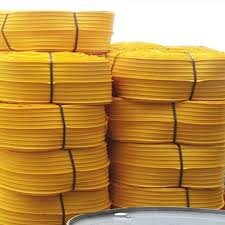
What is Robust PVC Water Stopper
-
The “Robust PVC Water Stopper” is a flexible PVC strip embedded in concrete joints (expansion joints, construction joints, movement joints) to prevent water seepage, leaks, or hydrostatic pressure infiltration. Robust Construction Chemical+2Robust Construction Chemical+2
-
It comes in various profiles — e.g. central‑bulb, dumbbell, ribbed, etc. — depending on the joint design and pressure requirements. Robust Construction Chemical+2longmansales.com+2
-
The PVC used is high‑grade, designed for elasticity, tensile strength, chemical resistance, and durability under pressure, moisture, environmental exposure — making it suitable for basements, water tanks, dams, swimming pools, tunnels, retaining walls, and other water‑retaining or subterranean concrete structures. Robust Construction Chemical+2Robust Construction Chemical+2
Why “Pure / Robust” PVC Water Stopper Matters
-
Because waterstopper is embedded inside concrete, the quality of PVC matters greatly: a good one maintains flexibility, resists chemical/alkali attack from concrete or water, and does not become brittle with time. Lower‑grade or recycled PVC may crack, lose seal, or fail under pressure. Robust Construction Chemical+1
-
Using high‑grade “Robust” PVC ensures long-term watertightness, even under hydrostatic pressure, structural movement, or environmental stress (e.g. soil chemical exposure). Robust Construction Chemical+2Robust Construction Chemical+2
-
It helps avoid future issues such as seepage, steel-rebar corrosion, dampness and structural deterioration — which can be very costly to repair once concrete is poured. Robust Construction Chemical+1
Common Applications
You will often use PVC water stopper in:
-
Water tanks (underground or overhead), reservoirs, canals, dams
-
Basements, underground parking, structural foundations — to block groundwater infiltration
-
Swimming pools, lift pits, sewage/wastewater treatment structures, retaining walls, tunnels, culverts
-
Bridges, flyovers, industrial structures, hydraulic and water‑holding infrastructure where concrete joints exist. Robust Construction Chemical+2longmansales.com+2
What to Check / Request When Buying (Especially “Pure / Robust” Quality)
When procuring PVC water stopper — especially if you’re installing on a construction site — check:
-
Material grade: genuine/Virgin PVC of high-quality (not recycled) for elasticity and durability.
-
Profile: choose correct type (bulb, ribbed, dumbbell) depending on joint type and expected loads.
-
Tensile strength / elongation / hardness / water absorption / chemical resistance specs — to ensure compliance with standards (often ASTM / BS / DIN depending on project). Robust Construction Chemical+2Robust Construction Chemical+2
-
Proper storage and handling — avoid bending, heat damage, or contamination before embedment. Robust Construction Chemical+1
-
On‑site welding/jointing capability (if making continuous waterstopter runs) and correct embedment during concrete pouring to avoid displacement or voids. Robust Construction Chemical+2Robust Construction Chemical+2
-
Technical & Material Specifications
From manufacturer’s data for Robust PVC Water Stopper: Robust Construction Chemical+1
Property / Parameter Typical / Minimum Value / Range Material High‑grade Polyvinyl Chloride (PVC) — plasticized/stabilized for concrete embedment Robust Construction Chemical Available profiles Central‑bulb, Dumbbell, Flat, Ribbed (and custom, on request) Robust Construction Chemical+1 Standard Widths 150 mm, 230 mm, 305 mm (custom widths possible) Robust Construction Chemical Tensile Strength ≥ 12 N/mm² (some datasheets show ≥ 13.5 MPa) Robust Construction Chemical+1 Elongation at Break ≥ 300% — ensures flexibility under structural movement Robust Construction Chemical+1 Hardness (Shore A) 65 ± 5 (per Robust data) Robust Construction Chemical Specific Gravity / Density ~ 1.3 – 1.4 g/cm³ Robust Construction Chemical+1 Water Absorption < 0.10% (very low — helps resist seepage) Robust Construction Chemical+1 Temperature Resistance / Service Range –35 °C to +70 °C (suitable for varying climates) Robust Construction Chemical+1 Chemical Resistance Good resistance to salts, alkalis, mild acids, and general groundwater/soil chemicals Robust Construction Chemical+1 Service Life (Expected) 25+ years (depending on site conditions) Robust Construction Chemical Standards / Compliance: According to manufacturer, Robust PVC Water Stopper is manufactured under quality control and meets international specifications. Robust Construction Chemical+1
Common relevant standards for PVC waterstops (globally) include ASTM (for tensile/elongation), and standards like BS 2571, DIN 7865, or local standards (e.g. IS:15058 in subcontinent contexts) for dimension and performance compliance. Robust Construction Chemical+2Longman Sales+2
Key Features & Benefits
-
Watertight barrier: When embedded correctly in concrete joints, creates a continuous, impermeable barrier — preventing seepage or leakage under water pressure. Robust Construction Chemical+1
-
Flexibility & Movement Accommodation: High elongation + flexible PVC mean the stopper can handle structural movement, thermal expansion/contraction, and vibrations without cracking. Robust Construction Chemical+1
-
Chemical & Environmental Resistance: Resistant to salts, alkalis, mild acids, groundwater chemicals — making it suitable for basements, sewage‑exposed structures, water tanks, reservoirs, dams, tunnels, etc. Robust Construction Chemical+1
-
Durability & Longevity: Low water absorption, stable under temperature extremes; expected service life measured in decades (25+ years). Robust Construction Chemical
-
Ease of On‑Site Installation: Extruded PVC profiles can be welded (heat‑fused) on site to create continuous runs; profiles available in various types to match joint design (expansion, construction, movement). Robust Construction Chemical+1
-
Versatility: Suitable for a wide range of concrete structures — water‑retaining (tanks, pools, reservoirs, dams), underground/basement structures, sewage/wastewater plants, tunnels, retaining walls, foundations, etc. Robust Construction Chemical+2Robust Construction Chemical+2
Installation & Best Practices (What to Ensure On‑site)
To ensure that PVC waterstoppers deliver optimal performance:
-
Correct placement in formwork: Waterstop must be positioned exactly at joint centerline before concrete pouring — misalignment can compromise seal. Imimg+1
-
Secure fixation: Use steel wires/clips/ties to reinforcement to hold the stopper in position to prevent displacement during concrete pouring/vibration. Robust Construction Chemical+1
-
Joint continuity: If waterstop runs are longer than standard roll length, butt‑splice ends on-site using proper heat‑welding equipment (not adhesives or overlapping) to create continuous watertight barrier. Imimg+1
-
Avoid damage / deformations: Do not bend sharply, fold, or subject to heavy loads before installation; store in cool, dry place away from direct sunlight or heat. Robust Construction Chemical+1
-
Proper concrete pouring and vibration: Make sure concrete is consolidated around the waterstop to avoid voids/air pockets which can create seepage paths. Robust Construction Chemical+1
-
Compatibility with environment & design water pressure: Choose appropriate profile (bulb, ribbed, dumbbell) based on joint type, expected movement, and hydrostatic pressure; for high water pressure use heavier profiles (ribbed/bulb). Robust Construction Chemical+1
Size / Profile Selection & Customization
-
Standard widths: 150 mm, 230 mm, 305 mm — but many manufacturers (including Robust) offer custom widths/profiles if project demands. Robust Construction Chemical+1
-
Profiles vary by application:
-
Central‑bulb / Dumbbell type — often used in expansion/movement or construction joints, provides accommodation of stresses and sealing under movement. Robust Construction Chemical+1
-
Flat / Ribbed type — suitable for walls or joints with less movement, or tight/confined spaces. decora.com.pk+1
-
-
Custom lengths and profile shapes available — helpful when joints are irregular or large, or for specialized civil structures (dams, tunnels, industrial tanks, etc.). Robust Construction Chemical+1
Common Pitfalls & What to Watch Out For
-
Overlapping waterstop strips without proper welding or fusion — leads to weak/ leak‑prone joints. Imimg+1
-
Misalignment in joint center or improper fixation → displacement during concreting → leak paths. Imimg+1
-
Poor concrete consolidation around the waterstop (voids or honeycombing) — reduces effectiveness of the water barrier. Robust Construction Chemical+1
-
Exposure to direct sunlight or high heat before embedding — can lead to deformation or reduced performance over time. Robust Construction Chemical+1
Suitable Applications (Where Robust PVC Water Stopper Excels)
Robust PVC Water Stopper works well for:
-
Basements and underground structures (to stop groundwater infiltration) Robust Construction Chemical+1
-
Water reservoirs, water tanks (underground/overhead), water storage structures Robust Construction Chemical+1
-
Swimming pools, dams, canals, irrigation structures, retaining walls — anywhere water‑retaining concrete joints exist Robust Construction Chemical+1
-
Sewage/wastewater treatment plants — due to chemical resistance and durability even in aggressive water/soil environment Robust Construction Chemical+1
-
Bridges, flyovers, tunnels, parking structures — where expansion/contraction requires a flexible, watertight joint solution Robust Construction Chemical+1
Quality Standards & Compliance (Important for Specification / Tender / Project Bidding)
-
According to manufacturer, Robust PVC Water Stopper conforms with international standards such as those of ASTM (e.g. tensile & elongation tests), BS (for waterstops), DIN, and local standards applicable in region. Robust Construction Chemical+1
-
For reference, general PVC waterstop industry‑wide spec tables often demand at least ~10 MPa tensile strength, ≥ 300% elongation, Shore‑A hardness ≥ 65, water absorption < 0.15%, and cold‑temperature flexibility (no brittleness down to –30 to –35 °C). PVC Water Stopper+2Imimg+2
-
For projects requiring formal compliance (e.g. government works, high-rise basements, dams) it’s advisable to demand compliance certificates and test reports for tensile strength, elongation, water absorption, dimension accuracy before acceptance.
My Recommendation (Given Your Business in Waterproofing & Heatproofing)
Since you already run a waterproofing/heatproofing chemicals company, using Robust PVC Water Stopper as part of a full waterproofing system makes sense — but only if you:
-
Source verified, virgin‑PVC, properly manufactured waterstopper (avoid cheap recycled‑PVC) with documented specs.
-
Ensure correct storage, handling, and site installation (fixing, welding, concrete compaction) — because even best material fails if installed poorly.
-
Combine waterstopper with surface waterproofing membranes/coatings (especially for below‑ground structures) for a full waterproofing envelope (joint + surface + concrete-level waterproofing).
-
For each project, choose appropriate profile, width & type depending on joint design, expected movement, water pressure — rather than using a “one-size-fits-all.”
-
In your company’s bids/tenders, you might include clauses such as:
-
“Only virgin/plasticized PVC waterstopper complying with ASTM D412, ASTM D792, ASTM D570, ASTM D2240, BS 2571 / DIN 7865 shall be accepted.”
-
“Supplier must provide material test certificate showing batch number, tensile and elongation test results, density, water absorption, chemical resistance test (if required).”
-
“Profiles and sizes shall match drawings; custom sizes to be supplied by supplier after approval.”
-
“All joints/splices to be hot‑welded on-site; no overlapped or glued joints permitted.”
-
“Waterstopper must be fixed/ tied securely to reinforcing bars or formwork; no displacement during concreting allowed.”
-
“After concreting, a water-tightness / leakage test shall be conducted before back-filling or finishing (for basements, tanks, water-retaining structures). Any leakage must be rectified before acceptance.”
-
“All installation, jointing, splicing, embedding shall follow manufacturer’s instructions under supervision of qualified engineer/site QC.”
Including such clauses protects quality, avoids leak issues, and ensures responsibility.
7. Performance, Behavior & Long-Term Considerations
Even a well‑selected and properly installed PVC waterstop must be evaluated over time — for structural movement, chemical exposure, aging, maintenance.
-
-
Here are considerations, expected performance, and potential risks/failures.
7.1 What PVC Waterstop Delivers If Done Right
-
Watertight Joint Barrier: When correctly embedded and continuous (with splices/welds done properly), waterstop provides an impermeable barrier — preventing seepage under hydrostatic pressure.
-
This is the fundamental role. Many manufacturers claim waterstops can resist high water pressure, making them suitable even under high head conditions (tanks, basement walls, retaining walls, dams).
-
Comprehensive Guide to PVC Waterstoppers
1. Introduction to PVC Waterstoppers
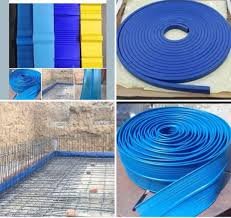
“Robust PVC Waterstop | Premium waterproofing solution for construction joints, basements, tunnels, dams, and water-retaining structures in Pakistan are integral components used to prevent water leakage through construction joints in concrete structures.
-
In reinforced concrete, joints are often necessary to accommodate structural design, but they are vulnerable to seepage.
-
Waterstoppers act as a barrier embedded within these joints, creating a continuous seal that prevents water ingress.
Waterstoppers are commonly used in water-retaining structures such as water tanks, reservoirs, swimming pools, dams, and canals, as well as water-excluding structures like basements, tunnels, retaining walls, and bridges.
-
They are especially critical in structures exposed to hydrostatic pressure, sewage, or chemical-laden water.
PVC, or polyvinyl chloride, is widely used for waterstoppers due to its excellent combination of flexibility, durability, chemical resistance, and ease of manufacturing.
-
PVC waterstoppers can be heat-welded on-site to create continuous lengths and adapt to complex geometries, ensuring effective sealing at joints and intersections.
2. Composition and Manufacturing
2.1 Raw Materials
High-quality PVC waterstoppers are manufactured from a carefully formulated PVC compound that typically includes:
-
Virgin PVC Resin: Provides the base polymer and ensures consistency in mechanical and chemical properties.
-
Plasticizers: Enhance flexibility and prevent brittleness, allowing the waterstop to accommodate structural movements.
-
Stabilizers: Heat and UV stabilizers protect the waterstop from degradation due to temperature fluctuations and environmental exposure.
-
Fillers or Additives: Adjust density, hardness, or mechanical properties, though excessive fillers can compromise quality.
-
Pigments: Primarily used for identification and quality control.
2.2 Manufacturing Process
PVC waterstoppers are typically manufactured using extrusion.
-
-
The PVC compound is melted under controlled temperature and pressure, extruded into the desired profile, and then cooled and cured.
-
Proper extrusion ensures uniform cross-sections and consistent material properties.
Using virgin PVC and high-quality plasticizers and stabilizers is crucial to ensuring durability, flexibility, chemical resistance, and long-term performance.
-
Poor-quality or recycled materials can result in brittleness, cracking, or premature failure.
3. Mechanical and Physical Properties
When selecting PVC waterstoppers, the following properties are critical:
Property Typical Specification Significance Material Virgin plasticized PVC Ensures long-term durability and chemical resistance Tensile Strength ≥ 12–13 MPa Ability to withstand mechanical stresses Elongation at Break ≥ 300% Allows accommodation of structural movement Hardness (Shore A) 65–75 Balances flexibility and rigidity Density 1.30–1.40 g/cm³ Ensures uniform quality and material integrity Water Absorption < 0.1% Prevents swelling and deformation Service Temperature –35°C to +70°C Withstands environmental temperature variations Chemical Resistance Resistant to salts, alkalis, mild acids, sewage Ensures longevity in aggressive water/soil conditions Hydrostatic Pressure Resistance Designed for specific water head requirements Prevents seepage under pressure Service Life 25+ years Long-term reliability when installed correctly Weldability Heat-weldable for continuous runs Ensures seamless sealing across joints 3.1 Standards and Compliance
High-quality PVC waterstoppers conform to recognized standards such as:
-
ASTM D412 (tensile strength and elongation)
-
ASTM D792 (density)
-
ASTM D570 (water absorption)
-
ASTM D2240 (Shore A hardness)
-
BS 2571 and DIN 7865 for waterstoppers
Compliance with these standards ensures consistent material properties, durability, and performance under stress, hydrostatic pressure, and chemical exposure.
4. Types and Profiles
PVC waterstoppers are available in various profiles to accommodate different joint types and structural requirements.
-
-
The most common profiles include:
4.1 Central Bulb Waterstop
Features a hollow or solid bulb at the center with flat wings extending to each side.
-
Suitable for expansion joints where significant movement is expected, the bulb accommodates deformation while maintaining a watertight seal.
4.2 Dumbbell Waterstop
Symmetrical profile with two bulbs connected by a narrow neck. Ideal for construction joints in walls and slabs with moderate movement, offering strong mechanical interlock and resistance to hydrostatic pressure.
4.3 Ribbed or Finned Waterstop
Includes ribs or fins along the surface to enhance mechanical bonding with concrete. Suitable for retaining walls, basements, and high-pressure applications.
4.4 Flat Waterstop
A simple flat strip, sometimes ribbed, used where minimal structural movement occurs. It provides economical sealing for static joints.
4.5 Kicker / External Waterstop
Designed for external or retrofit applications where embedding in concrete is challenging. Often used at slab-to-wall junctions or for repairs.
4.6 Sizes
PVC waterstoppers are typically available in widths from 80 mm to 305 mm, with profile thickness varying according to the application.
-
Pre-fabricated junction pieces for corners, T-joints, and cross joints facilitate installation in complex geometries.
5. Installation Best Practices
Proper installation is critical to the performance of PVC waterstoppers. The following steps are recommended:
5.1 Pre-Installation Preparations
-
Inspect waterstop for damage, uniformity, and correct profile.
-
Store in a dry, shaded area to avoid deformation from heat or sunlight.
-
Mark joint locations accurately according to structural drawings.
-
Prepare fixing materials, such as metal clips or binding wires, to secure the waterstop to reinforcement.
5.2 Placement and Fixation
-
Position waterstop at the joint centerline before concrete placement.
-
Fix securely to reinforcement to prevent movement during pouring.
-
Ensure proper clearance for concrete compaction to avoid voids around the waterstop.
5.3 Splicing and Welding
-
Butt-splice ends using heat welding to create a continuous seal.
-
Use pre-fabricated junction pieces for corners and intersections when possible.
-
Ensure welds are smooth, aligned, and free of gaps.
5.4 Concrete Pouring and Compaction
-
Pour concrete on both sides of the waterstop simultaneously when possible.
-
Use vibration to compact concrete fully around the waterstop to prevent honeycombing.
-
Inspect alignment and position during pouring if accessible.
5.5 Quality Assurance
-
Conduct visual inspections of welds and alignment.
-
Perform water-tightness or hydrostatic tests for critical water-retaining structures.
-
Maintain records of batch numbers, material certificates, installation location, and tests.
6. Integration with Waterproofing Systems
PVC waterstoppers are one component of a comprehensive waterproofing system. They can be integrated with:
-
Concrete Admixtures: Reduce permeability of the concrete matrix.
-
Surface Membranes or Coatings: Cementitious, bituminous, or polyurethane coatings enhance protection.
-
Sealants: Polyurethane or epoxy sealants at penetrations and non-embedded joints.
Integration ensures complete protection against water ingress and structural deterioration.
7. Performance and Longevity
When correctly specified and installed, PVC waterstoppers provide:
-
Watertight Joint Barrier: Prevents seepage under hydrostatic pressure.
-
Flexibility: Accommodates structural movement without losing sealing capability.
-
Chemical Resistance: Resists salts, alkalis, sewage, and mild acids.
-
Durability: Long service life exceeding 25 years with minimal maintenance.
Common failure modes include improper installation, poor welding, inadequate concrete compaction, use of low-quality PVC, and damage during handling.
-
-
These failures can lead to seepage or leaks at joints, emphasizing the importance of quality control and proper installation.
8. Specification for Procurement
When procuring PVC waterstoppers:
-
Ensure material certificates confirming virgin PVC and proper formulation.
-
Verify compliance with ASTM, BS, or DIN standards.
-
Specify mechanical properties: tensile strength ≥13 MPa, elongation ≥300%, Shore A hardness 65–75, water absorption <0.1%.
-
Define profiles, widths, and pre-fabricated junctions as per structural requirements.
-
Include installation procedures, welding methods, and quality assurance requirements in contracts.
-
Conduct post-installation testing for water-tightness and hydrostatic performance.
9. Limitations and Considerations
-
Installation-dependent performance; poor workmanship compromises effectiveness.
-
Limited access or congested reinforcement may challenge installation.
-
Not suitable for extremely aggressive chemical environments without protective coatings.
-
Potential long-term creep or stress relaxation under constant hydrostatic pressure.
-
Requires careful attention to welded joints to prevent leaks.
Alternative solutions for extreme conditions include hydrophilic (swelling) waterstoppers, rubber-based waterstoppers, or metal waterstoppers
-
-
. Combining PVC waterstoppers with surface coatings, integral admixtures, and sealants creates a multi-layered waterproofing system.
10. Conclusion
PVC waterstoppers are essential for the long-term integrity of concrete structures subjected to water pressure.
-
High-quality PVC, proper selection of profile and size, careful installation, and integration with broader waterproofing systems ensure reliable performance.
Products like Robust PVC Waterstoppers, with multiple profiles, proven material properties, and heat-weldable design, offer versatility for a wide range of construction projects.
-
Correct specification, installation, and quality assurance are paramount to achieving durable, leak-free structures.
-
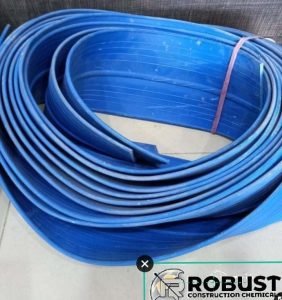
“Robust PVC Waterstop | Premium waterproofing solution for construction joints, basements, tunnels, dams, and water-retaining structures in Pakistan
-
-