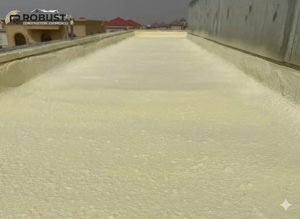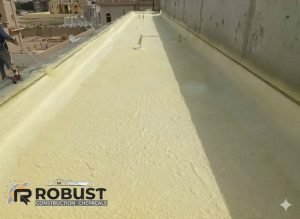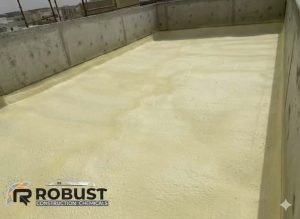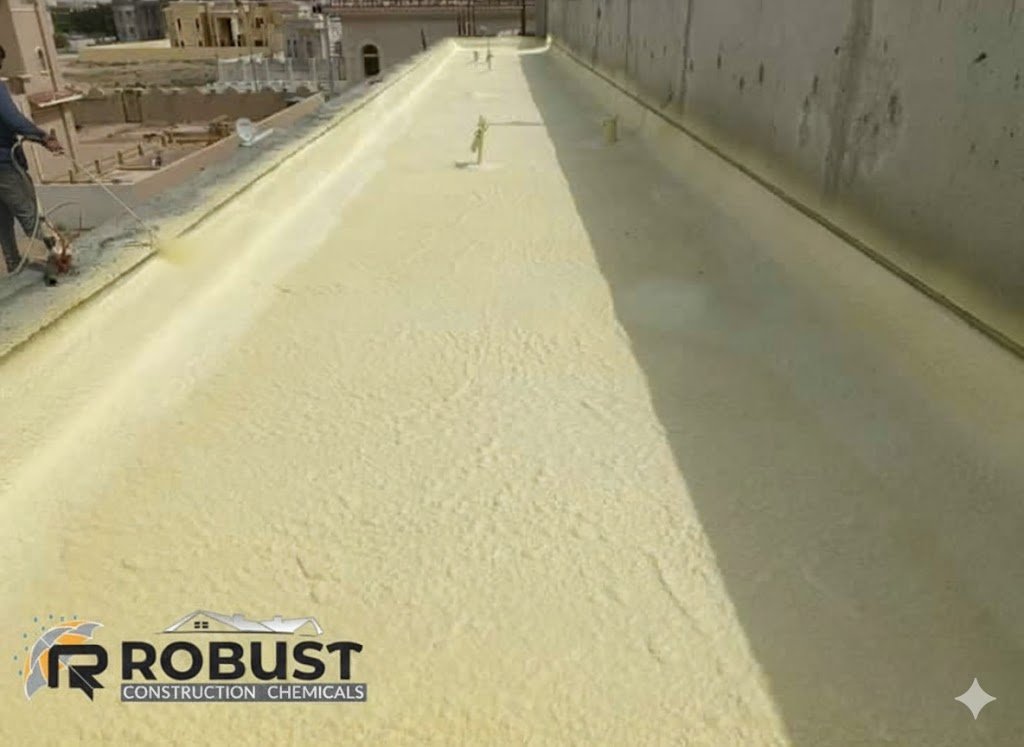
Closed-Cell PU Spray Foam | Superior Roof & Wall Insulation Coating
Closed-cell PU spray foam is a superior roof and wall insulation coating engineered to deliver exceptional thermal insulation, waterproofing performance, air sealing, and long-term structural protection for residential, commercial, and industrial buildings where energy efficiency, moisture control, and durability are critical.
Closed-cell polyurethane spray foam forms a dense, rigid, and seamless insulation layer that expands upon application, filling cracks, gaps, joints, and surface irregularities to create a continuous thermal and moisture barrier without joints or weak points.
This high-performance PU spray foam insulation system significantly reduces heat transfer, minimizes air leakage, and prevents water penetration.
making it one of the most effective insulation and waterproofing solutions available for roofs, walls, ceilings, metal sheets, concrete surfaces, warehouses, factories, cold storage facilities, and industrial sheds.
Closed-cell PU spray foam has a high R-value per inch, meaning it delivers maximum insulation performance with minimal thickness, which is especially beneficial for space-constrained areas and lightweight structures.
The closed-cell structure of the foam prevents water absorption, resists vapor transmission, and provides excellent moisture control, protecting buildings from dampness, condensation, mold growth, and long-term structural damage.
Closed-cell PU spray foam insulation also adds significant compressive strength and rigidity to the surface, enhancing the structural integrity of roofs and walls while protecting substrates from thermal shock, weathering, and environmental stress.
This advanced insulation coating adheres strongly to concrete, metal, steel, wood, masonry, and existing roofing systems, creating a permanent bond that does not sag, settle, shrink, or degrade over time.
Closed-cell PU spray foam is highly resistant to temperature extremes, UV exposure when protected with a suitable topcoat, chemical fumes, and atmospheric pollutants, making it ideal for harsh climates and demanding industrial environments.
One of the major advantages of closed-cell PU spray foam is its ability to provide both thermal insulation and waterproofing in a single application, eliminating the need for multiple layers or separate systems and reducing overall construction and maintenance costs.
The seamless nature of PU spray foam insulation eliminates thermal bridges and air infiltration points, ensuring consistent indoor temperatures, improved comfort, and reduced load on HVAC systems.
which leads to substantial energy savings and lower electricity bills over the life of the building. Closed-cell PU spray foam insulation is widely used in flat roofs, sloped roofs, metal roofs, RCC roofs, sandwich panels, wall cavities, basements, cold rooms, and industrial enclosures where high insulation efficiency and moisture resistance are essential.
The fast application and rapid curing time of PU spray foam allow projects to be completed quickly with minimal disruption, making it a preferred solution for retrofit projects and operational facilities.
Closed-cell PU spray foam insulation also improves indoor air quality by sealing out dust, pollutants, allergens, and external contaminants, creating a healthier and more controlled indoor environment.
Compared to traditional insulation materials such as thermocol sheets, mineral wool, fiberglass, or brickbat coba, closed-cell PU spray foam offers superior performance, longer service life, and better resistance to moisture and air leakage.
The durability of closed-cell PU spray foam ensures consistent insulation performance for decades without deterioration, settling, or loss of thermal efficiency, making it a long-term investment in building performance and sustainability.
Closed-cell PU spray foam insulation is also an environmentally responsible choice, as reduced energy consumption leads to lower carbon emissions and improved overall building efficiency.
In industrial and commercial buildings, closed-cell PU spray foam helps maintain stable internal temperatures required for sensitive processes, storage of temperature-sensitive goods, and protection of equipment from condensation and corrosion.
For residential buildings, PU spray foam insulation enhances comfort by keeping interiors cooler in summer and warmer in winter while reducing noise transmission and external disturbances.
Closed-cell PU spray foam is compatible with protective coatings and waterproof membranes, allowing it to be finished with UV-resistant, reflective, or elastomeric topcoats to enhance weather resistance and extend service life.
Proper surface preparation and professional application ensure optimal foam density, adhesion, and thickness, which are critical for achieving maximum insulation and waterproofing performance.
Engineers, architects, contractors, and energy consultants prefer closed-cell PU spray foam because it meets modern building performance standards, delivers predictable results, and offers unmatched versatility across a wide range of applications.
Closed-cell PU spray foam insulation continues to be the preferred solution for energy-efficient buildings, industrial insulation, and high-performance roofing systems due to its ability to combine insulation, waterproofing, air sealing, and structural reinforcement into one powerful system.
By choosing closed-cell PU spray foam, building owners invest in a future-proof insulation solution that enhances comfort, reduces energy costs, protects structures from moisture damage, and delivers reliable long-term performance in all climate conditions.
Closed-Cell PU Spray Foam | Superior Roof & Wall Insulation Coating
Closed-cell PU spray foam is a superior roof and wall insulation coating engineered to deliver exceptional thermal insulation, waterproofing performance, air sealing, and long-term structural protection for residential, commercial, and industrial buildings where energy efficiency, moisture control, and durability are critical.
Closed-cell polyurethane spray foam forms a dense, rigid, and seamless insulation layer that expands upon application, filling cracks, gaps, joints, and surface irregularities to create a continuous thermal and moisture barrier without joints or weak points.
This high-performance PU spray foam insulation system significantly reduces heat transfer, minimizes air leakage, and prevents water penetration.
making it one of the most effective insulation and waterproofing solutions available for roofs, walls, ceilings, metal sheets, concrete surfaces, warehouses, factories, cold storage facilities, and industrial sheds.
Closed-cell PU spray foam has a high R-value per inch, meaning it delivers maximum insulation performance with minimal thickness, which is especially beneficial for space-constrained areas and lightweight structures.
The closed-cell structure of the foam prevents water absorption, resists vapor transmission, and provides excellent moisture control, protecting buildings from dampness, condensation, mold growth, and long-term structural damage.
Closed-cell PU spray foam insulation also adds significant compressive strength and rigidity to the surface, enhancing the structural integrity of roofs and walls while protecting substrates from thermal shock, weathering, and environmental stress.
This advanced insulation coating adheres strongly to concrete, metal, steel, wood, masonry, and existing roofing systems, creating a permanent bond that does not sag, settle, shrink, or degrade over time.
Closed-cell PU spray foam is highly resistant to temperature extremes, UV exposure when protected with a suitable topcoat, chemical fumes, and atmospheric pollutants, making it ideal for harsh climates and demanding industrial environments.
One of the major advantages of closed-cell PU spray foam is its ability to provide both thermal insulation and waterproofing in a single application, eliminating the need for multiple layers or separate systems and reducing overall construction and maintenance costs.
The seamless nature of PU spray foam insulation eliminates thermal bridges and air infiltration points, ensuring consistent indoor temperatures, improved comfort, and reduced load on HVAC systems.
which leads to substantial energy savings and lower electricity bills over the life of the building. Closed-cell PU spray foam insulation is widely used in flat roofs, sloped roofs, metal roofs, RCC roofs, sandwich panels, wall cavities, basements, cold rooms, and industrial enclosures where high insulation efficiency and moisture resistance are essential.
The fast application and rapid curing time of PU spray foam allow projects to be completed quickly with minimal disruption, making it a preferred solution for retrofit projects and operational facilities.
Closed-cell PU spray foam insulation also improves indoor air quality by sealing out dust, pollutants, allergens, and external contaminants, creating a healthier and more controlled indoor environment.
Compared to traditional insulation materials such as thermocol sheets, mineral wool, fiberglass, or brickbat coba, closed-cell PU spray foam offers superior performance, longer service life, and better resistance to moisture and air leakage.
The durability of closed-cell PU spray foam ensures consistent insulation performance for decades without deterioration, settling, or loss of thermal efficiency, making it a long-term investment in building performance and sustainability.
Closed-cell PU spray foam insulation is also an environmentally responsible choice, as reduced energy consumption leads to lower carbon emissions and improved overall building efficiency.
In industrial and commercial buildings, closed-cell PU spray foam helps maintain stable internal temperatures required for sensitive processes, storage of temperature-sensitive goods, and protection of equipment from condensation and corrosion.
For residential buildings, PU spray foam insulation enhances comfort by keeping interiors cooler in summer and warmer in winter while reducing noise transmission and external disturbances.
Closed-cell PU spray foam is compatible with protective coatings and waterproof membranes, allowing it to be finished with UV-resistant, reflective, or elastomeric topcoats to enhance weather resistance and extend service life.
Proper surface preparation and professional application ensure optimal foam density, adhesion, and thickness, which are critical for achieving maximum insulation and waterproofing performance.
Engineers, architects, contractors, and energy consultants prefer closed-cell PU spray foam because it meets modern building performance standards, delivers predictable results, and offers unmatched versatility across a wide range of applications.
Closed-cell PU spray foam insulation continues to be the preferred solution for energy-efficient buildings, industrial insulation, and high-performance roofing systems due to its ability to combine insulation, waterproofing, air sealing, and structural reinforcement into one powerful system.
By choosing closed-cell PU spray foam, building owners invest in a future-proof insulation solution that enhances comfort, reduces energy costs, protects structures from moisture damage, and delivers reliable long-term performance in all climate conditions.
Closed-Cell PU Spray Foam | Superior Roof & Wall Insulation Coating
Closed-cell PU spray foam is a superior roof and wall insulation coating engineered to deliver exceptional thermal insulation, waterproofing performance, air sealing, and long-term structural protection for residential, commercial, and industrial buildings where energy efficiency, moisture control, and durability are critical.
Closed-cell polyurethane spray foam forms a dense, rigid, and seamless insulation layer that expands upon application, filling cracks, gaps, joints, and surface irregularities to create a continuous thermal and moisture barrier without joints or weak points.
This high-performance PU spray foam insulation system significantly reduces heat transfer, minimizes air leakage, and prevents water penetration.
making it one of the most effective insulation and waterproofing solutions available for roofs, walls, ceilings, metal sheets, concrete surfaces, warehouses, factories, cold storage facilities, and industrial sheds.
Closed-cell PU spray foam has a high R-value per inch, meaning it delivers maximum insulation performance with minimal thickness, which is especially beneficial for space-constrained areas and lightweight structures.
The closed-cell structure of the foam prevents water absorption, resists vapor transmission, and provides excellent moisture control, protecting buildings from dampness, condensation, mold growth, and long-term structural damage.
Closed-cell PU spray foam insulation also adds significant compressive strength and rigidity to the surface, enhancing the structural integrity of roofs and walls while protecting substrates from thermal shock, weathering, and environmental stress.
This advanced insulation coating adheres strongly to concrete, metal, steel, wood, masonry, and existing roofing systems, creating a permanent bond that does not sag, settle, shrink, or degrade over time.
Closed-cell PU spray foam is highly resistant to temperature extremes, UV exposure when protected with a suitable topcoat, chemical fumes, and atmospheric pollutants, making it ideal for harsh climates and demanding industrial environments.
One of the major advantages of closed-cell PU spray foam is its ability to provide both thermal insulation and waterproofing in a single application, eliminating the need for multiple layers or separate systems and reducing overall construction and maintenance costs.
The seamless nature of PU spray foam insulation eliminates thermal bridges and air infiltration points, ensuring consistent indoor temperatures, improved comfort, and reduced load on HVAC systems.
which leads to substantial energy savings and lower electricity bills over the life of the building. Closed-cell PU spray foam insulation is widely used in flat roofs, sloped roofs, metal roofs, RCC roofs, sandwich panels, wall cavities, basements, cold rooms, and industrial enclosures where high insulation efficiency and moisture resistance are essential.
The fast application and rapid curing time of PU spray foam allow projects to be completed quickly with minimal disruption, making it a preferred solution for retrofit projects and operational facilities.
Closed-cell PU spray foam insulation also improves indoor air quality by sealing out dust, pollutants, allergens, and external contaminants, creating a healthier and more controlled indoor environment.
Compared to traditional insulation materials such as thermocol sheets, mineral wool, fiberglass, or brickbat coba, closed-cell PU spray foam offers superior performance, longer service life, and better resistance to moisture and air leakage.
The durability of closed-cell PU spray foam ensures consistent insulation performance for decades without deterioration, settling, or loss of thermal efficiency, making it a long-term investment in building performance and sustainability.
Closed-cell PU spray foam insulation is also an environmentally responsible choice, as reduced energy consumption leads to lower carbon emissions and improved overall building efficiency.
In industrial and commercial buildings, closed-cell PU spray foam helps maintain stable internal temperatures required for sensitive processes, storage of temperature-sensitive goods, and protection of equipment from condensation and corrosion.
For residential buildings, PU spray foam insulation enhances comfort by keeping interiors cooler in summer and warmer in winter while reducing noise transmission and external disturbances.
Closed-cell PU spray foam is compatible with protective coatings and waterproof membranes, allowing it to be finished with UV-resistant, reflective, or elastomeric topcoats to enhance weather resistance and extend service life.
Proper surface preparation and professional application ensure optimal foam density, adhesion, and thickness, which are critical for achieving maximum insulation and waterproofing performance.
Engineers, architects, contractors, and energy consultants prefer closed-cell PU spray foam because it meets modern building performance standards, delivers predictable results, and offers unmatched versatility across a wide range of applications.
Closed-cell PU spray foam insulation continues to be the preferred solution for energy-efficient buildings, industrial insulation, and high-performance roofing systems due to its ability to combine insulation, waterproofing, air sealing, and structural reinforcement into one powerful system.
By choosing closed-cell PU spray foam, building owners invest in a future-proof insulation solution that enhances comfort, reduces energy costs, protects structures from moisture damage, and delivers reliable long-term performance in all climate conditions.
Closed-Cell PU Spray Foam | Superior Roof & Wall Insulation Coating
Closed-cell PU spray foam is a superior roof and wall insulation coating engineered to deliver exceptional thermal insulation, waterproofing performance, air sealing, and long-term structural protection for residential, commercial, and industrial buildings where energy efficiency, moisture control, and durability are critical.
Closed-cell polyurethane spray foam forms a dense, rigid, and seamless insulation layer that expands upon application, filling cracks, gaps, joints, and surface irregularities to create a continuous thermal and moisture barrier without joints or weak points.
This high-performance PU spray foam insulation system significantly reduces heat transfer, minimizes air leakage, and prevents water penetration.
making it one of the most effective insulation and waterproofing solutions available for roofs, walls, ceilings, metal sheets, concrete surfaces, warehouses, factories, cold storage facilities, and industrial sheds.
Closed-cell PU spray foam has a high R-value per inch, meaning it delivers maximum insulation performance with minimal thickness, which is especially beneficial for space-constrained areas and lightweight structures.
The closed-cell structure of the foam prevents water absorption, resists vapor transmission, and provides excellent moisture control, protecting buildings from dampness, condensation, mold growth, and long-term structural damage.
Closed-cell PU spray foam insulation also adds significant compressive strength and rigidity to the surface, enhancing the structural integrity of roofs and walls while protecting substrates from thermal shock, weathering, and environmental stress.
This advanced insulation coating adheres strongly to concrete, metal, steel, wood, masonry, and existing roofing systems, creating a permanent bond that does not sag, settle, shrink, or degrade over time.
Closed-cell PU spray foam is highly resistant to temperature extremes, UV exposure when protected with a suitable topcoat, chemical fumes, and atmospheric pollutants, making it ideal for harsh climates and demanding industrial environments.
One of the major advantages of closed-cell PU spray foam is its ability to provide both thermal insulation and waterproofing in a single application, eliminating the need for multiple layers or separate systems and reducing overall construction and maintenance costs.
The seamless nature of PU spray foam insulation eliminates thermal bridges and air infiltration points, ensuring consistent indoor temperatures, improved comfort, and reduced load on HVAC systems.
which leads to substantial energy savings and lower electricity bills over the life of the building. Closed-cell PU spray foam insulation is widely used in flat roofs, sloped roofs, metal roofs, RCC roofs, sandwich panels, wall cavities, basements, cold rooms, and industrial enclosures where high insulation efficiency and moisture resistance are essential.
The fast application and rapid curing time of PU spray foam allow projects to be completed quickly with minimal disruption, making it a preferred solution for retrofit projects and operational facilities.
Closed-cell PU spray foam insulation also improves indoor air quality by sealing out dust, pollutants, allergens, and external contaminants, creating a healthier and more controlled indoor environment.
Compared to traditional insulation materials such as thermocol sheets, mineral wool, fiberglass, or brickbat coba, closed-cell PU spray foam offers superior performance, longer service life, and better resistance to moisture and air leakage.
The durability of closed-cell PU spray foam ensures consistent insulation performance for decades without deterioration, settling, or loss of thermal efficiency, making it a long-term investment in building performance and sustainability.
Closed-cell PU spray foam insulation is also an environmentally responsible choice, as reduced energy consumption leads to lower carbon emissions and improved overall building efficiency.
In industrial and commercial buildings, closed-cell PU spray foam helps maintain stable internal temperatures required for sensitive processes, storage of temperature-sensitive goods, and protection of equipment from condensation and corrosion.
For residential buildings, PU spray foam insulation enhances comfort by keeping interiors cooler in summer and warmer in winter while reducing noise transmission and external disturbances.
Closed-cell PU spray foam is compatible with protective coatings and waterproof membranes, allowing it to be finished with UV-resistant, reflective, or elastomeric topcoats to enhance weather resistance and extend service life.
Proper surface preparation and professional application ensure optimal foam density, adhesion, and thickness, which are critical for achieving maximum insulation and waterproofing performance.
Engineers, architects, contractors, and energy consultants prefer closed-cell PU spray foam because it meets modern building performance standards, delivers predictable results, and offers unmatched versatility across a wide range of applications.
Closed-cell PU spray foam insulation continues to be the preferred solution for energy-efficient buildings, industrial insulation, and high-performance roofing systems due to its ability to combine insulation, waterproofing, air sealing, and structural reinforcement into one powerful system.
By choosing closed-cell PU spray foam, building owners invest in a future-proof insulation solution that enhances comfort, reduces energy costs, protects structures from moisture damage, and delivers reliable long-term performance in all climate conditions.
H2: Closed-Cell PU Spray Foam Insulation System
H3: What Is Closed-Cell PU Spray Foam
H4: Composition of Polyurethane Closed-Cell Foam
H4: Difference Between Open-Cell and Closed-Cell Foam
H3: Why Closed-Cell PU Spray Foam Is Superior
H4: High-Density Structure and Closed-Cell Technology
H4: Seamless Expansion and Crack Filling Ability
H2: Key Benefits of Closed-Cell PU Spray Foam
H3: Superior Thermal Insulation Performance
H4: High R-Value Per Inch
H4: Reduction of Heat Transfer Through Roofs and Walls
H3: Excellent Waterproofing and Moisture Resistance
H4: Zero Water Absorption Properties
H4: Protection Against Dampness and Condensation
H3: Strong Adhesion and Structural Strength
H4: Bonding with Concrete, Metal, and Steel
H4: Added Rigidity and Surface Reinforcement
H2: Applications of Closed-Cell PU Spray Foam
H3: Roof Insulation Applications
H4: RCC Roofs and Flat Roof Systems
H4: Metal Roofs and Industrial Shed Roofing
H3: Wall Insulation Applications
H4: External Wall Insulation Systems
H4: Internal Wall and Cavity Insulation
H3: Industrial and Commercial Uses
H4: Warehouses, Factories, and Cold Storage
H4: Power Plants, Data Centers, and Process Units
H2: Energy Efficiency and Cost Savings
H3: Reduction in Electricity and Cooling Costs
H4: Lower HVAC Load and Energy Consumption
H4: Long-Term Operational Cost Savings
H3: Role in Green and Sustainable Buildings
H4: Contribution to Energy-Efficient Construction
H4: Reduced Carbon Footprint
H2: Installation Process of PU Spray Foam Insulation
H3: Surface Preparation Requirements
H4: Cleaning and Drying of Roofs and Walls
H4: Repair of Cracks and Substrate Defects
H3: Spray Application Method
H4: Two-Component Mixing and Spray Equipment
H4: Controlled Expansion and Thickness Control
H3: Curing and Protective Coating
H4: Fast Curing Time
H4: UV-Resistant and Weatherproof Top Coatings
H2: Performance in Extreme Climate Conditions
H3: Heat Resistance in Hot Weather
H4: Roof Heat Reduction Performance
H4: Stability in High Temperatures
H3: Performance in Cold and Humid Conditions
H4: Condensation Control
H4: Moisture Barrier Protection
H2: Closed-Cell PU Spray Foam vs Traditional Insulation
H3: Comparison with EPS and Thermocol Sheets
H4: Insulation Efficiency and Thickness Comparison
H4: Moisture Resistance Advantages
H3: Comparison with Mineral Wool and Fiberglass
H4: Long-Term Durability
H4: Air Sealing and Waterproofing Benefits
H2: Why Choose Closed-Cell PU Spray Foam
H3: Long Life and Low Maintenance
H4: No Sagging, Shrinking, or Settling
H4: Decades-Long Performance
H3: Trusted Solution for Modern Construction
H4: Preferred by Engineers and Architects
H4: Suitable for Residential, Commercial, and Industrial Projects