160 GSM Fiber Mesh | Crack-Resistant Reinforcement for Plaster, EIFS & Waterproofing
160 GSM Fiber Mesh is a high‑performance, crack‑resistant reinforcement material specially engineered for modern construction systems where durability, flexibility, and long‑term structural protection are critical.
Widely used in plaster reinforcement, EIFS insulation systems, waterproofing layers, wall strengthening, roof treatments, and concrete protection, 160 GSM fiber mesh delivers superior tensile strength while maintaining excellent flexibility, making it ideal for both residential and commercial construction projects.
This premium‑grade fiberglass mesh is manufactured from alkali‑resistant glass fibers and coated with a special polymer resin to ensure maximum resistance against cement alkalinity, moisture penetration, temperature fluctuations, and long‑term environmental stress.
In demanding construction environments where cracks, shrinkage, and surface failure are common problems, 160 GSM Fiber Mesh provides a reliable and cost‑effective reinforcement solution that significantly extends surface life and improves overall performance.
It acts as a structural bridge across micro‑cracks, distributes stress evenly, and enhances bonding between plaster, cementitious coatings, waterproofing membranes, and insulation systems, ensuring a smooth, crack‑free, and durable finish.
160 GSM Fiber Mesh is extensively used in plaster applications to prevent surface cracking caused by thermal movement, substrate settlement, and material shrinkage.
When embedded within cement plaster, gypsum plaster, or polymer‑modified renders, the mesh strengthens the plaster layer and minimizes the formation of hairline cracks that often appear over time.
This makes it an essential material for internal walls, external facades, ceilings, and decorative finishes where appearance and longevity are equally important.
In exterior plaster systems, 160 GSM fiber mesh provides enhanced resistance against weathering, rain impact, humidity, and UV exposure, helping structures maintain their aesthetic appeal and structural integrity for years.
Builders and contractors prefer 160 GSM Fiber Mesh because it is lightweight, easy to handle, and quick to install, reducing labor time while delivering professional‑grade results.
In EIFS (Exterior Insulation and Finish Systems), 160 GSM Fiber Mesh plays a vital role in reinforcing insulation boards and base coats.
EIFS systems are designed to improve thermal efficiency, reduce energy consumption, and protect buildings from harsh environmental conditions. However, without proper reinforcement, EIFS layers can become vulnerable to cracking, impact damage, and surface failure.
By embedding 160 GSM Fiber Mesh into the base coat, the system gains enhanced tensile strength and flexibility, allowing it to absorb structural movement without cracking.
This reinforcement ensures uniform load distribution across the insulation surface and significantly improves impact resistance, making it suitable for high‑traffic areas and exposed building facades. The consistent weave structure of 160 GSM fiber mesh ensures smooth embedding and excellent adhesion with base coats, resulting in a strong, uniform, and durable EIFS finish.
Waterproofing applications greatly benefit from the use of 160 GSM Fiber Mesh as a reinforcement layer within liquid waterproofing membranes, cementitious coatings, acrylic systems, PU liquid rubber, and bitumen‑based waterproofing solutions.
Waterproofing systems are often exposed to extreme temperature changes, water pressure, and structural movement, all of which can lead to cracking and membrane failure if not properly reinforced. 160 GSM Fiber Mesh enhances the elasticity and tensile strength of waterproofing layers, preventing cracks and ensuring continuous waterproof protection.
When embedded between waterproofing coats, the mesh forms a reinforced composite layer that resists tearing, puncturing, and delamination.
This makes it ideal for roofs, bathrooms, kitchens, water tanks, basements, foundations, balconies, terraces, and wet areas where long‑term waterproof reliability is essential.
Contractors rely on 160 GSM Fiber Mesh to improve system performance and reduce maintenance costs by preventing premature waterproofing failure.
One of the key advantages of 160 GSM Fiber Mesh is its alkali resistance, which allows it to maintain strength and integrity when embedded in cement‑based materials.
Ordinary fiberglass can degrade over time when exposed to alkaline environments, leading to loss of reinforcement and surface cracking.
Alkali‑resistant 160 GSM fiber mesh is specifically designed to withstand cement alkalinity, ensuring long‑term durability and consistent reinforcement performance.
This makes it suitable for concrete repairs, screeds, renders, and mortar applications where exposure to alkaline conditions is unavoidable. Its high tensile strength helps absorb stresses caused by drying shrinkage, thermal expansion, and structural movement, reducing the risk of cracks and surface defects.
160 GSM Fiber Mesh is also widely used in crack repair and surface rehabilitation projects. When repairing damaged plaster, concrete, or masonry surfaces, embedding fiber mesh over cracks helps prevent their reappearance by reinforcing weak areas and distributing stress evenly.
This technique is commonly used in renovation and retrofitting projects to extend the life of existing structures without the need for extensive demolition.
The mesh integrates seamlessly with repair mortars, polymer‑modified compounds, and leveling layers, creating a reinforced repair zone that withstands future movement and environmental exposure.
Its lightweight nature allows easy application on vertical and overhead surfaces, making it suitable for ceilings, beams, columns, and wall junctions.
From a construction efficiency perspective, 160 GSM Fiber Mesh offers excellent workability and ease of installation.
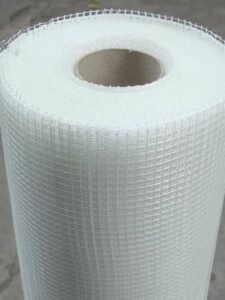
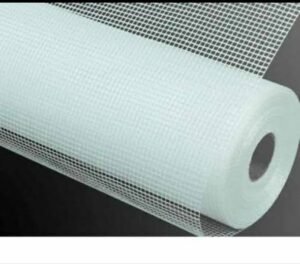
It can be easily cut to size, rolled out smoothly, and embedded into wet coatings without curling or bunching. The uniform mesh openings ensure proper penetration of plaster or waterproofing materials, creating strong mechanical bonding between layers.
This results in a smooth, even surface that is easy to finish and paint. Contractors appreciate the consistent quality and predictable performance of 160 GSM fiber mesh, which helps maintain high workmanship standards across different projects.
Its compatibility with a wide range of construction chemicals and coating systems makes it a versatile reinforcement solution for diverse applications.
In terms of durability, 160 GSM Fiber Mesh provides long‑term protection against cracking, delamination, and surface failure.
Its resistance to moisture, chemicals, and temperature variations ensures stable performance in both interior and exterior environments. Whether used in hot climates, humid conditions, or areas exposed to heavy rainfall, the mesh maintains its structural integrity and reinforcing properties.
This reliability makes it a preferred choice for projects where long service life and minimal maintenance are key requirements. Architects and engineers often specify 160 GSM Fiber Mesh in project designs to ensure compliance with quality standards and to enhance overall system performance.
For cost‑conscious construction projects, 160 GSM Fiber Mesh offers excellent value by reducing repair frequency and extending the lifespan of plaster, EIFS, and waterproofing systems.
By preventing cracks and reinforcing weak areas, it minimizes future repair costs and improves the return on investment for building owners.
Its lightweight packaging and easy handling also reduce transportation and storage costs, making it a practical choice for large‑scale projects. The consistent performance of 160 GSM fiber mesh helps contractors deliver reliable results while maintaining competitive pricing in the construction market.
From an SEO and market demand perspective, 160 GSM Fiber Mesh has become one of the most searched and trusted reinforcement materials in the construction industry due to its proven performance and wide application range.
Builders, contractors, waterproofing specialists, and insulation system installers actively seek high‑quality 160 GSM fiber mesh for projects that require crack resistance, strength, and durability.
Its growing popularity reflects the increasing focus on quality construction, energy efficiency, and long‑term building protection.
By choosing premium 160 GSM Fiber Mesh, construction professionals ensure enhanced performance, professional finishes, and satisfied clients across residential, commercial, and industrial projects.
In summary, 160 GSM Fiber Mesh stands as a reliable, high‑strength, and versatile reinforcement solution for plaster, EIFS, waterproofing, and surface protection systems.
Its alkali resistance, excellent tensile strength, flexibility, and ease of application make it an essential material for modern construction practices.
Whether used for crack prevention, surface reinforcement, insulation systems, or waterproofing enhancement, 160 GSM Fiber Mesh delivers consistent, long‑lasting results that improve structural performance and extend service life.
For projects demanding quality, durability, and professional‑grade reinforcement, 160 GSM Fiber Mesh remains the smart and dependable choice for crack‑resistant construction solutions.
160 GSM Fiber Mesh | Crack-Resistant Reinforcement for Plaster, EIFS & Waterproofing
160 GSM Fiber Mesh is a high‑performance, crack‑resistant reinforcement material specially engineered for modern construction systems where durability, flexibility, and long‑term structural protection are critical.
Widely used in plaster reinforcement, EIFS insulation systems, waterproofing layers, wall strengthening, roof treatments, and concrete protection, 160 GSM fiber mesh delivers superior tensile strength while maintaining excellent flexibility, making it ideal for both residential and commercial construction projects.
This premium‑grade fiberglass mesh is manufactured from alkali‑resistant glass fibers and coated with a special polymer resin to ensure maximum resistance against cement alkalinity, moisture penetration, temperature fluctuations, and long‑term environmental stress.
In demanding construction environments where cracks, shrinkage, and surface failure are common problems, 160 GSM Fiber Mesh provides a reliable and cost‑effective reinforcement solution that significantly extends surface life and improves overall performance.
It acts as a structural bridge across micro‑cracks, distributes stress evenly, and enhances bonding between plaster, cementitious coatings, waterproofing membranes, and insulation systems, ensuring a smooth, crack‑free, and durable finish.
160 GSM Fiber Mesh is extensively used in plaster applications to prevent surface cracking caused by thermal movement, substrate settlement, and material shrinkage.
When embedded within cement plaster, gypsum plaster, or polymer‑modified renders, the mesh strengthens the plaster layer and minimizes the formation of hairline cracks that often appear over time.
This makes it an essential material for internal walls, external facades, ceilings, and decorative finishes where appearance and longevity are equally important.
In exterior plaster systems, 160 GSM fiber mesh provides enhanced resistance against weathering, rain impact, humidity, and UV exposure, helping structures maintain their aesthetic appeal and structural integrity for years.
Builders and contractors prefer 160 GSM Fiber Mesh because it is lightweight, easy to handle, and quick to install, reducing labor time while delivering professional‑grade results.
In EIFS (Exterior Insulation and Finish Systems), 160 GSM Fiber Mesh plays a vital role in reinforcing insulation boards and base coats.
EIFS systems are designed to improve thermal efficiency, reduce energy consumption, and protect buildings from harsh environmental conditions. However, without proper reinforcement, EIFS layers can become vulnerable to cracking, impact damage, and surface failure.
By embedding 160 GSM Fiber Mesh into the base coat, the system gains enhanced tensile strength and flexibility, allowing it to absorb structural movement without cracking.
This reinforcement ensures uniform load distribution across the insulation surface and significantly improves impact resistance, making it suitable for high‑traffic areas and exposed building facades. The consistent weave structure of 160 GSM fiber mesh ensures smooth embedding and excellent adhesion with base coats, resulting in a strong, uniform, and durable EIFS finish.
Waterproofing applications greatly benefit from the use of 160 GSM Fiber Mesh as a reinforcement layer within liquid waterproofing membranes, cementitious coatings, acrylic systems, PU liquid rubber, and bitumen‑based waterproofing solutions.
Waterproofing systems are often exposed to extreme temperature changes, water pressure, and structural movement, all of which can lead to cracking and membrane failure if not properly reinforced. 160 GSM Fiber Mesh enhances the elasticity and tensile strength of waterproofing layers, preventing cracks and ensuring continuous waterproof protection.
When embedded between waterproofing coats, the mesh forms a reinforced composite layer that resists tearing, puncturing, and delamination.
This makes it ideal for roofs, bathrooms, kitchens, water tanks, basements, foundations, balconies, terraces, and wet areas where long‑term waterproof reliability is essential.
Contractors rely on 160 GSM Fiber Mesh to improve system performance and reduce maintenance costs by preventing premature waterproofing failure.
One of the key advantages of 160 GSM Fiber Mesh is its alkali resistance, which allows it to maintain strength and integrity when embedded in cement‑based materials.
Ordinary fiberglass can degrade over time when exposed to alkaline environments, leading to loss of reinforcement and surface cracking.
Alkali‑resistant 160 GSM fiber mesh is specifically designed to withstand cement alkalinity, ensuring long‑term durability and consistent reinforcement performance.
This makes it suitable for concrete repairs, screeds, renders, and mortar applications where exposure to alkaline conditions is unavoidable. Its high tensile strength helps absorb stresses caused by drying shrinkage, thermal expansion, and structural movement, reducing the risk of cracks and surface defects.
160 GSM Fiber Mesh is also widely used in crack repair and surface rehabilitation projects. When repairing damaged plaster, concrete, or masonry surfaces, embedding fiber mesh over cracks helps prevent their reappearance by reinforcing weak areas and distributing stress evenly.
This technique is commonly used in renovation and retrofitting projects to extend the life of existing structures without the need for extensive demolition.
The mesh integrates seamlessly with repair mortars, polymer‑modified compounds, and leveling layers, creating a reinforced repair zone that withstands future movement and environmental exposure.
Its lightweight nature allows easy application on vertical and overhead surfaces, making it suitable for ceilings, beams, columns, and wall junctions.
From a construction efficiency perspective, 160 GSM Fiber Mesh offers excellent workability and ease of installation.
It can be easily cut to size, rolled out smoothly, and embedded into wet coatings without curling or bunching. The uniform mesh openings ensure proper penetration of plaster or waterproofing materials, creating strong mechanical bonding between layers.
This results in a smooth, even surface that is easy to finish and paint. Contractors appreciate the consistent quality and predictable performance of 160 GSM fiber mesh, which helps maintain high workmanship standards across different projects.
Its compatibility with a wide range of construction chemicals and coating systems makes it a versatile reinforcement solution for diverse applications.
In terms of durability, 160 GSM Fiber Mesh provides long‑term protection against cracking, delamination, and surface failure.
Its resistance to moisture, chemicals, and temperature variations ensures stable performance in both interior and exterior environments. Whether used in hot climates, humid conditions, or areas exposed to heavy rainfall, the mesh maintains its structural integrity and reinforcing properties.
This reliability makes it a preferred choice for projects where long service life and minimal maintenance are key requirements. Architects and engineers often specify 160 GSM Fiber Mesh in project designs to ensure compliance with quality standards and to enhance overall system performance.
For cost‑conscious construction projects, 160 GSM Fiber Mesh offers excellent value by reducing repair frequency and extending the lifespan of plaster, EIFS, and waterproofing systems.
By preventing cracks and reinforcing weak areas, it minimizes future repair costs and improves the return on investment for building owners.
Its lightweight packaging and easy handling also reduce transportation and storage costs, making it a practical choice for large‑scale projects. The consistent performance of 160 GSM fiber mesh helps contractors deliver reliable results while maintaining competitive pricing in the construction market.
From an SEO and market demand perspective, 160 GSM Fiber Mesh has become one of the most searched and trusted reinforcement materials in the construction industry due to its proven performance and wide application range.
Builders, contractors, waterproofing specialists, and insulation system installers actively seek high‑quality 160 GSM fiber mesh for projects that require crack resistance, strength, and durability.
Its growing popularity reflects the increasing focus on quality construction, energy efficiency, and long‑term building protection.
By choosing premium 160 GSM Fiber Mesh, construction professionals ensure enhanced performance, professional finishes, and satisfied clients across residential, commercial, and industrial projects.
In summary, 160 GSM Fiber Mesh stands as a reliable, high‑strength, and versatile reinforcement solution for plaster, EIFS, waterproofing, and surface protection systems.
Its alkali resistance, excellent tensile strength, flexibility, and ease of application make it an essential material for modern construction practices.
Whether used for crack prevention, surface reinforcement, insulation systems, or waterproofing enhancement, 160 GSM Fiber Mesh delivers consistent, long‑lasting results that improve structural performance and extend service life.
For projects demanding quality, durability, and professional‑grade reinforcement, 160 GSM Fiber Mesh remains the smart and dependable choice for crack‑resistant construction solutions.
160 GSM Fiber Mesh | Crack-Resistant Reinforcement for Plaster, EIFS & Waterproofing
160 GSM Fiber Mesh is a high‑performance, crack‑resistant reinforcement material specially engineered for modern construction systems where durability, flexibility, and long‑term structural protection are critical.
Widely used in plaster reinforcement, EIFS insulation systems, waterproofing layers, wall strengthening, roof treatments, and concrete protection, 160 GSM fiber mesh delivers superior tensile strength while maintaining excellent flexibility, making it ideal for both residential and commercial construction projects.
This premium‑grade fiberglass mesh is manufactured from alkali‑resistant glass fibers and coated with a special polymer resin to ensure maximum resistance against cement alkalinity, moisture penetration, temperature fluctuations, and long‑term environmental stress.
In demanding construction environments where cracks, shrinkage, and surface failure are common problems, 160 GSM Fiber Mesh provides a reliable and cost‑effective reinforcement solution that significantly extends surface life and improves overall performance.
It acts as a structural bridge across micro‑cracks, distributes stress evenly, and enhances bonding between plaster, cementitious coatings, waterproofing membranes, and insulation systems, ensuring a smooth, crack‑free, and durable finish.
160 GSM Fiber Mesh is extensively used in plaster applications to prevent surface cracking caused by thermal movement, substrate settlement, and material shrinkage.
When embedded within cement plaster, gypsum plaster, or polymer‑modified renders, the mesh strengthens the plaster layer and minimizes the formation of hairline cracks that often appear over time.
This makes it an essential material for internal walls, external facades, ceilings, and decorative finishes where appearance and longevity are equally important.
In exterior plaster systems, 160 GSM fiber mesh provides enhanced resistance against weathering, rain impact, humidity, and UV exposure, helping structures maintain their aesthetic appeal and structural integrity for years.
Builders and contractors prefer 160 GSM Fiber Mesh because it is lightweight, easy to handle, and quick to install, reducing labor time while delivering professional‑grade results.
In EIFS (Exterior Insulation and Finish Systems), 160 GSM Fiber Mesh plays a vital role in reinforcing insulation boards and base coats.
EIFS systems are designed to improve thermal efficiency, reduce energy consumption, and protect buildings from harsh environmental conditions. However, without proper reinforcement, EIFS layers can become vulnerable to cracking, impact damage, and surface failure.
By embedding 160 GSM Fiber Mesh into the base coat, the system gains enhanced tensile strength and flexibility, allowing it to absorb structural movement without cracking.
This reinforcement ensures uniform load distribution across the insulation surface and significantly improves impact resistance, making it suitable for high‑traffic areas and exposed building facades. The consistent weave structure of 160 GSM fiber mesh ensures smooth embedding and excellent adhesion with base coats, resulting in a strong, uniform, and durable EIFS finish.
Waterproofing applications greatly benefit from the use of 160 GSM Fiber Mesh as a reinforcement layer within liquid waterproofing membranes, cementitious coatings, acrylic systems, PU liquid rubber, and bitumen‑based waterproofing solutions.
Waterproofing systems are often exposed to extreme temperature changes, water pressure, and structural movement, all of which can lead to cracking and membrane failure if not properly reinforced. 160 GSM Fiber Mesh enhances the elasticity and tensile strength of waterproofing layers, preventing cracks and ensuring continuous waterproof protection.
When embedded between waterproofing coats, the mesh forms a reinforced composite layer that resists tearing, puncturing, and delamination.
This makes it ideal for roofs, bathrooms, kitchens, water tanks, basements, foundations, balconies, terraces, and wet areas where long‑term waterproof reliability is essential.
Contractors rely on 160 GSM Fiber Mesh to improve system performance and reduce maintenance costs by preventing premature waterproofing failure.
One of the key advantages of 160 GSM Fiber Mesh is its alkali resistance, which allows it to maintain strength and integrity when embedded in cement‑based materials.
Ordinary fiberglass can degrade over time when exposed to alkaline environments, leading to loss of reinforcement and surface cracking.
Alkali‑resistant 160 GSM fiber mesh is specifically designed to withstand cement alkalinity, ensuring long‑term durability and consistent reinforcement performance.
This makes it suitable for concrete repairs, screeds, renders, and mortar applications where exposure to alkaline conditions is unavoidable. Its high tensile strength helps absorb stresses caused by drying shrinkage, thermal expansion, and structural movement, reducing the risk of cracks and surface defects.
160 GSM Fiber Mesh is also widely used in crack repair and surface rehabilitation projects. When repairing damaged plaster, concrete, or masonry surfaces, embedding fiber mesh over cracks helps prevent their reappearance by reinforcing weak areas and distributing stress evenly.
This technique is commonly used in renovation and retrofitting projects to extend the life of existing structures without the need for extensive demolition.
The mesh integrates seamlessly with repair mortars, polymer‑modified compounds, and leveling layers, creating a reinforced repair zone that withstands future movement and environmental exposure.
Its lightweight nature allows easy application on vertical and overhead surfaces, making it suitable for ceilings, beams, columns, and wall junctions.
From a construction efficiency perspective, 160 GSM Fiber Mesh offers excellent workability and ease of installation.
It can be easily cut to size, rolled out smoothly, and embedded into wet coatings without curling or bunching. The uniform mesh openings ensure proper penetration of plaster or waterproofing materials, creating strong mechanical bonding between layers.
This results in a smooth, even surface that is easy to finish and paint. Contractors appreciate the consistent quality and predictable performance of 160 GSM fiber mesh, which helps maintain high workmanship standards across different projects.
Its compatibility with a wide range of construction chemicals and coating systems makes it a versatile reinforcement solution for diverse applications.
In terms of durability, 160 GSM Fiber Mesh provides long‑term protection against cracking, delamination, and surface failure.
Its resistance to moisture, chemicals, and temperature variations ensures stable performance in both interior and exterior environments. Whether used in hot climates, humid conditions, or areas exposed to heavy rainfall, the mesh maintains its structural integrity and reinforcing properties.
This reliability makes it a preferred choice for projects where long service life and minimal maintenance are key requirements. Architects and engineers often specify 160 GSM Fiber Mesh in project designs to ensure compliance with quality standards and to enhance overall system performance.
For cost‑conscious construction projects, 160 GSM Fiber Mesh offers excellent value by reducing repair frequency and extending the lifespan of plaster, EIFS, and waterproofing systems.
By preventing cracks and reinforcing weak areas, it minimizes future repair costs and improves the return on investment for building owners.
Its lightweight packaging and easy handling also reduce transportation and storage costs, making it a practical choice for large‑scale projects. The consistent performance of 160 GSM fiber mesh helps contractors deliver reliable results while maintaining competitive pricing in the construction market.
From an SEO and market demand perspective, 160 GSM Fiber Mesh has become one of the most searched and trusted reinforcement materials in the construction industry due to its proven performance and wide application range.
Builders, contractors, waterproofing specialists, and insulation system installers actively seek high‑quality 160 GSM fiber mesh for projects that require crack resistance, strength, and durability.
Its growing popularity reflects the increasing focus on quality construction, energy efficiency, and long‑term building protection.
By choosing premium 160 GSM Fiber Mesh, construction professionals ensure enhanced performance, professional finishes, and satisfied clients across residential, commercial, and industrial projects.
In summary, 160 GSM Fiber Mesh stands as a reliable, high‑strength, and versatile reinforcement solution for plaster, EIFS, waterproofing, and surface protection systems.
Its alkali resistance, excellent tensile strength, flexibility, and ease of application make it an essential material for modern construction practices.
Whether used for crack prevention, surface reinforcement, insulation systems, or waterproofing enhancement, 160 GSM Fiber Mesh delivers consistent, long‑lasting results that improve structural performance and extend service life.
For projects demanding quality, durability, and professional‑grade reinforcement, 160 GSM Fiber Mesh remains the smart and dependable choice for crack‑resistant construction solutions.
Overview of 160 GSM Fiber Mesh
Definition and Purpose
Material Composition
GSM Weight Significance
Technical Specifications of 160 GSM Fiber Mesh
Alkali Resistance Properties
Tensile Strength and Flexibility
Mesh Size and Weave Structure
Coating and Durability
Applications of 160 GSM Fiber Mesh
Plaster Reinforcement Applications
Internal Wall Plaster
External Wall Plaster
Ceiling and Decorative Plaster
EIFS (Exterior Insulation and Finish Systems)
Base Coat Reinforcement
Insulation Board Strengthening
Impact Resistance Improvement
Waterproofing Reinforcement Applications
Roof Waterproofing Systems
Bathroom and Kitchen Waterproofing
Basement and Foundation Protection
Water Tank and Wet Area Applications
Concrete Repair and Surface Strengthening
Crack Repair Solutions
Renovation and Retrofitting Works
Screeds and Render Reinforcement
Benefits of Using 160 GSM Fiber Mesh
Crack Prevention and Control
Stress Distribution Across Surfaces
Improved Bonding Strength
Long-Term Durability and Stability
Installation Method of 160 GSM Fiber Mesh
Surface Preparation Guidelines
Embedding in Plaster and Coatings
Overlapping and Joint Treatment
Final Finishing and Curing
Advantages Over Traditional Reinforcement Materials
Comparison with Steel Mesh
Comparison with Plastic Mesh
Lightweight and Cost Efficiency
Quality Standards and Performance Reliability
Resistance to Moisture and Chemicals
Performance in Harsh Weather Conditions
Compatibility with Construction Chemicals
Why Choose 160 GSM Fiber Mesh for Construction Projects
Contractor and Applicator Benefits
Architect and Engineer Preference
Cost Saving and Maintenance Reduction
Applications in Residential, Commercial, and Industrial Projects
Residential Construction Benefits
Commercial Building Applications
Industrial Surface Protection
Market Demand and SEO Importance of 160 GSM Fiber Mesh
High Search Demand in Construction Industry
Popularity in Waterproofing and EIFS Systems
Conclusion
Summary of Performance Benefits
Long-Term Value in Modern Construction