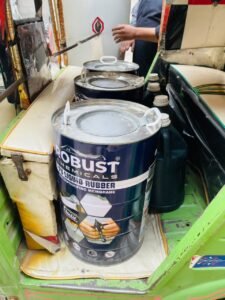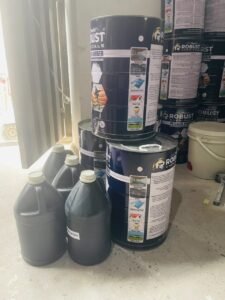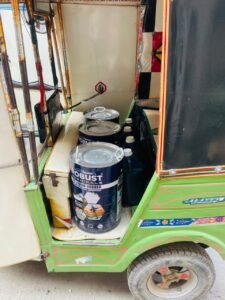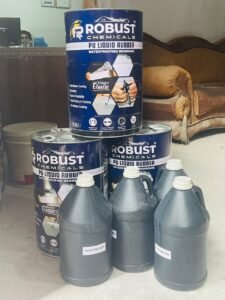
Industrial Polyurethane Roof Coating | Seamless & UV-Safe
Industrial polyurethane (PU) roof coating is a high-performance, liquid-applied elastomeric membrane engineered to protect flat RCC concrete slabs, corrugated metal sheds, and commercial rooftops from water ingress, extreme solar UV radiation, and thermal expansion stress. Unlike traditional torch-on bitumen sheets that rely on overlapping seams or rigid cementitious plasters that crack when a building shifts, a liquid polyurethane roof membrane cures into a 100% seamless, monolithic rubberized barrier bonded directly to the substrate. With elongation rates exceeding 400% to 600%, high solar reflectance, and a proven service life of 15 to 25 years, UV-stable polyurethane roof coatings have become the premier waterproofing and heat-reflective solution for factories, warehouses, pharmaceutical plants, and commercial complexes across Lahore and Pakistan.
1. Why Industrial Roofs Fail—And How Polyurethane Solves It
Industrial rooftops endure harsher environmental stress than almost any other part of a building. In regions like Punjab and Lahore—where summer roof surface temperatures routinely exceed 65°C (149°F) before sudden monsoon downpours drop temperatures by 25°C within minutes—roofing materials face severe thermal shock.
The 4 Primary Causes of Industrial Roof Leakage
-
Thermal Expansion & Structural Movement: Concrete slabs and pre-engineered steel (PEB) roof panels expand in intense afternoon heat and contract at night. Rigid waterproofing systems (such as standard mortar screeds or brittle acrylic paints) snap under this cyclic movement, opening hairline fissures that channel rainwater directly into production floors.
-
Seam & Overlap Failure in Sheet Membranes: Traditional APP/SBS bitumen rolls require thousands of linear feet of heat-torched seams. Over time, UV rays dry out the bitumen lap joints, allowing standing water to creep underneath the membrane and travel meters away from the visible ceiling leak.
-
Ponding Water Degradation: Large-span factory roofs rarely maintain a steep drainage slope. Water pooling around clogged drains or HVAC plinths rapidly softens water-based acrylic coatings, causing them to re-emulsify, blister, and peel.
-
Complex Roof Penetrations: Exhaust vents, solar panel mounting pedestals, skylights, parapet wall junctions, and pipe sleeves create dozens of irregular corners where pre-formed sheets cannot form a watertight seal.
How Liquid Polyurethane Eliminates Every Weak Point
-
Zero Seams or Joints: Applied as a cold liquid via airless spray, roller, or notched squeegee, polyurethane cures into a continuous wall-to-wall membrane—including seamless vertical flashing up parapet walls and around solar mounting brackets.
-
Extreme Elastomeric Crack-Bridging: High-grade industrial polyurethane stretches up to 400%–600% without tearing, effortlessly bridging active structural cracks up to 2 mm wide even at sub-zero temperatures.
-
Total Resistance to Ponding Water: Unlike water-based acrylics, moisture-cured and two-component polyurethane membranes do not soften or re-emulsify under stagnant rainwater.
-
Full-Surface Adhesion: Because the membrane bonds chemically across 100% of the concrete or metal deck (at pull-off strengths above 1.5 MPa), even if a sharp object punctures one spot, water cannot migrate laterally beneath the coating.
2. Aromatic vs. Aliphatic Polyurethane: Understanding True UV Stability
Not all polyurethane roof coatings are UV-safe out of the drum. Specifying the wrong chemistry is the single most common reason industrial roof coatings chalk, yellow, or degrade prematurely under direct sunlight.
Aromatic Polyurethane (Base Coat)
Aromatic PU offers exceptional tensile strength, chemical resistance, and cost efficiency, making it ideal as a thick, high-build waterproofing base layer. However, when exposed directly to ultraviolet radiation, aromatic molecular rings oxidize—causing the surface to amber (yellow) and chalk over time.
Aliphatic Polyurethane (UV-Safe Topcoat)
Aliphatic polyurethane is chemically engineered to resist UV degradation. It will not yellow, chalk, or lose elasticity even after decades of intense equatorial or Pakistani summer sun exposure. Furthermore, white or light-grey aliphatic PU topcoats achieve a Solar Reflectance (SR) of up to 85%–89%, reflecting solar heat away from the roof deck and reducing indoor warehouse temperatures by 5°C to 8°C.
Engineering Best Practice: For maximum durability and value on exposed industrial roofs, contractors apply a high-build aromatic polyurethane waterproofing base membrane (1.2 mm – 1.5 mm dry film thickness) sealed with a UV-stable white aliphatic polyurethane topcoat (0.3 mm – 0.5 mm).
3. Technical Specifications of Industrial PU Roof Membranes
When evaluating technical data sheets (TDS) from global or local chemical manufacturers, facility engineers should verify the following benchmark performance metrics:
| Technical Parameter | Industrial Standard Benchmark | Test Method | Why It Matters on Industrial Roofs |
| Elongation at Break | 400% – 600% | ASTM D412 / ISO 527 | Absorbs thermal slab expansion without splitting |
| Tensile Strength | 2.0 – 6.0 MPa | ASTM D412 / ISO 527 | Resists tearing under foot traffic and wind uplift |
| Adhesion to Concrete / Metal | ≥ 1.5 MPa (1.5 N/mm²) | ASTM D903 | Prevents wind peel-off and sub-membrane water travel |
| Recommended Dry Film Thickness (DFT) | 1.5 mm – 2.0 mm (reinforced) | Micron Gauge | Ensures 15–25 year service life under ponding water |
| Service Temperature Range | -30°C to +80°C (up to 90°C peak) | Thermal Cycling | Withstands freezing winters and peak summer roof heat |
| Solar Reflectance (White Aliphatic) | 85% – 89% | ASTM C1549 | Lowers HVAC cooling loads and indoor heat stress |
| Water Vapor Permeability | 14 – 18 g/m²/day | EN 1931 / ISO 9932 | Allows trapped slab moisture to breathe without blistering |
4. Polyurethane vs. Bitumen, Acrylic & EPDM Roof Systems
| Feature / Criteria | Industrial Polyurethane (PU) Coating | Torch-On Bitumen Membrane (APP/SBS) | Acrylic Elastomeric Roof Paint | EPDM / TPO Single-Ply Sheets |
| Seams & Joints | 100% Seamless (Liquid) | Overlapping torch-welded seams | Seamless | Mechanically fastened or glued seams |
| UV & Sunlight Stability | Excellent (Aliphatic topcoat) | Moderate (requires mineral granules/silver paint) | Good (chalks over 4–5 years) | Very Good |
| Ponding Water Resistance | Excellent (Zero softening) | Good (until seam failure) | Poor (re-emulsifies & peels) | Good |
| Heat Reflectivity | High (White PU reflects ~88% UV) | Poor (black surface absorbs heat) | High | High (White TPO) |
| Detailing Around Solar / Pipes | Effortless self-flashing | Difficult (high leak risk at collars) | Easy | Requires custom boots & adhesives |
| Expected Lifespan | 15 – 25 Years | 8 – 12 Years | 4 – 6 Years | 15 – 20 Years |
| Ease of Spot Repair | Very Easy (recoat directly) | Requires torching & patching | Easy | Requires specialized welding |
5. Industrial Polyurethane Roof Coating Price in Pakistan & Lahore (2026 Rates)
In Pakistan’s construction and industrial maintenance market, polyurethane roof waterproofing is priced either by material supply (per kg bucket/drum) or as a turnkey installed rate (per sq. ft.) including surface preparation, primer, polyester reinforcement mesh, and multiple PU coats.
2026 Material Supply Rates in Pakistan
-
Economy / Standard 1-Component PU Waterproofing (20 kg Bucket): PKR 12,500 – 14,500 (covers ~400–500 sq. ft. in a standard two-coat system)
-
Industrial Airless-Spray Grade PU Membrane (25 kg Drum): PKR 16,500 – 17,000+
-
Imported / Aliphatic UV-Stable Topcoat Grades (20–25 kg): PKR 18,000 – 28,000+ depending on solids content and brand origin.
2026 Turnkey Installed Rates in Lahore (Per Sq. Ft.)
| Polyurethane Roof System Specification | Recommended System Build | Indicative Installed Rate (PKR / Sq. Ft.) | Best Application |
| Standard 2-Coat PU Roof Coating | Primer + 2 coats PU membrane (~1.0 mm DFT) | PKR 70 – 110 | Light commercial roofs, offices, sound RCC slabs |
| Reinforced Industrial PU Membrane | Primer + Base PU + Non-Woven Polyester Mesh + Topcoat (1.5 mm DFT) | PKR 110 – 160 | Cracked RCC factory roofs, ponding water zones |
| Heavy-Duty UV + Heat-Reflective System | Moisture Primer + Reinforced Aromatic PU + White Aliphatic Topcoat | PKR 150 – 220+ | Textile mills, pharma plants, cold-storage roofs |
| Corrugated Metal / PEB Shed PU Coating | Anti-corrosive primer + Seam tape + Spray PU + UV Topcoat | PKR 130 – 190+ | Industrial warehouses, steel sheds (Sundar / Kot Lakhpat) |
Key Factors That Influence Your Final Project Cost
-
Roof Substrate Type & Condition: Spalled RCC concrete with exposed aggregate, old peeling mud-phaska/brick tiles (khaprail), or rusted corrugated GI/galvalume sheets require extra mechanical grinding, crack routing, or rust-inhibiting primers.
-
Geotextile Polyester Mesh Reinforcement: Embedding a 60–100 gsm non-woven polyester fleece between the first and second PU coats increases tensile strength and guarantees uniform thickness across structural cracks, adding roughly PKR 25–40 per sq. ft.
-
Total Roof Area (Economies of Scale): Industrial roofs exceeding 15,000–50,000 sq. ft. qualify for high-speed airless spray application, lowering labor cost per square foot compared to manual roller work on smaller commercial roofs.
-
Solar Panel Obstructions: Roofs already crowded with solar PV arrays require meticulous hand-detailing around hundreds of anchor bolts and cable trays, slightly increasing labor hours.