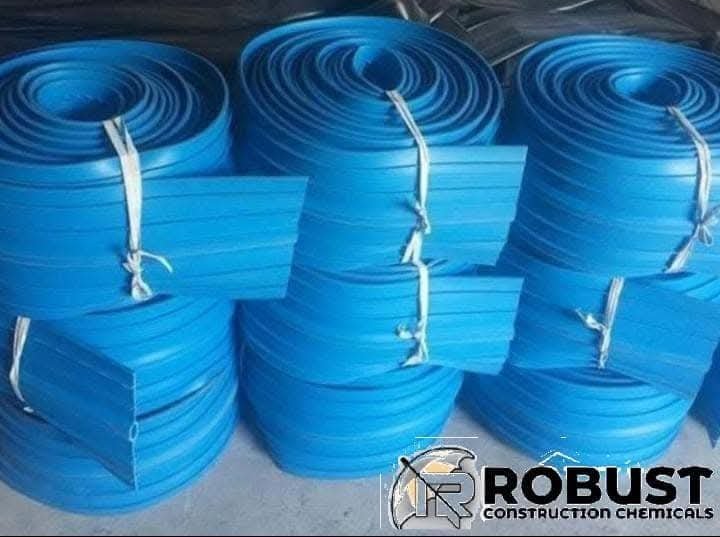
Robust PVC Water Stopper (also specified as Hydrophilic / Extruded PVC Waterstop or Construction & Expansion Joint Water Barrier) is a flexible, high-grade extruded polyvinyl chloride profile embedded directly into concrete construction and expansion joints during pouring. Engineered to create a continuous, watertight physical diaphragm across subterranean and water-retaining concrete structures, it blocks hydrostatic water pressure from passing through cold joints, slab-to-wall junctions, and structural movement gaps.
1. Core Material & Structural Design Features
-
Virgin Plasticized PVC Compound: Extruded from heavy-duty, non-recycled elastomeric polyvinyl chloride formulated to resist aging, alkaline concrete environments, sewage, seawater, and mild industrial chemicals without becoming brittle.
-
Multi-Ribbed Serrated Flanges: Parallel anchor ribs along both wings create a tortuous water path and interlock mechanically with cured concrete, preventing water from creeping around the edge of the strip under high hydrostatic head.
-
Center Bulb vs. Flat Dumbbell Profiles:
-
Center-Bulb Profile (Expansion Joints): Features a hollow flexible center bulb positioned directly across structural expansion joints to absorb multi-directional shear, thermal expansion, and differential settlement without tearing.
-
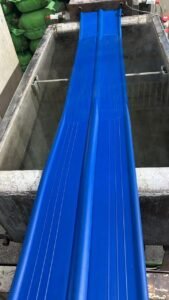
Flat / Ribbed Dumbbell Profile (Construction / Cold Joints): Designed for stationary pour-break joints (such as base-slab to retaining-wall junctions) where structural movement is minimal.
-
-
Factory Brass Eyelets / Hog-Ring Flanges: Reinforced outer edges allow secure tying to rebar cages with binding wire so the profile never folds or shifts under heavy concrete pouring vibration.
2. Standard Sizes & Technical Specifications (6″ to 12″)
Robust PVC Water Stopper is manufactured in standard widths from 150 mm (6 inches) to 300 mm (12 inches) to match concrete wall and slab thicknesses:
| Parameter / Specification | 6-Inch (150 mm) Profile | 9-Inch (230 mm) Profile | 12-Inch (300 mm) Profile |
| Width (mm / inches) | 150 mm (6″) | 225 – 230 mm (9″) | 300 mm (12″) |
| Web Thickness | 4.5 – 6.0 mm | 6.0 – 8.0 mm | 8.0 – 10.0 mm |
| Recommended Concrete Thickness | 150 – 200 mm (6″–8″ walls/slabs) | 225 – 300 mm (9″–12″ walls/slabs) | ≥ 300 – 450 mm+ (12″–18″ heavy rafts/walls) |
| Standard Roll Length | 15 – 25 linear meters | 15 – 25 linear meters | 15 – 20 linear meters |
| Tensile Strength (ASTM D638 / BS 2571) | ≥ 12 – 15 N/mm² (1,740 – 2,175 psi) | ≥ 12 – 15 N/mm² | ≥ 12 – 15 N/mm² |
| Elongation at Break | ≥ 280% – 350% | ≥ 280% – 350% | ≥ 280% – 350% |
| Shore A Hardness (ASTM D2240) | 65 – 75 | 65 – 75 | 65 – 75 |
| Service Temperature Range | -35°C to +70°C | -35°C to +70°C | -35°C to +70°C |
| Hydrostatic Head Resistance | Up to 20 – 30 meters water head | Up to 35 – 50 meters water head | Up to 60+ meters water head |
3. Primary Applications in Civil & Infrastructure Projects
-
Underground Water Tanks, OHWT & Reservoirs: Seals base-slab-to-wall kicker joints and vertical wall pour breaks in domestic, commercial, and municipal water-retaining tanks.
-
Deep Basements, Lift Pits & Retaining Walls: Prevents groundwater seepage in multi-story commercial basements, underground parking structures, and subways.
-
Sewage Treatment Plants (STP) & Canals: Resists aggressive wastewater, sulfates, and continuous hydrostatic pressure in treatment basins, culverts, and irrigation channels.
-
Dams, Tunnels, Bridge Decks & Swimming Pools: Accommodates structural expansion joints in heavy civil infrastructure and commercial pools.
4. Step-by-Step Site Installation & Heat-Welding Protocol
-
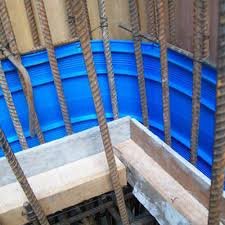
Centering & Sizing Rule: Select a water stopper width equal to or slightly less than the concrete wall/slab thickness (e.g., use a 9-inch / 230 mm profile in a 9-to-12-inch concrete wall). Embed 50% of the width in the first concrete pour and leave 50% projecting cleanly for the second pour.
-
Secure Tying to Rebar: Tie the outer flanges to the steel reinforcement cage every 250 mm – 300 mm (10–12 inches) using binding wire passed through the outer eyelets—never drive nails or screws through the central web or center bulb.
-
Heat-Welding Butt Joints & Intersections: Never overlap PVC water stoppers cold or use glue/tape at roll ends. Cut ends square, heat both faces simultaneously against a thermostatically controlled PVC welding knife/iron (~190°C – 210°C) until a 3 mm molten bead forms, remove the blade swiftly, and press the molten ends firmly together for 20–30 seconds until fused. Use factory-molded L, T, and Cross (+) pieces for corner transitions.
-
Concrete Compaction Around Profile: Vibrate concrete thoroughly around the embedded ribs using a needle vibrator without touching the PVC strip directly, eliminating honeycombing or air pockets beneath horizontal waterstops.
-
Cleaning Projecting Half Before Second Pour: Before casting the adjoining slab or wall, clean all dried mortar splatters, rust, and formwork oil off the exposed half of the PVC water stopper.
-
1. Complete Profile Selection Guide (Choosing the Right Geometry)
Selecting the wrong water stopper profile is the primary cause of joint leakage in water-retaining structures. Match the profile geometry to the joint movement behavior:
-
Center-Bulb Ribbed Profile (For Dynamic Expansion Joints):
-
Design: Features a hollow central tubular bulb flanked by multi-ribbed anchor wings.
-
Movement Capacity: Accommodates up to 20 mm lateral expansion/contraction and 10 mm transverse shear movement without tearing.
-
Where to Use: Structural expansion joints in large basement rafts, commercial swimming pools, bridge abutments, dams, spillways, and long concrete boundary walls.
-
-
Flat Ribbed / Dumbbell Profile (For Stationary Construction & Cold Joints):
-
Design: Symmetrical flat web with enlarged terminal dumbbell edges and parallel sealing ribs—no center bulb.
-
Where to Use: Horizontal and vertical construction pour breaks (cold joints) where concrete casting stops and resumes later without intentional structural movement.
-
-
Rear-Guard / Externally Placed Base-Seal Profile (For Ground Slabs & Blinding Concrete):
-
Design: Flat ribbed base with projecting nail/anchor flanges on one side only, laid directly on top of lean/blinding concrete beneath the main slab or against permanent shuttering.
-
Where to Use: Basement floor slabs poured over lean concrete, tunnel linings, and repair extensions of existing concrete walls where central embedding is impractical.
-
-
Kicker-Type Profile (For Slab-to-Wall Vertical Transitions):
-
Design: Specially angled or T-ribbed section engineered for the critical 90-degree junction between a base raft slab and a vertical retaining wall starter (kicker).
-
2. Full Technical & Lab Testing Data Sheet (ASTM / BS / CRD Compliance)
For government tenders, NESPAK/consulting engineer approvals, and commercial BOQ submittals, Robust PVC Water Stopper meets international physical and chemical standards:
3. Updated 2026 Pakistan Market Pricing Chart (6″ to 12″ By Width & Thickness)
In Pakistan (Lahore, Karachi, Islamabad/Rawalpindi, Faisalabad, and Multan), PVC Water Stopper prices vary based on width, web thickness (standard 3–4 mm light duty vs. 5–10 mm heavy civil duty), and A++ Virgin PVC vs. semi-recycled grades:
4. How to Spot Virgin A++ Grade vs. Cheap Recycled PVC on Site
Many low-cost local strips fail within 2–3 years because they use recycled cable-scrap PVC filled with calcium carbonate. Verify these four on-site checks before accepting delivery:
-
The 180° Fold-and-Crease Test: Fold the PVC strip sharply 180 degrees and press firmly with your thumb. Virgin A++ PVC springs back smoothly with zero white stress-blushing along the fold line; chalk-filled recycled PVC immediately turns white and cracks at the crease.
-
Odor & Surface Sheen Check: Virgin PVC has a clean, mild plastic scent and a uniform satin-gloss finish. Recycled strips often smell strongly of burnt rubber/solvents and show pitted, grainy surface streaks.
-
Heat-Weld Fusion Test: When pressed against a 200°C welding knife, virgin PVC melts into a smooth, elastic molten bead that fuses seamlessly. Over-filled recycled PVC chars, smokes heavily, and forms a brittle weld that snaps when bent.
-
Weight & Web Thickness Verification: Measure the central web (excluding ribs) with a vernier caliper—ensure a contracted 5 mm or 8 mm heavy-duty strip is not undersized to 3 mm.
5. Field & Factory Heat-Welding Rules (Zero-Leakage Junctions)
Over 70% of waterstop failures occur at roll ends and 90-degree corners rather than straight runs. Follow strict ASTM/BS splicing standards:
-
Field Butt-Welding Procedure: Clamp both square-cut roll ends into a dedicated alignment welding jig. Insert a thermostatically controlled heating blade set to 190°C – 210°C between the faces until ~3 mm of molten PVC forms on each end. Withdraw the blade in one swift motion and press the molten ends firmly together for 20–30 seconds without twisting.
-
Welded Joint Strength Benchmark: A properly fused field butt-weld must retain at least 80% of the parent material’s tensile strength (≥ 11.5 MPa) and ≥ 180% elongation without separating at the seam.
-
Pre-Fabricated Factory Junctions: For complex 3D intersections—such as Vertical L-corners, Flat L-miters, T-pieces, and Cross (+) intersections where a base-slab waterstop meets a vertical retaining-wall waterstop—use factory-vulcanized junction pieces (supplied with 30 cm free legs) so site teams only perform simple straight butt-welds.
6. Common Site Installation Mistakes & Prevention
-
Folding / “Flopping” Under Concrete Pour: If ties are spaced wider than 300 mm, wet concrete pushes the upper half of the waterstop flat like a hinge, creating a direct leak path. Fix: Tie both top and bottom outer eyelets tightly to main rebar every 250–300 mm (10–12 inches) using specialized hog rings or binding wire.
-
Honeycombing Beneath Horizontal Waterstops: Air gets trapped underneath flat horizontal waterstops during slab pours. Fix: Pour concrete slightly higher on one side first, vibrate thoroughly until mortar flows out the opposite side, and slightly tilt horizontal strips (~10°–15° upward) so air bubbles escape naturally.
-
Puncturing the Web with Nails: Never drive nails or formwork tie-rods through the central web or center bulb—use only the designated outer edge eyelets outside the outermost sealing rib.
-
1. Complete Profile Selection Guide (Choosing the Right Geometry)
Selecting the wrong water stopper profile is the primary cause of joint leakage in water-retaining structures. Match the profile geometry to the joint movement behavior:
-
Center-Bulb Ribbed Profile (For Dynamic Expansion Joints):
-
Design: Features a hollow central tubular bulb flanked by multi-ribbed anchor wings.
-
Movement Capacity: Accommodates up to 20 mm lateral expansion/contraction and 10 mm transverse shear movement without tearing.
-
Where to Use: Structural expansion joints in large basement rafts, commercial swimming pools, bridge abutments, dams, spillways, and long concrete boundary walls.
-
-
Flat Ribbed / Dumbbell Profile (For Stationary Construction & Cold Joints):
-
Design: Symmetrical flat web with enlarged terminal dumbbell edges and parallel sealing ribs—no center bulb.
-
Where to Use: Horizontal and vertical construction pour breaks (cold joints) where concrete casting stops and resumes later without intentional structural movement.
-
-
Rear-Guard / Externally Placed Base-Seal Profile (For Ground Slabs & Blinding Concrete):
-
Design: Flat ribbed base with projecting nail/anchor flanges on one side only, laid directly on top of lean/blinding concrete beneath the main slab or against permanent shuttering.
-
Where to Use: Basement floor slabs poured over lean concrete, tunnel linings, and repair extensions of existing concrete walls where central embedding is impractical.
-
-
Kicker-Type Profile (For Slab-to-Wall Vertical Transitions):
-
Design: Specially angled or T-ribbed section engineered for the critical 90-degree junction between a base raft slab and a vertical retaining wall starter (kicker).
-
2. Full Technical & Lab Testing Data Sheet (ASTM / BS / CRD Compliance)
For government tenders, NESPAK/consulting engineer approvals, and commercial BOQ submittals, Robust PVC Water Stopper meets international physical and chemical standards:
3. Updated 2026 Pakistan Market Pricing Chart (6″ to 12″ By Width & Thickness)
In Pakistan (Lahore, Karachi, Islamabad/Rawalpindi, Faisalabad, and Multan), PVC Water Stopper prices vary based on width, web thickness (standard 3–4 mm light duty vs. 5–10 mm heavy civil duty), and A++ Virgin PVC vs. semi-recycled grades:
4. How to Spot Virgin A++ Grade vs. Cheap Recycled PVC on Site
Many low-cost local strips fail within 2–3 years because they use recycled cable-scrap PVC filled with calcium carbonate. Verify these four on-site checks before accepting delivery:
-
The 180° Fold-and-Crease Test: Fold the PVC strip sharply 180 degrees and press firmly with your thumb. Virgin A++ PVC springs back smoothly with zero white stress-blushing along the fold line; chalk-filled recycled PVC immediately turns white and cracks at the crease.
-
Odor & Surface Sheen Check: Virgin PVC has a clean, mild plastic scent and a uniform satin-gloss finish. Recycled strips often smell strongly of burnt rubber/solvents and show pitted, grainy surface streaks.
-
Heat-Weld Fusion Test: When pressed against a 200°C welding knife, virgin PVC melts into a smooth, elastic molten bead that fuses seamlessly. Over-filled recycled PVC chars, smokes heavily, and forms a brittle weld that snaps when bent.
-
Weight & Web Thickness Verification: Measure the central web (excluding ribs) with a vernier caliper—ensure a contracted 5 mm or 8 mm heavy-duty strip is not undersized to 3 mm.
5. Field & Factory Heat-Welding Rules (Zero-Leakage Junctions)
Over 70% of waterstop failures occur at roll ends and 90-degree corners rather than straight runs. Follow strict ASTM/BS splicing standards:
-
Field Butt-Welding Procedure: Clamp both square-cut roll ends into a dedicated alignment welding jig. Insert a thermostatically controlled heating blade set to 190°C – 210°C between the faces until ~3 mm of molten PVC forms on each end. Withdraw the blade in one swift motion and press the molten ends firmly together for 20–30 seconds without twisting.
-
Welded Joint Strength Benchmark: A properly fused field butt-weld must retain at least 80% of the parent material’s tensile strength (≥ 11.5 MPa) and ≥ 180% elongation without separating at the seam.
-
Pre-Fabricated Factory Junctions: For complex 3D intersections—such as Vertical L-corners, Flat L-miters, T-pieces, and Cross (+) intersections where a base-slab waterstop meets a vertical retaining-wall waterstop—use factory-vulcanized junction pieces (supplied with 30 cm free legs) so site teams only perform simple straight butt-welds.
6. Common Site Installation Mistakes & Prevention
-
Folding / “Flopping” Under Concrete Pour: If ties are spaced wider than 300 mm, wet concrete pushes the upper half of the waterstop flat like a hinge, creating a direct leak path. Fix: Tie both top and bottom outer eyelets tightly to main rebar every 250–300 mm (10–12 inches) using specialized hog rings or binding wire.
-
Honeycombing Beneath Horizontal Waterstops: Air gets trapped underneath flat horizontal waterstops during slab pours. Fix: Pour concrete slightly higher on one side first, vibrate thoroughly until mortar flows out the opposite side, and slightly tilt horizontal strips (~10°–15° upward) so air bubbles escape naturally.
-
Puncturing the Web with Nails: Never drive nails or formwork tie-rods through the central web or center bulb—use only the designated outer edge eyelets outside the outermost sealing rib.
- Robust
- Robust
- Robust
- Robust
- Robust
- Robust
- Robust
- Robust
- Robust
- Robust
- Robust
- Robust
- Robust
- Robust
- Robust
- Robust
- Robust
- Robust
- Robust
- Robust
- Robust
- Robust
- Robust
- Robust
- Robust
- Robust
- Robust
- Robust
- Robust
- Robust
- Robust
- Robust
- Robust
- Robust
- Robust
- Robust
- Robust
- Robust
- Robust
- Robust
- Robust
- Robust
- Robust
- Robust
- Robust
- Robust
- Robust
- Robust
- Robust
- Robust
- Robust
- Robust
- Robust
- Robust
- Robust
- Robust
- Robust
- Robust
- Robust
- Robust
- Robust
- Robust
- Robust
- Robust
- Robust
- Robust
-
-
-