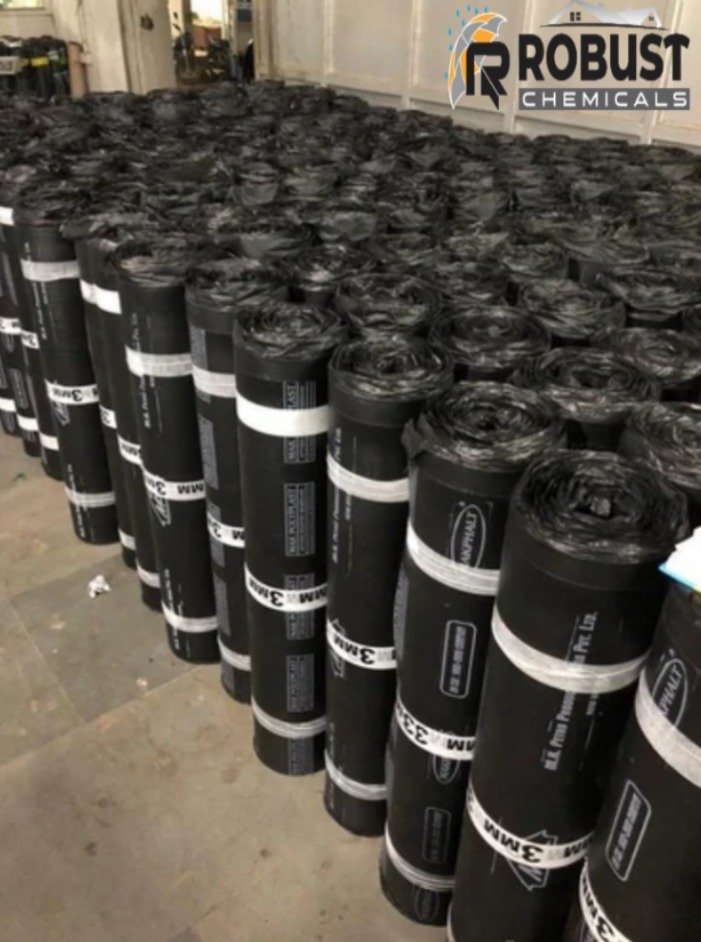
Torch-Applied Bitumen Membrane: The Professional Waterproofing Standard
Among all application methods, the torch-applied bitumen membrane system (also known as torch-on membrane) remains the most popular and trusted technique in the construction industry.
This method uses a heat torch gun (typically fueled by propane) to apply controlled heat to the underside of the bituminous roll, softening the modified bitumen layer to achieve perfect adhesion with the prepared substrate.
When applied correctly, the molten bitumen creates a continuous, monolithic bond between the membrane and the surface, eliminating voids or air gaps that could lead to leaks. This technique ensures a long-lasting, fully watertight barrier ideal for demanding environments.
Step-by-Step Application Process
1. Surface Preparation
The substrate — whether concrete, screed, or metal — must be clean, dry, and free from dust or oil. A bituminous primer is applied to enhance bonding and ensure surface uniformity.
Proper surface preparation is critical; any trapped moisture can cause blistering later.
2. Heating and Rolling
Once the primer has dried, the bitumen membrane roll is positioned on the surface. Using a propane torch gun, the applicator evenly heats the underside of the roll as it is slowly unrolled.
The heat melts the lower bituminous layer, creating a sticky, viscous surface that bonds instantly to the substrate.
3. Overlapping and Sealing
Adjacent rolls are overlapped by at least 100 mm on side laps and 150 mm on end laps. The edges are torched to fuse the layers together, ensuring a seamless joint and full waterproof coverage.
When correctly torched, a thin bead of molten bitumen appears at the overlap — a visible sign of complete sealing.
4. Finishing and Protection
After installation, the surface may be protected with aluminum-coated foil, reflective paint, or screed topping depending on exposure conditions.
This protects the membrane from mechanical damage and UV degradation, extending its service life.
Advantages of Torch-On Bitumen Membranes
-
Superior Adhesion: The heat-activated bonding ensures a permanent fusion between the membrane and substrate, providing excellent waterproof integrity.
-
Monolithic Protection: Unlike liquid coatings, torch-on membranes form a uniform, seamless barrier resistant to punctures and cracks.
-
Fast Installation: Professional applicators can cover large surface areas efficiently, making it suitable for commercial and industrial projects.
-
Adaptability: The method can be applied on flat, sloped, or curved surfaces, including roofs, terraces, and parapet walls.
-
Weather Resistance: APP-modified membranes perform exceptionally well in hot climates, maintaining dimensional stability under solar exposure.
Safety Guidelines During Torch Application
Although torch-on application delivers unmatched bonding strength, it requires strict safety measures on-site:
-
Always use a certified propane torch gun with a flame control valve.
-
Avoid torching near flammable materials or unprotected electrical systems.
-
Keep fire extinguishers readily available during application.
-
Apply in well-ventilated areas to prevent gas buildup.
-
Ensure only trained professionals handle torch application, particularly on vertical or confined surfaces.
For projects where open flame is restricted — such as hospitals, schools, or chemical plants — self-adhesive or cold-applied membranes offer a safe alternative without compromising waterproofing quality.
Bitumen Membrane: An Effective Waterproofing Solution
Bitumen membranes are essential components in construction and roofing, providing a reliable solution for waterproofing. Widely used in both residential and commercial buildings, they serve as a protective layer against water penetration, safeguarding structures from damage caused by rain, snow, and other environmental factors. Made from bitumen, a sticky, viscous material derived from petroleum, these membranes are applied to roofs, basements, and foundations.
1. Understanding Bitumen Membrane
Bitumen, also called asphalt, is a sticky substance derived from refining crude oil. This material is versatile and durable, making it ideal for construction applications. When combined with polymers or other modifiers, bitumen becomes a resilient and long-lasting waterproof membrane. Bitumen membranes are either torch-applied, self-adhesive, or cold-applied and come in a variety of forms like rolls, sheets, and layers.
2. Types of Bitumen Membrane
- SBS (Styrene-Butadiene-Styrene) Modified Bitumen Membrane: This type is highly flexible and suitable for extreme temperature changes, particularly in regions with cold climates. SBS bitumen membrane is often applied using adhesives or fasteners, providing excellent elasticity that allows it to expand and contract without cracking.
- APP (Atactic Polypropylene) Modified Bitumen Membrane: APP membranes are rigid and more heat-resistant, making them ideal for warmer climates. They are torch-applied to ensure adhesion, and their durability makes them suitable for areas with high UV exposure.
- Self-Adhesive Bitumen Membrane: This type is easy to install without using heat or adhesives. Self-adhesive membranes are suitable for both small and large areas, offering a quick solution for waterproofing that doesn’t require specialized equipment.
Each of these types has its own benefits and best-use scenarios, but all are designed to protect buildings from moisture and weather-related damage.
3. Key Benefits of Bitumen Membrane
- Waterproofing Efficiency: Bitumen membranes provide a highly effective waterproof barrier. This helps in protecting surfaces from water infiltration, which can lead to structural damage over time.
- Durability and Longevity: When properly installed, bitumen membranes can last for 10 to 20 years, depending on the type and environment. This longevity makes them a cost-effective solution for building protection.
- Temperature Resistance: Modified bitumen membranes, particularly APP, are resistant to high temperatures and UV radiation, making them ideal for regions with intense sunlight. SBS membranes, on the other hand, offer flexibility in colder temperatures, preventing cracks due to expansion and contraction.
- Flexibility and Versatility: Bitumen membranes are highly versatile and can be applied to various surfaces, including concrete, metal, wood, and more. This adaptability makes them suitable for a wide range of applications.
- Cost-Effectiveness: Compared to other waterproofing solutions, bitumen membranes offer a great balance of affordability and performance, giving property owners quality protection without excessive costs.
4. Common Applications of Bitumen Membrane
Bitumen membranes are used in several areas due to their waterproofing properties:
- Flat Roofs: Bitumen membranes are commonly applied to flat roofs, where water can pool and cause leakage. By creating a watertight barrier, these membranes prevent water from seeping into the building structure.
- Basements and Foundations: Since basements are prone to water seepage, applying a bitumen membrane on the foundation walls and floors ensures moisture does not penetrate from the soil.
- Pitched Roofs: While more common for flat roofs, bitumen membranes can also be used on pitched roofs, particularly in regions that experience heavy rain or snowfall.
- Parking Decks: Parking areas, especially those on elevated decks, are susceptible to water damage. Bitumen membranes protect these areas, ensuring the longevity of the deck surface.
- Green Roofs: Bitumen membranes serve as an essential layer in green roof systems, providing waterproofing under layers of soil and vegetation.
5. Installation Process
Installing bitumen membranes requires skill and precision to ensure effective waterproofing. Here’s an overview of the steps typically involved in installing a torch-applied bitumen membrane:
- Surface Preparation: The surface must be clean, dry, and smooth. Any cracks or holes are filled, and a primer is applied to improve adhesion.
- Laying Out the Membrane: The bitumen membrane roll is unrolled and positioned on the surface. The installer ensures that each roll aligns correctly and overlaps with the previous roll, creating a seamless barrier.
- Heating (Torching): Using a propane torch, the installer heats the underside of the bitumen membrane, causing it to adhere to the surface. It’s crucial to heat the membrane evenly to ensure proper bonding without burning.
- Sealing Edges and Joints: To create a watertight seal, the edges and joints of the membrane are carefully heated and pressed down. This step prevents any potential leaks along seams.
- Final Inspection: Once the membrane is installed, a thorough inspection ensures there are no air bubbles, wrinkles, or gaps. Any issues are promptly addressed to ensure a perfect waterproof layer.
6. Maintenance and Care
While bitumen membranes are durable, they still require maintenance to extend their lifespan. Regular inspections, especially after heavy rain or snow, help identify and address any issues early on. Here are a few maintenance tips:
- Clean the Surface Regularly: Remove debris, dirt, and leaves from the membrane surface to prevent water pooling.
- Repair Small Damages Promptly: Small cracks or blisters can worsen over time, leading to leaks. Apply patches as soon as these are noticed.
- Inspect Flashings and Seams: Flashings and seams are susceptible to wear. Ensure they remain intact to avoid water penetration.
- Professional Inspections: For large installations, annual inspections by professionals can help catch issues early, ensuring the membrane’s longevity.
7. Bitumen Membrane vs. Other Waterproofing Methods
Bitumen membranes compete with various waterproofing solutions, like liquid-applied membranes, PVC, and TPO (thermoplastic polyolefin). Here’s a quick comparison:
- Durability: Bitumen membranes offer longevity, especially compared to liquid-applied solutions, which may wear faster in high-traffic areas.
- Cost: Bitumen membranes are generally more affordable than TPO or PVC systems, making them a preferred choice for budget-conscious projects.
- Installation Flexibility: Self-adhesive bitumen membranes are easier to apply than TPO or PVC, which often require specialized equipment.
- Environmental Impact: Bitumen is petroleum-based, so it may not be as eco-friendly as some alternatives. However, its long life and effectiveness can offset this drawback to some extent.
Bitumen Waterproofing Membrane – Ultimate Protection for Building Durability and Longevity
Introduction
In the world of modern construction, waterproofing is one of the most crucial aspects of ensuring a building’s structural integrity and long-term performance. Bitumen Waterproofing Membrane — commonly known as Bituminous Membrane — has become the industry’s most trusted and widely used solution for roofing, basements, foundations, bridges, and tunnels.
Bitumen membranes provide an impermeable barrier that protects concrete structures from water ingress, dampness, and environmental damage. With their combination of durability, flexibility, and cost-effectiveness, these membranes have become the backbone of modern waterproofing systems worldwide.
Whether for residential, commercial, or industrial projects, bitumen membranes ensure long-lasting waterproof protection, reduce maintenance costs, and extend the life of the structure.
What is Bitumen Waterproofing Membrane?
A Bitumen Waterproofing Membrane is a prefabricated sheet made from bitumen (asphalt) modified with polymers to improve its flexibility, strength, and resistance to environmental factors. The membrane is usually reinforced with fiberglass or polyester, which provides added tensile strength and dimensional stability.
These membranes are designed to create a continuous, watertight layer over surfaces like concrete, metal, or wood — preventing water penetration and protecting structures from moisture-related issues such as corrosion, cracks, and leaks.
Bitumen membranes are available in various grades and finishes, depending on the type of project and the level of protection required. They can be applied using torch-on, self-adhesive, or hot-applied methods, offering flexibility in installation.
Types of Bitumen Membrane
1. APP (Atactic Polypropylene) Modified Bitumen Membrane
APP membranes are manufactured by modifying bitumen with atactic polypropylene, a type of thermoplastic polymer. This enhances the membrane’s UV resistance, aging stability, and heat tolerance, making it ideal for hot climatic conditions.
Key Features:
-
Excellent resistance to UV rays and heat
-
High tensile strength and dimensional stability
-
Suitable for roofs and exposed areas
-
Typically torch-applied for strong adhesion
2. SBS (Styrene-Butadiene-Styrene) Modified Bitumen Membrane
SBS membranes are made by adding styrene-butadiene-styrene polymer, which provides enhanced flexibility and elasticity. These membranes perform exceptionally well in cold climates and areas with temperature fluctuations.
Key Features:
-
Superior flexibility and crack-bridging ability
-
Excellent adhesion to various substrates
-
Suitable for both exposed and covered applications
-
Can be applied by torching or hot mopping
3. Self-Adhesive Bitumen Membrane
This type has a peel-and-stick backing, eliminating the need for torching or heating. It’s ideal for sensitive areas or where open flame is not allowed.
Key Features:
-
Easy and safe installation
-
Ideal for small or confined spaces
-
Uniform adhesion with minimal labor
Composition and Structure
A typical Bitumen Waterproofing Membrane consists of multiple layers designed for strength, flexibility, and watertight performance:
-
Top Surface Layer – Often made of mineral granules, polyethylene film, or aluminum foil for UV protection and durability.
-
Reinforcement Layer – Fiberglass or non-woven polyester mat that provides dimensional stability and tensile strength.
-
Bitumen Layer – The main waterproofing component, modified with APP or SBS polymers.
-
Bottom Surface Layer – A polyethylene film or self-adhesive layer that aids installation and bonding.
This multi-layered design ensures complete impermeability and long-term performance even in harsh conditions.
Advantages of Bitumen Waterproofing Membrane
1. Excellent Waterproofing Performance
Bitumen membranes form a continuous, seamless barrier that prevents any water ingress, protecting structural elements from corrosion and deterioration.
2. High Durability
With their multi-layer reinforcement and UV resistance, these membranes provide decades of protection against environmental wear and tear.
3. Flexibility and Crack Bridging
Even under temperature changes or structural movement, the membranes remain flexible, accommodating cracks and movements without compromising integrity.
4. Easy Application
Bituminous membranes can be applied through torch-on, self-adhesive, or hot-melt methods, allowing versatility in installation depending on the project’s needs.
5. Cost-Effective
Compared to other waterproofing systems, bitumen membranes offer long-term performance at an affordable price, reducing future repair and maintenance costs.
6. Resistance to Chemicals and Salts
They resist chemicals, alkalis, and salts found in soil and concrete, making them ideal for foundations, basements, and retaining walls.
7. UV and Weather Resistance
APP-modified membranes in particular have excellent UV stability, making them suitable for exposed roofing systems.
Applications of Bitumen Waterproofing Membrane
1. Roof Waterproofing
Bitumen membranes are extensively used on flat and sloped roofs to protect against rainwater and temperature fluctuations.
They ensure seamless protection and can be covered with reflective coatings or tiles.
2. Basement and Foundation Waterproofing
These membranes create a durable moisture barrier for basements and foundations, preventing water seepage and structural weakening.
3. Terrace and Podium Waterproofing
For terraces, balconies, and podiums exposed to weather, bituminous membranes provide long-lasting leakproof protection.
4. Bridge Decks and Tunnels
The flexibility and high tensile strength of bitumen membranes make them ideal for infrastructure projects like bridges, tunnels, and underpasses.
5. Bathrooms and Wet Areas
Used beneath tiles or screeds, these membranes prevent water leakage in bathrooms, kitchens, and wash areas.
6. Retaining Walls
Applied externally, they protect retaining walls from soil moisture and pressure-driven water infiltration.
7. Water Tanks and Reservoirs
Bituminous membranes are often used in non-potable water tanks, ensuring reliable waterproofing in submerged conditions.
Installation Methods
1. Torch-On Application
In this method, the underside of the membrane is heated with a propane torch until the bitumen melts slightly and adheres to the substrate. This ensures strong bonding and watertight sealing.
2. Self-Adhesive Application
Here, the membrane has a pressure-sensitive adhesive that sticks directly to the surface once the protective film is removed. It’s fast, clean, and ideal for small-scale or fire-restricted sites.
3. Hot-Mopped Application
Involves applying a hot layer of bitumen or bituminous adhesive before placing the membrane. Commonly used in large industrial or commercial applications.
4. Cold-Applied Adhesive
Cold bituminous adhesives are used where torching is not feasible. It provides odorless and flame-free installation.
Technical Properties
| Property | Typical Range / Description |
|---|---|
| Thickness | 2 mm – 5 mm |
| Reinforcement | Fiberglass or Polyester |
| Tensile Strength | 600 – 900 N/5 cm |
| Elongation at Break | 30 – 60% |
| Water Absorption | < 0.2% |
| Service Temperature | −20°C to +120°C |
| Softening Point | 150°C – 160°C |
| Tear Resistance | Excellent |
| UV Resistance | High (APP type) |
Maintenance and Lifespan
Bitumen membranes are known for their long service life, typically lasting 20–25 years or more with proper installation.
Routine maintenance involves:
-
Inspecting joints and overlaps annually
-
Ensuring proper drainage on flat roofs
-
Applying protective coatings (optional) for enhanced UV resistance
Timely repairs and maintenance significantly extend membrane performance.
Environmental and Safety Considerations
Modern bitumen membranes are eco-friendly and compliant with environmental standards. Manufacturers use low-VOC adhesives, and many products are recyclable.
Additionally, self-adhesive systems eliminate open flames, improving site safety.
Comparison with Other Waterproofing Systems
| Feature | Bitumen Membrane | Liquid Membrane | Cementitious Coating |
|---|---|---|---|
| Application | Torch / Peel & Stick | Brush / Spray | Brush / Trowel |
| Durability | 20–25 years | 5–10 years | 3–7 years |
| Flexibility | High | Medium | Low |
| UV Resistance | Excellent (APP type) | Moderate | Poor |
| Cost | Moderate | Moderate | Low |
| Crack Bridging | Excellent | Good | Limited |
Market Trends and Growth
The global bitumen membrane market is expanding rapidly due to rising infrastructure investment and the demand for durable waterproofing.
Key growth drivers include:
-
Urbanization and smart city projects
-
Increased roof garden and podium applications
-
Growing preference for eco-friendly and flame-free membranes
-
Advances in polymer-modified technology for higher performance
As sustainability becomes a global priority, manufacturers are also developing eco-bitumen membranes made with recycled content and low-carbon formulations.
Conclusion
Bitumen Waterproofing Membranes stand as the most reliable and proven solution in the waterproofing industry. Their high durability, flexibility, ease of installation, and long-term resistance to water and weather make them ideal for a vast range of applications — from residential buildings to major infrastructure projects.
Whether it’s a roof, basement, foundation, or bridge, a properly installed bituminous membrane guarantees complete waterproof protection and peace of mind. With modern polymer-modified technologies like APP and SBS, the performance of bitumen membranes continues to evolve, meeting the latest demands of sustainable and resilient construction.
For builders, engineers, and contractors seeking a cost-effective and durable waterproofing system, Bitumen Waterproofing Membrane remains the ultimate choice — combining strength, flexibility, and long-lasting reliability.