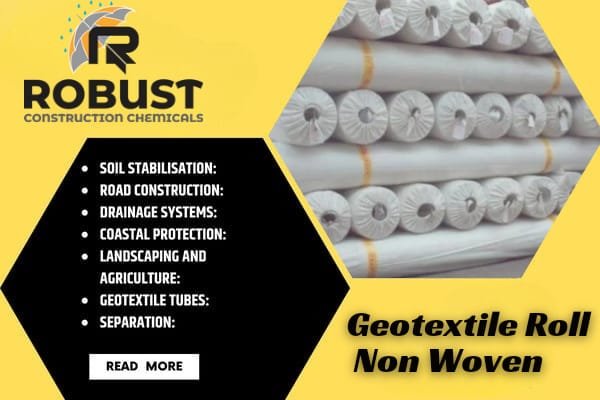
Geotextile Rolls for waterproofing: A Comprehensive Guide
Geo textile rolls have emerged as a vital component in various engineering, construction, and environmental applications. Though often overlooked, these synthetic fabrics provide significant benefits by stabilizing soil, managing water flow, and enhancing infrastructure. This article delves into the importance, types, applications, and benefits of geo textile rolls while maintaining a focus on their environmental significance.
What is a Geo Textile Roll?
A geo textile roll is essentially a synthetic fabric made from polymers like polyester or polypropylene. It is produced in roll form for easy transport and application. The primary function of a geo textile is to improve soil stability, provide filtration, and act as a barrier. Geo textile rolls are widely used in civil engineering, agriculture, and landscaping.
Types of Geo Textile Rolls
There are two main types of geo textile rolls: woven and non-woven. Both have their own advantages and are used for different purposes depending on the specific requirements of a project.
1. Woven Geo Textiles
Woven geo textiles are made by interlacing yarns at right angles, much like traditional fabrics. These textiles offer high tensile strength, which makes them ideal for applications requiring soil reinforcement and stabilization. Woven geo textiles are commonly used in road construction, where the fabric supports the soil under heavy loads, preventing soil erosion and improving longevity.
2. Non-Woven Geo Textiles
Non-woven geo textiles are created by bonding fibers together using heat, chemicals, or mechanical processes. These textiles have a felt-like texture and are primarily used for filtration and drainage applications. Non-woven geo textiles allow water to pass through while preventing soil from clogging drainage systems. They are often used in landfills, road drainage systems, and agricultural projects.
Key Applications of Geo Textile Rolls
Geo textile rolls play a critical role in various industries due to their versatility. Here are some of the most common applications:
1. Road Construction
One of the most significant uses of geo textile rolls is in road construction. When constructing roads, especially in areas with weak or unstable soil, geo textiles provide support by reinforcing the soil structure. By separating the subgrade from the base material, they prevent mixing, which helps maintain the road’s strength and prolongs its lifespan. Woven geo textiles are particularly useful in this context, offering the strength required to stabilize the soil under heavy traffic loads.
2. Erosion Control
Erosion control is a major concern in both construction and environmental projects. Geo textile rolls are used to prevent soil erosion by stabilizing slopes, riverbanks, and coastal areas. By allowing water to pass through while holding soil in place, geo textiles help mitigate the effects of wind and water erosion, ensuring that land remains intact and usable.
3. Drainage Systems
In drainage systems, non-woven geo textile rolls act as filters that allow water to pass through while preventing soil particles from entering the drainage pipes. This ensures that the drainage system remains unclogged and efficient over time. They are commonly used in road and highway drainage, landfills, and even in agricultural fields where proper water management is crucial.
4. Landfill Protection
Geo textiles play a crucial role in landfill projects by providing protection and enhancing waste containment. In a landfill, geo textiles are often used as a barrier between the waste and the surrounding soil, preventing contamination. They also assist in drainage, ensuring that leachate—liquid waste generated from decomposing materials—is properly managed.
5. Agriculture
In agricultural settings, geo textile rolls are used to improve soil structure, manage water flow, and prevent soil erosion. They are often placed under mulch or other materials to prevent weeds from growing, while still allowing water and nutrients to reach the soil. Geo textiles also help in irrigation systems by improving drainage and water management in crop fields.
Benefits of Using Geo Textile Rolls
Geo textile rolls offer a range of benefits that make them an essential component in both construction and environmental protection projects. Some of the key advantages include:
1. Improved Soil Stability
One of the primary functions of geo textile rolls is to improve soil stability. By reinforcing soil, these textiles prevent movement and mixing of different layers, which is crucial for the long-term durability of roads, buildings, and other structures. In projects involving weak or unstable soils, woven geo textiles are often used to strengthen the ground, allowing for construction in areas that would otherwise be unsuitable.
2. Enhanced Drainage
Proper drainage is critical in many projects, especially in road construction and landfills. Non-woven geo textiles facilitate water flow while filtering out fine soil particles, ensuring that drainage systems remain effective. This reduces the risk of flooding and waterlogging, which can cause significant damage to infrastructure and the environment.
3. Erosion Prevention
Erosion is a common issue in both construction and natural environments. Geo textile rolls provide a cost-effective solution to this problem by stabilizing soil and preventing the displacement of soil particles due to wind, rain, or water flow. This not only protects the environment but also enhances the durability of structures built on or near eroded areas.
4. Environmental Protection
Geo textile rolls are widely used in environmental projects, particularly in the construction of landfills. By acting as a barrier between waste and soil, they help prevent the contamination of groundwater and surrounding land. Additionally, geo textiles used in erosion control and drainage systems contribute to sustainable land management, making them an eco-friendly choice in many projects.
5. Cost-Effective and Durable
Geo textile rolls are relatively inexpensive compared to other construction materials, and their durability ensures long-lasting performance. This makes them a cost-effective solution for a wide range of applications. Whether used in road construction, drainage systems, or erosion control, geo textiles provide long-term value by reducing maintenance costs and extending the life of infrastructure.
The Environmental Impact of Geo Textile Rolls
In today’s world, where sustainability and environmental conservation are top priorities, geo textile rolls offer significant environmental benefits. By preventing soil erosion, enhancing drainage, and improving soil stability, geo textiles play a key role in protecting natural ecosystems.
Additionally, many geo textiles are made from recycled materials, further reducing their environmental footprint. Some manufacturers are also exploring biodegradable options, which would break down naturally over time, offering a more sustainable solution for certain applications.
Geotextile Rolls for Waterproofing: A Comprehensive Guide
1. Introduction
In modern civil engineering, infrastructure development, and environmental protection projects, geotextile rolls play a crucial role in ensuring the durability and efficiency of construction works. Geotextiles are permeable fabrics made from synthetic or natural fibers, designed to improve soil characteristics and provide separation, filtration, drainage, protection, and reinforcement. When used for waterproofing applications, geotextiles form an essential component of multilayer systems that protect structures from water infiltration and related damage.
The concept of using geotextiles for waterproofing emerged as engineers recognized the need for a flexible, durable, and economical solution to control water movement in soil and structural layers. Geotextile rolls, available in woven and nonwoven forms, are now standard materials in a variety of projects including tunnels, basements, retaining walls, roads, embankments, landfills, and green roofs.
This article explores the properties, types, manufacturing, applications, and advantages of geotextile rolls for waterproofing, as well as their installation procedures and performance considerations.
2. Understanding Geotextiles
2.1 Definition and Function
Geotextiles are synthetic textile materials used in geotechnical engineering to stabilize terrain, control erosion, and enhance soil strength. When applied for waterproofing, they act primarily as protective, drainage, and filtration layers, complementing waterproof membranes and barriers. They do not typically serve as the waterproofing layer themselves but rather safeguard and enhance the efficiency of the actual waterproofing system.
2.2 Materials Used
Geotextiles are primarily made from synthetic polymers, including:
-
Polypropylene (PP): Offers high resistance to chemical attack and biological degradation, making it ideal for long-term underground applications.
-
Polyester (PET): Known for its mechanical strength and dimensional stability.
-
Polyethylene (PE): Provides excellent resistance to water and most acids.
-
Nylon (PA): Used for high-strength applications though less common due to moisture absorption.
Natural fibers (such as jute or coir) are occasionally used for temporary works or eco-friendly projects, but they are less durable for waterproofing applications.
2.3 Manufacturing Processes
Geotextiles are produced through two primary methods:
-
Woven Geotextiles: Manufactured by interlacing threads or yarns, forming a strong, dimensionally stable fabric. Woven geotextiles offer high tensile strength and low elongation, ideal for reinforcement.
-
Nonwoven Geotextiles: Created by bonding fibers through mechanical (needle punching), chemical, or thermal methods. Nonwoven geotextiles are more flexible, permeable, and suitable for filtration and protection layers in waterproofing.
3. The Role of Geotextile Rolls in Waterproofing
3.1 Protective Layer
In most waterproofing systems, geotextiles act as a protective cushion layer that shields the waterproof membrane from mechanical damage caused by backfilling, installation activities, or settlement. They prevent punctures and abrasions that could compromise the integrity of the membrane.
3.2 Drainage and Filtration
Geotextile rolls also function as drainage layers, allowing water to flow laterally away from the structure while preventing soil particles from clogging the drainage system. This combination of filtration and drainage ensures long-term waterproofing performance.
3.3 Separation Layer
By separating dissimilar materials such as soil and granular drainage layers, geotextiles prevent contamination and maintain the efficiency of the drainage or waterproofing system.
3.4 Reinforcement
In certain cases, woven geotextiles provide additional reinforcement, improving the load-bearing capacity of the structure and reducing the risk of settlement that could lead to cracks and leaks.
4. Types of Geotextiles Used for Waterproofing
4.1 Nonwoven Geotextiles
These are the most commonly used in waterproofing applications due to their flexibility, permeability, and cushioning properties. Nonwoven geotextiles, typically made from polypropylene or polyester fibers, provide excellent protection to waterproof membranes in basements, tunnels, and roofs.
Key features:
-
High puncture resistance
-
Excellent filtration and drainage
-
Good elongation and flexibility
-
Resistance to biological and chemical attack
4.2 Woven Geotextiles
Woven geotextiles, though less common in waterproofing, may be used where high tensile strength and dimensional stability are required, such as beneath heavy loads or reinforced retaining structures.
Key features:
-
Superior tensile strength
-
Low permeability
-
Excellent dimensional stability
-
Resistance to UV degradation
4.3 Composite Geotextiles
Composite geotextiles combine woven and nonwoven layers or include geogrid or drainage cores. These are used where multifunctional performance is needed, such as reinforcement, filtration, and protection in one material.
5. Applications of Geotextile Rolls in Waterproofing
5.1 Underground Structures
Geotextiles are widely used in waterproofing basements, foundations, and underground parking structures. They serve as a protective cushion over waterproof membranes (such as HDPE or bituminous sheets), preventing damage during concrete placement or backfilling.
5.2 Tunnels and Subways
In tunnel waterproofing systems, geotextiles are used between the structural lining and waterproof membranes. They protect the membrane from puncture by rough concrete surfaces and allow controlled drainage of seepage water.
5.3 Roof Gardens and Green Roofs
Geotextile rolls play a key role in green roof waterproofing systems, acting as a filtration and drainage layer above the waterproof membrane. They allow water to drain freely while retaining soil and preventing clogging.
5.4 Landfills and Waste Containment
In landfill liners and caps, geotextiles protect geomembranes used for waterproofing hazardous waste sites. They prevent mechanical damage and assist in leachate drainage.
5.5 Reservoirs, Ponds, and Canals
Geotextiles in hydraulic structures serve as protective layers under geomembranes, ensuring waterproof containment and preventing puncture from stones or irregular subgrade surfaces.
5.6 Road and Bridge Deck Waterproofing
On bridge decks, geotextiles are installed beneath bituminous waterproofing membranes to absorb stress, improve bonding, and prevent reflective cracking.
6. Installation Procedure
6.1 Surface Preparation
The substrate must be smooth, clean, and free of sharp objects or debris. Any voids or irregularities should be filled to prevent damage to the geotextile or waterproof membrane.
6.2 Placement of Geotextile Rolls
Geotextile rolls should be unrolled carefully to avoid stretching or tearing. Overlaps typically range from 150 to 300 mm, depending on design specifications.
6.3 Fixing and Jointing
In some cases, geotextiles are fixed using adhesives, welding, or mechanical fasteners to prevent displacement during installation. For nonwoven types, needle punching or heat bonding may be used for seam joining.
6.4 Membrane Installation
Once the geotextile is in place, the waterproof membrane (such as PVC, HDPE, or bituminous sheets) is applied. In a two-layer system, a second geotextile layer may be added on top for added protection.
6.5 Quality Control
Proper inspection is essential. Key aspects include:
-
Checking for tears, folds, or displacement
-
Ensuring overlap consistency
-
Verifying alignment and coverage
-
Testing permeability and mechanical strength if required
7. Performance Characteristics
7.1 Mechanical Properties
-
Tensile Strength: Resistance to stretching under load.
-
Puncture Resistance: Ability to resist penetration by sharp objects.
-
Tear Strength: Resistance to propagation of cuts or tears.
7.2 Hydraulic Properties
-
Permeability: Controls the flow of water through the fabric.
-
Aperture Size: Determines the soil particle size that can pass through, affecting filtration.
7.3 Durability
Geotextiles must resist chemical degradation, biological attack, and ultraviolet exposure. In underground applications, synthetic materials like polypropylene offer exceptional durability exceeding 50 years.
8. Advantages of Using Geotextile Rolls in Waterproofing
-
Enhanced Protection: Prevents mechanical damage to expensive waterproof membranes.
-
Improved Drainage: Reduces hydrostatic pressure by allowing water flow away from structures.
-
Cost Efficiency: Minimizes maintenance and repair costs by extending membrane lifespan.
-
Ease of Installation: Lightweight, flexible, and easy to handle on-site.
-
Environmental Benefits: Promotes sustainable design by reducing material waste and preventing contamination.
-
Versatility: Applicable across a wide range of civil and environmental engineering projects.
-
Long-Term Performance: Resistant to chemical and biological degradation, ensuring consistent waterproofing efficiency.
9. Limitations and Considerations
While geotextile rolls offer numerous advantages, engineers must consider certain limitations:
-
Not a Waterproofing Membrane: Geotextiles alone do not provide waterproofing; they complement the membrane.
-
Installation Damage: Mishandling or inadequate overlap may compromise performance.
-
Clogging Risks: In poorly designed drainage systems, fine particles may clog the geotextile pores.
-
UV Sensitivity: Prolonged exposure to sunlight may degrade unprotected fabrics.
Proper design, material selection, and installation supervision are critical to mitigating these issues.
10. Selection Criteria
Choosing the right geotextile for waterproofing depends on several factors:
-
Project Type: (Tunnel, roof, basement, etc.)
-
Expected Loads: Determines required tensile and puncture strength.
-
Drainage Requirements: Permeability and thickness.
-
Chemical Environment: Resistance to pH variations, salts, and organic substances.
-
Installation Conditions: Exposure, accessibility, and contact with sharp surfaces.
Standard guidelines such as ASTM D4595, EN ISO 10319, and AASHTO M288 provide testing and classification methods for selecting suitable geotextiles.
11. Future Trends in Geotextile Waterproofing
With ongoing advancements in materials science, geotextiles are becoming smarter and more efficient. Next-generation geotextiles may include:
-
Smart Geotextiles: Embedded sensors for monitoring strain, moisture, and temperature.
-
Biodegradable Options: For temporary waterproofing in environmentally sensitive projects.
-
Hybrid Systems: Combining geotextiles with geomembranes or clay liners for superior performance.
-
Nanofiber Technologies: Offering enhanced filtration and strength with reduced weight.
The integration of geotextile rolls with advanced waterproofing membranes is paving the way for more resilient and sustainable infrastructure.
12. Conclusion
Geotextile rolls are indispensable components of modern waterproofing systems, serving as protective, filtration, and drainage layers that enhance the performance and longevity of waterproof membranes. Whether used in tunnels, basements, green roofs, or landfills, geotextiles ensure that water is controlled effectively while maintaining structural integrity.
Their versatility, durability, and cost-effectiveness make them a preferred choice in civil engineering and environmental applications. As technology advances, geotextile materials will continue to evolve, offering innovative solutions to the growing challenges of waterproofing and water management in construction.
In summary, while geotextile rolls may not directly prevent water penetration, their role in preserving and optimizing the waterproofing system is invaluable — making them a cornerstone of sustainable, durable, and efficient infrastructure design.
Post Tags :
- #GeomembraneRoll #HDPEGeomembrane #LDPEGeomembrane #PVCGeomembrane #WaterproofingMembrane #Geosynthetics #GeomembraneLiner #ImpermeableLiner #LandfillLiner #PondLiner #ContainmentLiner
- #QualityWaterproofing #DurableSolutions #EcoFriendlyMaterials #ConstructionInnovation #SmartConstruction #ProjectEngineering #IndustrialWaterproofing
- #WaterproofingSolutions #WaterproofingExperts #RoofWaterproofing #BasementWaterproofing #TankWaterproofing #PondWaterproofing #CanalLining #ReservoirLining