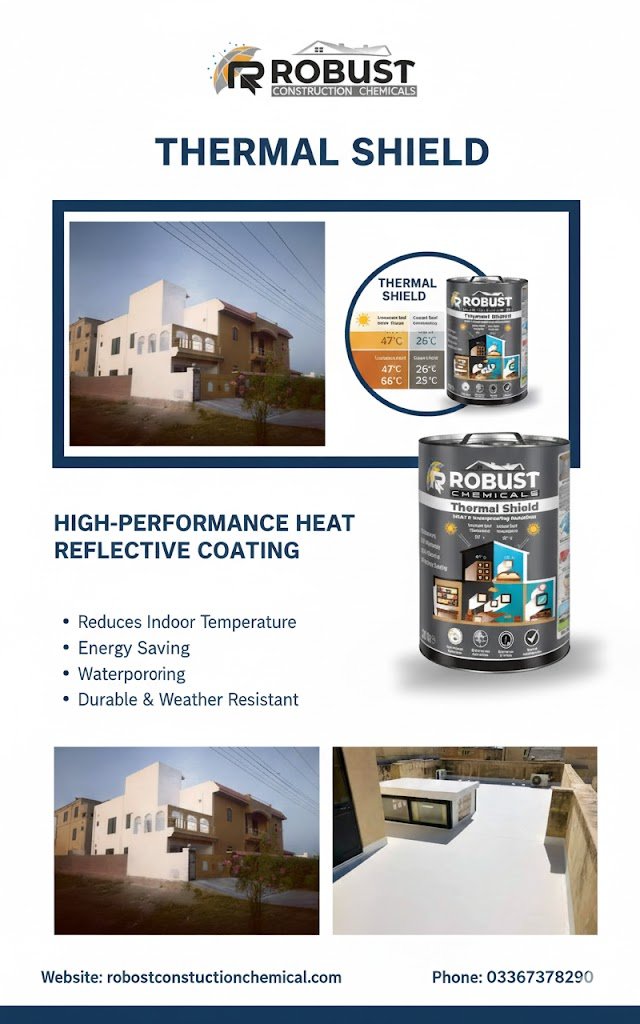
✅ Heat Defense Coating System | Thermal Shield for Roof Cooling & Energy Saving
Heat defense coating systems have become an essential solution for modern buildings that face increasing heat loads, rising energy costs, and growing demand for indoor comfort, and thermal shield roof coatings provide an effective way to reduce surface temperature by reflecting solar radiation and limiting heat transfer into the building envelope, which helps maintain stable indoor temperatures, protects roof materials from thermal stress, and significantly lowers cooling energy consumption across residential, commercial, and industrial facilities operating in hot and variable climates.
Unlike traditional insulation materials that require thick layers and complex installation, thermal shield coatings are applied directly onto roof surfaces using rollers, brushes, or spray equipment, forming a continuous reflective membrane that enhances solar reflectance and emissivity while sealing micro pores and surface imperfections that normally absorb heat and accelerate material degradation over time, resulting in improved durability and reduced maintenance demands throughout the roof lifecycle.
The reflective pigments and ceramic micro particles embedded within high quality thermal shield formulations work together to deflect infrared radiation and ultraviolet exposure, preventing excessive heat buildup during peak sunlight hours while minimizing surface expansion and contraction cycles that often cause cracking, blistering, and premature aging of conventional roofing systems, especially on concrete slabs, metal sheets, waterproof membranes, and industrial roofing assemblies exposed to continuous weather stress.
Roof cooling performance achieved through thermal shield technology directly contributes to energy efficiency by reducing the load on air conditioning systems, lowering electricity consumption, stabilizing internal temperatures, and creating more comfortable working and living environments for occupants, which translates into long term operational savings, reduced carbon footprint, and improved sustainability performance for property owners, facility managers, and infrastructure operators seeking responsible energy management strategies.
Thermal shield coatings also enhance waterproofing performance by forming a seamless protective layer that resists rain penetration, surface moisture absorption, dust accumulation, and biological growth, thereby preserving roof integrity and preventing secondary damage to insulation layers, structural concrete, electrical systems, and interior finishes that often suffer when moisture infiltration combines with heat driven material fatigue and ultraviolet exposure.
The elasticity and flexibility of modern heat defense coatings allow them to accommodate minor substrate movement, thermal cycling, and vibration without cracking or peeling, ensuring consistent adhesion on diverse substrates including cementitious roofs, metal decking, fiber cement sheets, bitumen membranes, and previously coated surfaces when properly prepared, primed, and cleaned according to manufacturer guidelines.
Application efficiency makes thermal shield systems attractive for both new construction and retrofit projects because they require minimal downtime, low labor intensity, and simple surface preparation compared to bulky insulation installations, enabling fast project turnaround while delivering immediate thermal performance improvement that can be measured through surface temperature reduction and indoor comfort enhancement shortly after curing.
In industrial environments where roof temperatures can significantly affect internal process stability, equipment reliability, and worker productivity, thermal shield coatings help regulate internal heat gain, reduce heat related stress on machinery, and improve operational safety by maintaining balanced ambient conditions that support consistent manufacturing performance and extended equipment lifespan.
Commercial buildings such as shopping centers, warehouses, office complexes, and logistics hubs benefit from reduced cooling loads, stabilized indoor climates, and enhanced roof protection that extends asset value while improving occupant satisfaction, whereas residential homes experience better comfort levels, lower electricity bills, and improved roof longevity under harsh sun exposure and seasonal temperature fluctuations.
Thermal shield coatings exhibit excellent resistance to ultraviolet radiation, weathering, pollution exposure, mild chemicals, and airborne contaminants, ensuring that reflective performance remains stable over extended periods without rapid chalking, discoloration, or loss of adhesion that could compromise heat reflection efficiency and aesthetic appearance of roof surfaces in urban and industrial environments.
Proper surface preparation plays a critical role in achieving optimal coating performance, requiring removal of loose debris, oil contamination, standing water, weak concrete layers, and incompatible coatings while repairing cracks, joints, and damaged sections to create a sound substrate that supports strong mechanical bonding and uniform film formation during application and curing.
Routine inspection and periodic cleaning further preserve reflectivity by removing dust accumulation and environmental residues that may reduce solar reflectance over time, ensuring that the roof continues to deliver consistent cooling performance and energy savings throughout the service life of the thermal shield system without requiring frequent recoating or intensive maintenance interventions.
From a sustainability perspective, heat defense coating systems contribute to urban heat island mitigation by lowering rooftop temperatures, reducing ambient heat release into surrounding environments, and supporting broader climate resilience initiatives that aim to reduce energy demand, improve building efficiency, and minimize greenhouse gas emissions associated with excessive cooling requirements in densely populated regions.
Modern thermal shield products are engineered with environmentally responsible formulations that emphasize low volatile organic compound emissions, safe handling characteristics, and long service life, enabling contractors to deliver high quality installations while maintaining occupational safety standards and environmental compliance across commercial and infrastructure projects.
Thermal performance consistency remains stable across seasonal cycles because reflective coatings maintain emissivity and surface integrity even during prolonged sun exposure, heavy rainfall, dust storms, and temperature variations that challenge conventional roof finishes and accelerate aging when left unprotected.
In retrofit scenarios, applying a thermal shield coating over existing waterproof membranes can restore reflectivity, improve waterproof reliability, and delay costly roof replacement cycles by protecting underlying materials from thermal shock, ultraviolet degradation, and moisture driven deterioration that often shorten roof lifespan in harsh climates.
Project stakeholders benefit from predictable return on investment because reduced energy consumption, extended roof durability, and lower maintenance costs collectively offset installation expenses while delivering measurable operational savings and improved asset performance throughout the coating service period.
Thermal shield systems also support compliance with energy efficiency guidelines, green building certifications, and sustainability frameworks that encourage reflective roofing solutions to minimize energy intensity and improve environmental performance across residential, commercial, and industrial developments.
As climate conditions continue to intensify with rising temperatures and increased solar exposure, the demand for reliable roof cooling and heat protection technologies continues to grow, positioning thermal shield coatings as a practical and scalable solution that delivers immediate comfort improvement, long term cost savings, and durable roof protection without major structural modification or complex installation requirements.
By integrating heat defense coating systems into building maintenance strategies and new construction planning, property owners and developers achieve resilient thermal performance, improved occupant comfort, reduced operational expenses, and extended roof service life, ensuring that buildings remain energy efficient, environmentally responsible, and structurally protected under evolving climate challenges and operational demands.
✅ Heat Defense Coating System | Thermal Shield for Roof Cooling & Energy Saving
Heat defense coating systems have become an essential solution for modern buildings that face increasing heat loads, rising energy costs, and growing demand for indoor comfort, and thermal shield roof coatings provide an effective way to reduce surface temperature by reflecting solar radiation and limiting heat transfer into the building envelope, which helps maintain stable indoor temperatures, protects roof materials from thermal stress, and significantly lowers cooling energy consumption across residential, commercial, and industrial facilities operating in hot and variable climates.
Unlike traditional insulation materials that require thick layers and complex installation, thermal shield coatings are applied directly onto roof surfaces using rollers, brushes, or spray equipment, forming a continuous reflective membrane that enhances solar reflectance and emissivity while sealing micro pores and surface imperfections that normally absorb heat and accelerate material degradation over time, resulting in improved durability and reduced maintenance demands throughout the roof lifecycle.
The reflective pigments and ceramic micro particles embedded within high quality thermal shield formulations work together to deflect infrared radiation and ultraviolet exposure, preventing excessive heat buildup during peak sunlight hours while minimizing surface expansion and contraction cycles that often cause cracking, blistering, and premature aging of conventional roofing systems, especially on concrete slabs, metal sheets, waterproof membranes, and industrial roofing assemblies exposed to continuous weather stress.
Roof cooling performance achieved through thermal shield technology directly contributes to energy efficiency by reducing the load on air conditioning systems, lowering electricity consumption, stabilizing internal temperatures, and creating more comfortable working and living environments for occupants, which translates into long term operational savings, reduced carbon footprint, and improved sustainability performance for property owners, facility managers, and infrastructure operators seeking responsible energy management strategies.
Thermal shield coatings also enhance waterproofing performance by forming a seamless protective layer that resists rain penetration, surface moisture absorption, dust accumulation, and biological growth, thereby preserving roof integrity and preventing secondary damage to insulation layers, structural concrete, electrical systems, and interior finishes that often suffer when moisture infiltration combines with heat driven material fatigue and ultraviolet exposure.
The elasticity and flexibility of modern heat defense coatings allow them to accommodate minor substrate movement, thermal cycling, and vibration without cracking or peeling, ensuring consistent adhesion on diverse substrates including cementitious roofs, metal decking, fiber cement sheets, bitumen membranes, and previously coated surfaces when properly prepared, primed, and cleaned according to manufacturer guidelines.
Application efficiency makes thermal shield systems attractive for both new construction and retrofit projects because they require minimal downtime, low labor intensity, and simple surface preparation compared to bulky insulation installations, enabling fast project turnaround while delivering immediate thermal performance improvement that can be measured through surface temperature reduction and indoor comfort enhancement shortly after curing.
In industrial environments where roof temperatures can significantly affect internal process stability, equipment reliability, and worker productivity, thermal shield coatings help regulate internal heat gain, reduce heat related stress on machinery, and improve operational safety by maintaining balanced ambient conditions that support consistent manufacturing performance and extended equipment lifespan.
Commercial buildings such as shopping centers, warehouses, office complexes, and logistics hubs benefit from reduced cooling loads, stabilized indoor climates, and enhanced roof protection that extends asset value while improving occupant satisfaction, whereas residential homes experience better comfort levels, lower electricity bills, and improved roof longevity under harsh sun exposure and seasonal temperature fluctuations.
Thermal shield coatings exhibit excellent resistance to ultraviolet radiation, weathering, pollution exposure, mild chemicals, and airborne contaminants, ensuring that reflective performance remains stable over extended periods without rapid chalking, discoloration, or loss of adhesion that could compromise heat reflection efficiency and aesthetic appearance of roof surfaces in urban and industrial environments.
Proper surface preparation plays a critical role in achieving optimal coating performance, requiring removal of loose debris, oil contamination, standing water, weak concrete layers, and incompatible coatings while repairing cracks, joints, and damaged sections to create a sound substrate that supports strong mechanical bonding and uniform film formation during application and curing.
Routine inspection and periodic cleaning further preserve reflectivity by removing dust accumulation and environmental residues that may reduce solar reflectance over time, ensuring that the roof continues to deliver consistent cooling performance and energy savings throughout the service life of the thermal shield system without requiring frequent recoating or intensive maintenance interventions.
From a sustainability perspective, heat defense coating systems contribute to urban heat island mitigation by lowering rooftop temperatures, reducing ambient heat release into surrounding environments, and supporting broader climate resilience initiatives that aim to reduce energy demand, improve building efficiency, and minimize greenhouse gas emissions associated with excessive cooling requirements in densely populated regions.
Modern thermal shield products are engineered with environmentally responsible formulations that emphasize low volatile organic compound emissions, safe handling characteristics, and long service life, enabling contractors to deliver high quality installations while maintaining occupational safety standards and environmental compliance across commercial and infrastructure projects.
Thermal performance consistency remains stable across seasonal cycles because reflective coatings maintain emissivity and surface integrity even during prolonged sun exposure, heavy rainfall, dust storms, and temperature variations that challenge conventional roof finishes and accelerate aging when left unprotected.
In retrofit scenarios, applying a thermal shield coating over existing waterproof membranes can restore reflectivity, improve waterproof reliability, and delay costly roof replacement cycles by protecting underlying materials from thermal shock, ultraviolet degradation, and moisture driven deterioration that often shorten roof lifespan in harsh climates.
Project stakeholders benefit from predictable return on investment because reduced energy consumption, extended roof durability, and lower maintenance costs collectively offset installation expenses while delivering measurable operational savings and improved asset performance throughout the coating service period.
Thermal shield systems also support compliance with energy efficiency guidelines, green building certifications, and sustainability frameworks that encourage reflective roofing solutions to minimize energy intensity and improve environmental performance across residential, commercial, and industrial developments.
As climate conditions continue to intensify with rising temperatures and increased solar exposure, the demand for reliable roof cooling and heat protection technologies continues to grow, positioning thermal shield coatings as a practical and scalable solution that delivers immediate comfort improvement, long term cost savings, and durable roof protection without major structural modification or complex installation requirements.
By integrating heat defense coating systems into building maintenance strategies and new construction planning, property owners and developers achieve resilient thermal performance, improved occupant comfort, reduced operational expenses, and extended roof service life, ensuring that buildings remain energy efficient, environmentally responsible, and structurally protected under evolving climate challenges and operational demands.
✅ Heat Defense Coating System | Thermal Shield for Roof Cooling & Energy Saving
Heat defense coating systems have become an essential solution for modern buildings that face increasing heat loads, rising energy costs, and growing demand for indoor comfort, and thermal shield roof coatings provide an effective way to reduce surface temperature by reflecting solar radiation and limiting heat transfer into the building envelope, which helps maintain stable indoor temperatures, protects roof materials from thermal stress, and significantly lowers cooling energy consumption across residential, commercial, and industrial facilities operating in hot and variable climates.
Unlike traditional insulation materials that require thick layers and complex installation, thermal shield coatings are applied directly onto roof surfaces using rollers, brushes, or spray equipment, forming a continuous reflective membrane that enhances solar reflectance and emissivity while sealing micro pores and surface imperfections that normally absorb heat and accelerate material degradation over time, resulting in improved durability and reduced maintenance demands throughout the roof lifecycle.
The reflective pigments and ceramic micro particles embedded within high quality thermal shield formulations work together to deflect infrared radiation and ultraviolet exposure, preventing excessive heat buildup during peak sunlight hours while minimizing surface expansion and contraction cycles that often cause cracking, blistering, and premature aging of conventional roofing systems, especially on concrete slabs, metal sheets, waterproof membranes, and industrial roofing assemblies exposed to continuous weather stress.
Roof cooling performance achieved through thermal shield technology directly contributes to energy efficiency by reducing the load on air conditioning systems, lowering electricity consumption, stabilizing internal temperatures, and creating more comfortable working and living environments for occupants, which translates into long term operational savings, reduced carbon footprint, and improved sustainability performance for property owners, facility managers, and infrastructure operators seeking responsible energy management strategies.
Thermal shield coatings also enhance waterproofing performance by forming a seamless protective layer that resists rain penetration, surface moisture absorption, dust accumulation, and biological growth, thereby preserving roof integrity and preventing secondary damage to insulation layers, structural concrete, electrical systems, and interior finishes that often suffer when moisture infiltration combines with heat driven material fatigue and ultraviolet exposure.
The elasticity and flexibility of modern heat defense coatings allow them to accommodate minor substrate movement, thermal cycling, and vibration without cracking or peeling, ensuring consistent adhesion on diverse substrates including cementitious roofs, metal decking, fiber cement sheets, bitumen membranes, and previously coated surfaces when properly prepared, primed, and cleaned according to manufacturer guidelines.
Application efficiency makes thermal shield systems attractive for both new construction and retrofit projects because they require minimal downtime, low labor intensity, and simple surface preparation compared to bulky insulation installations, enabling fast project turnaround while delivering immediate thermal performance improvement that can be measured through surface temperature reduction and indoor comfort enhancement shortly after curing.
In industrial environments where roof temperatures can significantly affect internal process stability, equipment reliability, and worker productivity, thermal shield coatings help regulate internal heat gain, reduce heat related stress on machinery, and improve operational safety by maintaining balanced ambient conditions that support consistent manufacturing performance and extended equipment lifespan.
Commercial buildings such as shopping centers, warehouses, office complexes, and logistics hubs benefit from reduced cooling loads, stabilized indoor climates, and enhanced roof protection that extends asset value while improving occupant satisfaction, whereas residential homes experience better comfort levels, lower electricity bills, and improved roof longevity under harsh sun exposure and seasonal temperature fluctuations.
Thermal shield coatings exhibit excellent resistance to ultraviolet radiation, weathering, pollution exposure, mild chemicals, and airborne contaminants, ensuring that reflective performance remains stable over extended periods without rapid chalking, discoloration, or loss of adhesion that could compromise heat reflection efficiency and aesthetic appearance of roof surfaces in urban and industrial environments.
Proper surface preparation plays a critical role in achieving optimal coating performance, requiring removal of loose debris, oil contamination, standing water, weak concrete layers, and incompatible coatings while repairing cracks, joints, and damaged sections to create a sound substrate that supports strong mechanical bonding and uniform film formation during application and curing.
Routine inspection and periodic cleaning further preserve reflectivity by removing dust accumulation and environmental residues that may reduce solar reflectance over time, ensuring that the roof continues to deliver consistent cooling performance and energy savings throughout the service life of the thermal shield system without requiring frequent recoating or intensive maintenance interventions.
From a sustainability perspective, heat defense coating systems contribute to urban heat island mitigation by lowering rooftop temperatures, reducing ambient heat release into surrounding environments, and supporting broader climate resilience initiatives that aim to reduce energy demand, improve building efficiency, and minimize greenhouse gas emissions associated with excessive cooling requirements in densely populated regions.
Modern thermal shield products are engineered with environmentally responsible formulations that emphasize low volatile organic compound emissions, safe handling characteristics, and long service life, enabling contractors to deliver high quality installations while maintaining occupational safety standards and environmental compliance across commercial and infrastructure projects.
Thermal performance consistency remains stable across seasonal cycles because reflective coatings maintain emissivity and surface integrity even during prolonged sun exposure, heavy rainfall, dust storms, and temperature variations that challenge conventional roof finishes and accelerate aging when left unprotected.
In retrofit scenarios, applying a thermal shield coating over existing waterproof membranes can restore reflectivity, improve waterproof reliability, and delay costly roof replacement cycles by protecting underlying materials from thermal shock, ultraviolet degradation, and moisture driven deterioration that often shorten roof lifespan in harsh climates.
Project stakeholders benefit from predictable return on investment because reduced energy consumption, extended roof durability, and lower maintenance costs collectively offset installation expenses while delivering measurable operational savings and improved asset performance throughout the coating service period.
Thermal shield systems also support compliance with energy efficiency guidelines, green building certifications, and sustainability frameworks that encourage reflective roofing solutions to minimize energy intensity and improve environmental performance across residential, commercial, and industrial developments.
As climate conditions continue to intensify with rising temperatures and increased solar exposure, the demand for reliable roof cooling and heat protection technologies continues to grow, positioning thermal shield coatings as a practical and scalable solution that delivers immediate comfort improvement, long term cost savings, and durable roof protection without major structural modification or complex installation requirements.
By integrating heat defense coating systems into building maintenance strategies and new construction planning, property owners and developers achieve resilient thermal performance, improved occupant comfort, reduced operational expenses, and extended roof service life, ensuring that buildings remain energy efficient, environmentally responsible, and structurally protected under evolving climate challenges and operational demands.
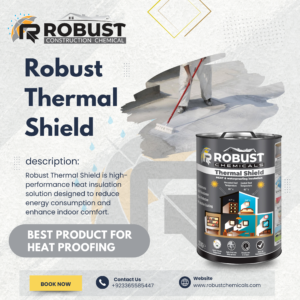
defensedefensedefensedefensedefensedefensedefensedefensedefensedefensedefensedefensedefensedefensedefensedefensedefensedefensedefensedefensedefensedefensedefensedefensedefensedefensedefense
🔷 Importance of Heat Defense in Modern Roofs
Excessive roof heat increases energy consumption and damages roofing materials.
Thermal shield coatings reduce heat absorption and improve building comfort.
🔹 Why Roof Cooling Matters
High roof temperatures transfer heat indoors.
This increases air conditioning loads and energy costs.
🔸 Long-Term Benefits of Thermal Shield Coating
Protects roofing materials from UV damage.
Enhances roof lifespan and durability.
🔷 What is Thermal Shield Coating
Thermal shield is a high-performance reflective coating applied on roof surfaces.
It blocks solar radiation and prevents heat penetration into the building envelope.
🔹 Reflective Pigments and Ceramic Technology
Specialized pigments reflect infrared and ultraviolet rays.
Ceramic micro particles reduce heat buildup and thermal stress.
🔸 Elastic and Durable Formulation
Coating adapts to roof movement and temperature changes.
Prevents cracking, peeling, and surface degradation.
🔷 Key Features of Thermal Shield Systems
Thermal shield coatings combine insulation, reflectivity, and waterproofing.
They deliver energy efficiency, comfort, and long-term protection.
🔹 Roof Surface Temperature Reduction
Significantly lowers heat absorbed by the roof.
Reduces interior temperature and cooling energy demand.
🔸 Waterproof and Weather Resistant
Protects against rain, dust, UV exposure, and biological growth.
Enhances roof integrity and prevents leaks.
🔷 Applications of Thermal Shield Coating
Thermal shield coatings are suitable for residential, commercial, and industrial roofs.
They can be applied to concrete, metal, bitumen membranes, fiber cement, and previously coated surfaces.
🔹 Residential Roofs
Improves indoor comfort and reduces cooling bills.
Prevents roof damage from heat and UV radiation.
🔸 Commercial and Industrial Buildings
Supports warehouses, factories, offices, and large roof surfaces.
Reduces operational energy costs and protects equipment inside.
🔷 Benefits in Energy Efficiency and Sustainability
Thermal shield reduces dependence on air conditioning.
It lowers electricity consumption and greenhouse gas emissions.
🔹 Environmental Advantages
Helps mitigate urban heat island effects.
Promotes sustainable and energy-efficient construction practices.
🔸 Long-Term Cost Savings
Minimizes roof maintenance and replacement costs.
Provides measurable ROI through reduced energy bills.
🔷 Application Method and Best Practices
Proper surface preparation is essential for optimal performance.
Clean, dry, and stable surfaces ensure strong adhesion.
🔹 Surface Cleaning and Priming
Remove dust, oil, loose debris, and weak concrete layers.
Use primer if recommended for difficult substrates.
🔸 Coating Application Techniques
Apply using roller, brush, or spray for uniform coverage.
Ensure consistent thickness and smooth finish for maximum reflectivity.
🔷 Performance Under Extreme Conditions
Thermal shield coatings perform well under intense sunlight, high temperatures, rain, and pollution.
The coating maintains elasticity and reflective performance over years.
🔹 UV and Weather Resistance
Protects roof surfaces from UV radiation and heat stress.
Prevents cracking, chalking, and fading.
🔸 Durability in Harsh Environments
Suitable for coastal, industrial, and urban locations.
Resists dust, chemicals, and biological growth.
🔷 Compatibility with Other Roofing Systems
Thermal shield works with waterproofing membranes, protective coatings, and insulation layers.
Enhances overall roof protection.
🔹 Multi-Layer Roofing Integration
Provides additional reflective and waterproofing protection.
Supports both new construction and retrofit projects.
🔸 Painting and Coating Over Compatibility
Allows aesthetic finishing with paints or protective top layers.
Maintains high reflectivity and durability.
🔷 Advantages Over Traditional Roof Coatings
Thermal shield coatings provide both heat reflection and surface protection.
Traditional coatings often fail under high solar exposure.
🔹 Energy Efficiency
Reduces indoor temperature and AC load.
Promotes sustainable energy usage.
🔸 Extended Roof Lifespan
Prevents heat-related degradation.
Reduces frequency of roof replacement or repairs.
🔷 Why Choose ROBUST Thermal Shield
ROBUST Thermal Shield combines durability, reflectivity, and waterproofing.
Trusted by contractors, architects, and building owners across Pakistan.
🔹 Quality Manufacturing Standards
Consistent product performance.
High adhesion, elasticity, and long-term stability.
🔸 Cost-Effective and Environmentally Responsible
Reduces energy bills and maintenance costs.
Supports sustainable and resilient construction.
🔷 Conclusion: Smart Heat Defense Solution
Thermal shield coatings provide efficient roof cooling and energy savings.
Protects structures, reduces costs, and improves indoor comfort.
🔹 Ideal Choice for Modern Construction
Suitable for residential, commercial, and industrial roofs.
Delivers reliable, long-term heat defense and roof protection.
🔸 Sustainable, Durable, and Energy Efficient
Enhances roof lifespan, reduces energy consumption, and improves overall building performance.