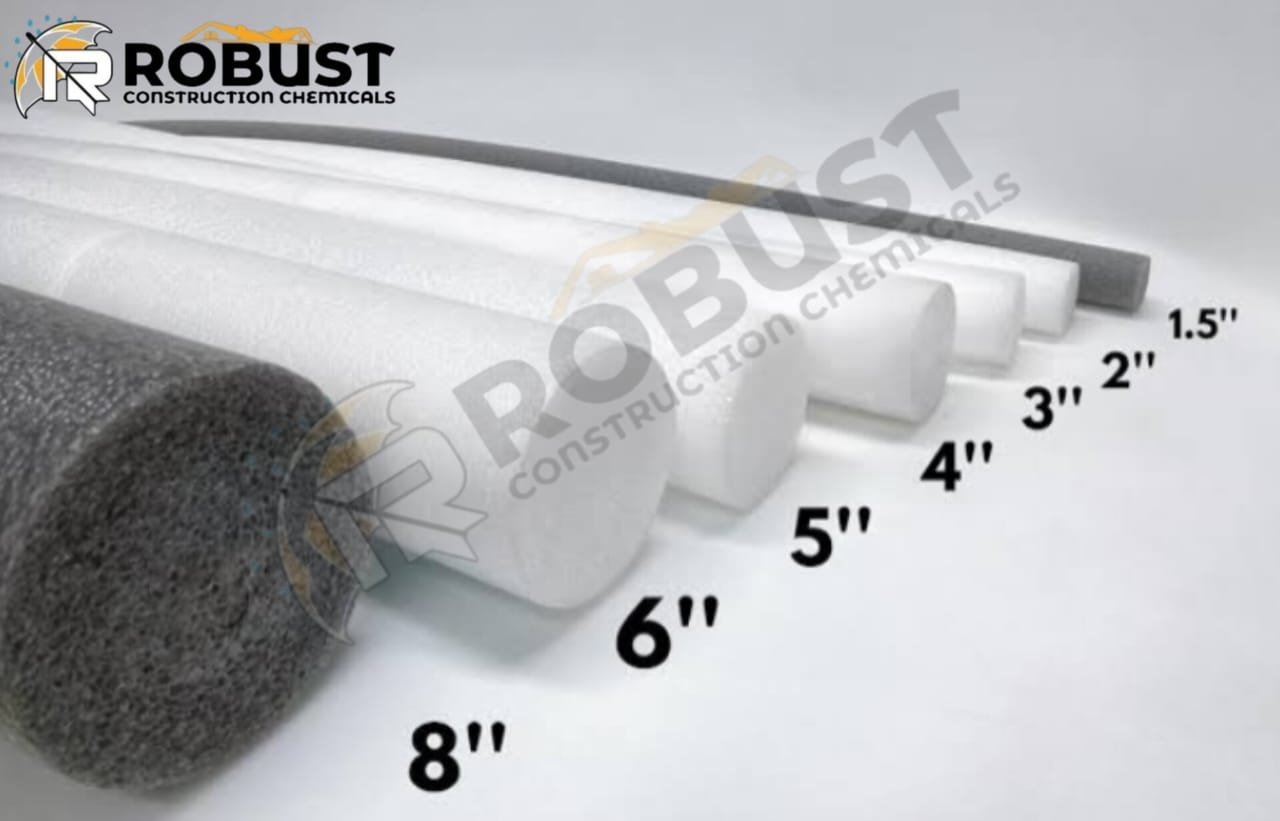
The Robust Backer Rod is a versatile, durable foam rod designed to provide superior joint support and sealant depth control in construction and repair applications. Made from high-quality, closed-cell foam, it resists moisture, enhances sealant adhesion, and ensures a long-lasting, professional finish. Ideal for filling gaps in expansion joints, windows, doors, and other sealing projects.
Robust Backer Rod: Comprehensive Guide, Applications, and Installation in Pakistan
Introduction to Backer Rod
In the world of construction and waterproofing, every small detail matters when it comes to ensuring durability, flexibility, and long-term protection. Among the essential materials that play a vital role in sealing and jointing work is the Backer Rod. This simple yet highly functional product is a must-have component for professional sealant application, particularly in expansion joints, concrete gaps, windows, doors, and façade systems.
A Backer Rod is a flexible, compressible foam material inserted into a joint before applying sealant. It serves as a backing material that controls the depth of sealant and ensures proper shape, adhesion, and performance. While it may seem like a small accessory, its role is fundamental in achieving airtight, watertight, and long-lasting joints.
In modern construction, where energy efficiency, waterproofing, and structural stability are top priorities, the Backer Rod ensures perfect sealant performance by preventing wastage, reducing joint stress, and improving elasticity. From highways and bridges to basements and building façades, this product is an unsung hero behind many successful waterproofing systems.
What is a Backer Rod?
A Backer Rod is a cylindrical foam strip made from materials like closed-cell polyethylene (PE) or open-cell polyurethane (PU). It is placed inside a joint or gap before the sealant is applied. The main purpose of using a backer rod is to:
-
Control the depth of sealant.
-
Provide a firm backing for sealant tooling.
-
Prevent three-sided adhesion, which can cause premature sealant failure.
-
Reduce sealant consumption, saving material and cost.
-
Enhance flexibility and performance of the sealant during expansion and contraction.
Backer rods come in various diameters ranging from 6mm to 50mm or more, depending on the joint width and application requirements.
The backer rod compresses easily into joints and rebounds to fill gaps tightly, ensuring that the sealant bonds only to the sides of the joint. This allows the sealant to stretch and compress with structural movement without tearing or losing adhesion.
Types of Backer Rod
Depending on their composition and structure, backer rods are categorized mainly into three types:
1. Closed-Cell Backer Rod
Closed-cell backer rods are made from dense, non-absorbent polyethylene foam with a smooth surface.
They are ideal for outdoor applications exposed to moisture because they do not absorb water.
Key Features:
-
Waterproof and moisture-resistant
-
Provides excellent sealant backing
-
Used with most sealant types (polyurethane, silicone, polysulfide)
-
Prevents air and water infiltration
-
Best suited for horizontal and vertical joints
Applications:
-
Expansion joints in concrete pavements
-
Façade sealing
-
Precast concrete panel joints
-
Roof and parapet joints
2. Open-Cell Backer Rod
Open-cell backer rods are made of softer, spongy polyurethane foam with interconnected cells that allow air passage.
They are commonly used in indoor or sheltered joints where moisture exposure is minimal.
Key Features:
-
Flexible and compressible
-
Allows air release from sealant during curing
-
Ideal for deep and irregular joints
-
Suitable for dynamic movement joints
Applications:
-
Interior wall joints
-
Door and window frames
-
Partition gaps
-
Controlled environment sealing
3. Hybrid or Bi-Cellular Backer Rod
Hybrid backer rods combine properties of both open and closed-cell types. They have a tough outer skin (closed cell) and a soft, flexible core (open cell).
This design provides the durability of a closed-cell rod with the flexibility of open-cell foam.
Key Features:
-
Can be used in most indoor/outdoor applications
-
Compatible with various sealants
-
Resists moisture and maintains compressibility
Applications:
-
Bridges and highways
-
Building exteriors
-
Large expansion joints
Technical Specifications
While specifications can vary by manufacturer, a general overview is given below:
| Property | Description |
|---|---|
| Material | Polyethylene or Polyurethane foam |
| Structure | Closed-cell or open-cell |
| Diameter Range | 6mm – 50mm (or customized) |
| Density | 25 – 35 kg/m³ |
| Water Absorption | < 1% by volume |
| Temperature Resistance | -40°C to +90°C |
| Chemical Resistance | Resistant to oils, acids, alkalis, and solvents |
| Color | Usually grey, black, or white |
Why Backer Rod is Essential in Sealant Application
Without a backer rod, sealants may adhere to three sides of the joint (two walls and the bottom), which restricts their ability to move freely. This leads to stress build-up, cracking, or peeling over time.
By placing a backer rod before sealant application:
-
The sealant bonds only to two sides, ensuring elasticity and proper movement.
-
The joint depth is controlled for optimal sealant thickness.
-
The sealant consumption is reduced, making the project more economical.
-
The joint appearance is smoother and more professional.
-
The sealant performance lasts longer due to reduced stress.
This makes the backer rod a key component in waterproofing and joint sealing systems for all types of structures.
Applications of Backer Rod in Construction
1. Expansion Joints
In concrete structures such as bridges, roads, and runways, expansion joints accommodate movement caused by temperature fluctuations. The backer rod ensures that sealant depth and flexibility are optimized for such conditions.
2. Precast Concrete Joints
When connecting precast concrete panels, a backer rod ensures uniform sealant application, preventing leakage or air infiltration.
3. Façade and Curtain Wall Systems
In glass façades or aluminum curtain wall systems, the backer rod acts as a spacer and sealant support to maintain watertightness and energy efficiency.
4. Doors and Windows
Used around frames to prevent air and water infiltration, improve sound insulation, and enhance sealant performance.
5. Water Tanks and Basements
In waterproofing applications, backer rods are used to fill expansion joints in retaining walls, basements, and water tanks before applying sealant.
6. Roofing and Parapet Joints
Backer rods are essential for creating flexible and durable seals on roof joints and parapet walls to prevent leakage.
Installation Guidelines for Backer Rod
Correct installation is crucial for achieving the desired performance. Below is a step-by-step guide for proper backer rod installation:
Step 1: Surface Preparation
-
Clean the joint thoroughly to remove dust, dirt, oil, or loose particles.
-
Ensure the sides of the joint are dry and free from contaminants.
Step 2: Selection of Backer Rod Size
-
Choose a backer rod with a diameter 20–30% larger than the joint width to ensure a tight fit.
-
Avoid undersized rods, as they can move or allow sealant leakage.
Step 3: Insertion
-
Compress and insert the backer rod into the joint using a blunt tool or roller.
-
Avoid puncturing or twisting the rod.
-
Maintain uniform depth throughout the joint.
Step 4: Sealant Application
-
Apply the sealant over the backer rod using a caulking gun.
-
Tool the sealant surface to achieve smooth adhesion with joint edges.
Step 5: Finishing
-
Allow the sealant to cure as per manufacturer’s instructions.
-
Inspect for air bubbles, gaps, or uneven finishes.
Advantages of Using Backer Rod
-
Enhanced Sealant Performance: Prevents three-side adhesion and improves flexibility.
-
Reduced Sealant Usage: Saves cost by limiting sealant volume.
-
Improved Waterproofing: Ensures joint tightness and prevents leaks.
-
Better Joint Aesthetics: Creates uniform sealant lines and smoother finishes.
-
Thermal and Sound Insulation: Acts as a barrier for heat and noise.
-
Easy Installation: Lightweight and simple to insert.
-
Chemical Resistance: Stable against oils, solvents, and construction chemicals.
-
Durable and Long-lasting: Resistant to aging, UV rays, and extreme temperatures.
-
Environmentally Safe: Non-toxic, non-reactive, and recyclable.
Choosing the Right Backer Rod
When selecting a backer rod for a project, consider the following factors:
-
Joint Type and Location: Indoor or outdoor, horizontal or vertical.
-
Sealant Compatibility: Polyurethane, silicone, polysulfide, or acrylic.
-
Exposure Conditions: UV, temperature, moisture, or chemicals.
-
Movement Capability: Expansion and contraction levels expected in the joint.
-
Joint Width: Always choose a rod slightly larger than the gap.
Backer Rod in Waterproofing Systems
In waterproofing systems, especially in basements, roofs, tanks, and retaining walls, Backer Rods play a significant role. They help sealant maintain elasticity and prevent seepage even under hydrostatic pressure.
For example, when waterproofing a basement:
-
The expansion joints are filled with a backer rod.
-
A polyurethane sealant is applied over it.
-
This combination allows the joint to move without cracking and provides a watertight seal.
The same technique is used in swimming pools, water tanks, and reservoirs, where long-term waterproof performance is critical.
Maintenance and Durability
Once installed correctly, backer rods require minimal maintenance. However:
-
Inspect joints periodically for signs of sealant deterioration.
-
Replace damaged or dislodged rods during renovation.
-
Avoid over-compressing the rod during installation.
Proper installation ensures a lifespan of 10–20 years depending on environmental exposure.
Common Mistakes to Avoid
-
Using wrong size or type of backer rod
-
Overfilling or underfilling the joint
-
Puncturing the closed-cell rod (which allows water absorption)
-
Using incompatible sealants
-
Applying sealant without ensuring proper compression
Avoiding these mistakes ensures professional sealing and long-lasting waterproofing.
Comparison: Backer Rod vs. Other Filling Materials
| Feature | Backer Rod | Sand/Cotton Rope | Foam Tape |
|---|---|---|---|
| Flexibility | Excellent | Poor | Moderate |
| Water Resistance | High | Low | Medium |
| Durability | Long-lasting | Short-term | Medium |
| Sealant Support | Excellent | Poor | Good |
| Cost Efficiency | High | Low | Moderate |
Clearly, backer rods outperform other fillers in professional waterproofing applications.
Environmental and Safety Benefits
Backer rods are made from non-toxic polyethylene or polyurethane foams. They are:
-
Environmentally safe
-
CFC-free and non-reactive
-
Easy to handle and install without special equipment
-
Safe for use in residential, commercial, and industrial environments
These properties make them compliant with green building standards.
Applications Across Industries
| Industry | Typical Use |
|---|---|
| Construction | Expansion and control joints |
| Infrastructure | Bridges, highways, tunnels |
| Residential | Windows, doors, roofs, basements |
| Commercial | Glass façades, malls, airports |
| Waterproofing | Tanks, swimming pools, retaining walls |
| Energy Sector | Oil & gas facilities, power plants |
Backer Rod Sizes Available in Pakistan
In Pakistan, backer rods are available in multiple diameters ranging from 6mm to 50mm or customized as required.
Common brands, including Robust Construction Chemicals, supply premium-quality PE Backer Rods designed for both waterproofing and heat insulation joints.
Available Sizes:
-
6mm, 8mm, 10mm, 12mm, 15mm
-
20mm, 25mm, 30mm, 40mm, 50mm
Packaging usually includes 50m to 200m rolls, depending on diameter.
Why Choose Robust Construction Chemicals Backer Rod
Robust Construction Chemicals offers top-quality Backer Rods manufactured from high-density closed-cell polyethylene foam. Our products are designed to meet international standards for waterproofing, insulation, and joint sealing applications.
Key Advantages:
-
Excellent waterproofing and airtightness
-
Compatible with polyurethane and silicone sealants
-
Resistant to UV, aging, and temperature extremes
-
Economical and long-lasting solution
-
Available in multiple diameters and lengths
Recommended Uses:
-
Expansion joints in concrete floors and walls
-
Sealant backing in glass façades
-
Joint sealing in basements and water tanks
-
Roofs, terraces, and parapets
Conclusion
The Backer Rod may appear to be a simple product, but its role in waterproofing and sealing cannot be overstated. It is the foundation for achieving durable, flexible, and watertight joints in all kinds of construction projects. By controlling sealant depth, reducing wastage, and enhancing elasticity, the backer rod ensures long-term protection and performance.
For builders, engineers, and waterproofing professionals across Pakistan, Robust Construction Chemicals Backer Rods offer the reliability, performance, and economy needed for modern construction challenges. Whether used in expansion joints, façades, or basements, they provide the perfect backing for durable, watertight seals that stand the test of time.
Description
Robust Backer Rod: Comprehensive Guide, Applications, and Installation in Pakistan
The Robust Backer Rod is an essential tool for construction and maintenance professionals seeking efficiency and durability in their sealing projects. Constructed from premium closed-cell foam, this backer rod is lightweight yet robust, providing excellent resistance to moisture, chemicals, and temperature fluctuations. It is designed to act as a spacer, ensuring precise control over sealant depth, reducing waste, and enhancing adhesion.
Suitable for various applications, the Robust Backer Rod is perfect for expansion joints, concrete repairs, and sealing gaps around windows, doors, and curtain walls. Its flexibility allows for easy installation, adapting to irregular joint widths while maintaining its shape. Additionally, the backer rod serves as a barrier to prevent three-sided adhesion, enabling a professional and reliable seal.
With its superior performance and long-lasting quality, the Robust Backer Rod is the go-to choice for creating strong, resilient, and aesthetically pleasing seals in residential, commercial, and industrial projects.
Backer Rod — Complete Overview
A Backer Rod is a flexible, compressible foam material that plays a crucial role in construction and waterproofing applications, especially in joint sealing and crack filling. It is usually made from closed-cell polyethylene (PE) or open-cell polyurethane (PU) foam and comes in various diameters to fit different joint widths. The primary purpose of a backer rod is to control the depth of sealant, ensure proper joint design, and enhance the performance of sealants in expansion joints, concrete slabs, façades, windows, and curtain walls.
🔹 Purpose of Backer Rod
-
Sealant Depth Control:
Ensures the correct sealant thickness, preventing overuse and improving flexibility. -
Bond Breaker:
Prevents the sealant from adhering to the bottom of the joint, allowing it to expand and contract properly. -
Improved Sealant Shape:
Helps form the ideal “hourglass” profile, which enhances sealant performance and longevity. -
Economical:
Reduces the amount of expensive sealant required. -
Insulation:
Provides thermal and sound insulation between building components.
🔹 Types of Backer Rod
-
Closed-Cell Backer Rod:
-
Non-absorbent and moisture-resistant.
-
Ideal for exterior joints, water-retaining structures, and waterproofing applications.
-
Used with silicone, polyurethane, polysulfide, and bituminous sealants.
-
-
Open-Cell Backer Rod:
-
More compressible and breathable.
-
Allows air to escape during sealant application.
-
Suitable for interior joints or where water exposure is minimal.
-
🔹 Common Applications
-
Expansion and contraction joints in concrete slabs and pavements
-
Façade and curtain wall joints
-
Precast concrete panels and masonry joints
-
Window and door frame perimeters
-
Bridge decks, tunnels, and basements
-
Waterproofing systems for roofs and foundations
🔹 Installation Instructions
-
Clean the Joint:
Remove dust, dirt, oil, and loose materials from the joint surface. -
Select Proper Size:
Choose a backer rod 25–50% larger than the joint width to ensure a snug fit. -
Insert the Rod:
Use a blunt tool or roller to press the rod into the joint to the desired depth—usually half the joint width. -
Apply Sealant:
Apply the sealant over the backer rod, ensuring full contact with both joint sides without air pockets. -
Finishing:
Smooth the sealant surface for a clean finish and allow it to cure as per manufacturer recommendations.
🔹 Advantages of Using Backer Rod
-
Enhances sealant elasticity and durability
-
Prevents three-sided adhesion
-
Improves joint waterproofing and aesthetic finish
-
Minimizes sealant consumption and cost
-
Resistant to chemicals, weather, and temperature changes
-
Provides excellent insulation and soundproofing properties
🔹 Technical Properties
| Property | Specification |
|---|---|
| Material | Polyethylene / Polyurethane Foam |
| Type | Closed-Cell / Open-Cell |
| Density | 20–35 kg/m³ (typical) |
| Temperature Range | -40°C to +90°C |
| Water Absorption | <1% |
| Compression Recovery | >90% |
| Compatibility | Most commercial sealants |
🔹 Why Use Robust Backer Rod?
Robust Construction Chemicals provides premium-grade Backer Rods designed for maximum performance and durability. Our backer rods are made from high-quality polyethylene foam with excellent resistance to weather, chemicals, and water. They ensure optimal sealant adhesion, reduce material wastage, and enhance the overall waterproofing and insulation of your structures.
With Robust Backer Rod, you get:
-
Consistent diameter and density
-
Superior elasticity and compression recovery
-
Easy installation and long service life
-
Compatibility with all major sealant types
-
Ideal performance in both interior and exterior applications
🔹 Conclusion
A Backer Rod is a small but essential component in modern construction and waterproofing systems. By properly controlling sealant depth, preventing three-point adhesion, and ensuring joint flexibility, it dramatically increases the lifespan of seals and prevents water ingress or structural damage. Whether you’re working on building façades, roads, or basements, using Robust Backer Rod ensures efficiency, reliability, and long-term protection.
Related products
-
Sale!
Robust Tile grout
Original price was: ₨ 2,000.₨ 1,500Current price is: ₨ 1,500. Add to cart -
Sale!
Robust Leak Fix Admixture
Original price was: ₨ 2,800.₨ 2,500Current price is: ₨ 2,500. Add to cart -
Sale!
Robust XPS sheet (jumbolon)
Original price was: ₨ 1,630.₨ 1,530Current price is: ₨ 1,530. Add to cart -
Sale!
Robust Polyurethane foam spray
Original price was: ₨ 2,750.₨ 2,500Current price is: ₨ 2,500. Add to cart