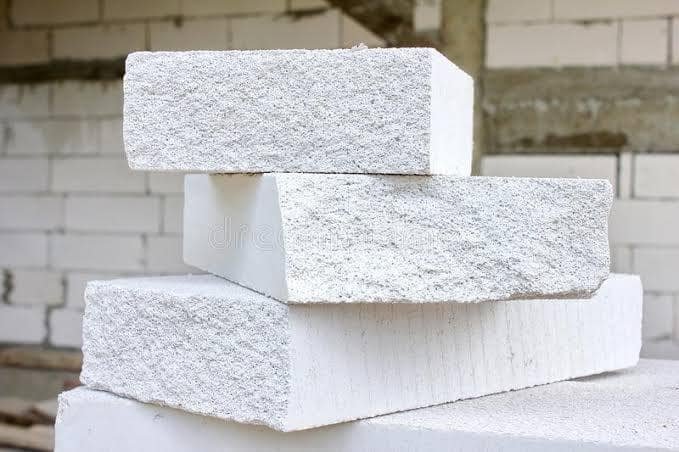
Robust Lightweight Concrete (Advanced Technical and Practical Expansion)
1. Microstructural Engineering and Performance Mechanisms
The performance of Robust Lightweight Concrete (RLC) is fundamentally determined by its microstructure, which governs strength, permeability, and long-term durability. The integration of Robust Construction Chemicals into the concrete matrix ensures a balanced interaction between hydration, porosity, and pore distribution.
1.1 Microstructure and Pore Distribution
Unlike normal concrete, where pores are random and interconnected, RLC exhibits a controlled cellular structure. The air voids formed through the Robust Foaming Agent are closed-cell bubbles ranging from 0.1–1 mm in diameter. These bubbles are uniformly distributed, preventing capillary water absorption.
Key Microstructural Benefits:
-
Reduced continuous capillary pores → lower permeability
-
Even stress distribution → improved resistance to microcracking
-
Stable internal air system → enhanced freeze–thaw durability
Scanning Electron Microscopy (SEM) and Mercury Intrusion Porosimetry (MIP) studies have confirmed that RLC microstructures possess 20–40% fewer open pores than traditional foamed concrete when Robust admixtures are used.
1.2 Interfacial Transition Zone (ITZ) Strength
The ITZ between cement paste and lightweight aggregate is a critical factor for overall performance. Robust Plasticizers and bonding agents strengthen this interface by:
-
Enhancing the flow and penetration of the cement paste around aggregates
-
Reducing bleeding and segregation
-
Improving the adhesion and uniformity of hydration products
This results in an ITZ with higher C–S–H concentration and minimal calcium hydroxide crystal accumulation — a common weak zone in conventional mixes.
1.3 Shrinkage and Crack Resistance
Autogenous shrinkage in lightweight concrete is typically higher due to greater porosity. However, with Robust Leak Fix Admixture, internal capillary tension is reduced, allowing uniform moisture retention during curing.
Measured shrinkage:
-
Normal lightweight concrete: 0.08–0.12%
-
Robust Lightweight Concrete: 0.04–0.06%
This improvement ensures excellent dimensional stability and reduces the risk of surface cracks, especially in thin roof insulation layers or large slab panels.
2. Thermal and Acoustic Engineering
2.1 Thermal Conductivity
The thermal conductivity coefficient (k) of RLC ranges from 0.10 to 0.40 W/m·K, depending on density and composition. The cellular voids act as trapped air pockets, which drastically limit heat transfer.
The theoretical formula used for predicting thermal performance:
kmix=ks(1−ϕ)+ka(ϕ)k_{mix} = k_s (1 – \phi) + k_a (\phi)
where:
ksk_s = conductivity of solid phase (cement matrix)
kak_a = conductivity of air (≈ 0.025 W/m·K)
ϕ\phi = volume fraction of air voids
As ϕ\phi increases, kmixk_{mix} decreases exponentially, improving insulation efficiency.
Practical Result:
A 75 mm thick RLC layer (density 800 kg/m³) can reduce heat transmission through roofs by up to 45%, cutting energy consumption for cooling by 25–30%.
2.2 Acoustic Absorption
The porous internal structure also acts as a sound trap, dissipating acoustic energy by internal friction within the cellular walls. Laboratory tests (ISO 140-3) show:
-
Sound Transmission Class (STC): 35–50 dB
-
Noise Reduction Coefficient (NRC): 0.45–0.60
Hence, RLC is suitable for cinemas, studios, hotels, and residential walls, where sound isolation is essential.
3. Durability Engineering
Durability defines the lifespan of concrete under environmental exposure. Robust Lightweight Concrete incorporates both chemical and physical resistances through admixture technology and dense matrix formation.
3.1 Water Permeability
Water permeability tests (DIN 1048) indicate penetration depths of only 5–10 mm after 72 hours of pressure when Robust Leak Fix Admixture is added — compared to 20–25 mm in normal foamed concrete.
This is due to the dual mechanism:
-
Crystalline waterproofing reaction (formation of insoluble calcium silicate hydrates).
-
Reduced pore connectivity from stable air cell structure.
3.2 Chloride and Sulfate Resistance
RLC exhibits excellent resistance against chloride penetration and sulfate attack, making it suitable for marine and coastal structures. The internal pores prevent capillary suction, and the use of pozzolanic materials like fly ash consumes free calcium hydroxide, preventing deleterious reactions.
ASTM C1202 (RCPT) results:
-
Charge passed: < 1000 coulombs (classified as very low permeability)
3.3 Fire Resistance
The inherent air content gives RLC outstanding fire resistance. The trapped air acts as an insulator, delaying heat propagation.
-
Fire endurance: 3–4 hours (at 800–1000°C)
-
Spalling resistance: Excellent (no explosive spalling observed)
When coated with Robust PU Liquid Rubber or Elastomeric Coating, RLC surfaces also resist UV degradation and hydrothermal aging.
4. Lifecycle Cost and Sustainability Evaluation
4.1 Lifecycle Cost Analysis (LCCA)
While initial material cost may be slightly higher than conventional concrete, RLC provides significant long-term economic advantages due to:
-
Reduced structural weight → smaller foundations
-
Lower steel consumption → cost saving up to 15%
-
Energy efficiency → reduced HVAC load by 25%
-
Durability → lower maintenance and repair frequency
Example:
For a 10-storey building, total cost reduction can reach 10–12% over 30 years of service life.
4.2 Sustainability Metrics
RLC supports low-carbon construction by minimizing resource usage:
-
Uses up to 40% less aggregate
-
Incorporates industrial by-products (fly ash, slag)
-
Reduces transportation emissions by 30–50% due to lower weight
Embodied CO₂ Reduction:
CO₂_{saving} = \frac{(CO₂_{normal} – CO₂_{RLC})}{CO₂_{normal}} × 100
Typical saving: 25–40% in embodied carbon footprint.
5. Onsite Production and Application
5.1 Site Setup and Equipment
For large-scale projects, Robust Lightweight Concrete can be produced onsite using:
-
Foam concrete generator (for foam production)
-
Mixing unit / pan mixer
-
Foam dosing system
-
Pumping machine (progressive cavity type)
A typical setup allows continuous output of 10–20 m³/hour with density control ±25 kg/m³.
5.2 Mixing Procedure
-
Prepare slurry with cement, water, and Robust admixtures.
-
Generate stable foam using Robust Foaming Agent at 30–60 g/L density.
-
Mix foam with slurry in the ratio required to reach target density.
-
Pour or pump directly to formwork.
-
Finish with trowel or screed.
Tip: Avoid mechanical vibration — use light tapping for settlement.
5.3 Curing Methodology
Proper curing is essential to achieve target strength and dimensional stability:
-
Maintain surface moisture for at least 7 days.
-
Use Robust Curing Compound where water curing is impractical.
-
Cover with polythene sheets in hot/dry environments.
Accelerated curing (steam or warm water at 50°C) can be used for precast elements to achieve 80% strength within 24 hours.
5.4 Finishing and Protection
RLC surfaces can be directly coated with:
-
Robust Cementitious Coating (RC-7) – waterproofing barrier
-
Robust PU Liquid Rubber – UV and thermal protection
-
Robust Acrylic Paints or Plaster – aesthetic and surface hardness
For flooring, surface hardeners or screeds may be applied for abrasion resistance.
6. Field Implementation and Case Experiences
Case Study 1 – High-Rise Roof Deck, Lahore
-
Thickness: 75 mm
-
Density: 900 kg/m³
-
Purpose: Thermal insulation and waterproofing substrate
-
Results:
-
Surface temperature reduced from 68°C to 52°C
-
Load reduced by 42%
-
No shrinkage cracks after 24 months of service
-
System used: Robust Foaming Agent + Leak Fix Admixture + PU Liquid Rubber topcoat
Case Study 2 – Precast AAC Replacement in Housing Project
In this case, RLC panels (density 1300 kg/m³, compressive strength 20 MPa) replaced AAC blocks for better onsite casting flexibility.
Advantages:
-
Faster installation (direct cast panels)
-
Enhanced sound insulation (38 dB reduction)
-
Better anchorage for fixtures due to denser matrix
-
15% lower total cost than AAC panel system
Case Study 3 – Road Embankment and Void Filling
RLC used as flowable lightweight fill for an underpass backfill application:
-
Density: 700 kg/m³
-
Flow spread: 250 mm
-
No settlement observed after 6 months
-
Provided uniform load transfer without differential settlement
The mix included Robust Foaming Agent and Plasticizer for stable flow.
7. Quality Assurance and Inspection Guidelines
7.1 Pre-Production Testing
Before mass casting, conduct trial mixes to verify:
-
Foam density consistency
-
Fresh mix density ±3% tolerance
-
7-day compressive strength target achievement
7.2 Field Density Control
Use cylinder sampling (ASTM C495) and oven drying method to confirm density.
Acceptable variance:
-
±30 kg/m³ for densities ≤1000 kg/m³
-
±50 kg/m³ for densities >1000 kg/m³
7.3 Onsite Monitoring
-
Record mixing times and temperature
-
Calibrate foam generator daily
-
Avoid delays over 30 minutes between mixing and placement
8. Integration with Structural Systems
RLC can be integrated with steel reinforcement and RCC elements by applying bonding agents (Robust Bond Coat) at interfaces.
For composite sections:
σc=MyI\sigma_c = \frac{M y}{I}
Where II is adjusted for lightweight density, providing 10–15% reduction in bending stress for equivalent load conditions.
Composite Design Advantage:
When used as a filler or topping over conventional RCC, it enhances thermal insulation and fire rating without significantly increasing load.
9. Repair, Retrofitting, and Maintenance Applications
RLC also serves as an ideal repair and rehabilitation material due to its lightweight nature and compatibility with existing substrates.
Applications:
-
Filling of floor voids and sunken areas
-
Overlays for damaged slabs
-
Leveling layers over old roofs
-
Pipe trench reinstatement
-
Bridge deck surfacing
Repair Protocol:
-
Clean and prime the old concrete surface with Robust Epoxy Bonding Agent.
-
Apply RLC in layers up to 100 mm thick.
-
Finish and cure as per standard procedure.
After curing, apply Robust Waterproofing Coating for long-term protection.
10. Training and Implementation Support
Robust Construction Chemicals provides technical training for engineers and site staff covering:
-
Foam generation and calibration
-
Mix proportioning and trial design
-
Equipment handling and maintenance
-
Quality control and testing
-
Surface protection and waterproofing integration
These sessions ensure that RLC is used efficiently, minimizing errors during production or application.
11. Future Developments and Innovations
Research at Robust’s R&D division is focused on:
-
Nano-modified foaming agents for improved bubble stability
-
Geopolymer lightweight concrete (cement-free systems)
-
Hybrid fiber-reinforced RLC using PVA, basalt, or glass fibers for tensile strength enhancement
-
3D printable lightweight concrete for modular construction
Projected improvements include 20% higher tensile strength, 30% lower shrinkage, and CO₂ reduction beyond 50% compared to traditional lightweight concrete.
12. Summary of Key Technical Advantages
| Property | Robust Lightweight Concrete | Conventional Concrete |
|---|---|---|
| Density | 600–1800 kg/m³ | 2400 kg/m³ |
| Compressive Strength | 3–40 MPa | 20–50 MPa |
| Thermal Conductivity | 0.10–0.40 W/m·K | 1.6–1.9 W/m·K |
| Sound Insulation | 35–50 dB | 25–30 dB |
| Water Absorption | <10% | 15–20% |
| Fire Resistance | 3–4 hours | 1–2 hours |
| Carbon Footprint | 25–40% lower | — |
13. Final Technical Summary
Robust Lightweight Concrete represents a leap in material technology — a balance between structural efficiency, durability, and sustainability. Its versatility across structural and non-structural domains, coupled with the specialized chemistry of Robust Construction Chemicals, makes it a preferred material for modern architecture, green building design, and cost-effective infrastructure development.
Whether for roofing insulation, precast panels, void filling, or lightweight blocks, RLC ensures:
-
Consistent density and strength
-
Superior workability and flow
-
Long-term resistance to water, heat, and corrosion
-
Significant load and cost reductions
In combination with Robust’s full chemical system — Foaming Agent, Leak Fix, Plasticizer, PU Liquid Rubber, and Bonding Agents — this material ensures unmatched performance, durability, and reliability in every application.
Robust Lightweight Concrete
Introduction:
Robust Lightweight Concrete is an advanced construction material developed by Robust Construction Chemicals to provide high strength, thermal insulation, and reduced structural load. It is specially formulated using lightweight aggregates, foaming agents, and cementitious binders to achieve excellent workability, durability, and sustainability. This type of concrete is ideal for modern construction projects where weight reduction, cost efficiency, and performance are key priorities.
Key Features of Robust Lightweight Concrete
-
Reduced Density:
The density of Robust Lightweight Concrete typically ranges from 600 to 1800 kg/m³, depending on mix design. This makes it significantly lighter than conventional concrete (2400 kg/m³). -
High Compressive Strength:
Despite its lower weight, it can achieve compressive strengths of up to 40 MPa, suitable for both structural and non-structural applications. -
Excellent Thermal Insulation:
The presence of air voids within the concrete matrix greatly enhances its thermal insulation properties, reducing heat transfer and improving energy efficiency in buildings. -
Sound Insulation:
The porous structure of lightweight concrete effectively absorbs sound, making it ideal for acoustic insulation in residential and commercial buildings. -
Durability:
Formulated with advanced admixtures from Robust Chemicals, it resists shrinkage, cracking, and water penetration, ensuring long-term performance. -
Eco-Friendly Composition:
Uses recycled materials and reduces the overall consumption of cement and aggregates, lowering carbon emissions in construction.
Composition and Materials
-
Cement: Ordinary Portland Cement (OPC) or blended cements.
-
Foaming Agent / Air Entraining Agent: Robust Foaming Chemical produces stable bubbles that form the lightweight structure.
-
Aggregates: Lightweight aggregates such as expanded clay, pumice, perlite, or foam beads.
-
Admixtures: Robust Plasticizer, Robust Leak Fix Admixture, and water-reducing agents for better flow and bonding.
-
Water: Clean potable water used as per design requirements.
Types of Robust Lightweight Concrete
-
Foamed Concrete (CLC – Cellular Lightweight Concrete):
Produced by mixing foam into a cement slurry, it provides excellent thermal insulation and low density (600–1200 kg/m³).
Applications: Roof insulation, floor screeds, partition walls. -
Lightweight Aggregate Concrete:
Incorporates lightweight aggregates such as expanded shale or clay instead of normal aggregates.
Applications: Precast blocks, structural elements, slabs. -
Aerated Concrete (AAC):
Autoclaved aerated concrete uses a chemical reaction (usually aluminum powder) to form air pockets.
Applications: Load-bearing blocks, panels, wall systems.
Applications of Robust Lightweight Concrete
-
Roof Insulation Layers – Excellent heat resistance reduces cooling loads.
-
Partition and Non-Load-Bearing Walls – Easy to handle and install.
-
Precast Blocks and Panels – Lightweight and faster construction.
-
Floor Leveling and Screeding – Provides smooth finish with reduced dead load.
-
Bridge Decks and Marine Structures – Lower self-weight reduces stress on supporting structures.
-
Thermal Insulating Fills – Used in roofs, slabs, and under floors.
Advantages
Reduces dead load on the structure
Improves thermal and acoustic comfort
Minimizes structural costs (foundation and frame)
Enhances fire resistance
Easy to transport and apply
Compatible with all waterproofing and finishing materials
Mix Design Example (Foamed Lightweight Concrete)
| Component | Quantity (per m³) |
|---|---|
| Cement (OPC 43 Grade) | 300–400 kg |
| Water | 140–160 liters |
| Robust Foaming Agent | 1.0 – 1.5 liters |
| Foam Volume | As per target density |
| Admixture (Plasticizer / Leak Fix) | 0.5% – 1.0% of cement weight |
Procedure:
-
Prepare the base slurry using cement, water, and admixtures.
-
Generate foam using Robust Foaming Agent.
-
Mix the foam into the slurry until uniform.
-
Pour or pump into molds or directly on site.
-
Allow to set and cure properly (7–28 days).
Curing and Finishing
-
Keep moist curing for at least 7 days for best strength.
-
Apply Robust Waterproof Coating or PU Liquid Rubber for surface protection.
-
Can be easily cut, nailed, or plastered after curing.
Technical Performance
| Property | Range / Result |
|---|---|
| Density | 600 – 1800 kg/m³ |
| Compressive Strength | 2 – 40 MPa |
| Thermal Conductivity | 0.10 – 0.40 W/m·K |
| Sound Reduction Index | Up to 45 dB |
| Water Absorption | <10% (with Robust admixtures) |
| Fire Resistance | Up to 4 hours |
Conclusion
Robust Lightweight Concrete is the ideal solution for modern sustainable construction. It combines strength, insulation, and economy, making it a preferred choice for architects, engineers, and builders seeking performance with durability. Whether for high-rise buildings, industrial floors, or residential roofing, this innovative material ensures long-term energy efficiency and cost savings.
Robust Lightweight Concrete – Technical Report
1. Introduction
Robust Lightweight Concrete (RLC) is an advanced composite material engineered to meet the dual requirements of structural strength and reduced self-weight. Developed by Robust Construction Chemicals, RLC represents a next-generation formulation combining lightweight aggregates, foaming technologies, and high-performance admixtures to deliver superior thermal insulation, acoustic absorption, and long-term durability.
Traditional concrete, with an average density of 2400 kg/m³, imposes high dead loads on structures. RLC reduces this by up to 40–60%, achieving densities between 600 and 1800 kg/m³, without compromising mechanical strength or serviceability. The result is a versatile concrete ideal for both load-bearing and non-load-bearing applications, including high-rise slabs, roof insulation, floor screeds, wall panels, and precast components.
2. Material Science and Chemical Composition
2.1 Cementitious Matrix
The binder phase in RLC typically consists of Ordinary Portland Cement (OPC 43 or 53 grade), Portland Pozzolana Cement (PPC), or Portland Slag Cement (PSC). In advanced formulations, supplementary cementitious materials (SCMs) such as fly ash, silica fume, or ground granulated blast furnace slag (GGBS) are incorporated to enhance workability, strength development, and microstructural density.
Chemical Reactions:
Cement hydration: 2C3S+6H→C3S2H3+3CH\text{Cement hydration: } 2C_3S + 6H \rightarrow C_3S_2H_3 + 3CH Pozzolanic reaction: CH+S+H→C−S−H\text{Pozzolanic reaction: } CH + S + H \rightarrow C-S-H
These reactions result in C–S–H (calcium silicate hydrate), which is responsible for the strength and durability of concrete.
2.2 Lightweight Aggregates
Lightweight aggregates (LWAs) replace conventional crushed stone or gravel. Common LWAs used in Robust formulations include:
-
Expanded clay aggregates (ECA)
-
Pumice and volcanic tuff
-
Perlite or vermiculite
-
Sintered fly ash pellets
-
Foam beads or EPS (expanded polystyrene) granules
These materials possess bulk densities between 300–1000 kg/m³, creating internal air voids that reduce overall weight and improve insulation.
2.3 Foaming Agents
The Robust Foaming Agent (RFA) is a key innovation in RLC. It is a biodegradable, protein-based or synthetic surfactant that generates stable microbubbles when mixed with air and water. These bubbles remain intact during mixing and curing, forming a cellular concrete matrix.
Foam Density Control:
ρc=Wc+Ww+Wa+WfVc\rho_c = \frac{W_c + W_w + W_a + W_f}{V_c}
where:
ρc\rho_c = density of lightweight concrete (kg/m³)
Wc,Ww,Wa,WfW_c, W_w, W_a, W_f = weights of cement, water, aggregate, and foam respectively
VcV_c = total concrete volume
By controlling foam density (30–80 g/L), the final concrete density can be precisely adjusted.
2.4 Admixtures
Robust admixtures enhance performance and consistency:
-
Robust Plasticizer / Superplasticizer – improves flow and reduces water demand.
-
Robust Leak Fix Admixture – provides waterproofing and reduces permeability.
-
Retarders and Accelerators – control setting time for temperature variations.
-
Air-Entraining Agents – stabilize micro air cells and prevent segregation.
2.5 Water
Only potable-quality water should be used. Water-cement ratio (w/c) typically ranges from 0.35 to 0.45, depending on the target strength and density.
3. Structural Design Considerations
3.1 Density–Strength Relationship
RLC exhibits an inverse relationship between density and strength. The general empirical formula is:
fc=k(ρ)nf_c = k (\rho)^n
where:
fcf_c = compressive strength (MPa)
ρ\rho = density (kg/m³)
k,nk, n = empirical constants (typ. k = 2.0 × 10⁻⁶, n = 2.5 for foamed concrete)
| Density (kg/m³) | Compressive Strength (MPa) | Typical Application |
|---|---|---|
| 600–800 | 1–3 | Roof insulation, void filling |
| 900–1200 | 5–10 | Blocks, panels, screeds |
| 1300–1600 | 10–25 | Structural lightweight walls, slabs |
| 1700–1800 | 25–40 | Load-bearing precast and structural members |
3.2 Structural Load Reduction
By using RLC, total dead load can be reduced by 30–50%, resulting in:
-
Smaller foundation sizes
-
Reduced reinforcement consumption
-
Lower seismic inertia forces
-
Shorter construction cycles
Example:
A 100 m² slab using normal concrete (2400 kg/m³, 150 mm thick) weighs:
100×0.15×2400=36,000 kg100 × 0.15 × 2400 = 36,000 \text{ kg}
Using RLC at 1200 kg/m³:
100×0.15×1200=18,000 kg100 × 0.15 × 1200 = 18,000 \text{ kg}
→ Load reduction: 50%
3.3 Design Codes and Standards
-
ACI 213R-14: Guide for Structural Lightweight-Aggregate Concrete
-
ASTM C330: Specification for Lightweight Aggregates for Structural Concrete
-
BS EN 206: Concrete — Specification, Performance, and Conformity
-
ACI 318: Building Code Requirements for Structural Concrete
4. Mix Design Optimization
4.1 Proportioning Method
Mix design depends on desired density, strength, and application.
For foamed RLC, the mix ratio is determined by controlling foam volume.
Example Design (Target Density: 1000 kg/m³)
| Material | Quantity (kg/m³) |
|---|---|
| Cement | 350 |
| Water | 150 |
| Robust Foaming Agent | 1.2 |
| Foam Volume | Adjust to density |
| Plasticizer | 0.8% by weight of cement |
Foam introduction:
Generated separately and mixed gently into slurry to avoid collapse.
4.2 Quality of Foam
Stable foam has:
-
Fine bubble diameter (0.1–1.0 mm)
-
High stability (no collapse for 30–60 minutes)
-
Uniform distribution
Testing as per ASTM C796 (foaming agent performance).
4.3 Optimization Parameters
-
Workability (Slump Flow): Target 150–200 mm (ASTM C1437)
-
Air Content: 10–50% (controlled via foam ratio)
-
Water Absorption: <10% (ASTM C642)
-
Compressive Strength: ≥10 MPa (for structural grades)
5. Testing and Quality Control
5.1 Fresh Concrete Tests
| Test | Standard | Objective |
|---|---|---|
| Density | ASTM C138 | Confirm target mix density |
| Flow Table | ASTM C230 | Evaluate workability |
| Foam Stability | ASTM C796 | Assess air bubble retention |
| Air Content | ASTM C173 | Verify cellular distribution |
5.2 Hardened Concrete Tests
| Test | Standard | Parameter |
|---|---|---|
| Compressive Strength | ASTM C495 | Cube or cylinder test |
| Dry Density | ASTM C567 | Density measurement |
| Water Absorption | ASTM C642 | Durability |
| Thermal Conductivity | ISO 8302 | Insulation value |
| Shrinkage | ASTM C157 | Volume stability |
| Fire Resistance | BS 476 | Heat endurance |
5.3 Microstructural Analysis
Using SEM (Scanning Electron Microscopy), RLC shows uniform cell structure with closed pores — contributing to reduced permeability and high durability. The C–S–H gel formation is dense due to the action of Robust admixtures, which limit capillary voids.
6. Construction Techniques and Equipment
6.1 Mixing
-
Use pan mixers or foam concrete machines with variable speed control.
-
Avoid overmixing — it may collapse foam cells.
-
Mix order: slurry → foam → gentle blend.
6.2 Pumping and Placement
Robust lightweight concrete can be pumped up to 60 meters vertically and 200 meters horizontally using low-pressure foam concrete pumps.
Pumping lines should have gentle bends and internal diameters ≥50 mm to prevent foam collapse.
6.3 Formwork
Formwork should be rigid, leak-proof, and coated with a mold release agent. Due to lower pressure, lightweight concrete exerts only about 50–60% of the lateral pressure compared to normal concrete.
6.4 Curing
-
Moist curing for at least 7 days (ASTM C511).
-
For dry climates, use Robust Curing Compound to prevent moisture loss.
-
Avoid aggressive water spraying; use fine mist.
6.5 Surface Finishing
RLC can be trowelled, floated, or directly coated with:
-
Robust PU Liquid Rubber
-
Robust Waterproof Coating (Cementitious Type)
-
Elastomeric Paints or Tile Adhesive Systems
7. Case Studies and Field Performance
Case 1 – Roof Insulation, Karachi
RLC (density: 800 kg/m³) applied as roof topping (50 mm thick) over RCC slab.
-
Reduced roof temperature by 7–10°C
-
Reduced load by 40%
-
No cracks observed after 3 years of service.
-
Waterproofing system: Robust PU Liquid Rubber.
Case 2 – Precast Wall Panels, Lahore
Panels (density: 1400 kg/m³, strength: 18 MPa) used in multi-storey housing.
-
Weight reduction: 45% vs. normal concrete.
-
Faster installation due to light handling.
-
Enhanced sound insulation (38 dB reduction).
Case 3 – Void Filling for Pipeline
Foamed RLC (density: 600 kg/m³) used for trench and pipe backfill.
-
Non-shrink, flowable mix filled voids effectively.
-
Zero segregation observed.
-
Replaced sand filling with 60% cost efficiency.
8. Integration with Robust Product Line
| Robust Product | Function | Integration Benefit |
|---|---|---|
| Robust Foaming Agent | Generates stable foam | Controls density and insulation value |
| Robust Leak Fix Admixture | Seals pores and capillaries | Improves water resistance |
| Robust Plasticizer | Reduces water demand | Enhances strength and flow |
| Robust Curing Compound | Retains moisture | Promotes hydration in lightweight mixes |
| Robust PU Liquid Rubber | Surface waterproofing | Protects from heat and moisture ingress |
9. Sustainability and Environmental Impact
RLC contributes significantly to green building certifications (LEED, BREEAM):
-
Reduces cement and aggregate usage by 30–40%.
-
Incorporates recycled fly ash and industrial by-products.
-
Lower transportation energy due to lightweight materials.
-
Enhances building energy efficiency through thermal insulation.
Embodied Energy Reduction:
EE=(ELC−ENC)ENC×100EE = \frac{(E_{LC} – E_{NC})}{E_{NC}} × 100
Typical reduction: 25–35% in embodied energy compared to normal concrete.
10. Limitations and Best Practices
-
Avoid excessive foam volume (>60%), which may reduce strength.
-
Protect uncured surfaces from rapid drying or direct sunlight.
-
Do not vibrate foamed concrete — it collapses air cells.
-
Verify foam stability at site before large pours.
-
Conduct trial mixes for every 100 m³ batch to maintain consistency.
11. Conclusion
Robust Lightweight Concrete is a technically advanced, environmentally responsible, and structurally efficient material designed for modern construction. It combines optimized density, high strength, thermal comfort, and durability, meeting global standards such as ACI 213, ASTM C330, and BS EN 206.
Through continuous innovation and the use of proprietary admixtures like Robust Foaming Agent, Robust Leak Fix, and Robust Plasticizer, this system delivers performance unmatched by conventional concrete solutions.
In applications ranging from roofs, slabs, precast panels, insulation layers, to void filling, Robust Lightweight Concrete demonstrates consistent strength, dimensional stability, and cost efficiency — defining a new benchmark in sustainable construction technology.