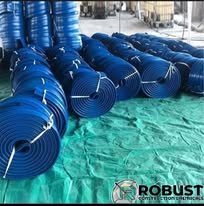
Advanced Guide to Robust Waterstopper PVC — Design, Selection, and Industry Insights
Understanding the Role of Waterstoppers in Concrete Structures
Concrete, while strong and durable, is naturally porous and prone to cracking. When exposed to water pressure—especially in underground or submerged structures—these cracks and joints become potential leakage points. A robust waterstopper PVC serves as a hydraulic seal, creating a continuous barrier that blocks water from seeping through.
This barrier is particularly critical in:
-
Expansion joints (where concrete sections move due to temperature changes)
-
Contraction joints (which prevent random cracking)
-
Construction joints (where two concrete pours meet)
By embedding PVC waterstoppers at these joints, the entire concrete mass acts as a monolithic, watertight system—making it a cornerstone of structural waterproofing engineering.
How PVC Waterstoppers Compare to Other Materials
Several types of waterstop materials are used in construction, including rubber, HDPE, bentonite, and metal strips. However, PVC remains the most widely adopted due to its balance of flexibility, strength, and chemical resistance.
| Material Type | Advantages | Disadvantages |
|---|---|---|
| PVC (Polyvinyl Chloride) | Flexible, economical, UV resistant, easy to weld | May soften under extreme heat |
| Rubber Waterstop | Highly elastic, suitable for dynamic joints | Expensive, harder to weld |
| HDPE Waterstop | Very strong, chemically resistant | Rigid and difficult to install |
| Metal Waterstop (Copper/Steel) | Excellent durability | Corrodes over time, high cost |
| Bentonite Waterstop | Expands on contact with water | Limited reuse, not for high-pressure zones |
From this comparison, it’s clear that a robust PVC waterstopper provides the best all-around performance for most civil and industrial projects—especially when cost-effectiveness and installation ease are priorities.
Industry Standards and Compliance
To ensure long-term reliability, PVC waterstoppers must meet various international standards. Leading manufacturers design their products in accordance with:
-
ASTM D412: Standard test for tensile properties of rubber and thermoplastic elastomers.
-
ASTM D638: Measures tensile properties of plastics.
-
IS 15058:2002 (India): Specifies the material and performance requirements for PVC waterstops.
-
BS 2571: British Standard for waterstopping materials in concrete joints.
A robust PVC waterstopper complying with these standards guarantees high tensile strength, elongation, and durability under pressure. Always request a manufacturer’s test certificate or third-party inspection report before procurement.
Case Study: Using Robust Waterstopper PVC in Large Projects
Project Overview: Underground Metro Construction
In one metropolitan city, engineers faced heavy groundwater pressure during the construction of an underground metro station. Traditional rubber waterstoppers were difficult to install due to limited workspace and joint complexity.
Solution: They switched to robust PVC waterstoppers with a center-bulb design. These were heat-welded on-site, creating a continuous barrier around all structural joints.
Results:
-
Zero leakage after hydrostatic testing.
-
Reduced installation time by 30%.
-
Maintenance-free waterproofing for over 10 years.
This case demonstrates the real-world efficiency and practicality of robust PVC waterstoppers in complex infrastructure projects.
Innovations in PVC Waterstopper Technology
Modern construction demands smarter materials. In recent years, several innovations have improved the performance of PVC waterstoppers:
-
Hybrid Polymer Blends: Combining PVC with elastomers enhances flexibility and temperature resistance.
-
Pre-Profiled Edges: Allow for better bonding and easy installation between concrete pours.
-
UV-Stabilized Formulations: Prevent degradation in exposed conditions.
-
Reinforced Center Bulbs: Provide additional strength for joints with high movement or pressure.
-
Custom Extrusion Designs: Tailored profiles based on project specifications, ensuring perfect joint sealing.
These advancements have made robust PVC waterstoppers more adaptable than ever, suitable for both water-retaining and water-excluding applications.
Choosing the Right Manufacturer or Supplier
The quality of your waterstopper is only as good as the source. When selecting a supplier, look for the following:
-
Technical Expertise: Ability to recommend the right profile for your application.
-
Testing Facilities: In-house testing for tensile strength, elongation, and chemical resistance.
-
On-Site Support: Installation training and technical supervision.
-
Certifications: ISO 9001:2015, ASTM, and IS standard compliance.
-
Proven Track Record: References from previous large-scale projects.
A reliable manufacturer of robust PVC waterstoppers provides not only quality materials but also ongoing technical support, ensuring that the installation and performance meet design intent.
Maintenance and Long-Term Performance
While PVC waterstoppers require minimal maintenance once installed, routine inspections can help identify potential issues before they escalate.
Inspection Checklist:
-
Verify waterstop exposure points after construction.
-
Ensure no deformation or displacement during concrete curing.
-
Check welded joints periodically for signs of wear.
-
Clean debris buildup from exposed surfaces in water-retaining structures.
With proper care, robust PVC waterstoppers can maintain their sealing efficiency for several decades—making them one of the most durable waterproofing investments in construction.
Environmental and Sustainability Perspective
The construction industry increasingly focuses on sustainability, and PVC waterstoppers contribute positively to this trend:
-
Recyclable Material: Many manufacturers now use recyclable PVC formulations.
-
Low Carbon Footprint: Longer service life means fewer replacements and reduced material waste.
-
Water Conservation: Preventing leakage ensures minimal water loss in tanks, reservoirs, and dams.
-
Durability: A single installation can last over 50 years, minimizing the environmental impact of rework.
By choosing eco-friendly, robust PVC waterstoppers, builders align with global green building standards like LEED and BREEAM, enhancing both sustainability and brand reputation.
Economic Analysis: Cost vs. Value
While initial costs may vary depending on size and profile type, the total lifecycle cost of a PVC waterstopper is far lower compared to other waterproofing systems. Here’s why:
-
Low Installation Cost: Easy welding and placement reduce labor hours.
-
Minimal Maintenance: No need for external membranes or coatings.
-
Fewer Failures: Fewer leaks mean fewer repairs and downtime.
-
Extended Service Life: Ensures structural longevity, saving money in the long run.
For example, using a robust PVC waterstopper in a water tank project may increase initial cost by only 1–2%, but it can save up to 20% in long-term maintenance and repair expenses.
Common Myths About PVC Waterstoppers
-
“PVC waterstoppers are only for large projects.”
➤ False. They’re suitable for small basements, retaining walls, and even residential foundations. -
“All PVC waterstoppers perform the same.”
➤ Incorrect. Quality depends on the formulation, design profile, and manufacturing standards. -
“They are difficult to install.”
➤ Not true. With basic training, contractors can easily heat-weld and position PVC waterstoppers. -
“PVC degrades quickly in sunlight.”
➤ Only low-grade PVC does. Robust UV-stabilized PVC waterstoppers are designed to resist sunlight and weather exposure.
Future Trends in Waterstopper Technology
As infrastructure demands grow, waterstopper technology continues to evolve. Upcoming trends include:
-
Smart Waterstoppers: Sensors embedded within joints to detect early signs of leakage.
-
Self-Healing Materials: Advanced polymers that automatically seal minor cracks.
-
3D-Printed Profiles: Custom-made designs for complex geometries.
-
Green PVC Formulations: Non-toxic, lead-free compounds aligning with environmental standards.
The next generation of robust PVC waterstoppers will combine traditional strength with modern innovation—enhancing safety, sustainability, and intelligence in waterproofing design.
Key Takeaways
-
Robust waterstopper PVC is an essential waterproofing element for all concrete structures.
-
Offers unmatched flexibility, strength, and chemical resistance.
-
Performs reliably in both water-retaining and water-excluding structures.
-
Easy to install, cost-effective, and eco-friendly.
-
Meets international standards such as ASTM, IS, and BS.
-
Represents a long-term investment in structural durability and integrity.
Final Conclusion
In every construction project—whether it’s a simple basement or a complex hydroelectric dam—the success of waterproofing often depends on the smallest details. A robust PVC waterstopper may seem like a minor component, but it plays a major role in ensuring watertight performance and structural safety.
Engineers, contractors, and project owners alike should view the waterstopper not just as a material but as a core waterproofing system. By choosing robust, certified PVC waterstoppers and ensuring proper installation, you protect your project from leaks, cracks, and long-term deterioration.
In short, when it comes to waterproofing concrete joints, robust PVC waterstoppers stand the test of time—delivering strength, flexibility, and performance that lasts for generations.
Robust Waterstopper PVC: The Ultimate Solution for Concrete Joint Waterproofing
Introduction
In the world of modern construction, one of the most critical challenges faced by engineers and contractors is preventing water leakage through concrete joints. Whether it’s a basement, tunnel, reservoir, or water-retaining structure, even a small leak can lead to structural deterioration, costly repairs, and safety hazards. That’s where the robust waterstopper PVC comes in—a simple yet highly effective solution designed to block water passage through concrete joints.
A PVC waterstopper (Polyvinyl Chloride Waterstopper) is a flexible strip embedded in concrete joints to prevent the movement of water or fluids. Its robust design ensures long-term durability, resistance to chemicals, and adaptability to structural movements. Let’s explore in depth what makes the robust PVC waterstopper indispensable in modern waterproofing systems.
What Is a Robust Waterstopper PVC?
A robust waterstopper PVC is a specially engineered waterproofing strip made from high-grade polyvinyl chloride (PVC) material. It acts as a physical barrier within concrete joints—expansion, contraction, or construction joints—ensuring that water cannot penetrate through these weak points.
The term “robust” signifies that the PVC waterstopper is heavy-duty, durable, and capable of withstanding high water pressure, making it ideal for demanding applications like dams, basements, water tanks, canals, and sewage treatment plants.
Key Features of Robust PVC Waterstoppers
-
High Tensile Strength: Can withstand concrete movement and water pressure.
-
Excellent Flexibility: Adapts to joint movement without cracking or tearing.
-
Chemical Resistance: Withstands exposure to acids, alkalis, and salts.
-
Corrosion-Proof: Unlike metal alternatives, PVC does not rust or corrode.
-
Easy to Install: Can be welded or joined on-site using heat or adhesives.
-
Long Lifespan: Remains effective for decades under proper installation conditions.
Why Use a Robust Waterstopper PVC?
1. Prevents Leakage and Structural Damage
The primary function of a PVC waterstopper is to block the passage of water through concrete joints. In structures like water tanks, basements, and swimming pools, water seepage can compromise structural integrity. A robust PVC waterstopper ensures complete waterproofing, preventing cracks and damage caused by moisture ingress.
2. Ensures Longevity of Structures
By keeping joints watertight, waterstoppers significantly extend the lifespan of concrete structures. This protection helps maintain the building’s performance even in areas prone to heavy rainfall or water retention.
3. Resistant to Harsh Environments
A robust PVC waterstopper can withstand exposure to chemicals, soil contaminants, and fluctuating temperatures, making it ideal for industrial and infrastructural applications such as wastewater treatment plants, tunnels, and retaining walls.
4. Cost-Effective Waterproofing Solution
Compared to epoxy injections or post-construction waterproofing systems, PVC waterstoppers are affordable, low-maintenance, and long-lasting, reducing future repair costs.
Types of PVC Waterstoppers
Depending on the structure’s design and the type of joint, different types of PVC waterstoppers are used. Let’s look at the most common varieties:
1. Center Bulb Type Waterstopper
-
Best for expansion and contraction joints.
-
The central bulb allows for movement without compromising waterproofing.
-
Commonly used in large structures like bridges, tunnels, and reservoirs.
2. Dumbbell Type Waterstopper
-
Ideal for construction joints where limited movement occurs.
-
Its simple shape makes it easy to install during concrete pouring.
-
Common in slabs, walls, and floors.
3. Ribbed Type Waterstopper
-
Offers superior grip within concrete due to its ribbed design.
-
Suitable for structures exposed to high water pressure.
-
Ensures a strong mechanical bond with concrete.
4. Flat Type Waterstopper
-
Used in structures with no expected joint movement.
-
Often installed in small retaining walls, slabs, and foundations.
Applications of Robust PVC Waterstopper
A robust waterstopper PVC is versatile and can be used in a wide range of construction projects. Below are its most common applications:
| Application Area | Purpose |
|---|---|
| Water Retaining Structures | Prevent leakage in water tanks, reservoirs, and dams. |
| Basements & Foundations | Block groundwater infiltration through concrete joints. |
| Tunnels & Subways | Protect underground structures from hydrostatic pressure. |
| Sewage Treatment Plants | Resist chemical attack and prevent seepage. |
| Swimming Pools | Maintain watertight conditions for long-term use. |
| Bridges & Flyovers | Allow expansion/contraction movement while sealing joints. |
| Retaining Walls & Canals | Prevent leakage through construction joints. |
Material Composition and Properties
A robust PVC waterstopper is made from high-grade polyvinyl chloride, a thermoplastic known for its flexibility and toughness. The material formulation often includes:
-
Plasticizers: To enhance flexibility.
-
Stabilizers: To improve heat and UV resistance.
-
Fillers: To strengthen the structure.
-
Pigments: For identification and aesthetic purposes.
Physical Properties
| Property | Typical Value |
|---|---|
| Tensile Strength | 12–15 MPa |
| Elongation at Break | 300–400% |
| Hardness (Shore A) | 70 ± 5 |
| Specific Gravity | 1.35 ± 0.05 |
| Water Absorption | < 0.1% |
| Temperature Range | -35°C to +80°C |
These properties make PVC waterstoppers robust, flexible, and reliable under varying environmental conditions.
Installation Guidelines for PVC Waterstoppers
Proper installation is crucial to achieving a watertight seal. Here’s a step-by-step overview:
1. Positioning
-
Place the waterstop in the center of the joint where water ingress is expected.
-
Ensure half of the profile is embedded in the first pour and the other half in the second.
2. Fixing
-
Secure the waterstop using eyelets or wire ties attached to reinforcement steel.
-
Avoid puncturing the waterstop.
3. Welding Joints
-
Ends of PVC waterstoppers can be joined using heat welding equipment.
-
Ensure a uniform weld to prevent weak spots.
4. Concrete Pouring
-
Pour concrete carefully around the waterstop to prevent displacement.
-
Vibrate concrete adequately to eliminate air voids near the profile.
5. Inspection
-
Inspect joints before and after concreting to ensure no gaps or twists.
-
Replace any damaged sections immediately.
Common Mistakes to Avoid During Installation
-
Incorrect alignment causing ineffective sealing.
-
Poor welding resulting in leakage points.
-
Using low-quality PVC materials that degrade over time.
-
Failing to secure the waterstop during concrete pouring.
Advantages of Robust Waterstopper PVC
-
Superior Durability: Long service life even in aggressive conditions.
-
Flexibility: Accommodates thermal and structural movements.
-
Ease of Installation: Simple welding and fixing process.
-
Corrosion Resistance: Ideal for water-retaining and chemical structures.
-
Cost-Effective: Low maintenance and long-term reliability.
-
Compatibility: Works with both horizontal and vertical concrete joints.
-
Environmentally Safe: Non-toxic and recyclable material.
Choosing the Right Waterstopper for Your Project
Selecting the correct robust PVC waterstopper depends on several factors:
-
Type of Joint: Expansion, contraction, or construction joint.
-
Water Pressure: High-pressure areas require thicker, ribbed types.
-
Chemical Exposure: Choose chemical-resistant PVC grades for industrial sites.
-
Movement Expectation: Use center-bulb types for large joint movements.
-
Installation Ease: For simple joints, dumbbell types are preferred.
Maintenance and Quality Assurance
Although PVC waterstoppers require minimal maintenance, regular inspection during the construction phase ensures long-term performance.
Quality Checks Include:
-
Visual Inspection: For cracks, voids, or surface defects.
-
Dimensional Accuracy: Conforming to design specifications.
-
Weld Strength Test: Ensures joint integrity.
-
Material Testing: For tensile strength, elongation, and chemical resistance.
Environmental Benefits of Using PVC Waterstoppers
Modern PVC formulations are designed to be eco-friendly and recyclable. Their long service life reduces waste, and their resistance to corrosion minimizes the need for chemical-based maintenance treatments. Using a robust PVC waterstopper supports sustainable construction practices by extending the lifespan of concrete structures and reducing water wastage from leaks.
Top Tips for Maximizing Performance
-
Always use high-quality PVC waterstoppers from reputable manufacturers.
-
Avoid stretching or bending the waterstop excessively during installation.
-
Use heat-welded joints instead of adhesive for better performance.
-
Keep the waterstop clean and free from debris before pouring concrete.
-
Follow the manufacturer’s recommended installation guide strictly.
Conclusion
The robust waterstopper PVC is one of the most reliable and cost-effective waterproofing solutions in modern construction. By acting as a watertight barrier within concrete joints, it protects structures from water ingress, chemical attack, and environmental wear—ensuring long-term durability and safety.
Whether you are building a basement, a tunnel, or a water treatment plant, choosing a high-quality, robust PVC waterstopper can make the difference between a lasting structure and one vulnerable to leakage and decay. With proper design, selection, and installation, PVC waterstoppers offer unmatched performance and peace of mind.
Meta Title:
Robust Waterstopper PVC – Durable Waterproofing Solution for Concrete Joints
Meta Description:
Discover how a robust PVC waterstopper provides superior waterproofing for concrete joints. Learn its types, installation, advantages, and applications for long-lasting construction protection.
Post Tags :
- #Construction #CivilEngineering #StructuralEngineering #BuildingMaterials #Infrastructure #ConcreteStructures #Waterproofing #ConstructionTechnology
- #Waterstopper #PVCWaterstopper #RobustWaterstopperPVC #ConcreteJointSeal #ExpansionJoint #ConstructionJoint #WaterproofingSolutions #ConcreteWaterproofing #WaterLeakPrevention #ConcreteProtection