- Robust Admin
- October 12, 2026
Flexible Waterproofing Membrane Sheet | Complete Protection Against Water & Heat
is a high-performance, multi-layer waterproofing solution designed to deliver long-lasting, reliable, and all-weather protection for roofs, terraces, basements, foundations, podium slabs, retaining walls, tunnels, water tanks, bathrooms, and large concrete structures where resistance to water penetration and heat stress is critically important.
A flexible waterproofing membrane sheet is engineered using advanced polymer-modified bitumen or synthetic reinforcement technology that combines strength, elasticity, and durability into a single protective layer capable of withstanding harsh environmental conditions, structural movement, and continuous exposure to moisture and sunlight.
This type of waterproofing membrane acts as a complete barrier against water ingress, seepage, dampness, and thermal damage, ensuring that buildings remain structurally sound, dry, and comfortable throughout their lifespan.
Flexible waterproofing membrane sheets are specifically designed to accommodate expansion, contraction, vibration, and minor structural shifts without cracking, tearing, or losing adhesion, making them far superior to rigid or traditional .
waterproofing methods that often fail under stress. Because modern construction structures are constantly exposed to temperature variations, rainfall, humidity, and UV radiation, the need for a flexible and heat-resistant waterproofing system has become essential rather than optional.
Flexible waterproofing membrane sheets provide seamless protection by forming a continuous layer that eliminates weak points, overlaps, and joints where water typically penetrates.
These membranes are commonly applied using torch-on, self-adhesive, or mechanically fixed systems, depending on project requirements, substrate conditions, and environmental exposure.
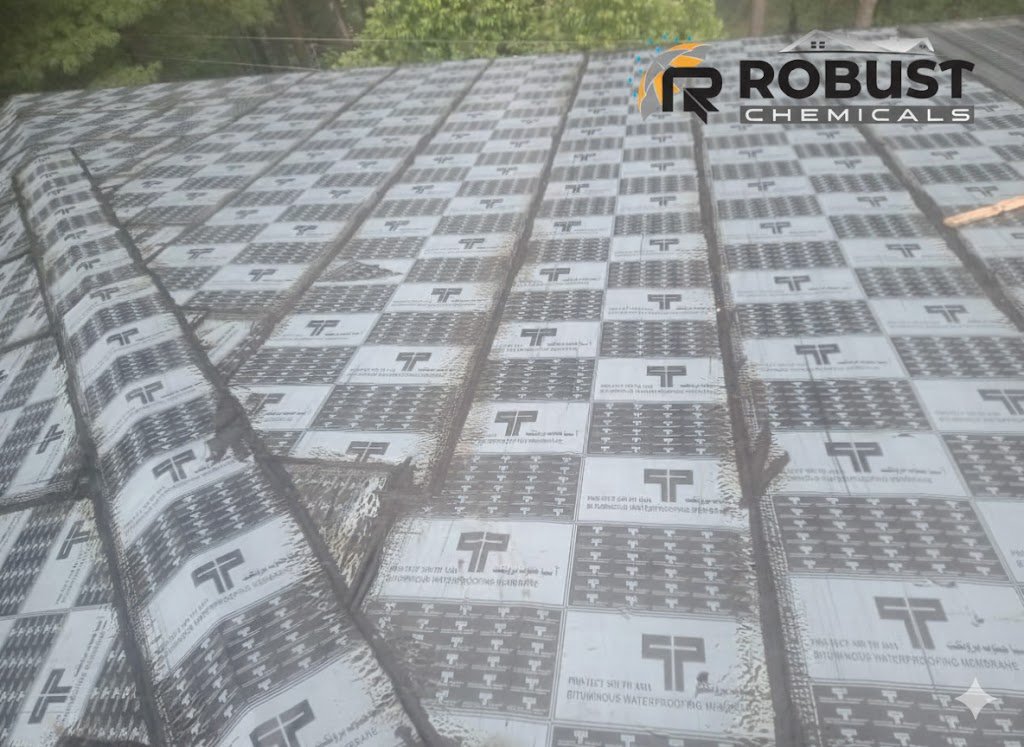
Torch-applied flexible membrane sheets are particularly popular for roof and terrace waterproofing because they create a strong bond with concrete surfaces, ensuring excellent adhesion and long-term waterproofing integrity.
Once installed, the membrane becomes an integral part of the structure, offering permanent protection without frequent maintenance or replacement.
One of the most important advantages of flexible waterproofing membrane sheets is their heat-resistant performance, which protects roofs and exposed surfaces from extreme solar radiation and high ambient temperatures.
By resisting heat penetration and UV degradation, these membranes help reduce surface cracking, material fatigue, and thermal stress on concrete slabs, ultimately extending the life of the structure.
Heat-resistant waterproofing membranes also contribute to improved indoor comfort by reducing heat transfer into the building, which can lower cooling costs and enhance energy efficiency.
Flexible waterproofing membrane sheets are reinforced with materials such as polyester, fiberglass, or composite fabrics that enhance tensile strength, tear resistance, and dimensional stability, allowing them to perform reliably even in demanding industrial and commercial environments.
This reinforcement ensures that the membrane can withstand foot traffic, mechanical stress, and environmental wear without compromising waterproofing performance.
In basements and foundations, flexible waterproofing membrane sheets provide a powerful defense against groundwater pressure and soil moisture, preventing seepage that can lead to dampness, mold growth, corrosion of reinforcement steel, and long-term structural weakening.
By creating a water-tight envelope around underground structures, these membranes ensure dry interiors, improved air quality, and enhanced durability.
Flexible waterproofing membrane sheets are also widely used in podium slabs, parking decks, and landscaped areas where exposure to water, chemicals, and load stress requires a robust and adaptable waterproofing system.
Their flexibility allows them to conform to complex shapes, corners, and detailing, ensuring complete coverage even in challenging application areas.
In water-retaining structures such as tanks, reservoirs, swimming pools, and treatment plants, flexible waterproofing membrane sheets prevent leakage and water loss, maintaining structural integrity and operational efficiency over time.
Because even small leaks can cause significant damage and financial loss, the use of a high-quality waterproofing membrane is essential in such applications.
Another major benefit of flexible waterproofing membrane sheets is their resistance to chemicals, salts, and pollutants, which makes them suitable for industrial buildings, factories, and infrastructure projects exposed to aggressive environments.
This chemical resistance ensures that the membrane does not degrade prematurely, maintaining its waterproofing and heat-resistant properties for decades.
Installation of flexible waterproofing membrane sheets requires proper surface preparation, correct alignment, and professional application to ensure optimal performance.
When installed correctly, the membrane provides a smooth, continuous, and durable waterproofing layer that protects the structure from water damage and thermal stress.
Contractors and waterproofing professionals prefer flexible membrane sheets because they offer predictable results, fast installation, and compatibility with a wide range of construction materials.
Engineers and architects specify flexible waterproofing membrane systems because they meet international waterproofing standards and provide proven long-term performance in both new construction and renovation projects.
Flexible waterproofing membrane sheets are also highly effective for remedial waterproofing, as they can be applied over existing substrates to restore waterproofing performance without extensive demolition.
This makes them a cost-effective solution for repairing aging roofs, leaking basements, and deteriorated waterproofing systems.
From an economic perspective, investing in a high-quality flexible waterproofing membrane sheet significantly reduces long-term maintenance costs by preventing recurring leakage, surface deterioration, and structural damage.
By protecting concrete and reinforcement from moisture and heat-related stress, the membrane helps extend the service life of the building and preserve its value.
Flexible waterproofing membrane sheets support sustainable construction practices by reducing the need for frequent repairs and minimizing material wastage over time.
Their long lifespan and durability contribute to environmentally responsible building solutions.
In residential buildings, flexible waterproofing membranes provide peace of mind by ensuring dry living spaces, protecting interior finishes, and preventing health issues related to dampness and mold.
In commercial and industrial buildings, they protect assets, equipment, and operations from water damage and heat exposure, ensuring uninterrupted functionality.
As construction standards continue to rise and climate conditions become more extreme, the demand for reliable, flexible, and heat-resistant waterproofing systems continues to grow.
Flexible waterproofing membrane sheets have become a trusted solution for builders, developers, and infrastructure professionals seeking complete protection against water and heat.
By delivering seamless waterproofing, exceptional flexibility, and long-term durability, flexible waterproofing membrane sheets ensure that structures remain protected, efficient, and structurally sound for many years.
Choosing a premium flexible waterproofing membrane sheet is a smart and future-proof investment that delivers complete protection against water penetration, heat stress, and environmental damage, making it an essential component of modern, high-quality construction projects.
Flexible Waterproofing Membrane Sheet | Complete Protection Against Water & Heat
is a high-performance, multi-layer waterproofing solution designed to deliver long-lasting, reliable, and all-weather protection for roofs, terraces, basements, foundations, podium slabs, retaining walls, tunnels, water tanks, bathrooms, and large concrete structures where resistance to water penetration and heat stress is critically important.
A flexible waterproofing membrane sheet is engineered using advanced polymer-modified bitumen or synthetic reinforcement technology that combines strength, elasticity, and durability into a single protective layer capable of withstanding harsh environmental conditions, structural movement, and continuous exposure to moisture and sunlight.
This type of waterproofing membrane acts as a complete barrier against water ingress, seepage, dampness, and thermal damage, ensuring that buildings remain structurally sound, dry, and comfortable throughout their lifespan.
Flexible waterproofing membrane sheets are specifically designed to accommodate expansion, contraction, vibration, and minor structural shifts without cracking, tearing, or losing adhesion, making them far superior to rigid or traditional .
waterproofing methods that often fail under stress. Because modern construction structures are constantly exposed to temperature variations, rainfall, humidity, and UV radiation, the need for a flexible and heat-resistant waterproofing system has become essential rather than optional.
Flexible waterproofing membrane sheets provide seamless protection by forming a continuous layer that eliminates weak points, overlaps, and joints where water typically penetrates.
These membranes are commonly applied using torch-on, self-adhesive, or mechanically fixed systems, depending on project requirements, substrate conditions, and environmental exposure.
Torch-applied flexible membrane sheets are particularly popular for roof and terrace waterproofing because they create a strong bond with concrete surfaces, ensuring excellent adhesion and long-term waterproofing integrity.
Once installed, the membrane becomes an integral part of the structure, offering permanent protection without frequent maintenance or replacement.
One of the most important advantages of flexible waterproofing membrane sheets is their heat-resistant performance, which protects roofs and exposed surfaces from extreme solar radiation and high ambient temperatures.
By resisting heat penetration and UV degradation, these membranes help reduce surface cracking, material fatigue, and thermal stress on concrete slabs, ultimately extending the life of the structure.
Heat-resistant waterproofing membranes also contribute to improved indoor comfort by reducing heat transfer into the building, which can lower cooling costs and enhance energy efficiency.
Flexible waterproofing membrane sheets are reinforced with materials such as polyester, fiberglass, or composite fabrics that enhance tensile strength, tear resistance, and dimensional stability, allowing them to perform reliably even in demanding industrial and commercial environments.
This reinforcement ensures that the membrane can withstand foot traffic, mechanical stress, and environmental wear without compromising waterproofing performance.
In basements and foundations, flexible waterproofing membrane sheets provide a powerful defense against groundwater pressure and soil moisture, preventing seepage that can lead to dampness, mold growth, corrosion of reinforcement steel, and long-term structural weakening.
By creating a water-tight envelope around underground structures, these membranes ensure dry interiors, improved air quality, and enhanced durability.
Flexible waterproofing membrane sheets are also widely used in podium slabs, parking decks, and landscaped areas where exposure to water, chemicals, and load stress requires a robust and adaptable waterproofing system.
Their flexibility allows them to conform to complex shapes, corners, and detailing, ensuring complete coverage even in challenging application areas.
In water-retaining structures such as tanks, reservoirs, swimming pools, and treatment plants, flexible waterproofing membrane sheets prevent leakage and water loss, maintaining structural integrity and operational efficiency over time.
Because even small leaks can cause significant damage and financial loss, the use of a high-quality waterproofing membrane is essential in such applications.
Another major benefit of flexible waterproofing membrane sheets is their resistance to chemicals, salts, and pollutants, which makes them suitable for industrial buildings, factories, and infrastructure projects exposed to aggressive environments.
This chemical resistance ensures that the membrane does not degrade prematurely, maintaining its waterproofing and heat-resistant properties for decades.
Installation of flexible waterproofing membrane sheets requires proper surface preparation, correct alignment, and professional application to ensure optimal performance.
When installed correctly, the membrane provides a smooth, continuous, and durable waterproofing layer that protects the structure from water damage and thermal stress.
Contractors and waterproofing professionals prefer flexible membrane sheets because they offer predictable results, fast installation, and compatibility with a wide range of construction materials.
Engineers and architects specify flexible waterproofing membrane systems because they meet international waterproofing standards and provide proven long-term performance in both new construction and renovation projects.
Flexible waterproofing membrane sheets are also highly effective for remedial waterproofing, as they can be applied over existing substrates to restore waterproofing performance without extensive demolition.
This makes them a cost-effective solution for repairing aging roofs, leaking basements, and deteriorated waterproofing systems.
From an economic perspective, investing in a high-quality flexible waterproofing membrane sheet significantly reduces long-term maintenance costs by preventing recurring leakage, surface deterioration, and structural damage.
By protecting concrete and reinforcement from moisture and heat-related stress, the membrane helps extend the service life of the building and preserve its value.
Flexible waterproofing membrane sheets support sustainable construction practices by reducing the need for frequent repairs and minimizing material wastage over time.
Their long lifespan and durability contribute to environmentally responsible building solutions.
In residential buildings, flexible waterproofing membranes provide peace of mind by ensuring dry living spaces, protecting interior finishes, and preventing health issues related to dampness and mold.
In commercial and industrial buildings, they protect assets, equipment, and operations from water damage and heat exposure, ensuring uninterrupted functionality.
As construction standards continue to rise and climate conditions become more extreme, the demand for reliable, flexible, and heat-resistant waterproofing systems continues to grow.
Flexible waterproofing membrane sheets have become a trusted solution for builders, developers, and infrastructure professionals seeking complete protection against water and heat.
By delivering seamless waterproofing, exceptional flexibility, and long-term durability, flexible waterproofing membrane sheets ensure that structures remain protected, efficient, and structurally sound for many years.
Choosing a premium flexible waterproofing membrane sheet is a smart and future-proof investment that delivers complete protection against water penetration, heat stress, and environmental damage, making it an essential component of modern, high-quality construction projects.
Flexible Waterproofing Membrane Sheet | Complete Protection Against Water & Heat
is a high-performance, multi-layer waterproofing solution designed to deliver long-lasting, reliable, and all-weather protection for roofs, terraces, basements, foundations, podium slabs, retaining walls, tunnels, water tanks, bathrooms, and large concrete structures where resistance to water penetration and heat stress is critically important.
A flexible waterproofing membrane sheet is engineered using advanced polymer-modified bitumen or synthetic reinforcement technology that combines strength, elasticity, and durability into a single protective layer capable of withstanding harsh environmental conditions, structural movement, and continuous exposure to moisture and sunlight.
This type of waterproofing membrane acts as a complete barrier against water ingress, seepage, dampness, and thermal damage, ensuring that buildings remain structurally sound, dry, and comfortable throughout their lifespan.
Flexible waterproofing membrane sheets are specifically designed to accommodate expansion, contraction, vibration, and minor structural shifts without cracking, tearing, or losing adhesion, making them far superior to rigid or traditional .
waterproofing methods that often fail under stress. Because modern construction structures are constantly exposed to temperature variations, rainfall, humidity, and UV radiation, the need for a flexible and heat-resistant waterproofing system has become essential rather than optional.
Flexible waterproofing membrane sheets provide seamless protection by forming a continuous layer that eliminates weak points, overlaps, and joints where water typically penetrates.
These membranes are commonly applied using torch-on, self-adhesive, or mechanically fixed systems, depending on project requirements, substrate conditions, and environmental exposure.
Torch-applied flexible membrane sheets are particularly popular for roof and terrace waterproofing because they create a strong bond with concrete surfaces, ensuring excellent adhesion and long-term waterproofing integrity.
Once installed, the membrane becomes an integral part of the structure, offering permanent protection without frequent maintenance or replacement.
One of the most important advantages of flexible waterproofing membrane sheets is their heat-resistant performance, which protects roofs and exposed surfaces from extreme solar radiation and high ambient temperatures.
By resisting heat penetration and UV degradation, these membranes help reduce surface cracking, material fatigue, and thermal stress on concrete slabs, ultimately extending the life of the structure.
Heat-resistant waterproofing membranes also contribute to improved indoor comfort by reducing heat transfer into the building, which can lower cooling costs and enhance energy efficiency.
Flexible waterproofing membrane sheets are reinforced with materials such as polyester, fiberglass, or composite fabrics that enhance tensile strength, tear resistance, and dimensional stability, allowing them to perform reliably even in demanding industrial and commercial environments.
This reinforcement ensures that the membrane can withstand foot traffic, mechanical stress, and environmental wear without compromising waterproofing performance.
In basements and foundations, flexible waterproofing membrane sheets provide a powerful defense against groundwater pressure and soil moisture, preventing seepage that can lead to dampness, mold growth, corrosion of reinforcement steel, and long-term structural weakening.
By creating a water-tight envelope around underground structures, these membranes ensure dry interiors, improved air quality, and enhanced durability.
Flexible waterproofing membrane sheets are also widely used in podium slabs, parking decks, and landscaped areas where exposure to water, chemicals, and load stress requires a robust and adaptable waterproofing system.
Their flexibility allows them to conform to complex shapes, corners, and detailing, ensuring complete coverage even in challenging application areas.
In water-retaining structures such as tanks, reservoirs, swimming pools, and treatment plants, flexible waterproofing membrane sheets prevent leakage and water loss, maintaining structural integrity and operational efficiency over time.
Because even small leaks can cause significant damage and financial loss, the use of a high-quality waterproofing membrane is essential in such applications.
Another major benefit of flexible waterproofing membrane sheets is their resistance to chemicals, salts, and pollutants, which makes them suitable for industrial buildings, factories, and infrastructure projects exposed to aggressive environments.
This chemical resistance ensures that the membrane does not degrade prematurely, maintaining its waterproofing and heat-resistant properties for decades.
Installation of flexible waterproofing membrane sheets requires proper surface preparation, correct alignment, and professional application to ensure optimal performance.
When installed correctly, the membrane provides a smooth, continuous, and durable waterproofing layer that protects the structure from water damage and thermal stress.
Contractors and waterproofing professionals prefer flexible membrane sheets because they offer predictable results, fast installation, and compatibility with a wide range of construction materials.
Engineers and architects specify flexible waterproofing membrane systems because they meet international waterproofing standards and provide proven long-term performance in both new construction and renovation projects.
Flexible waterproofing membrane sheets are also highly effective for remedial waterproofing, as they can be applied over existing substrates to restore waterproofing performance without extensive demolition.
This makes them a cost-effective solution for repairing aging roofs, leaking basements, and deteriorated waterproofing systems.
From an economic perspective, investing in a high-quality flexible waterproofing membrane sheet significantly reduces long-term maintenance costs by preventing recurring leakage, surface deterioration, and structural damage.
By protecting concrete and reinforcement from moisture and heat-related stress, the membrane helps extend the service life of the building and preserve its value.
Flexible waterproofing membrane sheets support sustainable construction practices by reducing the need for frequent repairs and minimizing material wastage over time.
Their long lifespan and durability contribute to environmentally responsible building solutions.
In residential buildings, flexible waterproofing membranes provide peace of mind by ensuring dry living spaces, protecting interior finishes, and preventing health issues related to dampness and mold.
In commercial and industrial buildings, they protect assets, equipment, and operations from water damage and heat exposure, ensuring uninterrupted functionality.
As construction standards continue to rise and climate conditions become more extreme, the demand for reliable, flexible, and heat-resistant waterproofing systems continues to grow.
Flexible waterproofing membrane sheets have become a trusted solution for builders, developers, and infrastructure professionals seeking complete protection against water and heat.
By delivering seamless waterproofing, exceptional flexibility, and long-term durability, flexible waterproofing membrane sheets ensure that structures remain protected, efficient, and structurally sound for many years.
Choosing a premium flexible waterproofing membrane sheet is a smart and future-proof investment that delivers complete protection against water penetration, heat stress, and environmental damage, making it an essential component of modern, high-quality construction projects.
H2: What Is a Flexible Waterproofing Membrane Sheet
H3: High-Performance Waterproofing Solution for Concrete Surfaces
H4: Provides Seamless, Heat-Resistant, and Water-Tight Protection
H2: Key Features of Flexible Waterproofing Membrane Sheet
H3: Seamless and Flexible Design
H4: Eliminates Weak Points and Adapts to Structural Movement
H3: Heat-Resistant and UV-Stable Performance
H4: Protects Roofs and Terraces from Thermal Damage
H3: Durable and Long-Lasting Material
H4: Withstands Harsh Environmental Conditions and Heavy Traffic
H2: Types of Waterproofing Membrane Sheets
H3: Torch-On Bituminous Membrane
H4: Strong Adhesion and High Mechanical Strength
H3: Self-Adhesive Membrane Sheets
H4: Easy Installation with Fast Application
H3: Reinforced Membrane Sheets
H4: Extra Tensile Strength and Tear Resistance for Heavy Duty Use
H2: Applications of Flexible Waterproofing Membrane Sheet
H3: Roofs and Terraces
H4: Prevents Rainwater Leakage and Surface Cracking
H3: Basements and Foundations
H4: Blocks Groundwater Seepage and Dampness
H3: Water Tanks, Pools, and Podium Slabs
H4: Maintains Leak-Free Performance Under Constant Water Pressure
H3: Industrial and Commercial Structures
H4: Resistant to Chemicals, Pollution, and Heavy Usage
H2: Benefits of Using Flexible Waterproofing Membrane Sheets
H3: Long-Term Structural Protection
H4: Prevents Corrosion, Mold, and Concrete Deterioration
H3: Maintenance-Free and Cost-Effective
H4: Reduces Repair Costs and Extends Building Life
H3: Eco-Friendly and Sustainable Solution
H4: Minimizes Material Wastage and Energy Use
H2: Installation Guidelines
H3: Surface Preparation and Cleaning
H4: Ensures Proper Adhesion and Waterproofing Efficiency
H3: Application Techniques
H4: Torch-On, Self-Adhesive, or Mechanically Fixed Systems
H3: Joint Detailing and Overlaps
H4: Creates Continuous Seamless Protection Without Leak Points
H2: Conclusion – Reliable Waterproofing for All Structures
H3: Flexible Membrane Sheet for Long-Lasting Protection
H4: Ideal for Roofs, Basements, Water Tanks, and Industrial Projects