PVC Water Stopper for Concrete Joint Waterproofing
H2: What Is PVC Water Stopper
H3: Flexible PVC Waterstop for Concrete Joints
H4: Designed to Prevent Water Leakage and Seepage
H2: Key Properties of PVC Water Stopper
H3: High Flexibility and Movement Absorption
H4: Handles Expansion and Contraction in Concrete Structures
H3: Strong Bonding with Concrete
H4: Embedded During Casting for Permanent Sealing
H3: Pressure and Chemical Resistance
H4: Suitable for Water-Retaining and Water-Excluding Structures
H2: Types of PVC Water Stoppers
H3: Central Bulb PVC Water Stopper
H4: Ideal for Expansion and Contraction Joints
H3: Dumbbell and Ribbed PVC Water Stopper
H4: Provides Maximum Grip and Leak Prevention
H3: External and Internal PVC Water Stopper
H4: Used for Retaining Walls and Underground Structures
H2: Applications of PVC Water Stopper
H3: Basements and Foundations
H4: Prevents Groundwater Seepage
H3: Dams, Canals, and Water Tanks
H4: Ensures Long-Term Water Retention
H3: Tunnels and Underground Structures
H4: Protects Against Hydrostatic Pressure
H2: Benefits of PVC Water Stopper
H3: Permanent Waterproofing Solution
H4: Eliminates Future Leakage and Repairs
H3: Long Service Life
H4: Maintains Performance for Decades
H3: Cost-Effective Joint Protection
H4: Reduces Maintenance and Structural Damage
H2: Installation Guidelines
H3: Placement During Concrete Pouring
H4: Must Be Fixed at Joint Centerline
H3: Welding and Joint Continuity
H4: Heat Welding Ensures Leakproof Connections
H2: Why Choose PVC Water Stopper
H3: Trusted Waterproofing for Critical Structures
H4: Ideal for Residential, Commercial, and Infrastructure Projects
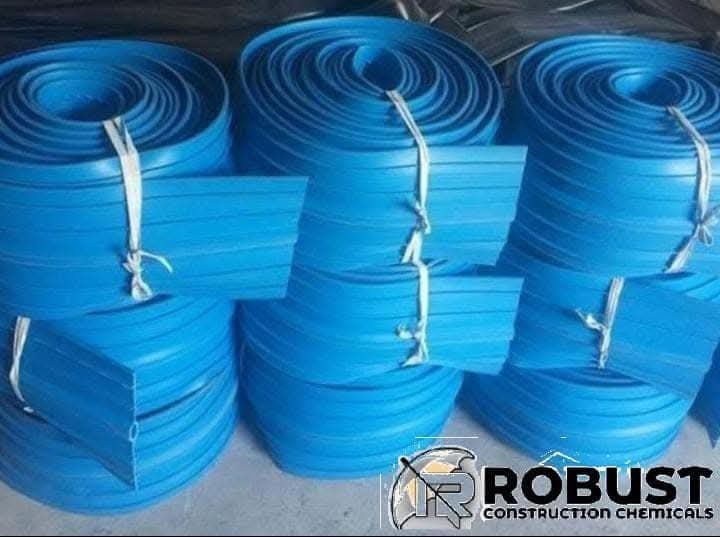
PVC Water Stopper is a highly specialized and essential waterproofing component used in reinforced concrete structures to prevent water leakage through construction joints, expansion joints, and movement joints.
It is manufactured from high-quality flexible polyvinyl chloride (PVC) compounds that are specifically engineered to withstand hydrostatic pressure, structural movement, chemical exposure, and long-term environmental stress.
PVC water stoppers are embedded inside concrete during casting and act as a permanent physical barrier that blocks the passage of water through joints, which are naturally the weakest points in any concrete structure.
Concrete structures such as basements, dams, tunnels, reservoirs, water tanks, canals, retaining walls, sewage treatment plants, and underground foundations are continuously exposed to water pressure from groundwater, stored water, or surrounding soil.
Without a reliable joint sealing system, water easily penetrates through these joints, causing leakage, dampness, corrosion of reinforcement steel, concrete deterioration, mold growth, and eventual structural failure.
PVC water stopper solves this problem by creating a continuous, flexible, and watertight seal within the concrete mass itself, ensuring long-term protection and structural safety.
The major advantage of PVC water stopper is its excellent flexibility combined with high tensile strength.
This allows it to accommodate expansion, contraction, vibration, and settlement movements that naturally occur in concrete due to temperature changes, load variations, and seismic activity.
Unlike rigid materials that crack or lose adhesion, PVC water stoppers stretch and recover without breaking, maintaining joint integrity even under continuous movement and pressure.
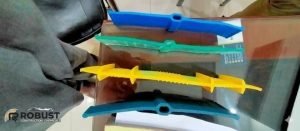
PVC water stoppers are available in multiple profiles, each designed for specific structural requirements.
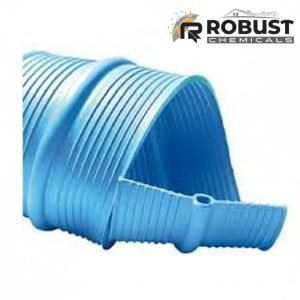
Central bulb PVC water stoppers are used in expansion and contraction joints where significant movement is expected. The central bulb absorbs movement while maintaining a watertight seal.
Dumbbell and ribbed profiles provide strong anchorage within concrete and are ideal for construction joints where movement is limited but water pressure is high.
Flat PVC water stoppers are commonly used in light-duty applications, while external and internal water stoppers are selected based on whether the joint is exposed to water from the outside or needs internal sealing.
One of the most important characteristics of PVC water stopper is its resistance to hydrostatic pressure.
In basements and underground structures, groundwater pressure can be extremely high, especially during monsoon seasons.
PVC water stoppers are designed to resist this pressure without deformation or leakage, ensuring dry interiors and protecting structural components.
This makes them an essential waterproofing solution in Pakistan’s challenging soil and water conditions.
PVC water stoppers also offer excellent resistance to chemicals, salts, sewage, acids, and alkaline environments.
This property makes them ideal for wastewater treatment plants, industrial facilities, chemical storage areas, and sewage systems where concrete is exposed to aggressive substances.
The chemical stability of PVC ensures that the water stopper does not degrade, harden, or lose flexibility over time, even in harsh environments.
Installation of PVC water stopper is a critical process that directly affects its performance.
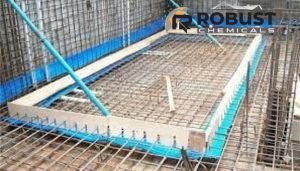
The water stopper must be accurately positioned at the center of the joint and securely fixed to reinforcement bars or formwork using clips, eyelets, or clamps.
Proper alignment prevents displacement during concrete pouring and vibration.
The ribs and serrations on the water stopper profile help it bond tightly with concrete, forming a monolithic, leakproof joint.
For long joint runs, PVC water stoppers are heat-welded at site using specialized welding equipment.
This ensures continuity of the waterproofing barrier and eliminates weak points where leakage could occur.
Proper welding technique is essential to maintain uniform thickness, strength, and flexibility across joints.
PVC water stoppers are widely used in basements and foundations to seal slab-to-wall joints and construction joints, preventing groundwater seepage and dampness.
In dams, canals, and reservoirs, they ensure controlled water retention and prevent pressure-induced leakage. In tunnels and underground passages, they protect against soil water infiltration and hydrostatic pressure.
In water tanks and swimming pools, they prevent water loss and structural weakening caused by continuous water exposure.
Another major benefit of PVC water stopper is its long service life. Once embedded in concrete, it requires no maintenance and continues to perform for decades.
This significantly reduces long-term repair costs, downtime, and structural rehabilitation expenses.
Engineers and consultants prefer PVC water stoppers because they provide predictable, tested, and code-compliant waterproofing performance.
From a cost perspective, PVC water stopper is a highly economical waterproofing solution when compared to recurring surface treatments or repair-based waterproofing systems.
By preventing water damage at the joint level, it protects the entire structure and extends its lifespan, making it a smart investment for both public and private construction projects.
PVC water stoppers are widely specified in international construction standards and are considered mandatory in critical water-retaining and water-excluding structures.
Their proven performance, durability, flexibility, and resistance to pressure make them one of the most trusted waterproofing joint solutions in modern construction.
In conclusion, PVC Water Stopper is an indispensable waterproofing material for concrete structures where leakage prevention, durability, and long-term structural protection are essential.
Its ability to handle movement, pressure, and aggressive environments makes it the preferred choice for basements, dams, tunnels, water tanks, canals, and infrastructure projects.
Choosing high-quality PVC water stopper and ensuring proper installation guarantees leak-free performance, structural safety, and peace of mind for decades.
PVC Water Stopper is a critical engineered waterproofing component used in reinforced concrete construction to control and block water flow through joints that are structurally unavoidable. In any concrete structure, joints are introduced due to staged casting, thermal movement, shrinkage, or structural design requirements. These joints become the most vulnerable points for water penetration. PVC water stopper is specifically designed to neutralize this weakness by forming a continuous, flexible, and impermeable barrier embedded directly within the concrete joint.
PVC water stoppers are manufactured from high-grade virgin PVC compounds blended with plasticizers and stabilizers that provide long-term flexibility, strength, and resistance to aging. The closed molecular structure of PVC ensures minimal water permeability while maintaining elasticity over decades. This combination of flexibility and impermeability allows PVC water stoppers to perform effectively under constant hydrostatic pressure without cracking, tearing, or losing bond with surrounding concrete.
One of the most important performance parameters of PVC water stopper is elongation capacity. High-quality water stoppers can elongate significantly without failure, allowing them to accommodate joint movement caused by temperature variations, seismic activity, vibration, settlement, and load redistribution. This is especially critical in large concrete masses such as dams, rafts, tunnels, and underground basements where movement is unavoidable and uncontrolled.
PVC water stoppers are classified based on joint type and exposure conditions. For expansion joints, central bulb water stoppers are used because the bulb acts as a movement absorber while maintaining watertight integrity. For construction joints where movement is limited but water pressure is high, ribbed or dumbbell profiles provide strong mechanical anchorage within concrete. External water stoppers are used where water pressure is expected from one side only, such as retaining walls and basement exteriors, while internal water stoppers are embedded centrally for full pressure resistance from both sides.
Another major advantage of PVC water stopper is its resistance to aggressive environments. It performs exceptionally well in contact with groundwater containing salts, chlorides, sulfates, sewage effluents, mild acids, and alkalis. This makes it ideal for sewage treatment plants, wastewater chambers, industrial foundations, chemical storage areas, and irrigation infrastructure. Unlike rubber or bitumen-based products, PVC does not rot, soften, or leach under prolonged exposure.
In water-retaining structures such as overhead tanks, underground tanks, reservoirs, canals, and swimming pools, PVC water stoppers play a vital role in preventing water loss and structural deterioration. Even micro-leakage can cause reinforcement corrosion and concrete degradation over time. PVC water stoppers ensure zero leakage at joints, maintaining water tightness and extending the service life of the structure.
In water-excluding structures such as basements, underground parking areas, lift pits, tunnels, and foundations, PVC water stoppers protect against groundwater ingress and hydrostatic uplift pressure. During heavy rainfall or rising water tables, groundwater pressure increases significantly. PVC water stoppers resist this pressure and prevent seepage that could otherwise lead to dampness, mold growth, electrical damage, and structural weakening.
Proper installation technique is essential for maximum performance. PVC water stoppers must be accurately aligned along the joint centerline and securely fixed using metal clips, eyelets, or reinforcement ties to prevent displacement during concrete pouring and vibration. Concrete must be properly compacted around the ribs of the water stopper to eliminate voids, as voids can create leakage paths. Careful supervision during installation is a key requirement in high-risk structures.
For continuous joint lengths, heat welding of PVC water stopper joints is mandatory. Heat welding creates a homogeneous bond that matches the original material strength and flexibility.
Cold joints, overlaps, or adhesive bonding are not acceptable in professional construction because they compromise watertightness.
Proper welding ensures continuity of the water barrier across the entire joint length.
PVC water stoppers contribute significantly to life-cycle cost reduction. Once installed correctly, they require no maintenance, no reapplication, and no surface treatment.
This makes them far more economical than external waterproofing systems that may deteriorate over time.
Infrastructure projects and government works rely on PVC water stoppers because of their proven durability and predictable performance over decades.
From an engineering standpoint, PVC water stoppers are compliant with international construction standards and are specified in major civil engineering projects worldwide.
Their consistent material properties, pressure resistance, and movement accommodation make them suitable for both conventional buildings and complex infrastructure projects such as hydropower stations, metro tunnels, spillways, and flood control structures.
In seismic zones, PVC water stoppers offer an additional safety advantage. Their flexibility allows joints to move without rupture during seismic events, maintaining watertight integrity even under sudden displacement.
This characteristic is crucial for underground and hydraulic structures in earthquake-prone regions.
In summary, PVC Water Stopper is not just a waterproofing accessory but a structural protection system that safeguards concrete joints against leakage, pressure, chemical attack, and movement-related failure.
Its long-term reliability, resistance to harsh environments, and compatibility with modern construction practices make it an indispensable component in basements, dams, tunnels, tanks, canals, and all water-critical structures.
Selecting high-quality PVC water stopper and ensuring expert installation guarantees leak-free, durable, and maintenance-free performance for the entire life of the structure.
PVC water stoppers contribute significantly to life-cycle cost reduction. Once installed correctly, they require no maintenance, no reapplication, and no surface treatment.
This makes them far more economical than external waterproofing systems that may deteriorate over time.
Infrastructure projects and government works rely on PVC water stoppers because of their proven durability and predictable performance over decades.
From an engineering standpoint, PVC water stoppers are compliant with international construction standards and are specified in major civil engineering projects worldwide.
Their consistent material properties, pressure resistance, and movement accommodation make them suitable for both conventional buildings and complex infrastructure projects such as hydropower stations, metro tunnels, spillways, and flood control structures.
In seismic zones, PVC water stoppers offer an additional safety advantage. Their flexibility allows joints to move without rupture during seismic events, maintaining watertight integrity even under sudden displacement.
This characteristic is crucial for underground and hydraulic structures in earthquake-prone regions.
In summary, PVC Water Stopper is not just a waterproofing accessory but a structural protection system that safeguards concrete joints against leakage, pressure, chemical attack, and movement-related failure.
Its long-term reliability, resistance to harsh environments, and compatibility with modern construction practices make it an indispensable component in basements, dams, tunnels, tanks, canals, and all water-critical structures.
Selecting high-quality PVC water stopper and ensuring expert installation guarantees leak-free, durable, and maintenance-free performance for the entire life of the structure.
PVC water stoppers contribute significantly to life-cycle cost reduction. Once installed correctly, they require no maintenance, no reapplication, and no surface treatment.
This makes them far more economical than external waterproofing systems that may deteriorate over time.
Infrastructure projects and government works rely on PVC water stoppers because of their proven durability and predictable performance over decades.
From an engineering standpoint, PVC water stoppers are compliant with international construction standards and are specified in major civil engineering projects worldwide.
Their consistent material properties, pressure resistance, and movement accommodation make them suitable for both conventional buildings and complex infrastructure projects such as hydropower stations, metro tunnels, spillways, and flood control structures.
In seismic zones, PVC water stoppers offer an additional safety advantage. Their flexibility allows joints to move without rupture during seismic events, maintaining watertight integrity even under sudden displacement.
This characteristic is crucial for underground and hydraulic structures in earthquake-prone regions.
In summary, PVC Water Stopper is not just a waterproofing accessory but a structural protection system that safeguards concrete joints against leakage, pressure, chemical attack, and movement-related failure.
Its long-term reliability, resistance to harsh environments, and compatibility with modern construction practices make it an indispensable component in basements, dams, tunnels, tanks, canals, and all water-critical structures.
Selecting high-quality PVC water stopper and ensuring expert installation guarantees leak-free, durable, and maintenance-free performance for the entire life of the structure.
PVC water stoppers contribute significantly to life-cycle cost reduction. Once installed correctly, they require no maintenance, no reapplication, and no surface treatment.
This makes them far more economical than external waterproofing systems that may deteriorate over time.
Infrastructure projects and government works rely on PVC water stoppers because of their proven durability and predictable performance over decades.
From an engineering standpoint, PVC water stoppers are compliant with international construction standards and are specified in major civil engineering projects worldwide.
Their consistent material properties, pressure resistance, and movement accommodation make them suitable for both conventional buildings and complex infrastructure projects such as hydropower stations, metro tunnels, spillways, and flood control structures.
In seismic zones, PVC water stoppers offer an additional safety advantage. Their flexibility allows joints to move without rupture during seismic events, maintaining watertight integrity even under sudden displacement.
This characteristic is crucial for underground and hydraulic structures in earthquake-prone regions.
In summary, PVC Water Stopper is not just a waterproofing accessory but a structural protection system that safeguards concrete joints against leakage, pressure, chemical attack, and movement-related failure.
Its long-term reliability, resistance to harsh environments, and compatibility with modern construction practices make it an indispensable component in basements, dams, tunnels, tanks, canals, and all water-critical structures.
Selecting high-quality PVC water stopper and ensuring expert installation guarantees leak-free, durable, and maintenance-free performance for the entire life of the structure.