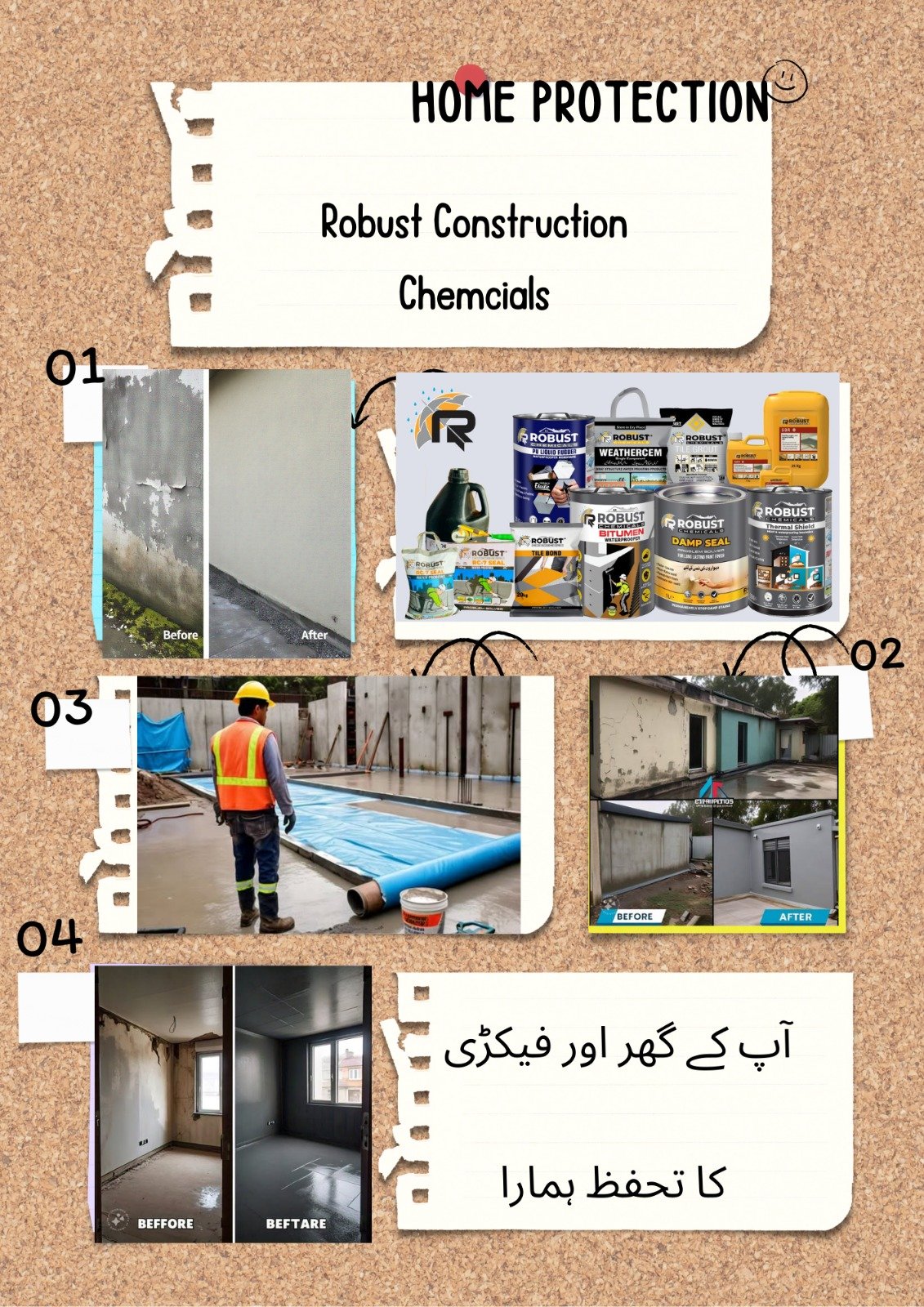
Best Waterproofing and Heatproofing Products in Pakistan — Complete Guide for Construction & Building Protection
Introduction
In Pakistan’s varied climate — from scorching summers in Karachi and Lahore to seasonal monsoons in Islamabad and coastal regions — the need for high-performance waterproofing and heatproofing products in construction has never been greater. Developers, commercial builders, homeowners, and infrastructure projects demand solutions that safeguard structures against water damage, thermal stress, humidity, and long-term deterioration.
Whether it’s a multi-storey commercial building, basement parking, terrace slab, podium, water tank, or residential rooftop, poor waterproofing and heatproofing can lead to:
-
Cracks and structural degradation
-
Damp walls and ceilings
-
Mold and unhealthy interiors
-
Steel corrosion
-
Thermal discomfort and higher energy costs
-
Frequent maintenance & repair expenses
Selecting the best waterproofing and heatproofing products in Pakistan is a strategic investment that increases durability, improves indoor comfort, and enhances property value. This guide explores every major class of products, application techniques, benefits, selection criteria, and real-world performance considerations — all optimized for high visibility in search engines and valuable for industry decision-makers.
Why Waterproofing and Heatproofing Matter in Pakistan
Pakistan’s climatic conditions present unique challenges:
1. Monsoon and Rainwater Exposure
Cities like Karachi, Islamabad, Lahore, Peshawar, and Quetta experience heavy seasonal rainfall that tests the strength and integrity of building envelopes.
2. Extreme Heat and Thermal Stress
Summer temperatures frequently reach 40°C+, especially in the plains and southern areas, causing concrete and roofing materials to expand and crack without proper thermal protection.
3. Humidity and Condensation
Coastal regions have higher humidity levels, leading to moisture ingress, efflorescence, and fungal growth on walls.
Effective waterproofing and heatproofing products are no longer optional — they are essential for performance, comfort, safety, and longevity.
Understanding Waterproofing vs Heatproofing
Before diving into specific products, it’s important to clarify the difference:
| Waterproofing | Heatproofing / Thermal Insulation |
|---|---|
| Prevents water & moisture ingress | Reduces heat penetration & surface temperatures |
| Protects structural integrity | Improves energy efficiency and indoor comfort |
| Essential for roofs, basements, water tanks | Critical for roofs, terraces, walls, and industrial facilities |
| Protects against rain, seepage, groundwater | Protects against thermal expansion & heat stress |
Many modern products now combine both waterproofing and heatproofing properties — delivering dual benefits.
Section 1 — Best Waterproofing Products in Pakistan
Waterproofing solutions come in many forms, each designed for specific surfaces and conditions. Below are the leading categories.
1. Cementitious Waterproofing Compounds
Cementitious waterproofing is one of the most trusted and widely used methods for concrete structures. It bonds with concrete and forms a sturdy barrier against water penetration.
Key Features
-
Easy to apply using a brush, roller, or spray
-
Bonds directly with concrete
-
Ideal for positive and negative side waterproofing
-
Low lifecycle cost
Common Applications
-
Basements
-
Foundations & footings
-
Water tanks & reservoirs
-
Lift pits
-
Sewage structures
Cementitious waterproofing products in Pakistan are available from multiple brands and are essential for heavy-duty infrastructure and residential waterproofing.
2. Liquid Applied Waterproofing Membranes
These products form a seamless, flexible membrane when applied. They are ideal for areas where movement cracks are possible.
Types
-
Polyurethane Liquid Membranes – Highly flexible and durable
-
Acrylic Waterproof Coatings – UV resistant and cost-effective
-
Bituminous Liquid Membranes – Excellent adhesion and waterproofing
Applications
-
Roof slabs & terraces
-
Podium slabs
-
Balconies & walkways
-
Metal roof sheets
Liquid membranes are a top choice for roofs and exposed outdoor areas due to their crack-bridging and weather-resistant properties.
3. Bituminous Membranes
Bituminous waterproofing remains a reliable choice for high-water-pressure applications.
Features
-
Strong water resistance
-
Durable under heavy loads
-
Excellent for areas with hydrostatic pressure
Typical Uses
-
Below-grade foundations
-
Retaining walls
-
Parking areas
In Pakistan, bituminous membranes are widely specified in urban construction where underground waterproofing is a priority.
4. Crystalline Waterproofing Solutions
Crystalline technology introduces active chemicals into the concrete that react with moisture and fill microscopic pores and capillaries.
Benefits
-
Self-healing waterproof effect
-
Works deep within concrete
-
Long-term protection
Uses
-
Concrete tanks
-
Underground structures
-
Water contact surfaces
This technology is particularly useful in critical infrastructure projects like water treatment plants and reservoirs.
5. Polyethylene Sheet and PVC Waterproofing
Sheet membranes provide a physical waterproof barrier.
Advantages
-
Consistent thickness
-
Factory-manufactured quality control
-
Ideal for large areas
Applications
-
Basements
-
Tunnels
-
Podium slabs
PVC-based waterproofing sheets are especially useful in commercial high-rise construction.
6. Injection Grouting & Sealants
These products are used for repairing leaks and sealing cracks in existing structures.
Common Types
-
Polyurethane injection resins
-
Epoxy crack fillers
-
Silicone sealants for movement joints
Injection systems are essential for waterproofing repair and maintenance.
Section 2 — Best Heatproofing & Thermal Protection Products
Heatproofing improves indoor comfort and reduces cooling loads — a crucial benefit in Pakistan’s hot climate.
1. Thermal Insulating Coatings & Reflective Roof Paints
These are specialized coatings that reflect solar heat and reduce surface temperature.
Benefits
-
Lowers roof surface temperatures by up to 10–15°C
-
Reduces air-conditioning energy use
-
Easy application
Popular Uses
-
Rooftops
-
Exposed terraces
-
Industrial sheds
-
Hospitals & schools
Heat-reflective coatings offer one of the most cost-effective ways to combat thermal stress in buildings.
2. EPS and XPS Insulation Boards
Expanded Poly Styrene (EPS) and Extruded Poly Styrene (XPS) are rigid insulation boards.
Characteristics
-
High thermal resistance (R-value)
-
Moisture resistant
-
Long service life
Applications
-
Roofs
-
Walls
-
Basement insulation
XPS boards are preferred where moisture and compressive strength are key requirements.
3. PU Spray Foam Insulation
Spray Applied Polyurethane Foam expands to seal gaps and provides continuous thermal barrier.
Benefits
-
Excellent air sealing
-
High R-value
-
Waterproof properties
Typical Uses
-
Roof decks
-
Industrial buildings
-
Cold storage & HVAC ducts
PU foam insulation is one of the best solutions for thermal comfort and energy efficiency.
4. Mineral Wool & Fiberglass Insulation
Commonly used in industrial and HVAC applications.
Benefits
-
Fire resistant
-
Good thermal protection
-
Sound insulation
Used in commercial interiors, mechanical rooms, and ductwork insulation.
5. Thermal Barriers & Composite Insulation Systems
Advanced systems that combine insulation boards with protective membranes for dual waterproofing and heatproofing benefits.
These systems provide integrated performance — making them suitable for modern architectural projects.
Section 3 — Dual-Function Solutions: Waterproofing + Heatproofing
Modern construction increasingly favors products that provide both waterproofing and heatproofing:
Liquid Membranes with Thermal Reflectivity
Some liquid waterproofing membranes now come with heat-reflective additives, offering roof waterproofing and thermal control in a single coat.
Composite Insulation Coats
These products combine reflective coatings with waterproofing agents to reduce thermal loads while protecting from water ingress.
Section 4 — How to Choose the Right Product
Selecting appropriate products depends on:
1. Application Area
Basement vs roof vs wall vs water tank vs façade.
2. Environmental Exposure
Monsoon rainfall, coastal humidity, UV exposure, high heat zones.
3. Structural Movement
Areas with crack risk require flexible membranes.
4. Longevity & Maintenance
Products with longer warranties and proven field performance deliver lower lifecycle cost.
5. Budget & Performance Balance
High-end products may cost more upfront but save costs over decades.
Section 5 — Best Practices for Application in Pakistan
✓ Surface Preparation
Clean and level surfaces before product application.
✓ Primer Use
Primers improve adhesion and performance.
✓ Proper Mixing & Thickness
Follow manufacturer standards for mix ratios and coats.
✓ Weather Considerations
Avoid application during rain or damp conditions.
✓ Quality Control & Inspection
Ensure inspections at each stage for long-lasting results.
Section 6 — Top Brands & Suppliers in Pakistan
Pakistan has both local and international brands offering waterproofing and thermal solutions. Some of the widely trusted categories include:
Waterproofing
-
Cementitious waterproofing brands
-
Polyurethane liquid membranes
-
PVC and polyethylene sheet membranes
-
Injection grout systems
Heatproofing
-
Thermal reflective roof coatings
-
EPS/XPS insulation boards
-
PU spray foam systems
-
Composite dual-function coatings
Choosing certified products with strong warranties is critical in commercial and residential projects alike.
Section 7 — Benefits of Quality Waterproofing and Heatproofing
Improved Structural Safety
Prevents water damage and thermal stress cracking.
Energy Savings
Lower cooling loads and utility bills.
Indoor Comfort
Reduced heat ingress improves occupant comfort.
Long-Term Durability
Protects structures for decades with minimal maintenance.
Reduced Lifecycle Cost
Lower repair and rehabilitation expenses over time.
Best Waterproofing and Heatproofing Products in Pakistan — Complete Guide for Construction & Building Protection
Introduction
In Pakistan’s varied climate — from scorching summers in Karachi and Lahore to seasonal monsoons in Islamabad and coastal regions — the need for high-performance waterproofing and heatproofing products in construction has never been greater. Developers, commercial builders, homeowners, and infrastructure projects demand solutions that safeguard structures against water damage, thermal stress, humidity, and long-term deterioration.
Whether it’s a multi-storey commercial building, basement parking, terrace slab, podium, water tank, or residential rooftop, poor waterproofing and heatproofing can lead to:
-
Cracks and structural degradation
-
Damp walls and ceilings
-
Mold and unhealthy interiors
-
Steel corrosion
-
Thermal discomfort and higher energy costs
-
Frequent maintenance & repair expenses
Selecting the best waterproofing and heatproofing products in Pakistan is a strategic investment that increases durability, improves indoor comfort, and enhances property value. This guide explores every major class of products, application techniques, benefits, selection criteria, and real-world performance considerations — all optimized for high visibility in search engines and valuable for industry decision-makers.
Why Waterproofing and Heatproofing Matter in Pakistan
Pakistan’s climatic conditions present unique challenges:
1. Monsoon and Rainwater Exposure
Cities like Karachi, Islamabad, Lahore, Peshawar, and Quetta experience heavy seasonal rainfall that tests the strength and integrity of building envelopes.
2. Extreme Heat and Thermal Stress
Summer temperatures frequently reach 40°C+, especially in the plains and southern areas, causing concrete and roofing materials to expand and crack without proper thermal protection.
3. Humidity and Condensation
Coastal regions have higher humidity levels, leading to moisture ingress, efflorescence, and fungal growth on walls.
Effective waterproofing and heatproofing products are no longer optional — they are essential for performance, comfort, safety, and longevity.
Understanding Waterproofing vs Heatproofing
Before diving into specific products, it’s important to clarify the difference:
| Waterproofing | Heatproofing / Thermal Insulation |
|---|---|
| Prevents water & moisture ingress | Reduces heat penetration & surface temperatures |
| Protects structural integrity | Improves energy efficiency and indoor comfort |
| Essential for roofs, basements, water tanks | Critical for roofs, terraces, walls, and industrial facilities |
| Protects against rain, seepage, groundwater | Protects against thermal expansion & heat stress |
Many modern products now combine both waterproofing and heatproofing properties — delivering dual benefits.
Section 1 — Best Waterproofing Products in Pakistan
Waterproofing solutions come in many forms, each designed for specific surfaces and conditions. Below are the leading categories.
1. Cementitious Waterproofing Compounds
Cementitious waterproofing is one of the most trusted and widely used methods for concrete structures. It bonds with concrete and forms a sturdy barrier against water penetration.
Key Features
-
Easy to apply using a brush, roller, or spray
-
Bonds directly with concrete
-
Ideal for positive and negative side waterproofing
-
Low lifecycle cost
Common Applications
-
Basements
-
Foundations & footings
-
Water tanks & reservoirs
-
Lift pits
-
Sewage structures
Cementitious waterproofing products in Pakistan are available from multiple brands and are essential for heavy-duty infrastructure and residential waterproofing.
2. Liquid Applied Waterproofing Membranes
These products form a seamless, flexible membrane when applied. They are ideal for areas where movement cracks are possible.
Types
-
Polyurethane Liquid Membranes – Highly flexible and durable
-
Acrylic Waterproof Coatings – UV resistant and cost-effective
-
Bituminous Liquid Membranes – Excellent adhesion and waterproofing
Applications
-
Roof slabs & terraces
-
Podium slabs
-
Balconies & walkways
-
Metal roof sheets
Liquid membranes are a top choice for roofs and exposed outdoor areas due to their crack-bridging and weather-resistant properties.
3. Bituminous Membranes
Bituminous waterproofing remains a reliable choice for high-water-pressure applications.
Features
-
Strong water resistance
-
Durable under heavy loads
-
Excellent for areas with hydrostatic pressure
Typical Uses
-
Below-grade foundations
-
Retaining walls
-
Parking areas
In Pakistan, bituminous membranes are widely specified in urban construction where underground waterproofing is a priority.
4. Crystalline Waterproofing Solutions
Crystalline technology introduces active chemicals into the concrete that react with moisture and fill microscopic pores and capillaries.
Benefits
-
Self-healing waterproof effect
-
Works deep within concrete
-
Long-term protection
Uses
-
Concrete tanks
-
Underground structures
-
Water contact surfaces
This technology is particularly useful in critical infrastructure projects like water treatment plants and reservoirs.
5. Polyethylene Sheet and PVC Waterproofing
Sheet membranes provide a physical waterproof barrier.
Advantages
-
Consistent thickness
-
Factory-manufactured quality control
-
Ideal for large areas
Applications
-
Basements
-
Tunnels
-
Podium slabs
PVC-based waterproofing sheets are especially useful in commercial high-rise construction.
6. Injection Grouting & Sealants
These products are used for repairing leaks and sealing cracks in existing structures.
Common Types
-
Polyurethane injection resins
-
Epoxy crack fillers
-
Silicone sealants for movement joints
Injection systems are essential for waterproofing repair and maintenance.
Section 2 — Best Heatproofing & Thermal Protection Products
Heatproofing improves indoor comfort and reduces cooling loads — a crucial benefit in Pakistan’s hot climate.
1. Thermal Insulating Coatings & Reflective Roof Paints
These are specialized coatings that reflect solar heat and reduce surface temperature.
Benefits
-
Lowers roof surface temperatures by up to 10–15°C
-
Reduces air-conditioning energy use
-
Easy application
Popular Uses
-
Rooftops
-
Exposed terraces
-
Industrial sheds
-
Hospitals & schools
Heat-reflective coatings offer one of the most cost-effective ways to combat thermal stress in buildings.
2. EPS and XPS Insulation Boards
Expanded Poly Styrene (EPS) and Extruded Poly Styrene (XPS) are rigid insulation boards.
Characteristics
-
High thermal resistance (R-value)
-
Moisture resistant
-
Long service life
Applications
-
Roofs
-
Walls
-
Basement insulation
XPS boards are preferred where moisture and compressive strength are key requirements.
3. PU Spray Foam Insulation
Spray Applied Polyurethane Foam expands to seal gaps and provides continuous thermal barrier.
Benefits
-
Excellent air sealing
-
High R-value
-
Waterproof properties
Typical Uses
-
Roof decks
-
Industrial buildings
-
Cold storage & HVAC ducts
PU foam insulation is one of the best solutions for thermal comfort and energy efficiency.
4. Mineral Wool & Fiberglass Insulation
Commonly used in industrial and HVAC applications.
Benefits
-
Fire resistant
-
Good thermal protection
-
Sound insulation
Used in commercial interiors, mechanical rooms, and ductwork insulation.
5. Thermal Barriers & Composite Insulation Systems
Advanced systems that combine insulation boards with protective membranes for dual waterproofing and heatproofing benefits.
These systems provide integrated performance — making them suitable for modern architectural projects.
Section 3 — Dual-Function Solutions: Waterproofing + Heatproofing
Modern construction increasingly favors products that provide both waterproofing and heatproofing:
Liquid Membranes with Thermal Reflectivity
Some liquid waterproofing membranes now come with heat-reflective additives, offering roof waterproofing and thermal control in a single coat.
Composite Insulation Coats
These products combine reflective coatings with waterproofing agents to reduce thermal loads while protecting from water ingress.
Section 4 — How to Choose the Right Product
Selecting appropriate products depends on:
1. Application Area
Basement vs roof vs wall vs water tank vs façade.
2. Environmental Exposure
Monsoon rainfall, coastal humidity, UV exposure, high heat zones.
3. Structural Movement
Areas with crack risk require flexible membranes.
4. Longevity & Maintenance
Products with longer warranties and proven field performance deliver lower lifecycle cost.
5. Budget & Performance Balance
High-end products may cost more upfront but save costs over decades.
Section 5 — Best Practices for Application in Pakistan
✓ Surface Preparation
Clean and level surfaces before product application.
✓ Primer Use
Primers improve adhesion and performance.
✓ Proper Mixing & Thickness
Follow manufacturer standards for mix ratios and coats.
✓ Weather Considerations
Avoid application during rain or damp conditions.
✓ Quality Control & Inspection
Ensure inspections at each stage for long-lasting results.
Section 6 — Top Brands & Suppliers in Pakistan
Pakistan has both local and international brands offering waterproofing and thermal solutions. Some of the widely trusted categories include:
Waterproofing
-
Cementitious waterproofing brands
-
Polyurethane liquid membranes
-
PVC and polyethylene sheet membranes
-
Injection grout systems
Heatproofing
-
Thermal reflective roof coatings
-
EPS/XPS insulation boards
-
PU spray foam systems
-
Composite dual-function coatings
Choosing certified products with strong warranties is critical in commercial and residential projects alike.
Section 7 — Benefits of Quality Waterproofing and Heatproofing
Improved Structural Safety
Prevents water damage and thermal stress cracking.
Energy Savings
Lower cooling loads and utility bills.
Indoor Comfort
Reduced heat ingress improves occupant comfort.
Long-Term Durability
Protects structures for decades with minimal maintenance.
Reduced Lifecycle Cost
Lower repair and rehabilitation expenses over time.
Best Waterproofing and Heatproofing Products in Pakistan — Complete Guide for Construction & Building Protection
Introduction
In Pakistan’s varied climate — from scorching summers in Karachi and Lahore to seasonal monsoons in Islamabad and coastal regions — the need for high-performance waterproofing and heatproofing products in construction has never been greater. Developers, commercial builders, homeowners, and infrastructure projects demand solutions that safeguard structures against water damage, thermal stress, humidity, and long-term deterioration.
Whether it’s a multi-storey commercial building, basement parking, terrace slab, podium, water tank, or residential rooftop, poor waterproofing and heatproofing can lead to:
-
Cracks and structural degradation
-
Damp walls and ceilings
-
Mold and unhealthy interiors
-
Steel corrosion
-
Thermal discomfort and higher energy costs
-
Frequent maintenance & repair expenses
Selecting the best waterproofing and heatproofing products in Pakistan is a strategic investment that increases durability, improves indoor comfort, and enhances property value. This guide explores every major class of products, application techniques, benefits, selection criteria, and real-world performance considerations — all optimized for high visibility in search engines and valuable for industry decision-makers.
Why Waterproofing and Heatproofing Matter in Pakistan
Pakistan’s climatic conditions present unique challenges:
1. Monsoon and Rainwater Exposure
Cities like Karachi, Islamabad, Lahore, Peshawar, and Quetta experience heavy seasonal rainfall that tests the strength and integrity of building envelopes.
2. Extreme Heat and Thermal Stress
Summer temperatures frequently reach 40°C+, especially in the plains and southern areas, causing concrete and roofing materials to expand and crack without proper thermal protection.
3. Humidity and Condensation
Coastal regions have higher humidity levels, leading to moisture ingress, efflorescence, and fungal growth on walls.
Effective waterproofing and heatproofing products are no longer optional — they are essential for performance, comfort, safety, and longevity.
Understanding Waterproofing vs Heatproofing
Before diving into specific products, it’s important to clarify the difference:
| Waterproofing | Heatproofing / Thermal Insulation |
|---|---|
| Prevents water & moisture ingress | Reduces heat penetration & surface temperatures |
| Protects structural integrity | Improves energy efficiency and indoor comfort |
| Essential for roofs, basements, water tanks | Critical for roofs, terraces, walls, and industrial facilities |
| Protects against rain, seepage, groundwater | Protects against thermal expansion & heat stress |
Many modern products now combine both waterproofing and heatproofing properties — delivering dual benefits.
Section 1 — Best Waterproofing Products in Pakistan
Waterproofing solutions come in many forms, each designed for specific surfaces and conditions. Below are the leading categories.
1. Cementitious Waterproofing Compounds
Cementitious waterproofing is one of the most trusted and widely used methods for concrete structures. It bonds with concrete and forms a sturdy barrier against water penetration.
Key Features
-
Easy to apply using a brush, roller, or spray
-
Bonds directly with concrete
-
Ideal for positive and negative side waterproofing
-
Low lifecycle cost
Common Applications
-
Basements
-
Foundations & footings
-
Water tanks & reservoirs
-
Lift pits
-
Sewage structures
Cementitious waterproofing products in Pakistan are available from multiple brands and are essential for heavy-duty infrastructure and residential waterproofing.
2. Liquid Applied Waterproofing Membranes
These products form a seamless, flexible membrane when applied. They are ideal for areas where movement cracks are possible.
Types
-
Polyurethane Liquid Membranes – Highly flexible and durable
-
Acrylic Waterproof Coatings – UV resistant and cost-effective
-
Bituminous Liquid Membranes – Excellent adhesion and waterproofing
Applications
-
Roof slabs & terraces
-
Podium slabs
-
Balconies & walkways
-
Metal roof sheets
Liquid membranes are a top choice for roofs and exposed outdoor areas due to their crack-bridging and weather-resistant properties.
3. Bituminous Membranes
Bituminous waterproofing remains a reliable choice for high-water-pressure applications.
Features
-
Strong water resistance
-
Durable under heavy loads
-
Excellent for areas with hydrostatic pressure
Typical Uses
-
Below-grade foundations
-
Retaining walls
-
Parking areas
In Pakistan, bituminous membranes are widely specified in urban construction where underground waterproofing is a priority.
4. Crystalline Waterproofing Solutions
Crystalline technology introduces active chemicals into the concrete that react with moisture and fill microscopic pores and capillaries.
Benefits
-
Self-healing waterproof effect
-
Works deep within concrete
-
Long-term protection
Uses
-
Concrete tanks
-
Underground structures
-
Water contact surfaces
This technology is particularly useful in critical infrastructure projects like water treatment plants and reservoirs.
5. Polyethylene Sheet and PVC Waterproofing
Sheet membranes provide a physical waterproof barrier.
Advantages
-
Consistent thickness
-
Factory-manufactured quality control
-
Ideal for large areas
Applications
-
Basements
-
Tunnels
-
Podium slabs
PVC-based waterproofing sheets are especially useful in commercial high-rise construction.
6. Injection Grouting & Sealants
These products are used for repairing leaks and sealing cracks in existing structures.
Common Types
-
Polyurethane injection resins
-
Epoxy crack fillers
-
Silicone sealants for movement joints
Injection systems are essential for waterproofing repair and maintenance.
Section 2 — Best Heatproofing & Thermal Protection Products
Heatproofing improves indoor comfort and reduces cooling loads — a crucial benefit in Pakistan’s hot climate.
1. Thermal Insulating Coatings & Reflective Roof Paints
These are specialized coatings that reflect solar heat and reduce surface temperature.
Benefits
-
Lowers roof surface temperatures by up to 10–15°C
-
Reduces air-conditioning energy use
-
Easy application
Popular Uses
-
Rooftops
-
Exposed terraces
-
Industrial sheds
-
Hospitals & schools
Heat-reflective coatings offer one of the most cost-effective ways to combat thermal stress in buildings.
2. EPS and XPS Insulation Boards
Expanded Poly Styrene (EPS) and Extruded Poly Styrene (XPS) are rigid insulation boards.
Characteristics
-
High thermal resistance (R-value)
-
Moisture resistant
-
Long service life
Applications
-
Roofs
-
Walls
-
Basement insulation
XPS boards are preferred where moisture and compressive strength are key requirements.
3. PU Spray Foam Insulation
Spray Applied Polyurethane Foam expands to seal gaps and provides continuous thermal barrier.
Benefits
-
Excellent air sealing
-
High R-value
-
Waterproof properties
Typical Uses
-
Roof decks
-
Industrial buildings
-
Cold storage & HVAC ducts
PU foam insulation is one of the best solutions for thermal comfort and energy efficiency.
4. Mineral Wool & Fiberglass Insulation
Commonly used in industrial and HVAC applications.
Benefits
-
Fire resistant
-
Good thermal protection
-
Sound insulation
Used in commercial interiors, mechanical rooms, and ductwork insulation.
5. Thermal Barriers & Composite Insulation Systems
Advanced systems that combine insulation boards with protective membranes for dual waterproofing and heatproofing benefits.
These systems provide integrated performance — making them suitable for modern architectural projects.
Section 3 — Dual-Function Solutions: Waterproofing + Heatproofing
Modern construction increasingly favors products that provide both waterproofing and heatproofing:
Liquid Membranes with Thermal Reflectivity
Some liquid waterproofing membranes now come with heat-reflective additives, offering roof waterproofing and thermal control in a single coat.
Composite Insulation Coats
These products combine reflective coatings with waterproofing agents to reduce thermal loads while protecting from water ingress.
Section 4 — How to Choose the Right Product
Selecting appropriate products depends on:
1. Application Area
Basement vs roof vs wall vs water tank vs façade.
2. Environmental Exposure
Monsoon rainfall, coastal humidity, UV exposure, high heat zones.
3. Structural Movement
Areas with crack risk require flexible membranes.
4. Longevity & Maintenance
Products with longer warranties and proven field performance deliver lower lifecycle cost.
5. Budget & Performance Balance
High-end products may cost more upfront but save costs over decades.
Section 5 — Best Practices for Application in Pakistan
✓ Surface Preparation
Clean and level surfaces before product application.
✓ Primer Use
Primers improve adhesion and performance.
✓ Proper Mixing & Thickness
Follow manufacturer standards for mix ratios and coats.
✓ Weather Considerations
Avoid application during rain or damp conditions.
✓ Quality Control & Inspection
Ensure inspections at each stage for long-lasting results.
Section 6 — Top Brands & Suppliers in Pakistan
Pakistan has both local and international brands offering waterproofing and thermal solutions. Some of the widely trusted categories include:
Waterproofing
-
Cementitious waterproofing brands
-
Polyurethane liquid membranes
-
PVC and polyethylene sheet membranes
-
Injection grout systems
Heatproofing
-
Thermal reflective roof coatings
-
EPS/XPS insulation boards
-
PU spray foam systems
-
Composite dual-function coatings
Choosing certified products with strong warranties is critical in commercial and residential projects alike.
Section 7 — Benefits of Quality Waterproofing and Heatproofing
Improved Structural Safety
Prevents water damage and thermal stress cracking.
Energy Savings
Lower cooling loads and utility bills.
Indoor Comfort
Reduced heat ingress improves occupant comfort.
Long-Term Durability
Protects structures for decades with minimal maintenance.
Reduced Lifecycle Cost
Lower repair and rehabilitation expenses over time.
bestbestbestbestbestbestbestbestbestbestbestbestbestbestbestbestbestbestbestbestbestbestbestbestbestbestbestbestbestbest