PVC Water Stopper Sizes & Price in Pakistan (6″ to 12″)
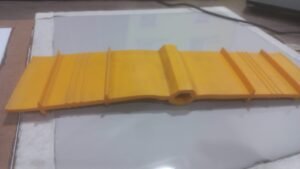
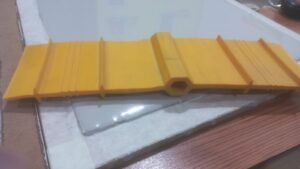
PVC water stoppers (also specified as PVC waterstops) are flexible, extruded polyvinyl chloride (PVC) sealing strips embedded across concrete construction joints and expansion joints to prevent water seepage under hydrostatic pressure. In Pakistan’s commercial, industrial, and residential construction sectors—from deep basement retaining walls in Lahore (DHA, Bahria Town, Gulberg) and coastal foundations in Karachi to underground water tanks, swimming pools, and water treatment plants in Islamabad—every concrete pour break creates a natural “cold joint.” Without a continuous physical water barrier cast directly into the concrete, groundwater and stored water inevitably force their way through those joints, leading to dampness, rebar corrosion, and structural concrete spalling.
Understanding the exact PVC water stopper sizes (from 6 inches / 150 mm up to 12 inches / 300 mm), profile geometries (ribbed, dumbbell, center-bulb, and external kicker), and 2026 market prices in Pakistan enables civil engineers, contractors, and homeowners to specify the right waterstop before concrete pouring begins.
1. PVC Water Stopper Price in Pakistan (2026 Market Rates)
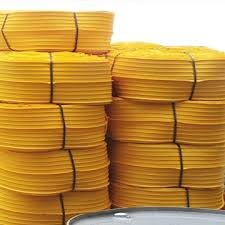
In Pakistan, PVC water stoppers are sold either per running foot (for retail and residential jobs) or per running meter / full roll (typically 15-meter, 20-meter, or 25-meter rolls for commercial and infrastructure tenders). Prices vary based on width, web thickness (typically 4 mm to 10 mm), profile complexity, and whether the strip is extruded from 100% virgin plasticized PVC or blended recycled compound.
Standard PVC Water Stopper Price Chart in Pakistan (6″ to 12″)
| Width (Inches) | Metric Width (mm) | Indicative Retail Rate (PKR / Foot) | Indicative Rate (PKR / Meter) | Typical Roll Length | Primary Structural Use Case |
| 6 Inch | 150 mm | PKR 120 – 160 | PKR 390 – 525 | 20 m – 25 m | Residential underground/overhead water tanks, shallow retaining walls |
| 8 Inch | 200 mm | PKR 135 – 185 | PKR 440 – 610 | 20 m – 25 m | Single-level basements, swimming pools, commercial water reservoirs |
| 9 Inch | 230 mm | PKR 145 – 210 | PKR 475 – 690 | 15 m – 20 m | Multi-story basement walls, raft foundation joints, box culverts |
| 12 Inch | 300 mm | PKR 210 – 320+ | PKR 690 – 1,050+ | 15 m – 20 m | High-water-table deep basements, dams, canals, sewerage treatment plants (STP) |
Note: Indicative 2026 market rates in Lahore, Karachi, and Rawalpindi/Islamabad. Heavy-duty high-thickness (8 mm–10 mm) profiles and specialized center-bulb expansion grades sit at the upper end of each range, while wholesale bulk orders (500+ meters) qualify for contractor discounts.
5 Factors That Influence PVC Water Stopper Pricing in Pakistan
-
Width & Web Thickness: Moving from a 150 mm (6″) strip to a 300 mm (12″) strip doubles the PVC resin mass per linear meter, directly increasing cost. Similarly, heavy-duty profiles with a 6 mm–10 mm web thickness cost more than light-duty 4 mm strips.
-
Virgin PVC vs. Recycled PVC Grade: High-grade virgin PVC compounds deliver superior tensile strength, elongation (300%+), and heat-weldability. Cheaper recycled PVC strips available in local hardware markets often turn brittle in winter, tear during rebar tying, or fail to fuse cleanly during hot-blade welding.
-
Profile Geometry (Flat vs. Center-Bulb): A plain dumbbell or flat ribbed waterstop requires less extrusion tooling and material than a complex ribbed center-bulb or external kicker profile.
-
Factory-Molded Intersection Pieces: Complex concrete joints require prefabricated flat crosses, vertical tees, flat ells, and vertical ells to eliminate weak field butt-welds at corners. Ordering factory-vulcanized intersection pieces adds to the bill of quantities (BOQ) while drastically lowering leak risk.
-
City & Freight Logistics: Major manufacturing and distribution hubs in Lahore and Karachi offer direct factory rates, whereas deliveries to remote hydropower, dam, or highway culvert sites in KP, Balochistan, or Gilgit-Baltistan include intercity freight charges.
2. How to Select the Right PVC Water Stopper Size (6″, 8″, 9″ & 12″)
Choosing the correct width is not guesswork—it is governed by concrete wall/slab thickness, rebar spacing, and expected hydrostatic water head (pressure).
Engineering Rule of Thumb for Size Selection
-
Width Must Not Exceed Slab/Wall Thickness: A PVC water stopper is embedded halfway into the first concrete pour and halfway into the second pour. Its total width should generally be less than or equal to the thickness of the concrete wall or raft slab so adequate concrete cover surrounds both outer edges without crowding steel reinforcement bars.
-
Minimum Concrete Cover: Maintain at least 50 mm to 75 mm (2 to 3 inches) of clear concrete cover between the outer edge of the waterstop and the exterior face of the concrete wall to prevent honeycombing or blowouts during vibration.
Size-by-Size Application Breakdown
6-Inch (150 mm) PVC Water Stopper
-
Best For: 6-inch to 9-inch (150–230 mm) concrete walls and slabs.
-
Typical Applications: Domestic underground water tanks (UGWT), rooftop RCC water tanks, small septic tanks, planter boxes, and low-head garden retaining walls.
-
Hydrostatic Capacity: Suitable for low-to-moderate water heads (typically up to 3–5 meters of water depth).
8-Inch (200 mm) PVC Water Stopper
-
Best For: 8-inch to 12-inch (200–300 mm) concrete sections.
-
Typical Applications: Residential single-basement retaining walls, commercial swimming pools, lift pits, and medium-capacity overhead reservoirs.
-
Hydrostatic Capacity: Handles moderate water pressure (5–10 meters water head) while offering a longer seepage path than 6-inch profiles.
9-Inch (230 mm) PVC Water Stopper
-
Best For: 9-inch to 15-inch (230–380 mm) structural RCC walls and raft slabs.
-
Typical Applications: Commercial plaza basements, hospital and university underground tanks, subways, and municipal drainage culverts.
-
Why Contractors Prefer It: The 9-inch (230 mm) size is the most widely stocked all-around specification in Lahore and Islamabad for commercial building basements, balancing strong mechanical anchorage with easy placement between double-curtain rebar cages.
12-Inch (300 mm) PVC Water Stopper
-
Best For: Thick structural concrete sections (12 inches / 300 mm and thicker).
-
Typical Applications: High-water-table deep basements (2 to 4 basement levels), dams, barrages, irrigation canals, hydropower tunnels, bridges, and industrial effluent/sewerage treatment plants (STP/ETP).
-
Hydrostatic Capacity: Provides an extended tortuous path for water migration, withstanding severe hydrostatic heads exceeding 15–20+ meters.
3. Types of PVC Water Stopper Profiles & Where to Use Each
Selecting the right width only solves half the engineering problem—you must also match the cross-sectional profile to whether the joint is static (construction joint) or dynamic (expansion/movement joint).
1. Ribbed PVC Water Stopper (Flat Ribbed)
-
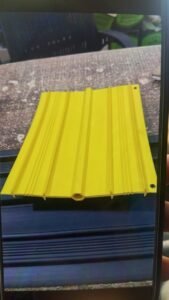
Design: Features multiple longitudinal ridges (ribs) running along both sides of a flat central web.
-
How It Works: As concrete cures and shrinks slightly, the ribs lock tightly into the concrete matrix, creating a multi-barrier labyrinth that blocks water from creeping along the PVC-concrete interface.
-
Best Use: Static construction joints (cold joints) where minimal structural movement is expected—such as horizontal raft-to-wall kicker joints and vertical wall pour breaks in basements and water tanks.
2. Dumbbell PVC Water Stopper
-
Design: Features a smooth flat web terminating in thick, rounded bulb-shaped edges (resembling a dumbbell).
-
How It Works: When concrete shrinks across a joint, the enlarged outer bulbs act as mechanical dovetail anchors inside the concrete, resisting pull-out tension.
-
Best Use: Traditional construction joints and contraction joints in heavy retaining walls, reservoirs, and civil infrastructure.
3. Center-Bulb PVC Water Stopper (Ribbed or Dumbbell with Center Bulb)
-
Design: Incorporates a hollow or flexible circular center bulb directly aligned with the joint gap, flanked by either ribbed or dumbbell wings.
-
How It Works: The hollow central tube compresses, stretches, and shears like an accordion when adjacent concrete slabs expand in summer heat, contract in winter cold, or undergo differential settlement—absorbing movement without tearing the PVC.
-
Best Use: Expansion joints and isolation joints in long retaining walls, bridge decks, large raft foundations, and rooftop podium slabs. (Never use a flat waterstop without a center bulb across an active expansion joint.)
4. External / Surface-Mounted (Kicker) PVC Water Stopper
-
Design: Flat back face with protruding anchoring legs/ribs on one side only, placed directly against the outer formwork or blinding concrete rather than embedded in the center of the wall.
-
How It Works: Installed beneath raft slabs (resting on lean/PCC concrete) or along the exterior face of basement walls so water pressure pushes the waterstop tighter against the concrete.
-
Best Use: Base slab (raft) construction/expansion joints where placing an internal waterstop through dense bottom rebar mats is impractical, or when joining new concrete extensions onto existing structures.
Quick Profile Selection Matrix
| Joint Type | Structural Behavior | Recommended PVC Profile |
| Construction Joint (Cold Joint) | No intentional movement; monolithic bond desired | Ribbed (Flat) or Dumbbell |
| Contraction (Control) Joint | Slight opening due to concrete drying shrinkage | Ribbed with Small Center Bulb or Dumbbell |
| Expansion / Movement Joint | Significant thermal expansion, contraction, or shear settlement | Ribbed Center-Bulb or Dumbbell Center-Bulb |
| Base Slab / Raft on PCC | Sub-slab water pressure; dense rebar congestion | External (Surface / Base Seal) Waterstop
|
PVC Water Stopper Sizes & Price in Pakistan (6″ to 12″)
PVC water stoppers (also specified as PVC waterstops) are flexible, extruded polyvinyl chloride (PVC) sealing strips embedded across concrete construction joints and expansion joints to prevent water seepage under hydrostatic pressure. In Pakistan’s commercial, industrial, and residential construction sectors—from deep basement retaining walls in Lahore (DHA, Bahria Town, Gulberg) and coastal foundations in Karachi to underground water tanks, swimming pools, and water treatment plants in Islamabad—every concrete pour break creates a natural “cold joint.” Without a continuous physical water barrier cast directly into the concrete, groundwater and stored water inevitably force their way through those joints, leading to dampness, rebar corrosion, and structural concrete spalling.
Understanding the exact PVC water stopper sizes (from 6 inches / 150 mm up to 12 inches / 300 mm), profile geometries (ribbed, dumbbell, center-bulb, and external kicker), and 2026 market prices in Pakistan enables civil engineers, contractors, and homeowners to specify the right waterstop before concrete pouring begins.
1. PVC Water Stopper Price in Pakistan (2026 Market Rates)
In Pakistan, PVC water stoppers are sold either per running foot (for retail and residential jobs) or per running meter / full roll (typically 15-meter, 20-meter, or 25-meter rolls for commercial and infrastructure tenders). Prices vary based on width, web thickness (typically 4 mm to 10 mm), profile complexity, and whether the strip is extruded from 100% virgin plasticized PVC or blended recycled compound.
Standard PVC Water Stopper Price Chart in Pakistan (6″ to 12″)
| Width (Inches) | Metric Width (mm) | Indicative Retail Rate (PKR / Foot) | Indicative Rate (PKR / Meter) | Typical Roll Length | Primary Structural Use Case |
| 6 Inch | 150 mm | PKR 120 – 160 | PKR 390 – 525 | 20 m – 25 m | Residential underground/overhead water tanks, shallow retaining walls |
| 8 Inch | 200 mm | PKR 135 – 185 | PKR 440 – 610 | 20 m – 25 m | Single-level basements, swimming pools, commercial water reservoirs |
| 9 Inch | 230 mm | PKR 145 – 210 | PKR 475 – 690 | 15 m – 20 m | Multi-story basement walls, raft foundation joints, box culverts |
| 12 Inch | 300 mm | PKR 210 – 320+ | PKR 690 – 1,050+ | 15 m – 20 m | High-water-table deep basements, dams, canals, sewerage treatment plants (STP) |
Note: Indicative 2026 market rates in Lahore, Karachi, and Rawalpindi/Islamabad. Heavy-duty high-thickness (8 mm–10 mm) profiles and specialized center-bulb expansion grades sit at the upper end of each range, while wholesale bulk orders (500+ meters) qualify for contractor discounts.
5 Factors That Influence PVC Water Stopper Pricing in Pakistan
-
Width & Web Thickness: Moving from a 150 mm (6″) strip to a 300 mm (12″) strip doubles the PVC resin mass per linear meter, directly increasing cost. Similarly, heavy-duty profiles with a 6 mm–10 mm web thickness cost more than light-duty 4 mm strips.
-
Virgin PVC vs. Recycled PVC Grade: High-grade virgin PVC compounds deliver superior tensile strength, elongation (300%+), and heat-weldability. Cheaper recycled PVC strips available in local hardware markets often turn brittle in winter, tear during rebar tying, or fail to fuse cleanly during hot-blade welding.
-
Profile Geometry (Flat vs. Center-Bulb): A plain dumbbell or flat ribbed waterstop requires less extrusion tooling and material than a complex ribbed center-bulb or external kicker profile.
-
Factory-Molded Intersection Pieces: Complex concrete joints require prefabricated flat crosses, vertical tees, flat ells, and vertical ells to eliminate weak field butt-welds at corners. Ordering factory-vulcanized intersection pieces adds to the bill of quantities (BOQ) while drastically lowering leak risk.
-
City & Freight Logistics: Major manufacturing and distribution hubs in Lahore and Karachi offer direct factory rates, whereas deliveries to remote hydropower, dam, or highway culvert sites in KP, Balochistan, or Gilgit-Baltistan include intercity freight charges.
2. How to Select the Right PVC Water Stopper Size (6″, 8″, 9″ & 12″)
Choosing the correct width is not guesswork—it is governed by concrete wall/slab thickness, rebar spacing, and expected hydrostatic water head (pressure).
Engineering Rule of Thumb for Size Selection
-
Width Must Not Exceed Slab/Wall Thickness: A PVC water stopper is embedded halfway into the first concrete pour and halfway into the second pour. Its total width should generally be less than or equal to the thickness of the concrete wall or raft slab so adequate concrete cover surrounds both outer edges without crowding steel reinforcement bars.
-
Minimum Concrete Cover: Maintain at least 50 mm to 75 mm (2 to 3 inches) of clear concrete cover between the outer edge of the waterstop and the exterior face of the concrete wall to prevent honeycombing or blowouts during vibration.
Size-by-Size Application Breakdown
6-Inch (150 mm) PVC Water Stopper
-
Best For: 6-inch to 9-inch (150–230 mm) concrete walls and slabs.
-
Typical Applications: Domestic underground water tanks (UGWT), rooftop RCC water tanks, small septic tanks, planter boxes, and low-head garden retaining walls.
-
Hydrostatic Capacity: Suitable for low-to-moderate water heads (typically up to 3–5 meters of water depth).
8-Inch (200 mm) PVC Water Stopper
-
Best For: 8-inch to 12-inch (200–300 mm) concrete sections.
-
Typical Applications: Residential single-basement retaining walls, commercial swimming pools, lift pits, and medium-capacity overhead reservoirs.
-
Hydrostatic Capacity: Handles moderate water pressure (5–10 meters water head) while offering a longer seepage path than 6-inch profiles.
9-Inch (230 mm) PVC Water Stopper
-
Best For: 9-inch to 15-inch (230–380 mm) structural RCC walls and raft slabs.
-
Typical Applications: Commercial plaza basements, hospital and university underground tanks, subways, and municipal drainage culverts.
-
Why Contractors Prefer It: The 9-inch (230 mm) size is the most widely stocked all-around specification in Lahore and Islamabad for commercial building basements, balancing strong mechanical anchorage with easy placement between double-curtain rebar cages.
12-Inch (300 mm) PVC Water Stopper
-
Best For: Thick structural concrete sections (12 inches / 300 mm and thicker).
-
Typical Applications: High-water-table deep basements (2 to 4 basement levels), dams, barrages, irrigation canals, hydropower tunnels, bridges, and industrial effluent/sewerage treatment plants (STP/ETP).
-
Hydrostatic Capacity: Provides an extended tortuous path for water migration, withstanding severe hydrostatic heads exceeding 15–20+ meters.
3. Types of PVC Water Stopper Profiles & Where to Use Each
Selecting the right width only solves half the engineering problem—you must also match the cross-sectional profile to whether the joint is static (construction joint) or dynamic (expansion/movement joint).
1. Ribbed PVC Water Stopper (Flat Ribbed)
-
Design: Features multiple longitudinal ridges (ribs) running along both sides of a flat central web.
-
How It Works: As concrete cures and shrinks slightly, the ribs lock tightly into the concrete matrix, creating a multi-barrier labyrinth that blocks water from creeping along the PVC-concrete interface.
-
Best Use: Static construction joints (cold joints) where minimal structural movement is expected—such as horizontal raft-to-wall kicker joints and vertical wall pour breaks in basements and water tanks.
2. Dumbbell PVC Water Stopper
-
Design: Features a smooth flat web terminating in thick, rounded bulb-shaped edges (resembling a dumbbell).
-
How It Works: When concrete shrinks across a joint, the enlarged outer bulbs act as mechanical dovetail anchors inside the concrete, resisting pull-out tension.
-
Best Use: Traditional construction joints and contraction joints in heavy retaining walls, reservoirs, and civil infrastructure.
3. Center-Bulb PVC Water Stopper (Ribbed or Dumbbell with Center Bulb)
-
Design: Incorporates a hollow or flexible circular center bulb directly aligned with the joint gap, flanked by either ribbed or dumbbell wings.
-
How It Works: The hollow central tube compresses, stretches, and shears like an accordion when adjacent concrete slabs expand in summer heat, contract in winter cold, or undergo differential settlement—absorbing movement without tearing the PVC.
-
Best Use: Expansion joints and isolation joints in long retaining walls, bridge decks, large raft foundations, and rooftop podium slabs. (Never use a flat waterstop without a center bulb across an active expansion joint.)
4. External / Surface-Mounted (Kicker) PVC Water Stopper
-
Design: Flat back face with protruding anchoring legs/ribs on one side only, placed directly against the outer formwork or blinding concrete rather than embedded in the center of the wall.
-
How It Works: Installed beneath raft slabs (resting on lean/PCC concrete) or along the exterior face of basement walls so water pressure pushes the waterstop tighter against the concrete.
-
Best Use: Base slab (raft) construction/expansion joints where placing an internal waterstop through dense bottom rebar mats is impractical, or when joining new concrete extensions onto existing structures.
Quick Profile Selection Matrix
| Joint Type | Structural Behavior | Recommended PVC Profile |
| Construction Joint (Cold Joint) | No intentional movement; monolithic bond desired | Ribbed (Flat) or Dumbbell |
| Contraction (Control) Joint | Slight opening due to concrete drying shrinkage | Ribbed with Small Center Bulb or Dumbbell |
| Expansion / Movement Joint | Significant thermal expansion, contraction, or shear settlement | Ribbed Center-Bulb or Dumbbell Center-Bulb |
| Base Slab / Raft on PCC | Sub-slab water pressure; dense rebar congestion | External (Surface / Base Seal) Waterstop |