Bituminous Waterproofing Products | Complete Guide to Durable Water Protection Systems
Introduction to Bituminous Waterproofing
Bituminous waterproofing products are among the oldest, most reliable, and widely used solutions for protecting buildings and structures against water penetration.
For decades, bitumen-based waterproofing systems have played a critical role in construction projects ranging from residential houses to large-scale infrastructure such as bridges, basements, tunnels, and industrial facilities.
Bitumen is naturally water-resistant, flexible, and highly durable, making it ideal for waterproofing applications where long-term protection is required.
Modern advancements have significantly improved traditional bituminous products by enhancing flexibility, adhesion, and resistance to aging and weathering.
This detailed guide explains bituminous waterproofing products, their types, applications, advantages, installation methods, and why they remain a trusted waterproofing solution in modern construction.
What Are Bituminous Waterproofing Products?
Bituminous waterproofing products are materials derived from bitumen (asphalt), a viscous and sticky substance obtained from petroleum refining.
These products are designed to form a continuous water-resistant barrier that prevents water ingress into concrete, masonry, and other construction surfaces.
Key Functions of Bituminous Waterproofing
-
Prevent water leakage and seepage
-
Protect concrete and steel reinforcement
-
Enhance durability of structures
-
Reduce maintenance and repair costs
-
Provide long-term moisture protection
Bituminous waterproofing products are used both above ground and below ground in various construction environments.
Importance of Waterproofing in Construction
Water is one of the most destructive elements for buildings if not controlled properly.
Unprotected structures can suffer from cracking, corrosion, mold growth, and reduced structural strength.
Why Waterproofing Is Essential
-
Concrete is porous and absorbs moisture
-
Water causes corrosion of reinforcement
-
Dampness reduces indoor comfort and hygiene
-
Repairing water damage is costly
Bituminous waterproofing products offer a proven solution to these challenges by forming a strong and reliable moisture barrier.
Why Choose Bituminous Waterproofing Products?
Despite the availability of modern polymer-based waterproofing systems, bituminous waterproofing remains popular due to its proven performance and cost effectiveness.
Key Reasons for Popularity
-
Excellent water resistance
-
Strong adhesion to concrete and masonry
-
Long service life
-
Suitable for harsh environments
-
Cost-effective waterproofing solution
Bituminous products are especially effective in basements, foundations, roofs, and underground structures.
Types of Bituminous Waterproofing Products
Bituminous waterproofing products are available in several forms, each designed for specific applications and installation methods.
Bituminous Membranes
Bituminous membranes are factory-manufactured sheets composed of bitumen modified with polymers and reinforced with fabrics.
Types of Bituminous Membranes
-
APP modified bituminous membranes
-
SBS modified bituminous membranes
Features
-
High tensile strength
-
Excellent waterproofing performance
-
Good resistance to water pressure
Applications
-
Roof waterproofing
-
Basement waterproofing
-
Foundations and retaining walls
Bituminous membranes are one of the most widely used waterproofing systems worldwide.
Torch-Applied Bituminous Membranes
Torch-applied membranes are installed by heating the underside with a gas torch to bond them to the substrate.
Advantages
-
Strong adhesion to surface
-
High durability
-
Excellent joint sealing
Common Uses
-
Flat roofs
-
Podiums and terraces
-
Underground waterproofing
Proper installation by trained applicators is essential for best performance.
Self-Adhesive Bituminous Membranes
Self-adhesive membranes come with a peel-off backing that allows easy installation without open flame.
Benefits
-
Safe application
-
Faster installation
-
Suitable for confined spaces
These membranes are ideal for residential and renovation projects.
Liquid-Applied Bituminous Coatings
Liquid bituminous waterproofing products are applied using brushes, rollers, or spray equipment.
Characteristics
-
Seamless waterproof layer
-
Easy application
-
Suitable for irregular surfaces
Common Forms
-
Cold-applied bitumen emulsion
-
Bituminous paint
-
Rubberized bitumen coatings
Liquid bituminous coatings are widely used for foundations, basements, and damp-proofing applications.
Bitumen Emulsion Waterproofing Products
Bitumen emulsions consist of bitumen dispersed in water, making them easy to apply and environmentally safer.
Advantages
-
Cold application
-
Good adhesion to damp surfaces
-
Cost-effective solution
Applications
-
Foundation walls
-
Plinth protection
-
Damp-proof courses
Bitumen emulsions are popular in residential and commercial construction.
Rubberized Bituminous Waterproofing Products
Rubberized bitumen combines bitumen with elastomeric polymers to improve flexibility and crack-bridging ability.
Key Benefits
-
Enhanced elasticity
-
Better resistance to cracking
-
Improved durability
Rubberized bituminous products perform well in areas with structural movement.
Applications of Bituminous Waterproofing Products
Bituminous waterproofing products are suitable for a wide range of construction applications.
Basement Waterproofing
Basements are exposed to continuous groundwater pressure and soil moisture.
Role of Bituminous Waterproofing
-
Prevent seepage through basement walls
-
Protect foundation structures
-
Enhance durability of underground areas
Bituminous membranes and coatings are commonly used in basement waterproofing systems.
Foundation Waterproofing
Foundations require reliable protection against moisture and soil chemicals.
Bituminous waterproofing provides:
-
Long-term moisture resistance
-
Protection against aggressive soil conditions
-
Strong adhesion to concrete
Roof Waterproofing
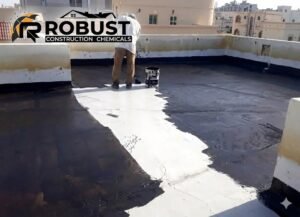
Bituminous membranes are widely used on flat and low-slope roofs.
Benefits for Roofs
-
Excellent water resistance
-
UV-resistant variants available
-
Long service life
Proper protection layers are recommended for exposed roofs.
Terrace and Podium Waterproofing
Terraces and podiums are exposed to weather and foot traffic.
Bituminous waterproofing systems offer:
-
Durable waterproof barrier
-
Compatibility with screeds and tiles
-
High load resistance
Retaining Walls and Underground Structures
Bituminous waterproofing products protect retaining walls, tunnels, and underground structures from lateral water pressure.
They ensure:
-
Structural safety
-
Long-term moisture protection
-
Reduced maintenance needs
Surface Preparation for Bituminous Waterproofing
Proper surface preparation is essential for successful waterproofing.
Cleaning
-
Remove dust, oil, grease, and loose particles
Repairing Defects
-
Seal cracks and honeycombs
-
Repair damaged concrete
Dryness
-
Ensure surface is dry unless using products suitable for damp surfaces
Poor preparation can lead to waterproofing failure.
Priming Before Application
Primers enhance adhesion between the substrate and bituminous waterproofing products.
Benefits of Primers
-
Improve bonding
-
Seal porous surfaces
-
Increase durability
Priming is strongly recommended for membrane applications.
Installation Methods for Bituminous Waterproofing Products
Installation varies depending on product type.
Installation of Bituminous Membranes
Step 1: Surface Preparation
Clean and prepare the substrate.
Step 2: Primer Application
Apply primer and allow it to dry.
Step 3: Membrane Placement
Lay membranes according to layout plan.
Step 4: Joint Sealing
Seal overlaps carefully to ensure watertight joints.
Step 5: Protection Layer
Apply protective screed or boards if required.
Application of Liquid Bituminous Coatings
Step 1: Surface Cleaning
Ensure clean and sound substrate.
Step 2: First Coat Application
Apply evenly using brush or roller.
Step 3: Second Coat
Apply cross-wise after first coat dries.
Step 4: Curing
Allow sufficient curing time before backfilling or exposure.
Thickness and Coverage Control
Proper thickness is critical for performance.
-
Insufficient thickness reduces effectiveness
-
Uniform coverage ensures durability
-
Manufacturer guidelines must be followed
Quality control during application is essential.
Advantages of Bituminous Waterproofing Products
Proven Technology
Used successfully for decades worldwide.
Excellent Water Resistance
Highly effective against water and moisture.
Strong Adhesion
Bonds well with concrete and masonry.
Cost Effective
Lower initial cost compared to many advanced systems.
Wide Availability
Easily available and familiar to contractors.
Limitations of Bituminous Waterproofing Products
While effective, bituminous waterproofing has some limitations.
UV Sensitivity
Requires protection when exposed to sunlight.
Application Skill
Torch-applied systems require trained workers.
Temperature Sensitivity
Application conditions must be controlled.
Proper system selection and installation address these limitations.
Bituminous Waterproofing vs Other Waterproofing Systems
Compared to Cementitious Waterproofing
-
Better flexibility
-
Higher durability
Compared to Polyurethane Waterproofing
-
More economical
-
Slightly lower elasticity
Compared to Acrylic Waterproofing
-
Better water resistance
-
Longer lifespan
Bituminous waterproofing offers a balance of performance and cost.
Maintenance of Bituminous Waterproofing Systems
Bituminous waterproofing requires minimal maintenance.
Inspection
Periodic visual inspection recommended.
Repairs
Damaged areas can be repaired easily.
Protection
Ensure protective layers remain intact.
Proper maintenance extends service life significantly.
Cost Effectiveness of Bituminous Waterproofing
Bituminous waterproofing products offer excellent value for money.
Cost Benefits
-
Lower material cost
-
Reduced maintenance expenses
-
Long service life
They are especially suitable for large-scale and budget-conscious projects.
Environmental and Safety Considerations
Modern bituminous products are increasingly eco-friendly.
-
Low VOC formulations available
-
Cold-applied systems reduce fire risk
-
Long lifespan reduces environmental impact
Safe handling and disposal practices should be followed.
Quality Control and Testing
Quality control ensures waterproofing performance.
Visual Inspection
Check for uniform coverage and joint sealing.
Thickness Checks
Ensure required thickness is achieved.
Water Testing
Conduct water ponding or leakage tests where applicable.
Choosing the Right Bituminous Waterproofing Product
Selection depends on:
-
Area of application
-
Exposure conditions
-
Water pressure
-
Budget and project requirements
Consulting waterproofing experts ensures correct product choice.
Role of Bituminous Waterproofing in Modern Construction
Despite technological advancements, bituminous waterproofing remains a cornerstone of modern construction due to its reliability and adaptability.
It continues to be specified for:
-
Basements
-
Foundations
-
Roofs
-
Infrastructure projects
Future Trends in Bituminous Waterproofing
-
Polymer-modified bitumen
-
Improved flexibility and durability
-
Environmentally friendly formulations
-
Faster application systems
These advancements ensure continued relevance of bituminous waterproofing.
Bituminous Waterproofing Products | Complete Guide to Durable Water Protection Systems
Introduction to Bituminous Waterproofing
Bituminous waterproofing products are among the oldest, most reliable, and widely used solutions for protecting buildings and structures against water penetration.
For decades, bitumen-based waterproofing systems have played a critical role in construction projects ranging from residential houses to large-scale infrastructure such as bridges, basements, tunnels, and industrial facilities.
Bitumen is naturally water-resistant, flexible, and highly durable, making it ideal for waterproofing applications where long-term protection is required.
Modern advancements have significantly improved traditional bituminous products by enhancing flexibility, adhesion, and resistance to aging and weathering.
This detailed guide explains bituminous waterproofing products, their types, applications, advantages, installation methods, and why they remain a trusted waterproofing solution in modern construction.
What Are Bituminous Waterproofing Products?
Bituminous waterproofing products are materials derived from bitumen (asphalt), a viscous and sticky substance obtained from petroleum refining.
These products are designed to form a continuous water-resistant barrier that prevents water ingress into concrete, masonry, and other construction surfaces.
Key Functions of Bituminous Waterproofing
-
Prevent water leakage and seepage
-
Protect concrete and steel reinforcement
-
Enhance durability of structures
-
Reduce maintenance and repair costs
-
Provide long-term moisture protection
Bituminous waterproofing products are used both above ground and below ground in various construction environments.
Importance of Waterproofing in Construction
Water is one of the most destructive elements for buildings if not controlled properly.
Unprotected structures can suffer from cracking, corrosion, mold growth, and reduced structural strength.
Why Waterproofing Is Essential
-
Concrete is porous and absorbs moisture
-
Water causes corrosion of reinforcement
-
Dampness reduces indoor comfort and hygiene
-
Repairing water damage is costly
Bituminous waterproofing products offer a proven solution to these challenges by forming a strong and reliable moisture barrier.
Why Choose Bituminous Waterproofing Products?
Despite the availability of modern polymer-based waterproofing systems, bituminous waterproofing remains popular due to its proven performance and cost effectiveness.
Key Reasons for Popularity
-
Excellent water resistance
-
Strong adhesion to concrete and masonry
-
Long service life
-
Suitable for harsh environments
-
Cost-effective waterproofing solution
Bituminous products are especially effective in basements, foundations, roofs, and underground structures.
Types of Bituminous Waterproofing Products
Bituminous waterproofing products are available in several forms, each designed for specific applications and installation methods.
Bituminous Membranes
Bituminous membranes are factory-manufactured sheets composed of bitumen modified with polymers and reinforced with fabrics.
Types of Bituminous Membranes
-
APP modified bituminous membranes
-
SBS modified bituminous membranes
Features
-
High tensile strength
-
Excellent waterproofing performance
-
Good resistance to water pressure
Applications
-
Roof waterproofing
-
Basement waterproofing
-
Foundations and retaining walls
Bituminous membranes are one of the most widely used waterproofing systems worldwide.
Torch-Applied Bituminous Membranes
Torch-applied membranes are installed by heating the underside with a gas torch to bond them to the substrate.
Advantages
-
Strong adhesion to surface
-
High durability
-
Excellent joint sealing
Common Uses
-
Flat roofs
-
Podiums and terraces
-
Underground waterproofing
Proper installation by trained applicators is essential for best performance.
Self-Adhesive Bituminous Membranes
Self-adhesive membranes come with a peel-off backing that allows easy installation without open flame.
Benefits
-
Safe application
-
Faster installation
-
Suitable for confined spaces
These membranes are ideal for residential and renovation projects.
Liquid-Applied Bituminous Coatings
Liquid bituminous waterproofing products are applied using brushes, rollers, or spray equipment.
Characteristics
-
Seamless waterproof layer
-
Easy application
-
Suitable for irregular surfaces
Common Forms
-
Cold-applied bitumen emulsion
-
Bituminous paint
-
Rubberized bitumen coatings
Liquid bituminous coatings are widely used for foundations, basements, and damp-proofing applications.
Bitumen Emulsion Waterproofing Products
Bitumen emulsions consist of bitumen dispersed in water, making them easy to apply and environmentally safer.
Advantages
-
Cold application
-
Good adhesion to damp surfaces
-
Cost-effective solution
Applications
-
Foundation walls
-
Plinth protection
-
Damp-proof courses
Bitumen emulsions are popular in residential and commercial construction.
Rubberized Bituminous Waterproofing Products
Rubberized bitumen combines bitumen with elastomeric polymers to improve flexibility and crack-bridging ability.
Key Benefits
-
Enhanced elasticity
-
Better resistance to cracking
-
Improved durability
Rubberized bituminous products perform well in areas with structural movement.
Applications of Bituminous Waterproofing Products
Bituminous waterproofing products are suitable for a wide range of construction applications.
Basement Waterproofing
Basements are exposed to continuous groundwater pressure and soil moisture.
Role of Bituminous Waterproofing
-
Prevent seepage through basement walls
-
Protect foundation structures
-
Enhance durability of underground areas
Bituminous membranes and coatings are commonly used in basement waterproofing systems.
Foundation Waterproofing
Foundations require reliable protection against moisture and soil chemicals.
Bituminous waterproofing provides:
-
Long-term moisture resistance
-
Protection against aggressive soil conditions
-
Strong adhesion to concrete
Roof Waterproofing
Bituminous membranes are widely used on flat and low-slope roofs.
Benefits for Roofs
-
Excellent water resistance
-
UV-resistant variants available
-
Long service life
Proper protection layers are recommended for exposed roofs.
Terrace and Podium Waterproofing
Terraces and podiums are exposed to weather and foot traffic.
Bituminous waterproofing systems offer:
-
Durable waterproof barrier
-
Compatibility with screeds and tiles
-
High load resistance
Retaining Walls and Underground Structures
Bituminous waterproofing products protect retaining walls, tunnels, and underground structures from lateral water pressure.
They ensure:
-
Structural safety
-
Long-term moisture protection
-
Reduced maintenance needs
Surface Preparation for Bituminous Waterproofing
Proper surface preparation is essential for successful waterproofing.
Cleaning
-
Remove dust, oil, grease, and loose particles
Repairing Defects
-
Seal cracks and honeycombs
-
Repair damaged concrete
Dryness
-
Ensure surface is dry unless using products suitable for damp surfaces
Poor preparation can lead to waterproofing failure.
Priming Before Application
Primers enhance adhesion between the substrate and bituminous waterproofing products.
Benefits of Primers
-
Improve bonding
-
Seal porous surfaces
-
Increase durability
Priming is strongly recommended for membrane applications.
Installation Methods for Bituminous Waterproofing Products
Installation varies depending on product type.
Installation of Bituminous Membranes
Step 1: Surface Preparation
Clean and prepare the substrate.
Step 2: Primer Application
Apply primer and allow it to dry.
Step 3: Membrane Placement
Lay membranes according to layout plan.
Step 4: Joint Sealing
Seal overlaps carefully to ensure watertight joints.
Step 5: Protection Layer
Apply protective screed or boards if required.
Application of Liquid Bituminous Coatings
Step 1: Surface Cleaning
Ensure clean and sound substrate.
Step 2: First Coat Application
Apply evenly using brush or roller.
Step 3: Second Coat
Apply cross-wise after first coat dries.
Step 4: Curing
Allow sufficient curing time before backfilling or exposure.
Thickness and Coverage Control
Proper thickness is critical for performance.
-
Insufficient thickness reduces effectiveness
-
Uniform coverage ensures durability
-
Manufacturer guidelines must be followed
Quality control during application is essential.
Advantages of Bituminous Waterproofing Products
Proven Technology
Used successfully for decades worldwide.
Excellent Water Resistance
Highly effective against water and moisture.
Strong Adhesion
Bonds well with concrete and masonry.
Cost Effective
Lower initial cost compared to many advanced systems.
Wide Availability
Easily available and familiar to contractors.
Limitations of Bituminous Waterproofing Products
While effective, bituminous waterproofing has some limitations.
UV Sensitivity
Requires protection when exposed to sunlight.
Application Skill
Torch-applied systems require trained workers.
Temperature Sensitivity
Application conditions must be controlled.
Proper system selection and installation address these limitations.
Bituminous Waterproofing vs Other Waterproofing Systems
Compared to Cementitious Waterproofing
-
Better flexibility
-
Higher durability
Compared to Polyurethane Waterproofing
-
More economical
-
Slightly lower elasticity
Compared to Acrylic Waterproofing
-
Better water resistance
-
Longer lifespan
Bituminous waterproofing offers a balance of performance and cost.
Maintenance of Bituminous Waterproofing Systems
Bituminous waterproofing requires minimal maintenance.
Inspection
Periodic visual inspection recommended.
Repairs
Damaged areas can be repaired easily.
Protection
Ensure protective layers remain intact.
Proper maintenance extends service life significantly.
Cost Effectiveness of Bituminous Waterproofing
Bituminous waterproofing products offer excellent value for money.
Cost Benefits
-
Lower material cost
-
Reduced maintenance expenses
-
Long service life
They are especially suitable for large-scale and budget-conscious projects.
Environmental and Safety Considerations
Modern bituminous products are increasingly eco-friendly.
-
Low VOC formulations available
-
Cold-applied systems reduce fire risk
-
Long lifespan reduces environmental impact
Safe handling and disposal practices should be followed.
Quality Control and Testing
Quality control ensures waterproofing performance.
Visual Inspection
Check for uniform coverage and joint sealing.
Thickness Checks
Ensure required thickness is achieved.
Water Testing
Conduct water ponding or leakage tests where applicable.
Choosing the Right Bituminous Waterproofing Product
Selection depends on:
-
Area of application
-
Exposure conditions
-
Water pressure
-
Budget and project requirements
Consulting waterproofing experts ensures correct product choice.
Role of Bituminous Waterproofing in Modern Construction
Despite technological advancements, bituminous waterproofing remains a cornerstone of modern construction due to its reliability and adaptability.
It continues to be specified for:
-
Basements
-
Foundations
-
Roofs
-
Infrastructure projects
Future Trends in Bituminous Waterproofing
-
Polymer-modified bitumen
-
Improved flexibility and durability
-
Environmentally friendly formulations
-
Faster application systems
These advancements ensure continued relevance of bituminous waterproofing.