Original price was: ₨ 4,500.₨ 4,300Current price is: ₨ 4,300.
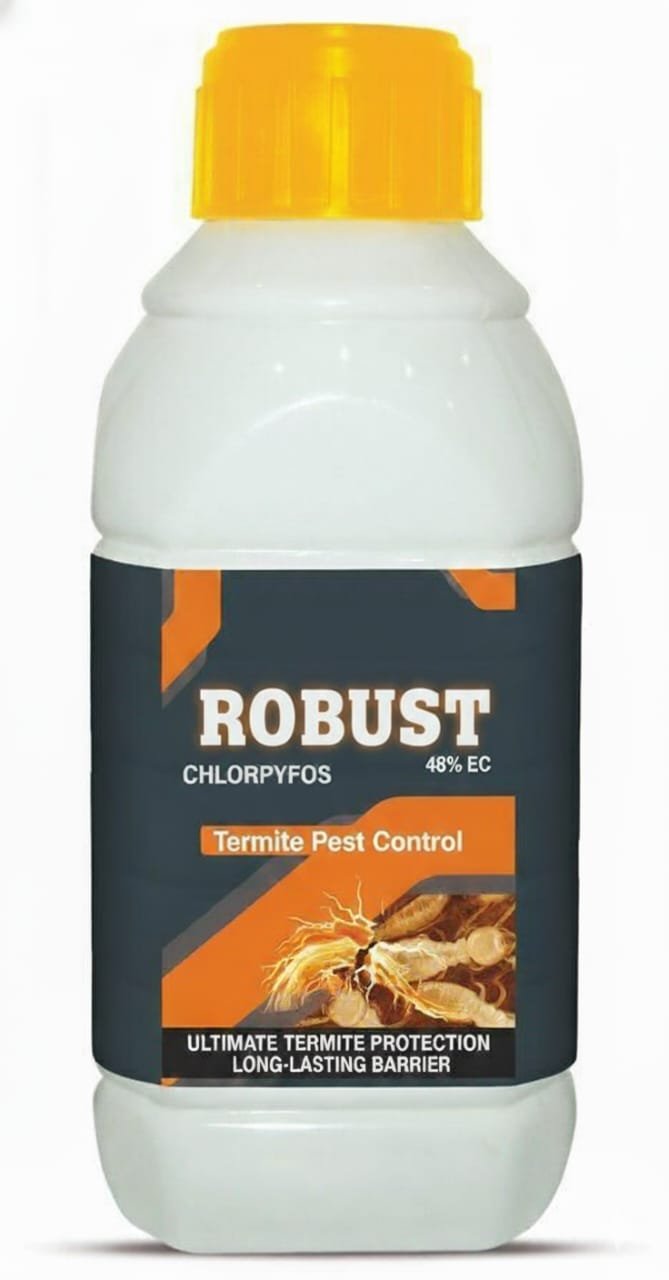
Robust Termite is a highly effective termite control solution that provides long-lasting protection against infestations. It targets termites at all life stages, creating a powerful barrier to prevent damage to structures. Safe for use around people and pets when applied correctly, it’s the perfect choice for termite eradication and prevention.
In summary, for your waterproofing & heat‑proofing chemicals company, the expansion into termite‑treatment makes strong strategic sense. By understanding termite biology, choosing appropriate termiticide chemistries, integrating services, ensuring compliance and building a strong offering, you can deliver differentiated value to your clients.
From a product viewpoint: you can develop/specify a termiticide (e.g., Fipronil 5% SC) packaged and marketed under your brand, with full spec sheet, packaging, training and service line. From a service viewpoint: bundle termite barrier + waterproofing + heat‑proofing into one integrated contract. From a market viewpoint: leverage your existing client base (builders, developers, commercial property owners) and educate them on the hidden cost of termite damage and the value of “complete building protection”. From a risk viewpoint: ensure rigorous application standards, compliance with regulatory/health & safety, maintenance contracts and documentation.
By doing so, you position your company not just as a “membrane/coating vendor”, but as a “structural protection specialist” — protecting against moisture, heat and pests. This aligns well with evolving building‑standards, client expectations, and allows you to build recurring revenue through inspections and maintenance.
Step 1: Research & Product Selection
-
Review available active ingredients, choose the one(s) you will distribute/manufacture (e.g., Fipronil 5% SC, Chlorantraniliprole).
-
Obtain regulatory clearance/registration for Pakistan.
-
Source or manufacture the termiticide, develop packaging, spec sheets, MSDS, label in English + Urdu if needed.
-
Define pricing and channel strategy (direct to contractor, retail, service‑line).
Step 2: Service Implementation Planning
-
Train your application/technician team in termite inspection, soil‑barrier application, wood‑treatment, safety protocols.
-
Develop integrated job workflow for projects: waterproofing/heat‑proofing + termite treatment.
-
Build checklists and client documentation (pre‑treatment inspection report, chemical batch record, service certificate, warranty terms).
-
Develop marketing materials emphasising integrated building protection.
Step 3: Pilot Project & Monitoring
-
Identify a pilot project (e.g., upcoming new build or a retrofit) where you apply the integrated solution.
-
Execute termite barrier + waterproofing/heat‑proofing together. Document details (site photos, application method, chemical batch, dosage).
-
After completion, schedule an inspection after 6–12 months to evaluate termite activity, membrane integrity, insulation performance. Use this case study for marketing.
Step 4: Full Roll‑out & Market Communication
-
Launch service line formally with a promotional campaign (website update, social media, builder/developer outreach, seminars).
-
Engage local builders/developers, explain benefits of integrated protection (moisture+heat+termites).
-
Offer introductory bundle pricing or maintenance contract.
-
Publish case‑study results from pilot. Provide guarantee certificate to clients.
Step 5: Maintenance & Inspection Programme
-
Develop a maintenance contract offering annual inspection for termite risk + waterproof/heat system.
-
Set up CRM system to track client annually, send reminders, schedule refresh treatments if barrier integrity compromised.
-
Use inspection data to refine your service (e.g., if you consistently find infiltration via service penetrations, you may revise your trench specification or add monitoring stations).
Step 6: Continuous Improvement & Innovation
-
Monitor performance of termite barrier chemicals in local soils/climates; gather feedback, adapt dosage/application method if needed.
-
Explore newer chemistries or eco‑friendly options (e.g., botanical termiticides) for premium market.
-
Expand into broader pest‑control offering if demand arises (or partner with pest‑specialist).
-
Continuously train staff, review safety protocols, monitor regulatory changes.
Description
Robust Technical specification deep‑dive: Application techniques, common pitfalls, integration with building substrates
Robust Termite is a highly effective and advanced termite control solution designed to provide long-lasting protection for both residential and commercial properties. It is formulated with potent active ingredients that target termites at all stages of their life cycle, ensuring thorough eradication and prevention. The product creates a powerful barrier around the affected area, preventing termites from accessing the structure. Robust Termite can be applied in various forms, such as liquid treatments or baits, and is ideal for use on both existing infestations and as a preventive measure. It is safe to use around people and pets when applied according to the instructions, making it a trusted solution for homeowners, businesses, and pest control professionals alike. Its efficacy, ease of application, and long-lasting effects make it one of the best choices for termite management.
-
Termites are wood/plant‑material‑eating social insects; they can cause serious structural damage.
-
According to the United States Environmental Protection Agency (EPA) fact‑sheet: termite treatments fall into chemical methods (liquid termiticides, baits, impregnated materials) and non‑chemical methods (barriers, physical exclusion).
-
Non‑chemical measures are also key in your segment (since you deal with waterproofing/heat‑proofing): for example, moisture control, grading, keeping wood off soil contact.
Key active ingredients & treatment modalities
Here are some of the most effective active ingredients and methods used for termite control — relevant for you if you want to include them among your chemical products or integrate in a complementary service.
Active ingredients
-
Fipronil – A common, potent insecticide used for termite sprays. For example: “Fipronil 5SC 480 ml” formulation in Pakistan includes ~5% Fipronil and is described as effective for subterranean & drywood termites.
-
Other chemical classes used (listed by EPA) include: acetamiprid, bifenthrin, chlorantraniliprole, chlorfenapyr, cyfluthrin, cypermethrin, imidacloprid, permethrin.
-
Natural / botanical alternatives: e.g., orange oil (d‑limonene) for dry‑wood termite treatment (less aggressive infestations) — useful for a “green” niche
Treatment forms & application methods
-
Liquid soil‑applied barriers: You treat the soil around/under the structure before or after construction to stop subterranean termites entering. EPA says this is the most common form.
-
Termite baits: Stations containing cellulose plus slow‑acting insecticide bait; termites carry it back to colony. Example product: Sentricon system.
-
Wood treatments / surface sprays: You spray or inject into wood or treat surfaces (especially in post‑construction) to target termite activity. Example local product “Termite Killer Ready For Use Spray – 1 litre”.
-
Physical barriers: Sheets, mesh, treated trims, etc. while not strictly chemical, these are relevant to your waterproofing/heat‑proofing business.
What to include in a “termite killer” product spec sheet for your company
Since you run a waterproofing & heatproofing chemicals company, you might develop or distribute a termite‑killer chemical product. Here’s what you’ll want to include in your spec sheet:
Product name: e.g., “Termite Barrier + Termiticide”
Active ingredient(s): say Fipronil 5% SC, or another suitable active in your region.
Formulation type: e.g., Suspension Concentrate (SC), Ready‑to‑Use (RTU) spray. In one local example: Fipronil 5SC.
Usage / Dilution instructions: e.g., “Dilute 2‑5 ml per litre water for soil spray” (from local product spec
Coverage area: Example: 480 ml bottle covers ~500‑800 sq ft per dilution
Target pests: Subterranean termites, drywood termites, wood‑destroying insects.
Residual effect: E.g., Up to 6 months or more depending on conditions.
Application methods:
-
Pre‑construction: Apply to soil under foundation before slab/pouring.
-
Post‑construction: Spray/ inject cracks, crevices, timber, wall junctions.
-
Spot treatment: On observed termite activity.
Precautions / Safety: -
Use personal protective equipment (gloves, mask, eyewear).
-
Keep out of reach of children/pets. Ensure ventilation.
-
Store in cool, dry place, away from direct sunlight.
Compatibility with other systems: Since you are in waterproofing/heatproofing, you should note whether the termite‑treatment is compatible with membranes, coatings, insulation materials, etc (e.g., will it interfere with bond, finish, longevity).
Warranty / guarantee: specify how long protection lasts, recommended re‑application intervals.
Integration for your company (waterproofing + heatproofing + termite control)
Given your existing business, here are some strategic angles:
-
Bundle solution: Provide termite‑treatment as part of the waterproofing scope (since termites often exploit moisture/leaks). That would add value to your clients (houses, commercial buildings) by offering a more holistic protection.
-
Pre‑construction barrier + waterproof layer: For new builds, apply termite soil‑treatment and membrane/injection waterproofing together before slab is poured.
-
Surface treatment after renovation: For existing structures showing moisture ingress (you already deal with), include termite spray/wood injection to mitigate termite risk, which is often triggered by damp wood/soil contact.
-
Reports & inspections: Offer inspection service for termite activity (mud tubes, wood damage) and then apply treatment; your waterproofing team is already on‐site so you can upsell.
-
Green/eco line: Consider offering botanical/low‑toxicity products (for sensitive buildings, hospitals, schools) alongside your regular chemical line. (E.g., orange oil treatments for drywood termite niches).
-
Materials compatibility: Verify that the termite‑treatment won’t adversely affect waterproof membranes, adhesives, insulation foams, etc. Integrate this as a selling point (we use compatible chemicals).
-
Education & maintenance: Provide clients with guidelines (keep soil away from timber, fix leaks, maintain ventilation) to enhance effect of termite treatment AND extend life of waterproofing/heatproofing. Use the EPA guidance.
Example product spec you might publish
Here is a mock‑up you could use on your website:
Termite‑Proof Plus 5% (Fipronil 5SC) Termiticide
• Active: Fipronil 5% SC
• Formulation: Suspension Concentrate
• Application: Soil spray, timber surface spray, spot treatment
• Dilution: 2 ‑ 5 ml per litre of water
• Coverage: ~500‑800 sq ft per 480 ml when diluted appropriately
• Residual protection: Up to 6 months in moderate conditions
• Available pack sizes: 0.5 L, 1 L, 4 L, 20 L
• Safety: Wear gloves/mask/eyewear. Keep children & pets away until dry.
• Compatibility: Safe to use in conjunction with our waterproof membranes and heat‑proof coatings, provided surfaces are dry and cured.
• Maintenance: For new structures apply during construction; for existing buildings inspect annually and re‑treat high‑risk zones.
1. Background: Why termites matter, especially in construction & waterproofing/heat‑proofing contexts
1.1 Termite biology & behaviour
The more you understand termite biology, the better you can design chemical treatments and integrated protection services. The insects designated “termites” are social insects in the order Isoptera (although some classify them more broadly within Blattodea) and are major structural pests worldwide.
Key features:
-
Termite colonies consist of castes: workers (do the feeding, excavation), soldiers (defend the colony) and reproductives (queens/kings) that maintain the colony.
-
Different termite species and categories:
-
Subterranean termites: nest in soil, require moisture and contact with ground. They build mud/shelter tubes to traverse open ground and maintain moisture and protect from predators.
-
Dry‑wood termites: do not necessarily require contact with soil; live entirely in wood with low moisture requirement.
-
Dampwood termites: prefer decayed or damp wood.
-
-
Termites exploit moisture conditions: For subterranean species, soil moisture, moisture under slabs, leaks, wood‑soil contact all facilitate termite entry. For dry‑wood species, wood moisture and being above ground make them independent of soil.
-
For your business: wooden structures, wood‑in‑soil contact, damp wood, subfloor areas, foundations are high risk zones. If waterproofing/heat‑proofing work is being done, the same weak spots (moisture ingress, cracks, leaks) that degrade membranes or insulation also facilitate termite infestation. So there is a natural link: moisture + structure + termite risk.
1.2 Why termite treatment is essential in building protection
-
Structural damage: Termites feed on cellulose (wood, paper, plant derivatives) and in doing so undermine structural elements like beams, joists, flooring, sub‑floor supports. Due to their hidden nature (often before damage is visible) large repair costs can accumulate.
-
Moisture & building fabric synergy: Moisture‑ingress, poor drainage, faulty waterproofing create conditions (damp wood, soil moisture, micro‑climate) favourable to termites. Thus a building that is poorly waterproofed or heat‑proofed may also be more termite‑vulnerable. Integrating termite control with your waterproofing/heat‑proofing service adds value.
-
Pre‑construction vs post‑construction: Soil treatments and physical barriers are most effective when applied pre‑construction (before slab poured). Post‑construction treatments are more difficult and costly.
-
Long term protection: Without a continuous barrier, termites can exploit even small untreated zones. As one source says: “If any part of the structure remains unprotected, termites may still find a way to enter.”
-
Insurance and regulatory pressure: In many markets, stigma of termite‑risk influences property value, insurance, lending. So offering termite‑treatment as part of building protection can be a differentiator.
2. Chemical treatments (termiticides/termiticide systems) – active ingredients, mechanisms, formulations
2.1 Overview of chemical control categories
Chemical termite control broadly falls into these categories:
-
Liquid soil‑applied barriers/termite treatments: chemicals are applied to soil around/under structure to form a barrier that prevents termite entry or kills on contact/ingestion.
-
Bait systems: termite bait stations placed in soil or around structure, termites consume toxic bait and transfer it through colony, gradually eliminating the colony.
-
Wood treatments/surface sprays/injections: treating wood or timber elements with termiticides or impregnating wood with borates, etc. This is more for prevention or dry‑wood termite control.
-
Physical/chemical hybrid: physical barriers (sand, steel mesh) combined with chemical treatment to limit termite entry.
-
Fumigation: for severe dry‑wood termite infestation where whole‑structure treatment is needed (less relevant for waterproofing/heat‑proofing, but good context).
-
2.2 Key active ingredients and their modes of action
Here are some of the main chemistries you will want to be familiar with if you’re developing or distributing a termite‑killer line.
-
Fipronil: A non‑repellent termiticide that acts on the insect’s central nervous system by blocking GABA‑gated chloride channels, causing hyperexcitation and death. Because it is non‑repellent, termites do not detect it and thus will cross it and carry it back to the colony (trophallaxis effect). (Often sold as product such as Termidor).
-
Imidacloprid: A neonicotinoid acting on insect nicotinic acetylcholine receptors, causing paralysis and death. Used as soil treatments.
-
Chlorantraniliprole: A newer active ingredient used in non‑repellent termiticides (sold under brand names like Altriset) that disrupts insect muscle tone by activating ryanodine receptors. Provides long‑term protehttps://web.facebook.com/profile.php?id=61555388654698ction and low toxicity to non‑targets.
-
Diflubenzuron: An insect growth regulator (IGR) that interferes with the molting process of termites. Often used in bait systems.
-
Boric acid / Borates: These are applied to wood for prevention or to infested wood surfaces; act by disrupting termite digestive processes or as stomach poisons. Lower toxicity for humans.
-
Bifenthrin: A pyrethroid repellent termiticide that binds strongly to soil particles, thus forming a long‑lasting barrier; however because it is repellent, termites avoid it rather than cross it.
-
Older organochlorines (e.g., chlordane, heptachlor) were widely used historically but are now banned or restricted because of human‑health/environmental risks.
2.3 Formulation types / application systems
-
Liquid emulsions, suspension concentrates (SC), ready‑to‑use sprays, etc. These are used for soil or surface application. For example, soil treatments require precise dilution and uniform application.
-
Bait stations: cellulose plus slow‑acting active ingredient. Termites consume and carry it back. The earlier referenced system Sentricon uses noviflumuron bait and is an example.
-
Wood impregnation/painting with borate or other termiticides. Suitable for pre‑construction wood or carpentry items.
-
Trenching/rodding under slabs or around footings: The soil barrier methods often require “trenching” around foundation walls, flooding/filling with insecticide emulsion, then backfilling. Proper technique matters.
2.4 Factors influencing efficacy of chemical treatments
From the technical literature:
-
Soil type and moisture: The ability of soil to accept treatment depends on how damp (not saturated) it is, whether fill is compacted, etc. Poor penetration leads to failure.
-
Continuity of barrier: Because termites may find alternate untreated paths, an unbroken treated zone is essential for success.
-
Water movement / disturbance: Soil movement, digging, slab changes, heavy moisture flow may disturb the treated zone or dilute the chemical. This reduces barrier life
-
Correct application rate & method: Underdosing, improper dilution or skipping key areas (pipes, utility conduits) undermines performance.
-
Termite species & local behaviour: For example, dry‑wood termites require different treatment (wood injection) than subterranean types.
-
Interaction with moisture and building defects: Because termites exploit damp wood, leaks, and soil contact, chemical treatment is more effective when combined with structural/maintenance fixes (which you as a waterproofing company can deliver).
3. Integrated service: combining termite control with waterproofing & heat‑proofing
Since your company specialises in waterproofing and heat‑proofing chemicals, here are practical ways to provide a more holistic protection service by integrating termite control.
3.1 Why it makes sense
-
Shared risk factors: Termites and moisture/heat issues share common vulnerabilities. Moisture ingress weakens structures, fosters decay, allows termite access; also deteriorates waterproof coatings, undermines thermal insulation.
-
Value‑add for your clients: By offering termite‑treatment (both pre‑construction and post‑construction) alongside waterproofing/heat‑proofing, you provide a “complete protection” message: water, heat and pests all addressed.
-
Differentiation: Many waterproofing firms treat only membranes/coatings; adding pest protection such as termite treatment sets you apart.
-
Cross‑selling opportunities: When you inspect the site for waterproofing/heat issues you can also inspect for termite risk, offer bundle packages, preventative programmes.
-
Operational synergy: On site you already have access to building structure, sub‐floors, slabs, walls, etc. You can schedule termite‑treatment alongside waterproofing works, reducing mobilization costs.
-
Better outcomes: Treating moisture ingress issues (e.g., underlying leak, poor drainage) strengthens the termite barrier’s durability. Conversely, treating termite risk improves the lifespan and reliability of wooden structural elements and your waterproof/heat coatings.
3.2 Practical workflows
Here is a suggested workflow you could adopt for offering integrated services.
Pre‐construction phase
-
Soil assessment: Before slab pour, inspect soil condition, drainage, proximity of wood to soil.
-
Apply waterproofing membrane/coating as agreed. Simultaneously apply termiticide barrier in soil, around footings and external perimeter.
-
Consider incorporating physical termite barrier (sand, steel mesh) under slab or around perimeter if budget allows.
-
After curing of membranes and coatings, install heat‑proofing insulation/surface treatment. Then final site clean‑up and documentation.
Post‐construction / renovation phase
-
Site inspection: Check for signs of termite activity (mud tubes, hollow wood, droppings) and moisture ingress (damp walls, leaks, plumbing faults).
-
Diagnose and remediate moisture/structural issues: Fix leaks, improve drainage, ensure sub‑floor ventilation, remove wood‑soil contact. These are prerequisites for termite treatment success.
-
Apply termite treatment: For active infestation, inject/rods/trench as needed; treat soil around the structure; treat timber elements.
-
Apply waterproofing/heat‐proofing treatments: After termite treatment is complete, proceed with your coatings/membranes/insulation.
-
Maintenance schedule: Propose annual inspection for moisture, termite risk; re‐treat termite barrier if needed; re‑inspect waterproof/heat systems. Provide a service contract to clients.
3.3 Technical alignment: how termite‑treatment chemicals interact with waterproofing/heat‑proofing systems
Since you distribute or apply chemical systems, you must ensure compatibility and inform the client appropriately.
-
Surface preparation: If you are injecting or spraying termiticide into slabs or walls, ensure surfaces are compatible with your waterproof coatings. Residual termiticide should not inhibit adhesion of membranes.
-
Moisture control: Proper waterproofing reduces soil/wood moisture, which reduces termite risk and improves termiticide longevity (treated soil remains in optimal moisture condition).
-
Heat‑proofing coatings: If you apply heat‑reflective coatings or insulation in timber structures, ensure termite‑resistant timber treatment or that wood is protected via borate or other preservative termiticide.
-
Warranty/guarantee considerations: Offer combined warranties (e.g., waterproofing + termite barrier). If termite risk is not treated correctly or moisture re‑ingresses, the guarantee might void. Clarify terms.
-
Material selection: Some termiticides may have corrosive or adverse effects on membranes or insulation adhesives; check compatibility (for example, some insecticides may degrade polyurethane foam adhesives).
-
Documentation: Provide clients with a full specification sheet including termite treatment chemistry, dosage, coverage, costs, application method, expected longevity. This builds trust and professionalism.
4. Designing your termite‐killer product line: specification sheet, packaging, marketing
If you are adding a termite‑treatment chemical product (or set) to your line, you will need to design detailed specifications, packaging, labeling, application instructions and marketing collateral.
4.1 Spec sheet – example items
You might create a spec sheet like:
Product Name: TermiteGuard 5SC (Fipronil 5% SC Termiticide)
Active Ingredient: Fipronil 5% w/v
Formulation Type: Suspension Concentrate (SC)
Usage: Soil barrier application around and under building; timber surface injection or spray for dry‑wood termite control
Dilution: 2–5 ml per litre of water (adjust per label & local regulation)
Coverage: Approx. 480 ml treats about 500–800 sq ft perimeter (diluted) (indicative)
Target pests: Subterranean termites (soil based), drywood termites (wood treatments)
Application Method:
-
Pre‑construction: Spray soil footing to depth of 75 mm, trench around external perimeter at least 100 mm deep, rodding/flooding under slab as per local site.
-
Post‑construction: Drill and inject crevices, apply surface spray to timber junctions, band‑spray along skirting, rod soil at periphery.
Residual Protection: Up to 5–8 years (depending on soil type, moisture, disturbance) – label accordingly.
Compatibility: Compatible with standard bitumen‑polymer membranes, acrylic waterproof coatings, polyurethane foam adhesives provided surfaces are clean and dry.
Shelf Life: 24 months (store in cool dry place, away from direct sunlight).
Safety & Precautions: Wear gloves, mask, eye protection. Keep children and pets away until dry. Do not apply to saturated/frozen soil. Ensure ventilation. Disposal per local regulation.
Warranty: When applied by authorised technician and in accordance with specification, free inspection/re‑application within first 12 months if termite activity reoccurs.
Packaging: 0.5 L, 1 L, 4 L, 20 L HDPE jerry can; colour‑coded single label panel with active ingredient, batch, manufacturing date, expiry, safety symbols.
Marketing positioning: “Complete building protection – ground to roof – from moisture, heat and termites”.
4.2 Marketing & positioning
-
Highlight “3‑in‑1 Protection”: Moisture ingress, excessive heat, termite attack.
-
Emphasise “Preventive” as well as “Remedial” service: Pre‑construction barrier + post‑construction inspection & treatment.
-
Use case‑studies: for example high moisture areas (basements, commercial slabs) in Lahore region where termite incidence is higher because of humid climate and soil‑wood contact.
-
Certification & assurance: If you can demonstrate that your termiticide meets local regulatory standards (or better yet, international ones), mention it. Provide service report after job.
-
Maintenance programme: Offer “Annual Check + Termite Barrier Refresh” contract.
-
Bundle pricing: Include termite treatment as optional add‑on with waterproofing/heat‑proofing package, emphasise synergy.
-
Local relevance: Emphasise compatibility with Pakistani building practices (e.g., crawl spaces are less common, many buildings have masonry slabs, etc) and local termite species & conditions (though you may want to commission local termite species study or partner with a pest‑control expert).
4.3 Packaging & channel strategy
-
Choose packaging sizes relevant for on‑site contractor use and for retail/distributor channels.
-
Consider distributor partnerships: hardware stores, building material outlets, pest‑control specialists.
-
Training & certification: Provide training to your field teams/contractors on correct application methods (trenching, rod‑injection, soil drenches) and especially safety and workmanship.
-
Service‑led model: Perhaps you don’t just sell a chemical; you offer a “TermiteGuard Service” (inspection + treatment) that uses your chemical and integrates with waterproofing jobs. This raises recurring revenue and strengthens your brand.
-
Documentation: Provide MSDS (Material Safety Data Sheet), application instructions, guarantee certificate. Provide client with “Record of treatment” that includes date, chemical batch, area treated, next inspection due.
-
After‑sales follow‑up: Send reminder when re‑inspection is due; offer renewal discount. Encourage clients to maintain moisture/ventilation around building.
5. Health, safety, regulatory & environmental considerations
Since you are dealing in chemicals, health/safety and regulatory compliance is essential (especially in Pakistan or whichever region you operate). Improper application can lead to liability, environmental harm or regulatory penalties.
5.1 Regulatory compliance
-
In many jurisdictions, termiticides must be registered with the national pesticide regulatory authority, and the label must include usage instructions, dilution, safety warnings, disposal guidelines. For example, the Environmental Protection Agency (EPA) in the U.S. requires that termiticides used for structural protection are demonstrated effective before registration.
-
Check local requirements in Pakistan: registration of pesticide, import/export regulations, labelling in Urdu/English, permissible active ingredients, storage/disposal rules.
-
Worker safety: Ensure applicators are trained, and have protective equipment; ensure chemical use adheres to occupational health standards.
-
Environmental protection: Prevent contamination of groundwater or surface water. For example, application to saturated soil or near well water may increase leaching risk.
-
Material compatibility: Ensure your termiticide does not conflict with building regulation materials or create fire/hazard risks.
-
Documentation: Maintain records of chemical use, batch numbers, safety data, site scans.
5.2 Health & safety for applicators and clients
-
Use PPE: gloves, mask/respirator (depending on chemical vapour hazards), eyewear.
-
Ensure ventilation in enclosed spaces (crawl spaces, sub‑floor areas).
-
Training: employees must know how to mix, apply, dispose of excess chemical safely.
-
Client communication: Notify building occupants (especially in multi‑storey buildings) about treatment schedule and any temporary access restrictions.
-
Avoid vulnerable populations: Schools, hospitals, childcare premises may require low‑toxicity alternatives (e.g., borate treatments, natural oils) if regulatory/marketing requires.
-
Storage & disposal: Store termiticides in secure, labelled cabinets, away from heat/sunlight, separate from consumables; dispose of leftover chemical or containers per regulation.
5.3 Environmental considerations & alternative (green) options
-
Some newer termiticides (e.g., chlorantraniliprole) boast lower non‑target toxicity and better environmental profile.
-
Natural/botanical alternatives: Orange oil (d‑limonene) for dry‑wood termite treatment is an example of a less toxic option.
-
Physical termite barriers (sand, steel mesh) and good building practices (moisture control, wood‑soil separation) reduce reliance on chemicals.
-
Offer clients choice: “Standard chemical barrier” vs “Eco‑friendly low‑toxicity termite defence”. This can cater to higher‑end/green building market.
6. Business & market strategy for your company in Pakistan/region
As your business is already in waterproofing & heat‑proofing chemicals, adding termite‑treatment offers strategic growth. Here are actionable strategies and market considerations.
6.1 Market opportunity & segmentation
-
Residential new builds: Offer pre‑construction termite barrier + waterproof/heat proof bundle. Many developers, especially in Pakistan’s urban growth areas (Lahore, Karachi) will benefit from integrated service.
-
Commercial buildings, multi‑storey developments: Termite risk increases in large footprints; waterproofing/heat issues are also higher; you can pitch a “complete structural protection” package.
-
Renovation/retrofit market: Older buildings often suffer dampness, termite damage, heat leaks; your combined inspection + remediation service fits well here.
-
Premium/green buildings: Use eco‑friendly termiticide options + thermal insulation + waterproofing for clients looking for low‑toxicity sustainable solutions.
-
Maintenance contracts: Offer annual inspection and refresh programmes. This generates recurring revenue beyond one‑time chemical sale.
6.2 Pricing & value proposition
-
Position termite treatment as cost‑effective compared to structural repair from termite damage.
-
Offer bundle discount: e.g., add termite barrier for X% discount when combined with waterproofing/heat‑proofing job.
-
Provide service tiers: Basic (visual inspection + spot treatment), Standard (full perimeter soil barrier + membrane), Premium (barrier + monitoring + warranty).
-
Provide transparent documentation: treatment report + guarantee certificate; this enhances trust and differentiates you from “fly‑by‑night” pest control firms.
-
Highlight long service life: If the barrier gives 5‑8 years protection (depending on product) this is a strong selling point. But also clarify that building defects/soil disturbance may reduce the life.
6.3 Partnerships & service model
-
Partnership with pest‑control specialists: You focus on the chemical product and integration with building works; partner with experienced termite applicator for colony detection, baiting, heavy infestation work.
-
Training in‑house applicator team: This strengthens your capability and integrates seamlessly with your waterproofing crews.
-
Marketing tie‑in: Educational content emphasising “moisture + heat + termite risk” triangle; blogs/social media posts showing how your integrated system protects buildings.
-
After‑sales service: Schedule annual visits, send reminders, update clients with recommended inspection/refresh times. Build ongoing relationship.
-
Data and certification: Maintain records of every job (site, chemical batch, area treated, date), so you can track performance, enforce warranty, and gradually build brand reputation.
6.4 Risk management & competitive environment
-
Ensure you understand local termite species, their behaviour and typical infestation patterns in Pakistan. This may differ from international literature (which often focuses on U.S., Australia).
-
Competitive landscape: There may be local pest‑control firms, local termiticide chemical suppliers. You differentiate by offering combined waterproofing/heat‑proofing + termite protection.
-
Quality assurance: Ensure correct workmanship; even best chemicals fail if barrier is compromised. Use in‑house inspection checklist, quality control measures.
-
Warranty wording: Be clear about what is included/excluded (e.g., structural repair if termite damage occurs due to misapplication vs if barrier breached due to building modification).
-
Liability: Since you are dealing with chemicals, ensure you have proper insurance and liability coverage for chemical application in residential/ commercial buildings.
-
Supply chain & regulation: For chemical importation/manufacturing, ensure full compliance with local chemical registration, labelling, import duty, transport/storage regulation.
7. Technical specification deep‑dive: Application techniques, common pitfalls, integration with building substrates
7.1 Pre‑construction soil barrier application
-
Timing: Preferably after grading and footings, but before slab pour. Soil fill should be damp (not saturated), well compacted and free of extraneous debris.
-
Application method: A trench is dug along the external perimeter of the foundation wall, typically ~100 mm deep (or as local regulation specifies). The termiticide is poured or injected (rodding) at the bottom of the trench, then soil mixed and backfilled. Also soil under slab can be treated by flooding or spraying before slab is poured.
-
Key considerations:
-
Avoid applying to saturated soil (run‑off risk).
-
Protect treated soil surface (use polyethylene sheet) until slab pour to prevent evaporation.
-
Ensure soil side of foundation wall is treated up to top of footing and consistent around.
-
Ensure no obstruction/untreated gaps (pipe entries, plumbing, conduits) which could act as termite entry points.
-
-
Integration with waterproofing: The waterproof membrane installation around footings must allow access for trenching/rodding; if membrane is applied afterwards, you need to avoid damaging the membrane. In your proposal, include specification that termiticide soil treatment is performed before or concurrently with the membrane application.
7.2 Post‑construction / retrofit soil barrier
-
Inspect perimeter for termite signs (mud tubes, wood damage, soil anomalies).
-
Carefully inspect and identify utility penetrations, slab edges, expansion joints.
-
Apply termiticide by:
-
Drilling holes through slab adjacent to perimeter and injecting chemical solution into underlying soil.
-
Trenching outside perimeter (if accessible) and flooding with termiticide.
-
Band‑spraying soil around perimeter.
-
-
Apply termite treatment to wood members if infestation detected: drill holes in timber, treat cavities or use foam/injection termiticide.
-
After termite treatment, then apply waterproofing/heat‑proofing remediation (membrane, coatings, insulation) ensuring surfaces are dry and clean. Moisture from untreated leak must be fixed first.
7.3 Timber/wood treatment (for dry‑wood termite risk)
-
Use borate or specialised termiticide for wood preservation for structural timbers, floor joists, roofing timbers. Example: Boric acid/borate treatments.
-
For active infestation: Drill holes in infested wood, inject termiticide or orange oil (d‑limonene) for dry‑wood termite control
-
Ensure wood is dry (moisture < 15 %) before coating or covering with insulation. Wet wood invites termite and fungal decay both.
-
Integration: If you are installing heat‑proofing insulation under timber floors or in roof space, specify that only termite‑treated timber is covered/insulated; otherwise hidden termite activity may undermine your insulation warranty.
7.4 Moisture control & ventilation (non‑chemical but critical)
-
Control of moisture is foundational. Without addressing moisture, even the best termite barrier may fail prematurely. Points include:
-
Fix plumbing/roof leaks, clear blocked gutters/downspouts, grade soil away from foundation.
-
Provide adequate ventilation in crawl spaces, remove wood debris from under building, ensure no timber direct contact with soil.
-
Maintain sub‑floor ventilation, remove any water ponding near building, ensure exterior landscaping does not trap moisture against the building.
-
-
As your waterproofing business, when you discover damp sub‐floor or foundation leakage, you can flag termite risk to the client and offer combined remedy.
7.5 Monitoring, maintenance and re‑treatment
-
After initial treatment, schedule periodic inspections (e.g., annually) to check for: new mud tubes, wood damage, changes in soil grade, disturbance of membrane or soil fill.
-
If disturbance occurs (excavation, landscaping, new utility lines), treat affected zone again since continuity of barrier may be compromised.
-
Some products claim multi‑year protection (5–10 years), but field conditions (soil type, moisture, movement) can reduce this. Provide realistic expectations to clients.
-
Keep records: area treated, chemical batch, date, applicator, next scheduled check. This is helpful for warranty and legal protection.
8. Challenges, pitfalls & how to avoid them
8.1 Gaps in the barrier
Even a small untreated zone may allow termite entry. Example: a slab‑pour defect, pipe chase, access panel. Solution: use detailed checklist of all potential termite entry paths (foundation edges, joints, expansion breaks, services, voids).
8.2 Moisture undermining the barrier
High water table, persistent seepage, irrigation, or poor drainage can dilute or shift the termiticide soil zone. Solution: bundle moisture remediation (your waterproofing service) with termite barrier and in contract specify that client must maintain drainage/grade for barrier to remain effective.
8.3 Wrong chemical or under‑application
Using a repellent termiticide (which termites avoid) may simply divert termites around the treated zone rather than eliminate them. For heavy infestation, non‑repellent termiticides are preferred
8.4 Wood condition ignored
Treating soil without addressing wet/decayed wood used in structure (e.g., timber skirting sitting on soil) will result in recurrence. Solution: inspect timber – remove decayed wood, treat, raise timber above soil, ensure no direct contact.
8.5 Expecting permanent “set and forget”
Over time changes occur: new landscaping, slabs, penetrations. Barrier may be breached. Solution: emphasise maintenance contract with periodic inspections.
8.6 Compatibility issues with waterproofing/heat coatings
Termiticide or application method may damage membranes (e.g., acid or solvent‑based injection). Solution: test compatibility; sequencing of works: termite treatment → curing period → waterproof/heat coating.
8.7 Regulatory or liability oversight
Using unregistered chemicals, non‑qualified applicators, or lack of documentation may expose you to liability. Solution: ensure compliance, training and documentation.
9. Specific considerations for the Pakistani market (and similar climates)
Since your business is located in Lahore, Punjab, Pakistan, here are climate‑ and market‑specific considerations that will influence your termite treatment offering. (If you like, I can research in depth local species/market data.)
9.1 Climate & building conditions
-
Lahore region is hot and humid for parts of the year; moisture‑ingress is common in basements/crawl spaces, old buildings may have damp walls, leaking plumbing, etc. These conditions attract termite activity.
-
Many buildings are slab‑on‑ground, masonry block/brick, with minimal crawl spaces; this means termite entry via slab edges or soil contact to walls is a key path. Pre‑construction slab‑treatments therefore are critical.
-
Landscaping often places soil in contact with building walls (due to traditional design or garden beds). You should emphasise grading-away from foundation, barrier details.
-
Heat‑proofing market is growing (insulation, reflective coatings) and combining termite protection with heat/water‑proofing gives you a strong value proposition.
9.2 Local termite species & behaviour
-
While detailed entomological surveys for Pakistan might not be as comprehensive as in U.S./Australia, you should plan to obtain local pest‑control consultation to identify dominant termite genera, their behaviour (soil‑nesting vs dry‑wood) in your region.
-
Adapt your product/packaging interpretations accordingly (for example if dry‑wood termites are prevalent in certain areas, you may need wood‑injection treatments rather than just soil barriers).
9.3 Economic & market sensitivity
-
Pricing: Building sector cost pressures mean you may need tiered service packages.
-
Awareness: Many local builders/owners may not appreciate termite risk until damage appears. Education is key. You might run seminars or produce brochures in Urdu/English explaining termite risk + building protection.
-
After‑sales/maintenance: Given market norm may be one‑time fix, offering maintenance contracts is a differentiator but also requires client education on value of on‑going inspection.
-
Local regulation & supply chain: Ensure active ingredients you source or manufacture are acceptable for Pakistan’s pesticide regulatory framework (Pakistan’s Environmental Protection Agency, provincial pesticide control). Import duty/taxes, storage requirements must be managed.
9.4 Integration with your existing waterproofing/heat‑proofing work
-
Offer combined pre‑construction packages to developers: “Waterproofing + Heat Insulation + Termite Barrier” as one bid.
-
Use your field teams to perform termite‑risk inspections as part of your waterproofing job (e.g., checking for soil‑wood contact, dampness, piping). This sells additional service.
-
Provide guarantee that covers all three risk types (moisture/heat/termites) – communicate this strongly in marketing.
-
Use local case‑studies: e.g., show pictures of termite damage in old Lahore buildings, emphasise how your combined solution prevents that.
10. Summary & roadmap for implementation
10.1 Summary of key points
-
Termites are serious structural pests whose activity overlaps significantly with problems of moisture ingress and poor thermal management—areas your company already addresses.
-
Chemical termite control is effective when applied correctly and integrated with structural/maintenance works (moisture control, drainage, wood‑soil separation).
-
Active ingredients vary; you should select products that are non‑repellent (for deep colony control) for soil barrier, and maybe borate/wood treatments for timber elements; also offer alternative low‑toxicity options for sensitive environments.
-
From a business standpoint, integrating termite protection into your waterproofing/heat‑proof offering creates a strong value proposition, cross‑selling opportunity and differentiation.
-
Health, safety, regulatory compliance are non‑negotiable. Proper application, documentation and maintenance are essential for efficacy and liability protection.
-
Localising to Pakistan means adapting for climate, common building practices, client awareness and market economics; presenting a bundle service is advantageous.
10.2 Roadmap for your company
Here’s a suggested 6‑step implementation roadmap:
Step 1: Research & Product Selection
-
Review available active ingredients, choose the one(s) you will distribute/manufacture (e.g., Fipronil 5% SC, Chlorantraniliprole).
-
Obtain regulatory clearance/registration for Pakistan.
-
Source or manufacture the termiticide, develop packaging, spec sheets, MSDS, label in English + Urdu if needed.
-
Define pricing and channel strategy (direct to contractor, retail, service‑line).
Step 2: Service Implementation Planning
-
Train your application/technician team in termite inspection, soil‑barrier application, wood‑treatment, safety protocols.
-
Develop integrated job workflow for projects: waterproofing/heat‑proofing + termite treatment.
-
Build checklists and client documentation (pre‑treatment inspection report, chemical batch record, service certificate, warranty terms).
-
Develop marketing materials emphasising integrated building protection.
Step 3: Pilot Project & Monitoring
-
Identify a pilot project (e.g., upcoming new build or a retrofit) where you apply the integrated solution.
-
Execute termite barrier + waterproofing/heat‑proofing together. Document details (site photos, application method, chemical batch, dosage).
-
After completion, schedule an inspection after 6–12 months to evaluate termite activity, membrane integrity, insulation performance. Use this case study for marketing.
Step 4: Full Roll‑out & Market Communication
-
Launch service line formally with a promotional campaign (website update, social media, builder/developer outreach, seminars).
-
Engage local builders/developers, explain benefits of integrated protection (moisture+heat+termites).
-
Offer introductory bundle pricing or maintenance contract.
-
Publish case‑study results from pilot. Provide guarantee certificate to clients.
Step 5: Maintenance & Inspection Programme
-
Develop a maintenance contract offering annual inspection for termite risk + waterproof/heat system.
-
Set up CRM system to track client annually, send reminders, schedule refresh treatments if barrier integrity compromised.
-
Use inspection data to refine your service (e.g., if you consistently find infiltration via service penetrations, you may revise your trench specification or add monitoring stations).
Step 6: Continuous Improvement & Innovation
-
Monitor performance of termite barrier chemicals in local soils/climates; gather feedback, adapt dosage/application method if needed.
-
Explore newer chemistries or eco‑friendly options (e.g., botanical termiticides) for premium market.
-
Expand into broader pest‑control offering if demand arises (or partner with pest‑specialist).
-
Continuously train staff, review safety protocols, monitor regulatory changes.
Additional information
| Weight | 1 kg |
|---|
Related products
-
Sale!
ROBUST CONCRETE PLASTICIZER ADMIXTURE
Original price was: ₨ 55,000.₨ 52,500Current price is: ₨ 52,500. Add to cart -
Sale!
Robust Power Plug
Original price was: ₨ 16,500.₨ 15,000Current price is: ₨ 15,000. Add to cart -
Sale!

Robust EPS sheet (Thermacol)
Original price was: ₨ 1,600.₨ 1,500Current price is: ₨ 1,500. Add to cart -
Sale!
Robust XPS sheet (jumbolon)
Original price was: ₨ 1,630.₨ 1,530Current price is: ₨ 1,530. Add to cart