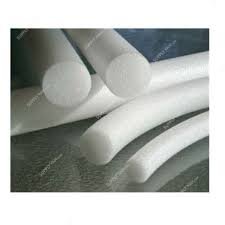
Robust Backer Rod (specified as Closed-Cell Expanded Polyethylene (EPE) Foam Backer Rod for building expansion joints and concrete floor saw-cuts) is a flexible, compressible, round cylindrical foam cord inserted into structural joints prior to gunning elastomeric sealants such as Robust PU Tube Sealant, silicone, or polysulfide. Engineered to control sealant joint depth and prevent three-sided adhesion, it ensures building expansion joints stretch and compress freely without splitting during severe summer-to-winter thermal movement.
1. Why Backer Rod Is Mandatory in Structural Building Joints
Every architectural and civil engineering standard (ASTM C1193 / DIN 18540) requires a backer rod in joints deeper than 6 mm for four critical reasons:
-
Eliminates Three-Sided Adhesion (Prevents Center Splitting): An elastomeric sealant must bond strictly to the two opposing joint walls—never to the bottom of the joint. Because polyethylene is non-stick, Robust Backer Rod acts as an automatic bond-breaker, allowing the PU sealant to stretch uniformly like a rubber band instead of tearing down the middle.
-
Enforces the Optimal 2:1 Width-to-Depth Ratio: Controls the exact thickness of the sealant bead (depth = half the joint width), preventing wasted sealant in deep concrete gaps and guaranteeing predictable elasticity.
-
Provides a Firm Backing Surface for Concave Tooling: Allows applicators to press and tool the sealant firmly against both joint walls with a spatula, eliminating air pockets and ensuring full sidewall wet-out.
-
Zero Water Absorption & Outgassing Resistance: Closed-cell polyethylene repels groundwater and rain from below while resisting air bubbles when rolled gently into place without puncturing.
2. Technical Specifications & ASTM C1330 Compliance
| Property / Metric | Specified Performance Range | Standard Test Method | Engineering Significance |
| Material Composition | Extruded Closed-Cell Expanded Polyethylene (EPE) Foam | ASTM C1330 (Type C) | Non-absorbent, chemically inert & non-staining |
| Cross-Sectional Profile | Smooth Cylindrical Round Cord | Visual / Caliper | Uniform compression across full joint depth |
| Bulk Density | 25 – 35 kg/m³ (1.6 – 2.2 lb/ft³) | ASTM D1622 / ISO 845 | High recovery resilience without crushing |
| Compression Deflection (25%) | 20 – 45 kPa (3 – 6.5 psi) | ASTM D5249 / ASTM D3575 | Easy insertion while resisting tooling pressure |
| Compression Set (at 50%) | ≤ 10% – 15% | ASTM D3575 | Expands back tightly as joints open in winter |
| Water Absorption | ≤ 0.03 – 0.05 g/cm³ (< 1% by volume) | ASTM C1016 / ASTM D2842 | Will not wick moisture or rot inside wet joints |
| Tensile Strength | ≥ 0.20 – 0.30 N/mm² (30 – 45 psi) | ASTM D3575 | Pulls smoothly off spools without snapping |
| Service Temperature Range | -40°C to +90°C | Thermal Stability | Stable across extreme Pakistani summer & winter climates |
| Sealant Compatibility | 100% compatible with PU, Silicone, Polysulfide & Acrylic | ASTM C1087 | Non-staining and non-reactive with cold-applied sealants |
| Standard Diameter Sizes | 6 mm, 8 mm, 10 mm, 12 mm, 15 mm, 20 mm, 25 mm, 30 mm, 40 mm & 50 mm | Industry Standard | Full size range for saw-cuts to wide seismic joints |
3. Diameter Selection & BOQ Sizing Chart (The +25% Compression Rule)
Never choose a backer rod equal to the joint width—it will fall loose to the bottom of the gap. Always select a Robust Backer Rod diameter 25% to 30% wider than the actual measured joint width so it stays locked tightly in position:
| Actual Joint Width (mm) | Recommended Backer Rod Diameter | Target Sealant Depth (2:1 Ratio) | Standard Roll / Coil Length |
| 4 – 5 mm (Narrow Saw-Cut) | 6 mm | 5 – 6 mm | 500 m – 1,000 m per roll |
| 6 – 8 mm (Floor Control Joint) | 10 mm | 6 mm | 250 m – 500 m per roll |
| 9 – 10 mm (Wall / Slab Joint) | 12 mm or 15 mm | 6 mm | 200 m – 250 m per roll |
| 12 – 15 mm (Standard Expansion Joint) | 20 mm | 6 – 8 mm | 100 m – 150 m per roll |
| 18 – 20 mm (Structural Expansion Joint) | 25 mm | 10 mm | 100 m per roll |
| 22 – 25 mm (Wide Bridge / Plaza Joint) | 30 mm | 12 mm | 50 m – 100 m per roll |
| 30 – 35 mm (Heavy Seismic Gap) | 40 mm | 15 mm | 50 m per roll |
| 38 – 42 mm (Wide Structural Gap) | 50 mm | 15 – 20 mm | 25 m – 50 m per roll |
4. Primary Building & Civil Construction Applications
-
Concrete Warehouse & Factory Floor Saw-Cut Joints: Installed inside contraction and construction joints prior to sealing with Robust PU Tube Sealant (High-Modulus Shore A 40–50) to support forklift wheel loads.
-
Building Structural Expansion Joints: Used in commercial plazas, high-rise slabs, exterior brick/concrete facades, and parking decks.
-
Precast Concrete Wall Panels & Tilt-Up Joints: Controls sealant depth between precast cladding panels and AAC block expansion gaps.
-
Window, Curtain Wall & Aluminum Glazing Perimeters: Provides thermal and acoustic insulation around aluminum frames before perimeter weather-sealing.
-
Roof Parapet Junctions, Bridges, Culverts & Water Channels: Ensures uniform sealant geometry in infrastructure expansion joints.
5. Step-by-Step Installation Protocol (Zero-Bubble Best Practices)
-
Clean & Dry the Joint: Grind or wire-brush joint walls to remove loose mortar, dust, and debris, then blow out completely with oil-free compressed air.
-
Verify Joint Width & Depth: Measure the joint gap at multiple points along the run (joints often vary from 10 mm to 16 mm) and stage the corresponding +25% oversized Robust Backer Rod diameters.
-
Insert Using a Blunt Roller Tool (Never Sharp Screwdrivers): Push the backer rod steadily into the joint using a blunt wheel roller or smooth rounded wooden/plastic tool set to the required depth gauge. CRITICAL: Never use a screwdriver, knife, or sharp putty blade—puncturing the outer skin of closed-cell polyethylene releases trapped gas cells, causing ugly bubbles (“outgassing”) in your PU sealant!
-
Butt-Joint Ends Tightly (Do Not Stretch): Press roll ends tightly against each other without overlapping or stretching the foam lengthwise (stretched foam shrinks back later and leaves unbacked gaps).
-
Apply Sealant Same Day: Gun Robust PU Tube Sealant over the installed backer rod on the same day so windblown site dust does not settle inside the prepared joint.
6. Indicative Pricing in Pakistan (2026 Market Benchmarks)
In Pakistan’s construction chemical market (Lahore, Karachi, Islamabad, Faisalabad, Multan), PE Foam Backer Rod is sold per running foot or per full coil/roll depending on diameter:
Robust Backer Rod (specified as Closed-Cell Expanded Polyethylene (EPE) Foam Backer Rod for building expansion joints and concrete floor saw-cuts) is a flexible, compressible, round cylindrical foam cord inserted into structural joints prior to gunning elastomeric sealants such as Robust PU Tube Sealant, silicone, or polysulfide. Engineered to control sealant joint depth and prevent three-sided adhesion, it ensures building expansion joints stretch and compress freely without splitting during severe summer-to-winter thermal movement.
1. Why Backer Rod Is Mandatory in Structural Building Joints
Every architectural and civil engineering standard (ASTM C1193 / DIN 18540) requires a backer rod in joints deeper than 6 mm for four critical reasons:
-
Eliminates Three-Sided Adhesion (Prevents Center Splitting): An elastomeric sealant must bond strictly to the two opposing joint walls—never to the bottom of the joint. Because polyethylene is non-stick, Robust Backer Rod acts as an automatic bond-breaker, allowing the PU sealant to stretch uniformly like a rubber band instead of tearing down the middle.
-
Enforces the Optimal 2:1 Width-to-Depth Ratio: Controls the exact thickness of the sealant bead (depth = half the joint width), preventing wasted sealant in deep concrete gaps and guaranteeing predictable elasticity.
-
Provides a Firm Backing Surface for Concave Tooling: Allows applicators to press and tool the sealant firmly against both joint walls with a spatula, eliminating air pockets and ensuring full sidewall wet-out.
-
Zero Water Absorption & Outgassing Resistance: Closed-cell polyethylene repels groundwater and rain from below while resisting air bubbles when rolled gently into place without puncturing.
2. Technical Specifications & ASTM C1330 Compliance
| Property / Metric | Specified Performance Range | Standard Test Method | Engineering Significance |
| Material Composition | Extruded Closed-Cell Expanded Polyethylene (EPE) Foam | ASTM C1330 (Type C) | Non-absorbent, chemically inert & non-staining |
| Cross-Sectional Profile | Smooth Cylindrical Round Cord | Visual / Caliper | Uniform compression across full joint depth |
| Bulk Density | 25 – 35 kg/m³ (1.6 – 2.2 lb/ft³) | ASTM D1622 / ISO 845 | High recovery resilience without crushing |
| Compression Deflection (25%) | 20 – 45 kPa (3 – 6.5 psi) | ASTM D5249 / ASTM D3575 | Easy insertion while resisting tooling pressure |
| Compression Set (at 50%) | ≤ 10% – 15% | ASTM D3575 | Expands back tightly as joints open in winter |
| Water Absorption | ≤ 0.03 – 0.05 g/cm³ (< 1% by volume) | ASTM C1016 / ASTM D2842 | Will not wick moisture or rot inside wet joints |
| Tensile Strength | ≥ 0.20 – 0.30 N/mm² (30 – 45 psi) | ASTM D3575 | Pulls smoothly off spools without snapping |
| Service Temperature Range | -40°C to +90°C | Thermal Stability | Stable across extreme Pakistani summer & winter climates |
| Sealant Compatibility | 100% compatible with PU, Silicone, Polysulfide & Acrylic | ASTM C1087 | Non-staining and non-reactive with cold-applied sealants |
| Standard Diameter Sizes | 6 mm, 8 mm, 10 mm, 12 mm, 15 mm, 20 mm, 25 mm, 30 mm, 40 mm & 50 mm | Industry Standard | Full size range for saw-cuts to wide seismic joints |
3. Diameter Selection & BOQ Sizing Chart (The +25% Compression Rule)
Never choose a backer rod equal to the joint width—it will fall loose to the bottom of the gap. Always select a Robust Backer Rod diameter 25% to 30% wider than the actual measured joint width so it stays locked tightly in position:
| Actual Joint Width (mm) | Recommended Backer Rod Diameter | Target Sealant Depth (2:1 Ratio) | Standard Roll / Coil Length |
| 4 – 5 mm (Narrow Saw-Cut) | 6 mm | 5 – 6 mm | 500 m – 1,000 m per roll |
| 6 – 8 mm (Floor Control Joint) | 10 mm | 6 mm | 250 m – 500 m per roll |
| 9 – 10 mm (Wall / Slab Joint) | 12 mm or 15 mm | 6 mm | 200 m – 250 m per roll |
| 12 – 15 mm (Standard Expansion Joint) | 20 mm | 6 – 8 mm | 100 m – 150 m per roll |
| 18 – 20 mm (Structural Expansion Joint) | 25 mm | 10 mm | 100 m per roll |
| 22 – 25 mm (Wide Bridge / Plaza Joint) | 30 mm | 12 mm | 50 m – 100 m per roll |
| 30 – 35 mm (Heavy Seismic Gap) | 40 mm | 15 mm | 50 m per roll |
| 38 – 42 mm (Wide Structural Gap) | 50 mm | 15 – 20 mm | 25 m – 50 m per roll |
4. Primary Building & Civil Construction Applications
-
Concrete Warehouse & Factory Floor Saw-Cut Joints: Installed inside contraction and construction joints prior to sealing with Robust PU Tube Sealant (High-Modulus Shore A 40–50) to support forklift wheel loads.
-
Building Structural Expansion Joints: Used in commercial plazas, high-rise slabs, exterior brick/concrete facades, and parking decks.
-
Precast Concrete Wall Panels & Tilt-Up Joints: Controls sealant depth between precast cladding panels and AAC block expansion gaps.
-
Window, Curtain Wall & Aluminum Glazing Perimeters: Provides thermal and acoustic insulation around aluminum frames before perimeter weather-sealing.
-
Roof Parapet Junctions, Bridges, Culverts & Water Channels: Ensures uniform sealant geometry in infrastructure expansion joints.
5. Step-by-Step Installation Protocol (Zero-Bubble Best Practices)
-
Clean & Dry the Joint: Grind or wire-brush joint walls to remove loose mortar, dust, and debris, then blow out completely with oil-free compressed air.
-
Verify Joint Width & Depth: Measure the joint gap at multiple points along the run (joints often vary from 10 mm to 16 mm) and stage the corresponding +25% oversized Robust Backer Rod diameters.
-
Insert Using a Blunt Roller Tool (Never Sharp Screwdrivers): Push the backer rod steadily into the joint using a blunt wheel roller or smooth rounded wooden/plastic tool set to the required depth gauge. CRITICAL: Never use a screwdriver, knife, or sharp putty blade—puncturing the outer skin of closed-cell polyethylene releases trapped gas cells, causing ugly bubbles (“outgassing”) in your PU sealant!
-
Butt-Joint Ends Tightly (Do Not Stretch): Press roll ends tightly against each other without overlapping or stretching the foam lengthwise (stretched foam shrinks back later and leaves unbacked gaps).
-
Apply Sealant Same Day: Gun Robust PU Tube Sealant over the installed backer rod on the same day so windblown site dust does not settle inside the prepared joint.
6. Indicative Pricing in Pakistan (2026 Market Benchmarks)
In Pakistan’s construction chemical market (Lahore, Karachi, Islamabad, Faisalabad, Multan), PE Foam Backer Rod is sold per running foot or per full coil/roll depending on diameter:
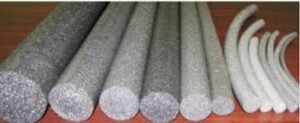
Robust Backer Rod (specified as Closed-Cell Expanded Polyethylene (EPE) Foam Backer Rod for building expansion joints and concrete floor saw-cuts) is a flexible, compressible, round cylindrical foam cord inserted into structural joints prior to gunning elastomeric sealants such as Robust PU Tube Sealant, silicone, or polysulfide. Engineered to control sealant joint depth and prevent three-sided adhesion, it ensures building expansion joints stretch and compress freely without splitting during severe summer-to-winter thermal movement.
1. Why Backer Rod Is Mandatory in Structural Building Joints
Every architectural and civil engineering standard (ASTM C1193 / DIN 18540) requires a backer rod in joints deeper than 6 mm for four critical reasons:
-
Eliminates Three-Sided Adhesion (Prevents Center Splitting): An elastomeric sealant must bond strictly to the two opposing joint walls—never to the bottom of the joint. Because polyethylene is non-stick, Robust Backer Rod acts as an automatic bond-breaker, allowing the PU sealant to stretch uniformly like a rubber band instead of tearing down the middle.
-
Enforces the Optimal 2:1 Width-to-Depth Ratio: Controls the exact thickness of the sealant bead (depth = half the joint width), preventing wasted sealant in deep concrete gaps and guaranteeing predictable elasticity.
-
Provides a Firm Backing Surface for Concave Tooling: Allows applicators to press and tool the sealant firmly against both joint walls with a spatula, eliminating air pockets and ensuring full sidewall wet-out.
-
Zero Water Absorption & Outgassing Resistance: Closed-cell polyethylene repels groundwater and rain from below while resisting air bubbles when rolled gently into place without puncturing.
2. Technical Specifications & ASTM C1330 Compliance
| Property / Metric | Specified Performance Range | Standard Test Method | Engineering Significance |
| Material Composition | Extruded Closed-Cell Expanded Polyethylene (EPE) Foam | ASTM C1330 (Type C) | Non-absorbent, chemically inert & non-staining |
| Cross-Sectional Profile | Smooth Cylindrical Round Cord | Visual / Caliper | Uniform compression across full joint depth |
| Bulk Density | 25 – 35 kg/m³ (1.6 – 2.2 lb/ft³) | ASTM D1622 / ISO 845 | High recovery resilience without crushing |
| Compression Deflection (25%) | 20 – 45 kPa (3 – 6.5 psi) | ASTM D5249 / ASTM D3575 | Easy insertion while resisting tooling pressure |
| Compression Set (at 50%) | ≤ 10% – 15% | ASTM D3575 | Expands back tightly as joints open in winter |
| Water Absorption | ≤ 0.03 – 0.05 g/cm³ (< 1% by volume) | ASTM C1016 / ASTM D2842 | Will not wick moisture or rot inside wet joints |
| Tensile Strength | ≥ 0.20 – 0.30 N/mm² (30 – 45 psi) | ASTM D3575 | Pulls smoothly off spools without snapping |
| Service Temperature Range | -40°C to +90°C | Thermal Stability | Stable across extreme Pakistani summer & winter climates |
| Sealant Compatibility | 100% compatible with PU, Silicone, Polysulfide & Acrylic | ASTM C1087 | Non-staining and non-reactive with cold-applied sealants |
| Standard Diameter Sizes | 6 mm, 8 mm, 10 mm, 12 mm, 15 mm, 20 mm, 25 mm, 30 mm, 40 mm & 50 mm | Industry Standard | Full size range for saw-cuts to wide seismic joints |
3. Diameter Selection & BOQ Sizing Chart (The +25% Compression Rule)
Never choose a backer rod equal to the joint width—it will fall loose to the bottom of the gap. Always select a Robust Backer Rod diameter 25% to 30% wider than the actual measured joint width so it stays locked tightly in position:
| Actual Joint Width (mm) | Recommended Backer Rod Diameter | Target Sealant Depth (2:1 Ratio) | Standard Roll / Coil Length |
| 4 – 5 mm (Narrow Saw-Cut) | 6 mm | 5 – 6 mm | 500 m – 1,000 m per roll |
| 6 – 8 mm (Floor Control Joint) | 10 mm | 6 mm | 250 m – 500 m per roll |
| 9 – 10 mm (Wall / Slab Joint) | 12 mm or 15 mm | 6 mm | 200 m – 250 m per roll |
| 12 – 15 mm (Standard Expansion Joint) | 20 mm | 6 – 8 mm | 100 m – 150 m per roll |
| 18 – 20 mm (Structural Expansion Joint) | 25 mm | 10 mm | 100 m per roll |
| 22 – 25 mm (Wide Bridge / Plaza Joint) | 30 mm | 12 mm | 50 m – 100 m per roll |
| 30 – 35 mm (Heavy Seismic Gap) | 40 mm | 15 mm | 50 m per roll |
| 38 – 42 mm (Wide Structural Gap) | 50 mm | 15 – 20 mm | 25 m – 50 m per roll |
4. Primary Building & Civil Construction Applications
-
Concrete Warehouse & Factory Floor Saw-Cut Joints: Installed inside contraction and construction joints prior to sealing with Robust PU Tube Sealant (High-Modulus Shore A 40–50) to support forklift wheel loads.
-
Building Structural Expansion Joints: Used in commercial plazas, high-rise slabs, exterior brick/concrete facades, and parking decks.
-
Precast Concrete Wall Panels & Tilt-Up Joints: Controls sealant depth between precast cladding panels and AAC block expansion gaps.
-
Window, Curtain Wall & Aluminum Glazing Perimeters: Provides thermal and acoustic insulation around aluminum frames before perimeter weather-sealing.
-
Roof Parapet Junctions, Bridges, Culverts & Water Channels: Ensures uniform sealant geometry in infrastructure expansion joints.
5. Step-by-Step Installation Protocol (Zero-Bubble Best Practices)
-
Clean & Dry the Joint: Grind or wire-brush joint walls to remove loose mortar, dust, and debris, then blow out completely with oil-free compressed air.
-
Verify Joint Width & Depth: Measure the joint gap at multiple points along the run (joints often vary from 10 mm to 16 mm) and stage the corresponding +25% oversized Robust Backer Rod diameters.
-
Insert Using a Blunt Roller Tool (Never Sharp Screwdrivers): Push the backer rod steadily into the joint using a blunt wheel roller or smooth rounded wooden/plastic tool set to the required depth gauge. CRITICAL: Never use a screwdriver, knife, or sharp putty blade—puncturing the outer skin of closed-cell polyethylene releases trapped gas cells, causing ugly bubbles (“outgassing”) in your PU sealant!
-
Butt-Joint Ends Tightly (Do Not Stretch): Press roll ends tightly against each other without overlapping or stretching the foam lengthwise (stretched foam shrinks back later and leaves unbacked gaps).
-
Apply Sealant Same Day: Gun Robust PU Tube Sealant over the installed backer rod on the same day so windblown site dust does not settle inside the prepared joint.
6. Indicative Pricing in Pakistan (2026 Market Benchmarks)
In Pakistan’s construction chemical market (Lahore, Karachi, Islamabad, Faisalabad, Multan), PE Foam Backer Rod is sold per running foot or per full coil/roll depending on diameter:
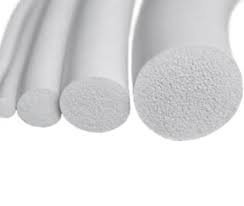
Robust
RobustRobustRobustRobustRobustRobustRobustRobustRobustRobustRobustRobustRobustRobustRobustRobustRobustRobustRobustRobustRobustRobustRobustRobustRobustRobustRobustRobustRobustRobustRobustRobustRobustRobustRobustRobustRobustRobustRobustRobustRobustRobustRobustRobustRobustRobustRobustRobustRobustRobustRobustRobustRobus