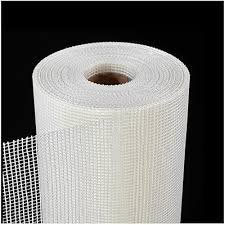
Robust 160 GSM Fiber Mesh Net Roll (specified as Heavy-Duty Alkali-Resistant EIFS & Structural Plaster Fiberglass Mesh) is the industrial-strength, high-tensile grade of woven glass-fiber reinforcement net engineered for exterior insulation systems (EIFS/ETICS), thick cementitious renders, high-stress brick-to-RCC structural junctions, and heavy-duty roof waterproofing. While lighter 45–75 GSM grades serve thin liquid roof coatings, 160 GSM is the international benchmark specified by architects and facade engineers for maximum impact resistance and structural crack arrest.
1. Why 160 GSM Is the Heavy-Duty Engineering Standard
-
Maximum Tensile Load Capacity (≥ 1,800 – 2,200 N / 50 mm): Packed with thicker C-glass or E-glass yarn bundles in both warp and weft directions, 160 GSM absorbs heavy shear stress at concrete column-to-brick masonry joints without snapping.
-
Superior Alkali-Resistant (AR) Polymer Coating: Coated with ~18%–22% specialized styrene-acrylic / latex copolymer resin by weight, preventing alkaline cement paste (pH 12.5–13.5) from degrading the glass fibers over 25+ years.
-
High Impact Resistance Over XPS / EPS Thermal Insulation: When embedded in polymer-modified base coat over extruded polystyrene (XPS / Jambolon) or EPS exterior wall boards, 160 GSM prevents dents, hail damage, and thermal shrinkage cracking.
-
Slide-Proof Leno Weave (4 × 4 mm or 5 × 5 mm Grid): Interlocked leno-weave knots prevent yarn distortion under heavy steel-trowel pressure while allowing thick cement mortar and base-coat slurries to key completely through the openings.
2. Technical Specifications (160 GSM Industrial Grade)
| Property / Parameter | 160 GSM Heavy-Duty Specification | Test Standard | Functional Significance |
| Unit Area Weight (GSM) | 160 g/m² (±5%) (Coated weight) | ISO 3374 / EN 13496 | Heavy-duty structural & exterior facade grade |
| Mesh Grid Aperture | 4 × 4 mm or 5 × 5 mm | Visual / Caliper | Optimal opening for cement plaster & EIFS base coats |
| Weave Structure | Interlocking Leno Weave | Textile Spec | Zero yarn slippage during trowel embedment |
| Polymer Coating Content | ≥ 18% – 22% Alkali-Resistant Latex | Loss on Ignition | Protects glass fibers against high-pH cement corrosion |
| Tensile Strength (Warp) | ≥ 1,800 – 2,200 N / 50 mm | ETAG 004 / ISO 4606 | Resists vertical structural settlement & thermal stress |
| Tensile Strength (Weft) | ≥ 1,750 – 2,100 N / 50 mm | ETAG 004 / ISO 4606 | Resists horizontal shrinkage & wind-load flexing |
| Alkali-Aged Residual Strength | ≥ 50% – 65% retention (after 28 days in NaOH) | ETAG 004 | Guarantees long-term reinforcement inside wet concrete/plaster |
| Elongation at Break | ≤ 3.5% – 4.5% | ISO 4606 | Arrests micro-cracks before they become visible |
| Standard Roll Dimensions | 1.0 m × 50 m (50 m² / ~538 sq. ft.) | Industry Standard | Net coverage ~485 sq. ft. per roll after 10% overlaps |
| Standard Colors | White, Blue, Orange, or Yellow | Manufacturer Spec | Color-coded for site QA inspection |
3. Primary Applications for 160 GSM Fiber Mesh Net Roll
-
Exterior Insulation & Finishing Systems (EIFS / XPS Thermal Walls): Embedded into polymer-modified adhesive mortar over XPS (Jambolon) or EPS boards on building facades to create a crack-free, impact-resistant render base.
-
Brick-to-RCC Column, Beam & Lintel Junctions: Bridges dissimilar masonry and concrete interfaces across full wall heights or wide 300–500 mm strips to eliminate vertical plaster separation cracks.
-
Heavy-Duty Industrial & Commercial Roof Waterproofing: Reinforces high-build polyurethane (PU Liquid Rubber), cementitious, and elastomeric waterproofing membranes on large factory roofs, parking decks, and parapet coves.
-
Thick Cement Plaster, Stucco & Floor Screeds: Reinforces weak or sandy plasters, electrical/plumbing wall chases, stone/marble cladding backings, and thin polymer-modified floor screeds.
4. Step-by-Step Installation Protocol (Trowel Wet-Embedment Method)
-
Substrate Prep & Pre-Cutting: Clean dust, loose mortar, and oil from the wall or slab. Pre-cut 160 GSM Fiber Mesh strips to exact run lengths, adding 100 mm (4 inches) for every overlap.
-
Apply Polymer-Modified Base Coat: Trowel a 2.0 – 3.0 mm uniform layer of polymer-modified base coat mortar (or cementitious/PU waterproofing membrane) onto the surface using a notched steel trowel.
-
Embed 160 GSM Mesh Wet-on-Wet: Lay the mesh flat onto the wet mortar and press it inward from the center toward the edges using a flat stainless-steel finishing trowel until the mortar squeezes cleanly through the 4×4 mm grid openings.
-
Mandatory 100 mm Overlaps & Corner Gussets: Overlap all side and end joints by at least 100 mm (10 cm). At window and door openings, install diagonal 300 × 500 mm stress-relief patches at 45° angles at every corner before applying the main mesh sheet.
-
Apply Final Skim / Topcoat: Apply a second 1.5 – 2.0 mm skim coat while the first layer is still fresh (wet-on-wet) so the 160 GSM mesh sits embedded in the outer third of the total render thickness with zero grid pattern showing through.
5. BOQ Consumption & 2026 Pakistan Market Pricing
-
Coverage & Wastage Calculation: One 1 m × 50 m roll equals 50 m² (538 sq. ft.) gross area. Accounting for mandatory 100 mm (10%) side and end overlaps, each roll delivers ~45 m² (485 sq. ft.) of net reinforced surface area.
-
Here are the extended technical, quality-testing, system comparison, and SEO deployment details for Robust 160 GSM Fiber Mesh Net Roll, formatted with clear headings for direct copy-pasting into your CMS:
1. EIFS / Thermal Wall System Architecture (How 160 GSM Fits in a Facade)
In commercial and residential thermal insulation facades (such as XPS Jambolon or EPS exterior cladding), the 160 GSM Fiber Mesh Net Roll acts as the structural tensile backbone of the entire exterior wall skin:
-
Concrete / Brick Masonry Substrate: Cleaned and primed to ensure secure mechanical and chemical bonding.
-
Polymer-Modified Insulation Adhesive: Applied via notched trowel to bond XPS / EPS thermal insulation boards (25 mm – 50 mm thick) to the exterior wall, supplemented with plastic/steel mechanical anchor pins.
-
First Polymer-Modified Base Coat (2.0 – 3.0 mm): Troweled directly over the sanded XPS/EPS insulation boards.
-
Robust 160 GSM Alkali-Resistant Fiber Mesh: Embedded wet-on-wet into the fresh base coat with 100 mm overlaps and diagonal corner gussets around windows/doors.
-
Second Skim Base Coat (1.5 – 2.0 mm): Applied immediately while wet to fully encapsulate the 160 GSM grid in the outer third of the 4–5 mm reinforced render layer.
-
Primer & Decorative Textured Finish: Sealed with an alkali-resistant primer and finished with acrylic, silicone, or elastomeric weatherproof facade paint.
2. Full GSM Grade Comparison Matrix (45 GSM vs. 75 GSM vs. 110 GSM vs. 160 GSM)
Selecting the correct fabric weight prevents over-engineering thin liquid coatings or under-reinforcing structural plaster:
Specification / Application 45 – 60 GSM (Light Waterproofing) 75 – 90 GSM (Standard Waterproofing) 110 – 145 GSM (Interior Plaster & Joints) 160 GSM (Heavy Structural & EIFS) Mesh Grid Opening 2.5 × 2.5 mm or 3 × 3 mm 3 × 3 mm or 4 × 4 mm 4 × 4 mm or 5 × 5 mm 4 × 4 mm or 5 × 5 mm Warp / Weft Tensile Strength 450 – 750 N / 50 mm 800 – 1,100 N / 50 mm 1,200 – 1,650 N / 50 mm 1,800 – 2,200 N / 50 mm Flexibility Around Tight Corners Extremely soft & conformable Very flexible Moderate stiffness High structural rigidity Primary Recommended Use Thin acrylic/PU roof coatings & parapet coves Heavy PU liquid rubber & sunken bathrooms Brick-to-RCC column joints & wall chases EIFS/XPS facades, thick exterior renders & heavy roofs 2026 Pakistan Rate (1 m × 50 m Roll) PKR 4,200 – 5,800 PKR 5,500 – 7,200 PKR 6,800 – 9,200 PKR 9,000 – 13,500 3. On-Site Quality Audit Checklist (Alkali-Resistant vs. Cheap Uncoated Mesh)
Low-cost local fiberglass rolls often skip proper alkali-resistant polymer coating, causing the glass fibers to dissolve inside wet cement within 6 to 12 months. Verify these four checks before accepting bulk rolls on site:
-
The Hand-Rub & Coating Stiffness Test: Rub a piece of the 160 GSM mesh briskly between your palms and flex it sharply. Properly coated Alkali-Resistant (AR) mesh feels crisp, springy, and holds its square 4×4 mm grid without shedding itchy white glass dust or fraying at cut edges. Uncoated cheap mesh feels limp like cloth and sheds raw fiberglass needles.
-
Yarn Slippage (Leno-Weave) Check: Grip two adjacent warp and weft strands with your fingernails and pull firmly. On genuine leno-weave 160 GSM mesh, the locked intersection knots will not slide apart.
-
Actual Roll Weight Verification: A true 160 GSM (1 m × 50 m = 50 m²) roll must weigh approximately 8.0 kg (±5%, i.e., 7.6 – 8.4 kg) excluding the cardboard core tube. Rolls weighing 5.5–6.5 kg are mislabeled 110–130 GSM stock.
-
C-Glass vs. E-Glass & Polymer Content: Confirm the Technical Data Sheet specifies ≥ 18%–22% alkali-resistant styrene-acrylic copolymer coating tested to ETAG 004 / ISO 3374 standards.
4. Common Site Installation Mistakes & Prevention
-
Dry-Hanging Mesh Before Plastering (Biggest Mistake): Stapling or pinning dry fiber mesh onto a bare brick/concrete wall and throwing plaster over it leaves the mesh sitting directly against the substrate—doing zero crack-bridging work and causing hollow plaster delamination. Fix: Always embed 160 GSM mesh wet-on-wet into the freshly troweled first coat so it sits in the outer third of the finished plaster thickness.
-
Butt-Jointing Without Overlap: Placing two roll edges side-by-side without overlapping creates a straight weak line that splits open during thermal expansion. Fix: Maintain a mandatory 100 mm (4-inch) overlap on all vertical and horizontal seams.
-
Skipping 45° Diagonal Corner Gussets: Windows, doors, and AC sleeve openings concentrate diagonal shear stress at corners. Fix: Embed 300 × 500 mm diagonal mesh patches at 45° across all four corners of every wall opening before laying the full-height mesh sheet.
-
Leaving Grid Texture Exposed: Applying too thin a topcoat leaves the 4×4 mm square pattern visible through exterior paint. Fix: Apply a full 1.5–2.0 mm skim coat over the embedded mesh and float smooth before painting.
5. Complete SEO Pillar Page Outline & Keyword Clusters (For CMS Rollout)
-
Primary Focus Keyword:
160 gsm fiber mesh roll(local variants:160 gsm fiberglass mesh price in Pakistan,fiber mesh net roll 160 gsm Lahore) -
Supporting Long-Tail & Buyer Keywords:
alkali resistant fiberglass mesh 160 gsm,EIFS exterior insulation fiber mesh Pakistan,1m x 50m fiber mesh roll rate,plaster crack control fiberglass jali,XPS thermal insulation reinforcement mesh -
Recommended H2 Sections for Your Product / Pillar Page:
-
H2: What Is a 160 GSM Fiber Mesh Net Roll & Why Is Alkali Resistance Critical?
-
H2: Technical Specifications & ETAG 004 Tensile Benchmarks (160 GSM Grade)
-
H2: Fiber Mesh GSM Comparison Chart (45 GSM vs. 75 GSM vs. 110 GSM vs. 160 GSM)
-
H2: Top 4 Applications: EIFS Facades, Brick-to-RCC Joints, Waterproofing & Renders
-
H2: Step-by-Step Wet-Embedment Installation Guide & Overlap Rules
-
H2: How to Verify Genuine 160 GSM AR Mesh on Site (Weight & Coating Checks)
-
Robust 160 GSM Fiber Mesh Net Roll (specified as Heavy-Duty Alkali-Resistant EIFS & Structural Plaster Fiberglass Mesh) is the industrial-strength, high-tensile grade of woven glass-fiber reinforcement net engineered for exterior insulation systems (EIFS/ETICS), thick cementitious renders, high-stress brick-to-RCC structural junctions, and heavy-duty roof waterproofing. While lighter 45–75 GSM grades serve thin liquid roof coatings, 160 GSM is the international benchmark specified by architects and facade engineers for maximum impact resistance and structural crack arrest.
1. Why 160 GSM Is the Heavy-Duty Engineering Standard
-
Maximum Tensile Load Capacity (≥ 1,800 – 2,200 N / 50 mm): Packed with thicker C-glass or E-glass yarn bundles in both warp and weft directions, 160 GSM absorbs heavy shear stress at concrete column-to-brick masonry joints without snapping.
-
Superior Alkali-Resistant (AR) Polymer Coating: Coated with ~18%–22% specialized styrene-acrylic / latex copolymer resin by weight, preventing alkaline cement paste (pH 12.5–13.5) from degrading the glass fibers over 25+ years.
-
High Impact Resistance Over XPS / EPS Thermal Insulation: When embedded in polymer-modified base coat over extruded polystyrene (XPS / Jambolon) or EPS exterior wall boards, 160 GSM prevents dents, hail damage, and thermal shrinkage cracking.
-
Slide-Proof Leno Weave (4 × 4 mm or 5 × 5 mm Grid): Interlocked leno-weave knots prevent yarn distortion under heavy steel-trowel pressure while allowing thick cement mortar and base-coat slurries to key completely through the openings.
2. Technical Specifications (160 GSM Industrial Grade)
Property / Parameter 160 GSM Heavy-Duty Specification Test Standard Functional Significance Unit Area Weight (GSM) 160 g/m² (±5%) (Coated weight) ISO 3374 / EN 13496 Heavy-duty structural & exterior facade grade Mesh Grid Aperture 4 × 4 mm or 5 × 5 mm Visual / Caliper Optimal opening for cement plaster & EIFS base coats Weave Structure Interlocking Leno Weave Textile Spec Zero yarn slippage during trowel embedment Polymer Coating Content ≥ 18% – 22% Alkali-Resistant Latex Loss on Ignition Protects glass fibers against high-pH cement corrosion Tensile Strength (Warp) ≥ 1,800 – 2,200 N / 50 mm ETAG 004 / ISO 4606 Resists vertical structural settlement & thermal stress Tensile Strength (Weft) ≥ 1,750 – 2,100 N / 50 mm ETAG 004 / ISO 4606 Resists horizontal shrinkage & wind-load flexing Alkali-Aged Residual Strength ≥ 50% – 65% retention (after 28 days in NaOH) ETAG 004 Guarantees long-term reinforcement inside wet concrete/plaster Elongation at Break ≤ 3.5% – 4.5% ISO 4606 Arrests micro-cracks before they become visible Standard Roll Dimensions 1.0 m × 50 m (50 m² / ~538 sq. ft.) Industry Standard Net coverage ~485 sq. ft. per roll after 10% overlaps Standard Colors White, Blue, Orange, or Yellow Manufacturer Spec Color-coded for site QA inspection 3. Primary Applications for 160 GSM Fiber Mesh Net Roll
-
Exterior Insulation & Finishing Systems (EIFS / XPS Thermal Walls): Embedded into polymer-modified adhesive mortar over XPS (Jambolon) or EPS boards on building facades to create a crack-free, impact-resistant render base.
-
Brick-to-RCC Column, Beam & Lintel Junctions: Bridges dissimilar masonry and concrete interfaces across full wall heights or wide 300–500 mm strips to eliminate vertical plaster separation cracks.
-
Heavy-Duty Industrial & Commercial Roof Waterproofing: Reinforces high-build polyurethane (PU Liquid Rubber), cementitious, and elastomeric waterproofing membranes on large factory roofs, parking decks, and parapet coves.
-
Thick Cement Plaster, Stucco & Floor Screeds: Reinforces weak or sandy plasters, electrical/plumbing wall chases, stone/marble cladding backings, and thin polymer-modified floor screeds.
4. Step-by-Step Installation Protocol (Trowel Wet-Embedment Method)
-
Substrate Prep & Pre-Cutting: Clean dust, loose mortar, and oil from the wall or slab. Pre-cut 160 GSM Fiber Mesh strips to exact run lengths, adding 100 mm (4 inches) for every overlap.
-
Apply Polymer-Modified Base Coat: Trowel a 2.0 – 3.0 mm uniform layer of polymer-modified base coat mortar (or cementitious/PU waterproofing membrane) onto the surface using a notched steel trowel.
-
Embed 160 GSM Mesh Wet-on-Wet: Lay the mesh flat onto the wet mortar and press it inward from the center toward the edges using a flat stainless-steel finishing trowel until the mortar squeezes cleanly through the 4×4 mm grid openings.
-
Mandatory 100 mm Overlaps & Corner Gussets: Overlap all side and end joints by at least 100 mm (10 cm). At window and door openings, install diagonal 300 × 500 mm stress-relief patches at 45° angles at every corner before applying the main mesh sheet.
-
Apply Final Skim / Topcoat: Apply a second 1.5 – 2.0 mm skim coat while the first layer is still fresh (wet-on-wet) so the 160 GSM mesh sits embedded in the outer third of the total render thickness with zero grid pattern showing through.
5. BOQ Consumption & 2026 Pakistan Market Pricing
-
Coverage & Wastage Calculation: One 1 m × 50 m roll equals 50 m² (538 sq. ft.) gross area. Accounting for mandatory 100 mm (10%) side and end overlaps, each roll delivers ~45 m² (485 sq. ft.) of net reinforced surface area.
-
Robust 160 GSM Fiber Mesh Net Roll (specified as Heavy-Duty Alkali-Resistant EIFS & Structural Plaster Fiberglass Mesh) is the industrial-strength, high-tensile grade of woven glass-fiber reinforcement net engineered for exterior insulation systems (EIFS/ETICS), thick cementitious renders, high-stress brick-to-RCC structural junctions, and heavy-duty roof waterproofing. While lighter 45–75 GSM grades serve thin liquid roof coatings, 160 GSM is the international benchmark specified by architects and facade engineers for maximum impact resistance and structural crack arrest.
1. Why 160 GSM Is the Heavy-Duty Engineering Standard
-
Maximum Tensile Load Capacity (≥ 1,800 – 2,200 N / 50 mm): Packed with thicker C-glass or E-glass yarn bundles in both warp and weft directions, 160 GSM absorbs heavy shear stress at concrete column-to-brick masonry joints without snapping.
-
Superior Alkali-Resistant (AR) Polymer Coating: Coated with ~18%–22% specialized styrene-acrylic / latex copolymer resin by weight, preventing alkaline cement paste (pH 12.5–13.5) from degrading the glass fibers over 25+ years.
-
High Impact Resistance Over XPS / EPS Thermal Insulation: When embedded in polymer-modified base coat over extruded polystyrene (XPS / Jambolon) or EPS exterior wall boards, 160 GSM prevents dents, hail damage, and thermal shrinkage cracking.
-
Slide-Proof Leno Weave (4 × 4 mm or 5 × 5 mm Grid): Interlocked leno-weave knots prevent yarn distortion under heavy steel-trowel pressure while allowing thick cement mortar and base-coat slurries to key completely through the openings.
2. Technical Specifications (160 GSM Industrial Grade)
Property / Parameter 160 GSM Heavy-Duty Specification Test Standard Functional Significance Unit Area Weight (GSM) 160 g/m² (±5%) (Coated weight) ISO 3374 / EN 13496 Heavy-duty structural & exterior facade grade Mesh Grid Aperture 4 × 4 mm or 5 × 5 mm Visual / Caliper Optimal opening for cement plaster & EIFS base coats Weave Structure Interlocking Leno Weave Textile Spec Zero yarn slippage during trowel embedment Polymer Coating Content ≥ 18% – 22% Alkali-Resistant Latex Loss on Ignition Protects glass fibers against high-pH cement corrosion Tensile Strength (Warp) ≥ 1,800 – 2,200 N / 50 mm ETAG 004 / ISO 4606 Resists vertical structural settlement & thermal stress Tensile Strength (Weft) ≥ 1,750 – 2,100 N / 50 mm ETAG 004 / ISO 4606 Resists horizontal shrinkage & wind-load flexing Alkali-Aged Residual Strength ≥ 50% – 65% retention (after 28 days in NaOH) ETAG 004 Guarantees long-term reinforcement inside wet concrete/plaster Elongation at Break ≤ 3.5% – 4.5% ISO 4606 Arrests micro-cracks before they become visible Standard Roll Dimensions 1.0 m × 50 m (50 m² / ~538 sq. ft.) Industry Standard Net coverage ~485 sq. ft. per roll after 10% overlaps Standard Colors White, Blue, Orange, or Yellow Manufacturer Spec Color-coded for site QA inspection 3. Primary Applications for 160 GSM Fiber Mesh Net Roll
-
Exterior Insulation & Finishing Systems (EIFS / XPS Thermal Walls): Embedded into polymer-modified adhesive mortar over XPS (Jambolon) or EPS boards on building facades to create a crack-free, impact-resistant render base.
-
Brick-to-RCC Column, Beam & Lintel Junctions: Bridges dissimilar masonry and concrete interfaces across full wall heights or wide 300–500 mm strips to eliminate vertical plaster separation cracks.
-
Heavy-Duty Industrial & Commercial Roof Waterproofing: Reinforces high-build polyurethane (PU Liquid Rubber), cementitious, and elastomeric waterproofing membranes on large factory roofs, parking decks, and parapet coves.
-
Thick Cement Plaster, Stucco & Floor Screeds: Reinforces weak or sandy plasters, electrical/plumbing wall chases, stone/marble cladding backings, and thin polymer-modified floor screeds.
4. Step-by-Step Installation Protocol (Trowel Wet-Embedment Method)
-
Substrate Prep & Pre-Cutting: Clean dust, loose mortar, and oil from the wall or slab. Pre-cut 160 GSM Fiber Mesh strips to exact run lengths, adding 100 mm (4 inches) for every overlap.
-
Apply Polymer-Modified Base Coat: Trowel a 2.0 – 3.0 mm uniform layer of polymer-modified base coat mortar (or cementitious/PU waterproofing membrane) onto the surface using a notched steel trowel.
-
Embed 160 GSM Mesh Wet-on-Wet: Lay the mesh flat onto the wet mortar and press it inward from the center toward the edges using a flat stainless-steel finishing trowel until the mortar squeezes cleanly through the 4×4 mm grid openings.
-
Mandatory 100 mm Overlaps & Corner Gussets: Overlap all side and end joints by at least 100 mm (10 cm). At window and door openings, install diagonal 300 × 500 mm stress-relief patches at 45° angles at every corner before applying the main mesh sheet.
-
Apply Final Skim / Topcoat: Apply a second 1.5 – 2.0 mm skim coat while the first layer is still fresh (wet-on-wet) so the 160 GSM mesh sits embedded in the outer third of the total render thickness with zero grid pattern showing through.
5. BOQ Consumption & 2026 Pakistan Market Pricing
-
Coverage & Wastage Calculation: One 1 m × 50 m roll equals 50 m² (538 sq. ft.) gross area. Accounting for mandatory 100 mm (10%) side and end overlaps, each roll delivers ~45 m² (485 sq. ft.) of net reinforced surface area.
- robust
- robust
- robust
- robust
- robust
- robust
- robust
- robust
- robust
- robust
- robust
- robust
- robust
- robust
- robust
- robust
- robust
- robust
- robust
- robust
- robust
- robust
- robust
- robust
- robust
- robust
- robust
- robust
- robust
- robust
- robust
- robust
- robust
- robust
- robust
- robust
- robust
- robust
- robust
- robust
- robust
- robust
- robust
- robust
- robust
- robust
- robust
- robust
- robust
- robust
- robust
- robust
- robust
- robust
- robust
- robust
- robust
- robust
- robust
- robust
- robust
- robust
- robust
- robust
- robust
- robust
- robust
- robust
- robust
- robust
- robust
- robust
- robust
- robust
- robust
- robust
- robust
- robust
- robust
- robust
- robust
-
-
-
-
-