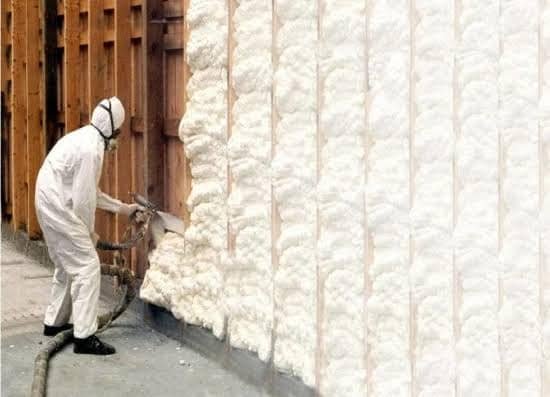
Robust PU Foam Spray – Complete Product Details
Introduction
PU Foam Spray (Polyurethane Foam) is a multi-purpose expanding foam specially formulated for sealing, filling, insulating, and waterproofing applications in construction and maintenance. It is a single-component, moisture-curing foam that expands on application and solidifies into a strong, durable, and closed-cell structure.
This advanced foam solution is designed for professionals and homeowners alike, offering exceptional thermal insulation, soundproofing, and air-sealing capabilities. Whether it’s for roofing, wall cavities, HVAC ducts, or window gaps — PU Foam provides long-lasting protection and energy efficiency.
Composition
PU Foam is made from polyurethane prepolymers that react with ambient moisture to expand and harden.
Key ingredients include:
-
Polyols
-
Isocyanates
-
Catalysts
-
Surfactants and stabilizers
-
Propellant gas (for spray expansion)
The result is a rigid, closed-cell foam that provides insulation, sealing, and waterproofing all in one.
Key Features
-
Excellent adhesion to concrete, wood, metal, glass, plastic, and masonry surfaces.
-
High expansion rate – expands up to 2–3 times its original size.
-
Durable and weather-resistant once cured.
-
Thermal and sound insulation properties.
-
Waterproof and airtight seal against moisture, dust, and air infiltration.
-
Can be cut, sanded, and painted after curing.
-
Easy application with gun or straw nozzle.
-
Resistant to mold, mildew, and temperature variations.
Technical Data
| Property | Specification |
|---|---|
| Appearance | Creamy/yellow foam |
| Density | 25–30 kg/m³ (cured) |
| Expansion Rate | 2–3 times original volume |
| Tack-Free Time | 8–15 minutes |
| Full Cure Time | 8–24 hours |
| Temperature Resistance | -40°C to +90°C |
| Application Temperature | +5°C to +30°C |
| Sound Reduction | Up to 60 dB |
| Thermal Conductivity | 0.035–0.040 W/m·K |
| Adhesion | Excellent to most building materials |
| Shelf Life | 12 months (unopened at +5°C to +25°C) |
Applications
PU Foam Spray is highly versatile and used in a wide range of applications, including:
1. Building Insulation
-
Roof heat insulation
-
Wall and floor insulation
-
Attic and ceiling voids
-
HVAC duct sealing
2. Waterproofing and Sealing
-
Roof cracks and leakage repair
-
Basement and wall joints
-
Around window and door frames
-
Pipe penetrations and plumbing gaps
3. Construction and Assembly
-
Fixing door and window frames
-
Filling cavities between panels
-
Bonding insulation boards
-
Sealing gaps in precast concrete structures
4. Industrial Applications
-
Cold storage insulation
-
Soundproof partition walls
-
Air-conditioning duct insulation
-
Vehicle body insulation
Advantages
-
Provides 100% airtight and watertight sealing.
-
Prevents heat loss and energy waste.
-
Easy to apply without special equipment.
-
Expands and fills irregular gaps completely.
-
Reduces noise transmission and vibration.
-
Protects against moisture, mold, and pests.
-
Suitable for both indoor and outdoor use.
-
Helps in achieving energy-efficient buildings.
How to Use PU Foam Spray
-
Preparation:
-
Clean the surface thoroughly (dust, oil, and grease-free).
-
Lightly moisten the surface with water spray to improve curing.
-
-
Application:
-
Shake the can vigorously for 30–60 seconds.
-
Fix the nozzle or foam gun tightly.
-
Apply foam upside down into gaps, cracks, or joints.
-
Fill gaps up to 50% as foam expands after application.
-
-
Curing:
-
Allow to cure for 8–24 hours.
-
After full curing, cut excess foam with a knife.
-
Can be painted or coated after curing.
-
-
Cleanup:
-
Use PU Foam Cleaner or acetone for uncured foam.
-
Remove cured foam mechanically.
-
Packaging
-
750 ml Aerosol Can (Standard)
-
500 ml Can (optional for smaller applications)
-
Available in Straw Type and Gun Type packaging.
Storage
-
Store upright in a cool and dry place (5°C–25°C).
-
Protect from direct sunlight, heat, and frost.
-
Keep away from ignition sources and electrical equipment.
Precautions
-
Use only in well-ventilated areas.
-
Avoid inhalation and direct contact with skin.
-
Wear protective gloves, goggles, and a mask.
-
Keep away from children and open flames.
-
Do not puncture or burn cans even when empty.
Environmental and Safety Standards
-
Free from CFCs (Chlorofluorocarbons).
-
Low VOC formulation available.
-
Non-toxic after curing.
-
Complies with ISO and ASTM insulation standards.
PU Foam Benefits in Construction
-
Energy Efficiency: Helps reduce energy costs by maintaining indoor temperature.
-
Moisture Resistance: Prevents water penetration in cracks and joints.
-
Noise Reduction: Absorbs sound and vibration effectively.
-
Structural Reinforcement: Adds rigidity to walls, frames, and joints.
-
Durability: Resistant to aging, temperature fluctuations, and UV degradation.
Why Choose Robust PU Foam?
Robust PU Foam stands out for its superior quality, expansion capacity, and long-lasting performance.
Formulated with advanced European-grade materials, it ensures:
-
Strong adhesion on diverse surfaces
-
Excellent insulation against heat and sound
-
Reliable sealing for water and air leakage
-
Ease of application with both professional and DIY usage
Robust Construction Chemicals guarantees consistency, durability, and top performance in every can — making it the ideal choice for modern waterproofing and insulation projects in Pakistan’s diverse climatic conditions.
Conclusion
PU Foam Spray is a complete insulation and waterproofing solution trusted by engineers, contractors, and homeowners. It ensures long-term protection, comfort, and energy efficiency while being simple to use.
For reliable results and professional-grade performance, Robust PU Foam is your perfect choice for all sealing, filling, and insulation applications.
Understanding PU Foam Technology
PU Foam (Polyurethane Foam) represents a revolutionary advancement in modern building science, offering sealing, insulation, and waterproofing within a single, easy-to-use product. The foam’s ability to expand and adapt to any shape makes it an invaluable material for energy-efficient and moisture-resistant construction projects.
At its core, PU Foam works by reacting with atmospheric moisture, which triggers a chemical expansion that fills cavities, cracks, and joints completely. Once cured, it forms a rigid, closed-cell structure that prevents air, heat, and water from passing through. This makes it far superior to traditional sealants or insulators such as cement mortar, silicone, or fiberglass.
How PU Foam Works
When the can is shaken and sprayed onto a surface, the isocyanate component reacts with the moisture in the air or substrate. This reaction forms carbon dioxide gas, which causes the foam to expand rapidly and fill all voids.
Once cured, PU Foam becomes:
-
Rigid and dense for strong adhesion and mechanical support.
-
Closed-celled to prevent water absorption.
-
Thermally efficient to maintain consistent indoor temperatures.
-
Acoustically effective for noise reduction.
This dual chemical reaction is what gives PU Foam its versatility in construction — it functions as both a sealant and insulator, providing a long-lasting solution in a single step.
Why PU Foam is Essential in Pakistan’s Climate
Pakistan’s climate ranges from extremely hot summers to cold winters with high humidity in certain regions. This variation demands materials that can withstand thermal stress, moisture penetration, and UV exposure. PU Foam is perfectly suited for these conditions due to its:
-
High thermal resistance (Low λ value of 0.035–0.040 W/m·K)
-
Moisture barrier properties that prevent dampness and seepage
-
Excellent dimensional stability even under temperature changes
In cities like Karachi, Lahore, Islamabad, and Multan, where heatproofing and waterproofing are critical, PU Foam Spray has become one of the most efficient and economical insulation materials for both residential and commercial buildings.
Types of PU Foam
PU Foams are categorized based on their application method and density:
1. One-Component PU Foam (OCF)
-
Packed in aerosol cans.
-
Cures with atmospheric moisture.
-
Ideal for small to medium sealing and filling jobs.
-
Commonly used for windows, doors, and general gap filling.
2. Two-Component PU Foam (TCF)
-
Requires a mixing system or spray gun.
-
Cures through internal chemical reaction.
-
Used for larger insulation projects (roofs, walls, tanks).
-
Faster curing and higher density.
3. High-Density PU Foam
-
Specifically designed for roof insulation and structural reinforcement.
-
Excellent compressive strength and weather resistance.
4. Low-Density PU Foam
-
More flexible, used for soundproofing and interior cavity filling.
Detailed Advantages of PU Foam
1. Thermal Insulation
PU Foam acts as an effective heat barrier, minimizing heat transfer between interior and exterior environments. This drastically reduces electricity consumption by lowering the need for air-conditioning during summer and heating during winter.
2. Air Tightness
One of the biggest sources of energy loss in buildings is air leakage. PU Foam forms an airtight seal that eliminates drafts, making buildings more comfortable and efficient.
3. Moisture and Water Resistance
Unlike ordinary fillers, PU Foam has closed-cell structures that block water penetration. This makes it ideal for waterproofing roofs, basements, and walls prone to seepage.
4. Soundproofing
The dense foam absorbs and dampens sound vibrations, effectively reducing noise transmission between rooms or from outside traffic and machinery.
5. Structural Support
Once cured, PU Foam adds rigidity to weak or hollow areas, strengthening structures such as walls, window frames, and joints.
6. Long-Term Durability
PU Foam resists cracking, shrinking, and disintegration, ensuring long-term stability even under harsh weather conditions.
7. Versatility
It can be used on almost all building materials including concrete, wood, metal, plastic, brick, and glass, providing universal compatibility.
Comparing PU Foam with Other Materials
| Property | PU Foam | Silicone Sealant | Cement Mortar | Fiberglass Wool |
|---|---|---|---|---|
| Expansion | 2–3x | None | None | Limited |
| Thermal Conductivity | 0.035 W/m·K | 0.3 W/m·K | 0.9 W/m·K | 0.04 W/m·K |
| Waterproof | Yes | Semi | No | No |
| Adhesion | Excellent | Moderate | Poor | Poor |
| Sound Insulation | High | Low | Low | Moderate |
| Flexibility | Moderate | High | Low | Low |
| Ease of Use | Very Easy | Easy | Difficult | Messy |
| Durability | 10+ years | 3–5 years | 2–3 years | 5 years |
From the table above, it’s clear that PU Foam outperforms traditional materials in all major aspects — particularly for insulation, sealing, and waterproofing efficiency.
Energy Efficiency and Sustainability
Using PU Foam can reduce energy consumption by up to 40% in climate-controlled environments. It seals small leaks and gaps where air usually escapes, improving HVAC efficiency.
Moreover, modern PU Foams from Robust Construction Chemicals are eco-friendly and CFC-free, ensuring environmental safety without compromising performance.
This contributes to:
-
Lower energy bills
-
Reduced carbon footprint
-
Sustainable building practices
Application Areas in Detail
1. Roof Insulation and Waterproofing
PU Foam creates a seamless, joint-free insulation layer that prevents heat gain and water leakage. It’s especially useful for concrete and metal roofs, where it provides a protective thermal barrier.
2. Wall Cavity Filling
In hollow walls, PU Foam ensures no space is left uninsulated. It also improves structural stability and prevents condensation buildup.
3. Door and Window Frame Sealing
Expanding foam eliminates air gaps around frames, reducing dust, sound, and thermal leakage — resulting in better energy efficiency and comfort.
4. Plumbing and Pipe Sealing
Used around plumbing joints and pipe penetrations to prevent water leaks, pest entry, and vibration transmission.
5. HVAC and Duct Sealing
Stops air leakage in ventilation ducts, increasing system efficiency and indoor air quality.
6. Industrial Applications
In cold storage facilities, vehicles, and prefab structures, PU Foam provides reliable thermal control and structural bonding.
Maintenance and Longevity
Properly applied PU Foam can last 10–20 years without major degradation.
To maximize lifespan:
-
Avoid direct UV exposure by applying a protective coating or paint.
-
Do not expose to open flame or solvents after curing.
-
Check sealed joints periodically for wear or cracking, especially in outdoor conditions.
-
Reapply or top-up as needed for continuous protection.
Environmental Resistance
PU Foam resists:
-
Extreme heat and cold
-
Rain and moisture
-
Fungal and bacterial growth
-
Mold, pests, and rodents
This makes it suitable for long-term use in tropical, desert, and coastal regions alike.
Troubleshooting Common Issues
| Problem | Possible Cause | Solution |
|---|---|---|
| Foam not expanding | Can not shaken properly | Shake can for 60 seconds before use |
| Poor adhesion | Dusty or oily surface | Clean and dry surface before spraying |
| Curing too slow | Low humidity | Lightly mist surface with water |
| Clogged nozzle | Foam cured in nozzle | Clean with PU foam cleaner immediately after use |
| Over-expansion | Overfilling the gap | Fill only 50% of cavity volume |
Professional Tips for Best Results
-
Always store can upright before and after use.
-
For deep cavities, apply in multiple layers instead of one thick layer.
-
Keep a foam cleaner handy for removing uncured residue.
-
Avoid applying under rain or high humidity (>80%) conditions.
-
For maximum insulation, pair PU Foam with reflective heatproof coatings from Robust Construction Chemicals.
Economic Benefits
-
Low material cost compared to traditional insulation boards.
-
Reduced labor time due to simple one-step application.
-
Energy savings pay back the investment within months.
-
Less maintenance required over time.
For contractors and builders, PU Foam significantly reduces construction delays and project costs, making it a preferred choice for modern energy-efficient structures.
Safety and Environmental Compliance
All Robust PU Foam products comply with international safety standards such as:
-
ISO 9001 (Quality Management)
-
ASTM C1029 (Foam Insulation Specification)
-
EU VOC Emission Regulations
-
RoHS & REACH Certified (Non-toxic materials)
The product is non-corrosive, CFC-free, and environmentally safe once cured.
Robust PU Foam – Trusted Quality and Performance
Robust Construction Chemicals is a leading manufacturer and supplier of high-performance waterproofing and insulation products in Pakistan. Our PU Foam is formulated with advanced European-grade polyurethane for reliable expansion, superior adhesion, and long-lasting durability.
Every batch undergoes strict quality control to ensure consistent foam density, curing time, and stability — providing professional contractors and homeowners with dependable results every time.
Robust PU Foam ensures:
-
Uniform expansion for controlled application
-
Excellent adhesion to multiple substrates
-
High yield and coverage
-
Stable performance under extreme temperatures
Customer Benefits
When you choose Robust PU Foam, you gain:
-
Professional-grade insulation for homes and industries
-
Durable sealing against leaks and air infiltration
-
Improved comfort with reduced energy loss
-
Eco-friendly performance that aligns with modern building standards
-
Comprehensive after-sales support from Robust Construction Chemicals
Conclusion
PU Foam Spray is more than just a sealing agent — it’s a complete insulation and waterproofing solution. With its high expansion capacity, strong adhesion, and long-lasting durability, it has become an essential material for energy-efficient, moisture-resistant, and sustainable construction.
PU Foam Spray – Extended Technical and Practical Insight
PU Foam Spray has revolutionized the construction and insulation industry by delivering an all-in-one solution for sealing, filling, and insulating with outstanding precision and performance. Its ability to expand, cure quickly, and bond with multiple materials makes it one of the most reliable choices for both professional contractors and DIY users.
When applied correctly, PU Foam creates a uniform, closed-cell structure that blocks air, moisture, and sound transmission, helping buildings achieve higher energy efficiency and durability. The foam’s expansion capability allows it to penetrate small cracks and large cavities, ensuring complete coverage and superior protection in a single application.
Advanced Benefits of PU Foam Spray
PU Foam Spray offers benefits that go beyond standard sealing and insulation materials:
-
Temperature Regulation:
It stabilizes indoor temperatures by minimizing heat transfer. In Pakistan’s intense summer heat, this can reduce cooling costs by up to 40%. -
Moisture Protection:
The waterproof, closed-cell composition prevents dampness, seepage, and condensation, ensuring dry, protected walls and ceilings. -
Air Quality Improvement:
By sealing air leaks, PU Foam keeps dust, pollen, and pollutants from entering living or working spaces — contributing to a cleaner, healthier indoor environment. -
Structural Enhancement:
Once hardened, PU Foam adds mechanical strength to weak joints, window frames, and walls, reducing vibration and potential structural movement. -
Weather Endurance:
It resists UV radiation, temperature changes, and moisture exposure, making it ideal for Pakistan’s coastal and desert regions alike.
Professional Application Guidelines
For best results, always follow these practical steps:
-
Shake the can thoroughly to ensure consistent mixing.
-
Test a small section before full application to check foam expansion behavior.
-
Apply foam in layers for large gaps, allowing each layer to cure before adding the next.
-
Avoid overfilling to prevent overflow or pressure on structural elements.
-
Once fully cured, trim and coat the foam to protect it from UV exposure and enhance aesthetics.
Regular cleaning of the foam gun with PU Foam Cleaner ensures long-term reliability and prevents blockages.
Innovative Uses of PU Foam Spray
Beyond traditional sealing, PU Foam Spray serves numerous specialized applications:
-
Insulating cold storage rooms and freezer compartments
-
Fixing panels in prefab buildings and containers
-
Sealing water storage tanks and joints
-
Insulating vehicle cabins and air ducts
-
Preventing insect or pest infiltration in small cavities
These diverse uses make PU Foam a multi-functional chemical solution across residential, commercial, and industrial sectors.
Robust PU Foam – The Professional Choice
Engineered by Robust Construction Chemicals, PU Foam Spray is manufactured with premium-grade polyurethane and advanced expansion control technology. Each batch ensures uniform cell density, optimal expansion, and quick curing time to guarantee consistent field performance.
Our PU Foam is trusted by architects, engineers, and builders for projects that demand long-lasting sealing, reliable insulation, and superior durability. Whether applied on roofs, walls, windows, or industrial machinery, it maintains high efficiency under all conditions.
Conclusion
PU Foam Spray is the ultimate insulation and waterproofing companion for modern construction needs. It not only strengthens and seals structures but also enhances comfort, energy savings, and safety. With its easy application, fast curing, and powerful results, Robust PU Foam continues to redefine the standards of waterproofing and insulation in Pakistan.