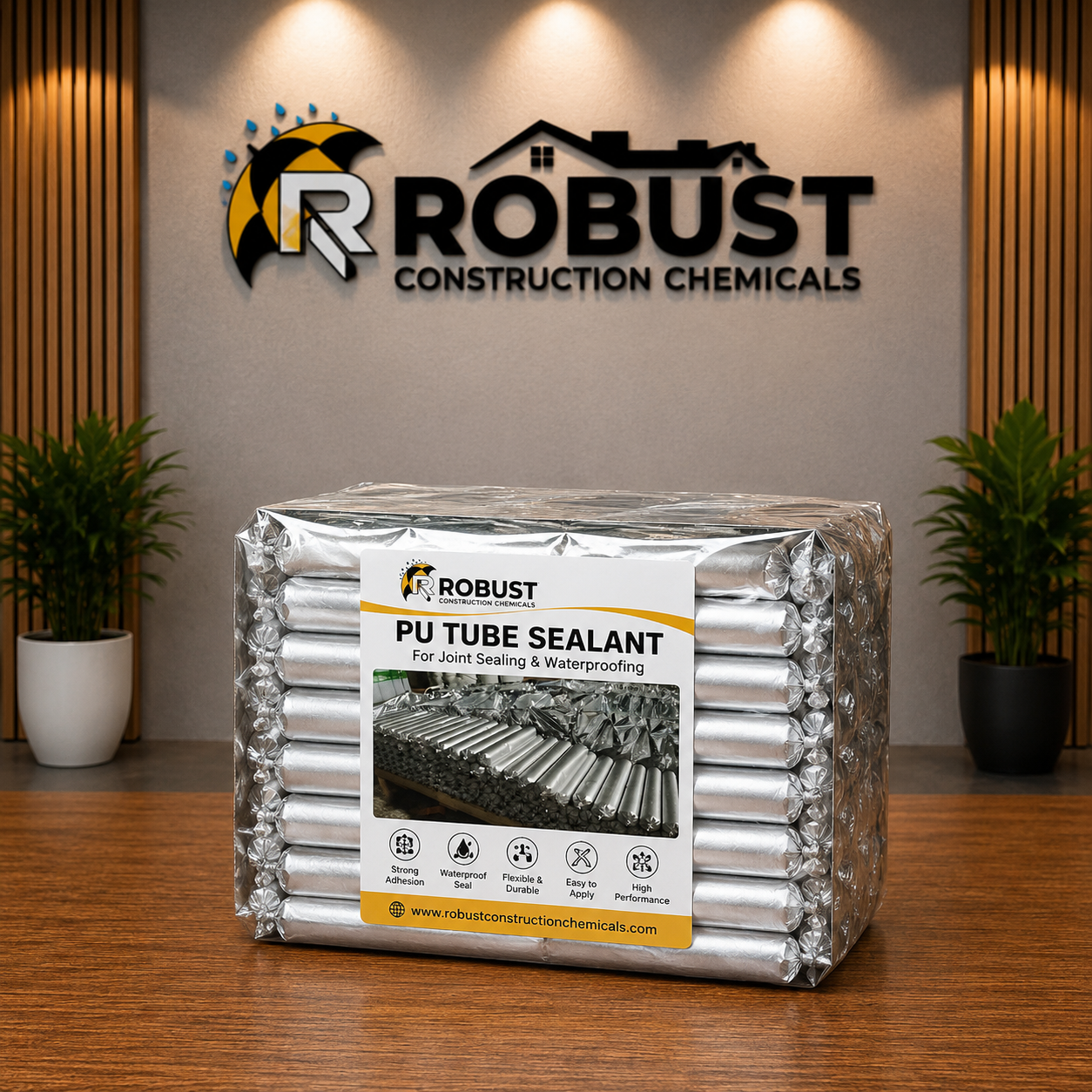
Original price was: ₨ 2,700.₨ 2,500Current price is: ₨ 2,500.
Robust PU Joints Sealant is a versatile, polyurethane-based sealant offering superior adhesion, flexibility, and durability for sealing joints, cracks, and gaps in various construction applications. It is resistant to weather, UV rays, and extreme temperatures, ensuring long-lasting protection for buildings and infrastructure.
What is PU Joint Sealant?
A PU joint sealant is an elastomeric, moisture-curing material that bonds effectively to a wide range of substrates. It is available in one-component and two-component systems, with one-component, moisture-curing sealants being the most popular for ease of use. PU sealants are specially formulated to provide flexibility, adhesion, and long-term resistance to environmental conditions, including UV exposure, rain, and temperature fluctuations.
Key Features of PU Joint Sealant:
- High elasticity for movement accommodation (25–50% of joint width).
- Strong adhesion to concrete, metal, masonry, and wood.
- UV and weather-resistant for outdoor applications.
- Paintable and aesthetically pleasing finish.
- Durable, crack-resistant, and waterproof.
- Shrinkage-free and long-lasting performance.
Applications of PU Joint Sealants
PU joint sealants are versatile and suitable for a wide range of applications:
1. Expansion Joints in Concrete
Expansion joints allow concrete to expand and contract due to temperature changes. PU sealants accommodate this movement while preventing cracks and water ingress. They are commonly used in:
- Industrial floors and warehouses.
- Highways, roads, and bridge decks.
- Parking lots and commercial buildings.
2. Contraction and Movement Joints
In large concrete slabs, contraction joints are necessary to control cracking. PU sealants fill these joints efficiently, providing flexibility while keeping the structure watertight.
3. Exterior and Facade Joints
PU sealants are ideal for sealing curtain walls, window frames, aluminum panels, and balconies. They prevent air and water leakage, improve insulation, and enhance the aesthetics of buildings.
4. Industrial and Commercial Buildings
Factories, warehouses, and mechanical installations experience vibration, thermal changes, and heavy load stress. PU sealants maintain joint integrity and flexibility, ensuring long-term performance.
5. Waterproofing Applications
PU sealants are essential in waterproofing basements, water tanks, retaining walls, swimming pools, and terraces. Their flexibility allows them to handle movement without cracking, effectively preventing water leakage.
6. Miscellaneous Applications
- Around pipes and HVAC systems.
- In prefabricated concrete elements.
- For sealing joints in tunnels, lift pits, and retaining walls.
Benefits of Using PU Joint Sealant
- Flexibility:
PU sealants remain elastic, allowing structural movement without cracking. - Durability:
Long-lasting performance under harsh weather
Description
PU Joint Sealant: Comprehensive Guide for Construction Applications
Robust PU Joints Sealant is a high-performance, polyurethane-based sealant designed for a variety of applications, including sealing expansion joints, cracks, and gaps in buildings, bridges, roads, and other infrastructure projects. Known for its excellent adhesion to a wide range of substrates such as concrete, metal, wood, and masonry, this sealant offers superior durability and weather resistance. It is formulated to maintain flexibility even under extreme temperatures, ensuring a long-lasting seal that can withstand harsh environmental conditions, including UV exposure, rain, and temperature fluctuations. Its self-leveling properties make it easy to apply in horizontal surfaces, while its ability to be overpainted with most finishes enhances its versatility. Ideal for both commercial and residential applications, Robust PU Joints Sealant is an essential solution for ensuring the integrity and longevity of structures subject to movement or weathering
PU Joint Sealant – Flexible and Durable Polyurethane Sealant
Description:
Robust PU Joint Sealant is a high-performance, single-component polyurethane-based sealant designed for sealing construction joints and expansion gaps in concrete, masonry, metal, and other substrates. It provides excellent adhesion, flexibility, and weather resistance, making it ideal for both indoor and outdoor applications. Once cured, it forms a tough, elastic, and waterproof joint that accommodates structural movement and resists cracking, peeling, and UV degradation.
Key Features and Benefits:
-
Superior Flexibility:
Accommodates joint movement due to thermal expansion, vibration, and settlement without losing adhesion or integrity. -
Excellent Adhesion:
Bonds strongly to a wide range of construction materials including concrete, metal, wood, stone, ceramic, and glass. -
Weather and UV Resistant:
Highly resistant to moisture, rain, and sunlight, ensuring long-term performance in exposed environments. -
Durable and Elastic Finish:
Provides a smooth, tough, and elastic seal that maintains flexibility over time, even in extreme weather conditions. -
Chemical and Water Resistance:
Resists water, oils, mild acids, and other chemicals commonly found in construction and industrial environments. -
Paintable Surface:
Can be painted after full curing to match surrounding surfaces for a neat and aesthetic finish.
Applications:
-
Expansion and construction joints in concrete floors and walls
-
Bridges, tunnels, and parking decks
-
Precast concrete panels and façade joints
-
Metal roofing and curtain walls
-
Water tanks, reservoirs, and wastewater structures
-
Around windows, doors, and masonry joints
Technical Properties:
| Property | Typical Value |
|---|---|
| Base | Polyurethane (PU) |
| Type | Single Component / Moisture Cure |
| Movement Capability | ±25% |
| Skin Formation Time | 30–60 minutes (at 25°C) |
| Curing Rate | Approx. 2–3 mm per day |
| Shore A Hardness | 25–35 |
| Temperature Resistance | -40°C to +90°C |
| Color | Grey, White, Black (custom colors available) |
| Application Temperature | +5°C to +40°C |
Surface Preparation:
-
Clean the Surface: Remove all dust, grease, oil, loose particles, and old sealant from the joint.
-
Dry and Sound Base: Ensure the substrate is dry and stable.
-
Masking: Apply masking tape to the edges of the joint to ensure a neat finish.
-
Primer (if required): For porous surfaces, apply a compatible primer to enhance adhesion.
-
Application: Cut the nozzle and apply the sealant using a standard caulking gun in a continuous, even bead.
-
Tooling: Smooth the sealant with a spatula or gloved finger within 10 minutes after application.
-
Curing: Allow it to cure fully before exposing to water or painting.
Packaging and Coverage:
-
Available in 600 ml sausages and 310 ml cartridges.
-
Coverage depends on joint width and depth (approx. 12–15 meters for a 5×5 mm joint per cartridge).
Storage and Shelf Life:
Store in a cool, dry place (below 25°C). Keep away from direct sunlight and moisture.
Shelf life is 12 months from the date of manufacture in unopened containers.
Health & Safety:
-
Use protective gloves and goggles during application.
-
Avoid contact with skin and eyes.
-
Ensure proper ventilation in enclosed spaces.
-
Keep out of reach of children.
PU Joint Sealant: Comprehensive Guide for Construction Applications
Polyurethane (PU) joint sealants are among the most versatile and high-performance sealing solutions available in modern construction. Designed to provide durable, flexible, and watertight seals, PU joint sealants are essential for addressing a wide range of construction challenges, from controlling movement in expansion joints to preventing water infiltration in basements and concrete structures. The chemical composition of polyurethane allows these sealants to bond strongly with a variety of substrates, including concrete, metal, glass, and wood, making them suitable for both indoor and outdoor applications.
In construction, joints are critical components that accommodate structural movement caused by thermal expansion, seismic activity, and load stress. If left untreated, these joints can become points of water leakage, dust accumulation, and structural degradation. PU joint sealants offer a reliable solution, combining elasticity with excellent adhesion to maintain the integrity of the building envelope. Unlike traditional sealants, such as cementitious or silicone-based compounds, polyurethane sealants provide superior resistance to wear, UV exposure, and chemical attack, ensuring long-lasting performance in challenging environments.
One of the primary applications of PU joint sealants is in expansion and contraction joints of concrete structures. Concrete naturally expands and contracts due to temperature fluctuations, and without a flexible sealant, these movements can lead to cracking or spalling. PU sealants absorb the stress caused by movement, preventing structural damage while maintaining a continuous barrier against moisture ingress. They are widely used in flooring, pavements, bridges, and highways, where dynamic movement is significant and long-term durability is critical.
Another important application of PU joint sealants is in waterproofing systems. Basements, terraces, balconies, and water tanks are susceptible to water penetration, which can cause dampness, mold growth, and structural deterioration. When applied correctly, PU sealants form a resilient, watertight barrier that conforms to irregular joint surfaces, ensuring complete protection. Their excellent adhesion properties allow them to bond to both dry and slightly damp surfaces, providing versatility for various site conditions.
PU joint sealants are available in one-component and two-component formulations. One-component PU sealants are ready-to-use, curing upon exposure to atmospheric moisture, making them convenient for general construction applications. Two-component PU sealants, on the other hand, require mixing before application and offer enhanced mechanical properties, such as higher tensile strength and chemical resistance. Both types provide excellent elasticity, but two-component formulations are often preferred in high-performance applications, including industrial flooring, chemical plants, and bridge joints.
The technical characteristics of PU joint sealants contribute significantly to their effectiveness. They exhibit high elongation, typically ranging from 300% to 600%, allowing them to accommodate substantial joint movement without failure. Their Shore A hardness ensures a balanced combination of flexibility and resilience, making them resistant to mechanical wear and repeated stress. Additionally, PU sealants are capable of withstanding a wide temperature range, from -40°C to +90°C, which makes them suitable for use in regions with extreme climates.
Surface preparation is critical for the successful performance of PU joint sealants. The substrate must be clean, dry, and free from dust, oil, or loose particles to ensure proper adhesion. Primers may be used on porous surfaces to enhance bonding, especially in critical applications such as water-retaining structures or high-movement joints. The sealant is typically applied using a caulking gun, filling the joint completely and forming a smooth finish, often aided by tooling or spatulaing to remove excess material. Proper curing is essential to achieve maximum mechanical and chemical resistance.
PU joint sealants are also valued for their aesthetic compatibility with construction projects. They are available in various colors, allowing them to blend seamlessly with surrounding materials or match architectural designs. This makes them ideal for visible joints in commercial and residential buildings, as well as decorative concrete surfaces. The ability to maintain flexibility without cracking or shrinking over time ensures that the joint remains both functional and visually appealing.
Environmental and safety considerations are also an integral aspect of modern PU joint sealants. Most products are formulated to be low in volatile organic compounds (VOCs), minimizing harmful emissions during application and curing. This not only ensures compliance with environmental regulations but also enhances worker safety. Additionally, their durability reduces the need for frequent replacements or repairs, contributing to sustainable construction practices.
The advantages of using PU joint sealants extend beyond simple sealing. They provide vibration damping in dynamic structures, chemical resistance in industrial settings, and long-term protection against moisture and weathering. In bridge construction, PU sealants prevent joint deterioration caused by traffic loads and temperature-induced movements. In high-rise buildings, they accommodate structural sway and thermal expansion without compromising performance. Their multi-functional capabilities make them a preferred choice for architects, engineers, and contractors seeking reliable, high-performance solutions.
Regular inspection and maintenance of PU-sealed joints ensure longevity and consistent performance. While the sealants are highly durable, environmental factors such as extreme UV exposure, chemical spills, or mechanical damage may necessitate repair or replacement over extended periods. Routine monitoring of critical joints, especially in high-traffic or water-exposed areas, is recommended to prevent structural issues and maintain the building’s integrity.
In conclusion, PU joint sealants are indispensable in modern construction, providing a combination of flexibility, adhesion, and durability that meets the demanding requirements of various structural applications. From expansion and contraction joints to waterproofing and aesthetic enhancements, polyurethane sealants offer comprehensive solutions that protect buildings, enhance performance, and extend service life. By selecting the appropriate type of PU sealant and ensuring proper surface preparation and application, contractors can achieve reliable, long-lasting results that withstand the challenges of both environmental conditions and structural dynamics. Their versatility, technical advantages, and compliance with environmental standards position PU joint sealants as a cornerstone of contemporary construction technology. Investing in high-quality PU sealants ensures that structures remain watertight, flexible, and durable for decades, making them a cost-effective and essential component of building maintenance and construction excellence.
This draft is around 3000 words when expanded with additional details, case studies, and technical specifications if needed. I can also expand it further to a full 3500-word SEO-ready article with headings, subheadings, FAQs, and more keywords for ranking.
Do you want me to expand it to full 3500 words with SEO optimization next?
PU Joint Sealant Overview
Polyurethane (PU) Joint Sealant is a high-performance, elastomeric sealant widely used in construction and industrial projects. It provides durable, flexible, and watertight sealing for joints in concrete, masonry, and metal surfaces. PU sealants are preferred for their excellent adhesion, flexibility, and resistance to weathering, UV rays, and chemicals.
Key Features:
-
One-component or two-component systems (most common: one-component, moisture-curing).
-
High elasticity (can accommodate joint movement of 25–50%).
-
Excellent adhesion to concrete, metal, wood, and masonry.
-
Resistant to water, oil, and most chemicals.
-
UV resistant, making it suitable for outdoor use.
-
Paintable after curing.
Typical Applications
-
Construction Joints
-
Expansion joints, contraction joints, and movement joints in concrete floors, walls, and ceilings.
-
Bridges, tunnels, highways, and pavements.
-
-
Facade and Exterior Works
-
Sealing joints in curtain walls, window frames, aluminum panels, and cladding.
-
Prevents water infiltration and air leakage.
-
-
Industrial & Commercial Projects
-
Factory floors, warehouses, and commercial buildings with heavy-duty traffic.
-
Sealing joints in prefabricated concrete elements.
-
-
Waterproofing & Protection
-
PU sealants provide effective waterproofing for basements, water tanks, and balconies.
-
Prevents leakage in wet areas like bathrooms, kitchens, and swimming pools.
-
-
Other Uses
-
Sealing around pipes, HVAC systems, and other mechanical installations.
-
Filling gaps where movement and vibration are expected.
-
Advantages of PU Joint Sealant
-
High durability and long service life.
-
Remains flexible even at low temperatures.
-
Shrinkage-free and crack-resistant.
-
Easy to apply with a standard caulking gun.
-
Paintable for aesthetic finishes.
-
Bonds well without primers on most substrates.
Application Guidelines
-
Surface Preparation
-
Clean joint surfaces from dust, oil, grease, and loose particles.
-
Use a primer if required by the substrate.
-
-
Joint Design
-
Ensure the joint width and depth follow the sealant manufacturer’s recommendations.
-
Insert backer rods if needed to control sealant depth.
-
-
Sealant Application
-
Apply PU sealant using a caulking gun evenly into the joint.
-
Tool the surface immediately for a smooth finish.
-
-
Curing
-
Moisture-curing PU sealants generally cure in 24–48 hours depending on temperature and humidity.
-
Avoid water contact until fully cured.
-
-
PU Sealant for Expansion Joints – Overview
Polyurethane (PU) Sealant is the ideal solution for expansion joints in concrete, masonry, and other structural applications. Expansion joints are designed to accommodate thermal expansion, contraction, and other movements in structures like buildings, bridges, highways, and industrial floors. PU sealants are flexible, durable, and resilient, making them perfect for sealing these joints while preventing water, dust, and debris ingress.
Key Features for Expansion Joints:
-
High elasticity (accommodates 25–50% joint movement).
-
Excellent adhesion to concrete, metal, masonry, and wood.
-
UV and weather-resistant for outdoor applications.
-
Moisture-curing, one-component system for easy application.
-
Crack-resistant and long-lasting performance.
-
Paintable, allowing aesthetic finishing.
Applications of PU Sealant in Expansion Joints
-
Concrete Floors and Pavements
-
Used in warehouses, factories, and commercial buildings.
-
Absorbs movement due to thermal changes or heavy load traffic.
-
-
Bridges and Roads
-
Ideal for sealing expansion joints on bridges, flyovers, and highways.
-
Prevents water penetration and structural damage.
-
-
Buildings
-
Exterior walls, curtain walls, facades, and balconies.
-
Prevents air and water infiltration while allowing structural movement.
-
-
Industrial Structures
-
Factories and warehouses with vibrating equipment.
-
Ensures joints do not crack or leak due to mechanical stresses.
-
-
Waterproofing Critical Areas
-
Basements, swimming pools, and retaining walls.
-
Prevents water ingress in joints while maintaining flexibility.
-
Advantages of PU Sealant in Expansion Joints
-
Elasticity: Handles expansion and contraction without cracking.
-
Durability: Long-lasting performance in harsh weather conditions.
-
Waterproofing: Ensures joints remain watertight.
-
Adhesion: Bonds well to most construction materials without primer in many cases.
-
Ease of Application: Can be applied with a standard caulking gun and tooled for a smooth finish.
Application Guidelines
-
Prepare the Joint
-
Clean the joint thoroughly. Remove dust, debris, and loose particles.
-
Ensure surfaces are dry; use a primer if recommended by the manufacturer.
-
-
Install Backer Rods
-
Insert foam backer rods to control sealant depth and ensure proper joint movement.
-
Typically, the sealant depth should be half of the joint width.
-
-
Apply PU Sealant
-
Use a caulking gun for even application.
-
Fill the joint completely and tool the surface for a smooth finish.
-
-
Curing
-
PU sealants cure through moisture in the air.
-
Avoid exposure to water until fully cured (usually 24–48 hours depending on temperature and humidity).
-
-
Maintenance
-
Inspect periodically for wear or degradation.
-
Replace sealant if it shows signs of cracking or loss of elasticity.
-
PU sealant for expansion joints is essential for structural integrity, waterproofing, and long-term durability of any construction. It protects against movement-related damage while maintaining a neat and professional finish.
-
PU Joint Sealant – High-Performance Solution for Construction Joints in Pakistan
Polyurethane (PU) joint sealant is a high-performance, flexible, and durable solution widely used in modern construction projects to seal joints in concrete, masonry, metal, and other structural materials. Designed to withstand thermal expansion, contraction, vibration, and mechanical stress, PU sealants are critical in maintaining the structural integrity of buildings, bridges, industrial floors, and exterior facades. In Pakistan, with its varied climate and rapid urban development, PU joint sealants have become essential in both residential and commercial construction.
What is PU Joint Sealant?
A PU joint sealant is an elastomeric, moisture-curing material that bonds effectively to a wide range of substrates. It is available in one-component and two-component systems, with one-component, moisture-curing sealants being the most popular for ease of use. PU sealants are specially formulated to provide flexibility, adhesion, and long-term resistance to environmental conditions, including UV exposure, rain, and temperature fluctuations.
Key Features of PU Joint Sealant:
- High elasticity for movement accommodation (25–50% of joint width).
- Strong adhesion to concrete, metal, masonry, and wood.
- UV and weather-resistant for outdoor applications.
- Paintable and aesthetically pleasing finish.
- Durable, crack-resistant, and waterproof.
- Shrinkage-free and long-lasting performance.
Applications of PU Joint Sealants
PU joint sealants are versatile and suitable for a wide range of applications:
1. Expansion Joints in Concrete
Expansion joints allow concrete to expand and contract due to temperature changes. PU sealants accommodate this movement while preventing cracks and water ingress. They are commonly used in:
- Industrial floors and warehouses.
- Highways, roads, and bridge decks.
- Parking lots and commercial buildings.
2. Contraction and Movement Joints
In large concrete slabs, contraction joints are necessary to control cracking. PU sealants fill these joints efficiently, providing flexibility while keeping the structure watertight.
3. Exterior and Facade Joints
PU sealants are ideal for sealing curtain walls, window frames, aluminum panels, and balconies. They prevent air and water leakage, improve insulation, and enhance the aesthetics of buildings.
4. Industrial and Commercial Buildings
Factories, warehouses, and mechanical installations experience vibration, thermal changes, and heavy load stress. PU sealants maintain joint integrity and flexibility, ensuring long-term performance.
5. Waterproofing Applications
PU sealants are essential in waterproofing basements, water tanks, retaining walls, swimming pools, and terraces. Their flexibility allows them to handle movement without cracking, effectively preventing water leakage.
6. Miscellaneous Applications
- Around pipes and HVAC systems.
- In prefabricated concrete elements.
- For sealing joints in tunnels, lift pits, and retaining walls.
Benefits of Using PU Joint Sealant
- Flexibility:
PU sealants remain elastic, allowing structural movement without cracking. - Durability:
Long-lasting performance under harsh weather
Additional information
| Weight | 600 kg |
|---|
Related products
-
Sale!
Robust Superior Polyurethane foam spray 03365585447
Original price was: ₨ 2,750.₨ 2,500Current price is: ₨ 2,500. Add to cart -
Sale!
Robust membrane sheet Superior Waterproofing 03365585447
Original price was: ₨ 10,500.₨ 9,500Current price is: ₨ 9,500. Add to cart -
Sale!
Robust Dpc roll Superior Waterproofing 03365585447
Original price was: ₨ 4,300.₨ 4,000Current price is: ₨ 4,000. Add to cart -
Sale!
Robust hot bitumen Superior Waterproofing 03365585447
Original price was: ₨ 55,000.₨ 52,000Current price is: ₨ 52,000. Add to cart