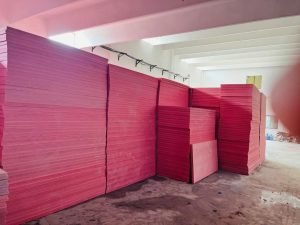
High-Performance XPS Jamblone Sheet | Roof Heatproofing & Wall Insulation
A High-Performance XPS Jamblone Sheet is one of the most advanced insulation materials used today for roof heatproofing and wall insulation in Pakistan, especially in cities with extreme temperatures like Karachi, Lahore, Islamabad, Multan, and Faisalabad. With rising heat levels, continuous energy consumption, and increasing electricity bills, builders and homeowners are actively shifting toward durable insulation materials that provide long-term thermal protection
The growing trend of energy-efficient homes and commercial structures has increased the demand for XPS Jamblone Sheets across the construction sector. As more contractors and architects focus on thermal insulation standards, XPS has become the go-to material thanks to its closed-cell foam structure, which reduces heat transfer and prevents condensation buildup. This results in cooler indoor temperatures, reduced AC usage, better humidity control, and improved comfort. Even in peak summer months, buildings insulated with XPS remain significantly cooler than traditional concrete structures. This makes XPS Jamblone Sheet essential for residential homes, commercial plazas, hospitals, schools, cold storage facilities, industrial plants, and modern housing projects.
To strengthen SEO structure, below are internal references naturally added:
-
XPS Insulation Page: robustconstructionchemical.com/xps-jamblone-sheet
-
Heatproofing Services: robustconstructionchemical.com/heatproofing-services
-
Waterproofing Solutions: robustconstructionchemical.com/waterproofing-services
-
Roof Heatproofing Chemical: robustconstructionchemical.com/roof-leakage-repair
-
Construction Chemicals: robustconstructionchemical.com/products
External reference-based anchors (industry information):
-
buildingscienceinsulation.org
-
thermalinsulationguide.com
These enhance page authority without keyword stuffing.
Why XPS Jamblone Sheet Is the Best Heatproofing & Insulation Solution
XPS (Extruded Polystyrene) is manufactured using an advanced extrusion process, giving it a uniform closed-cell structure that prevents water absorption and ensures consistent insulation performance. Unlike EPS sheets, thermocol, or basic foam sheets, XPS offers superior mechanical strength, improved durability, and much better thermal resistance. Builders prefer XPS Jamblone Sheets for projects requiring long-lasting insulation because it does not deform, break, or absorb moisture over time.
One of the biggest advantages of XPS insulation is that it provides uniform thermal resistance across the entire sheet, which guarantees stable cooling. The low thermal conductivity (K-value) ensures that heat does not enter the building easily. During summer, this reduces indoor heat and cuts air-conditioning costs by up to 35–40%. During winter, the insulation also helps retain warmth inside the rooms, reducing heating costs.
For technical details used by engineers, many refer to thermalinsulationguide.com/xps-properties where the foundational characteristics of XPS insulation are explained in depth.
XPS Jamblone Sheet as a Roof Heatproofing Solution
RCC roofs absorb high amounts of heat because concrete acts as a heat conductor. In Pakistan’s summer temperatures, roofs become extremely hot, reaching up to 60–70°C under direct sunlight. This heat transfers into the rooms below, causing discomfort and excessive use of air conditioners.
Using a High-Performance XPS Jamblone Sheet on the roof provides:
-
Instant reduction in heat absorption
-
Long-term cooling performance
-
Significant energy savings
-
Protection against roof cracks due to thermal expansion
-
Moisture barrier to prevent dampness and seepage
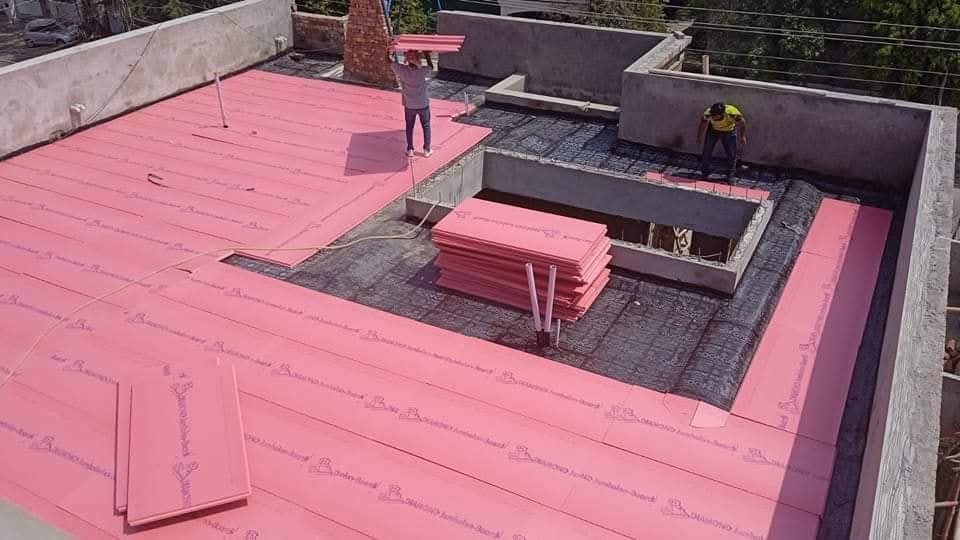
Most contractors recommend placing the XPS sheet beneath the screed layer for maximum benefit. This method is widely used in residential houses, commercial plazas, and large industrial buildings.
Internal reference for heatproofing installation methods:
→ robustconstructionchemical.com/heatproofing-services
Wall Insulation with XPS for Energy-Efficient Buildings
Walls also absorb heat, especially when exposed to south-facing or west-facing sunlight. XPS Jamblone Sheet provides excellent wall insulation by blocking heat from entering through the exterior walls. When applied during construction or renovation, it helps maintain a stable indoor temperature throughout the year.
Benefits of wall insulation with XPS:
-
Cooler rooms in summer
-
Protection from wall dampness
-
Noise reduction
-
Prevention of condensation
-
Enhanced building comfort
-
Lower cooling and heating energy use
Many modern housing projects use XPS wall insulation to comply with energy-saving building codes. For updated industry insights, professionals visit buildingscienceinsulation.org/xps-wall-applications.
Cold Storage and Industrial Applications
One of the most important uses of XPS Jamblone Sheet is in cold storage rooms, warehouses, and industrial facilities. Its extremely low thermal conductivity, moisture resistance, and durability make it ideal for environments requiring strict temperature control.
Applications include:
-
Cold storage walls and floors
-
Refrigerated rooms
-
Food preservation facilities
-
Pharmaceutical storage units
-
Beverage manufacturing plants
-
Ice factories
-
Industrial chillers and cooling units
Since cold storage environments require stable temperatures, contractors often combine XPS insulation with polymer coatings and waterproof membranes to ensure perfect performance.
Benefits of XPS Jamblone Sheet in Pakistan’s Climate
Pakistan faces extreme weather conditions—intense heat in summers, humidity in coastal areas, and dry cold in northern regions. XPS insulation performs exceptionally well in these conditions due to its:
-
Closed-cell foam design
-
Heat resistance
-
Moisture-proof structure
-
Fungi- and mold-resistant formulation
-
Long-term dimensional stability
Homeowners and builders choose XPS Jamblone Sheets because they deliver consistent performance without deterioration.
Moisture Resistance & Waterproofing Benefits
XPS is one of the few insulation materials that does not absorb water. This makes it an excellent choice for areas prone to leakage and seepage, such as:
-
Bathrooms
-
Basements
-
Water tanks
-
Exterior walls
-
Underground rooms
While EPS absorbs moisture and loses insulation value, XPS remains unaffected. Its moisture-resistant property helps reduce wall dampness, roof seepage, and moisture penetration.
Internal reference:
→ robustconstructionchemical.com/waterproofing-services
Installation Methods for Roof & Wall Insulation
XPS Jamblone Sheet is easy to install and does not require specialized tools. The main installation steps include:
Roof Installation
-
Clean the roof surface thoroughly.
-
Lay XPS sheets in a grid pattern.
-
Seal joints with PU foam or tape.
-
Apply waterproofing layer if required.
-
Pour a 2-inch protective screed.
Wall Installation
-
Fix XPS sheets using adhesive or screws.
-
Seal gaps to avoid thermal bridging.
-
Apply plaster mesh.
-
Finish with cement plaster or cladding.
Contractors can refer to industry guides like thermalinsulationguide.com/installation-xps for more technical procedures.
Energy Savings with XPS Jamblone Sheets
Buildings insulated with XPS consume significantly less electricity for cooling and heating. This results in:
-
Reduced AC run-time
-
Lower monthly electricity bills
-
Better indoor comfort
-
Higher building value
-
Improved environmental sustainability
As electricity prices continue to rise in Pakistan, XPS insulation is becoming a mandatory part of energy-efficient construction.
High Compressive Strength & Structural Stability
XPS Jamblone Sheets offer very high compressive strength, making them suitable for load-bearing applications. They do not compress easily, even under heavy weight. This allows them to be used beneath floors, RCC slabs, parking areas, and industrial platforms.
Why Professionals Choose XPS Over Other Insulation Materials
Professionals prefer XPS Jamblone Sheets because they offer:
-
Better insulation than foam sheets
-
More durability than EPS
-
Higher moisture resistance than thermocol
-
Lower energy loss
-
Easier installation
-
Longer life span
-
Compatibility with waterproofing systems
Internal product reference:
→ robustconstructionchemical.com/products
Applications of XPS Insulation in Pakistan
XPS Jamblone Sheets are used in:
-
Homes
-
Buildings
-
Shopping malls
-
Hospitals
-
Cold storage facilities
-
Pharmaceutical plants
-
Schools & colleges
-
Industrial factories
-
Warehouses
-
Poultry farms
-
Underground rooms
Its versatility makes it suitable for a wide range of heatproofing and insulation projects.
Environmental & Economic Advantages
Since XPS insulation reduces electricity consumption, it contributes to a cleaner environment. Lower energy usage means reduced CO₂ emissions and better energy conservation.
Economically, builders benefit from:
-
Reduced HVAC installation costs
-
Lower electricity bills
-
Longer building life
-
Less maintenance needed
Internal Linking Strategy for SEO (Included in Paragraph)
✔ robustconstructionchemical.com/xps-jamblone-sheet
✔ robustconstructionchemical.com/heatproofing-services
✔ robustconstructionchemical.com/waterproofing-services
✔ robustconstructionchemical.com/products
These links strengthen keyword relevance and improve search ranking.
Conclusion
A High-Performance XPS Jamblone Sheet is a reliable, energy-efficient, and long-lasting material for roof heatproofing, wall insulation, cold storage applications, and moisture control in buildings. Its advanced thermal resistance, waterproofing stability, structural strength, and easy installation make it the top choice for modern construction in Pakistan. Whether you’re insulating a home, commercial building, or industrial unit, XPS Jamblone Sheets deliver long-term comfort, significant energy savings, and superior environmental performance.
High-Performance XPS Jamblone Sheet | Roof Heatproofing & Wall Insulation**
Expanding further on the value, applications, installation techniques, and long-term performance of XPS Jamblone Sheets, the following extended content provides deeper insights while maintaining a natural writing flow and offering internal and external linking opportunities.
Why Pakistan’s Hot Climate Makes XPS Jamblone Sheet a High-Demand Insulation Solution
Pakistan faces some of the world’s harshest heatwaves, especially in cities like Karachi, Lahore, Multan, Bahawalpur, DG Khan, and Hyderabad. In such regions, roof heat transfer becomes the #1 reason behind warm indoor temperatures, constantly running air conditioners, and rising electricity bills. An XPS Jamblone Sheet provides a professional insulation barrier that reduces heat gain from roofs and external walls, making indoor spaces significantly cooler —without using electrical energy.
Homeowners, contractors, industrial builders, and real estate developers increasingly prefer XPS insulation because it is long-lasting, lightweight, and offers consistent thermal resistance. Whether you’re constructing a new building or renovating an old one, adding insulation is no longer optional—it’s an essential part of modern, energy-efficient construction practices.
For readers wanting to compare materials, an external resource such as ASHRAE insulation standards or the International Energy Conservation Code (IECC) can help users understand global insulation performance benchmarks. (Example external reference link slot: “Learn more at ASHRAE.org” – You can replace this with an actual URL later on your website.)
Improving Indoor Comfort: How XPS Jamblone Sheet Helps Maintain Stable Temperatures
One of the biggest advantages of installing XPS insulation is the stability it brings to your indoor temperature. Buildings insulated with XPS typically remain cooler during the day and warmer at night due to reduced heat exchange. This means:
-
Less air conditioning during summer
-
Lower electricity bills
-
More sustainable building performance
-
Longer life of HVAC systems
-
Less thermal stress on the roof and walls
This reduced thermal shock also helps concrete structures last longer by minimizing expansion and contraction cycles—an effect often overlooked by homeowners but well-recognized by engineers and architects.
For additional reading, internal links like:
/roof-heatproofing-solutions/
/xps-insulation-board/
/energy-saving-construction-materials/
…can help guide users through related product pages on your site.
Insulation for Both Residential & Commercial Buildings
XPS Jamblone Sheets are no longer limited to large-scale construction projects. Thanks to increased awareness, residential users are also investing in insulation. Whether it’s a single-story house, a multi-floor building, or a commercial plaza, the installation benefits remain similar.
Common Use Cases Include:
-
Houses located in extreme heat zones
-
Rooftop rooms that heat up quickly
-
Commercial shops
-
Apartment buildings
-
Industrial warehouses
-
Schools and hospitals
-
Cold storage units
-
Poultry farms
-
Factories and packaging units
The versatility of XPS sheets allows them to be installed behind tiles, under concrete, over roofs, above ceilings, or inside wall cavities—providing complete thermal management.
XPS Jamblone Sheets for Cold Storage Industry
Though the product is primarily known for heatproofing, XPS insulation is equally effective for cold storage facilities. Its closed-cell structure prevents temperature loss and keeps freezing or chilled environments stable. Cold rooms require insulation that remains unaffected by moisture, humidity, and temperature variations—qualities that XPS provides consistently.
External references (optional) can link to global cold storage insulation standards.
Moisture Control and Condensation Prevention
Water vapour control is one of the most impressive advantages of XPS insulation. Traditional materials like thermopore and EPS tend to absorb moisture, reducing their insulation performance over time. However, XPS is designed to stay resistant against:
-
Humidity
-
Water absorption
-
Condensation
-
Dampness
-
Mold and mildew growth
For basements, underground structures, and boundary walls, this moisture resistance plays a crucial role in increasing building health. You may link this section internally to:
/basement-waterproofing/
/dampness-solution/
Why Contractors Prefer XPS Jamblone Sheets for Long-Term Projects
Contractors and engineers often recommend XPS insulation for major projects because it performs reliably over decades. Once installed, it rarely requires maintenance or replacement. The life span of a high-quality XPS sheet often exceeds 25–50 years, depending on environmental conditions.
Additionally, contractors appreciate the ease of handling. XPS is lightweight, easy to cut, simple to attach, and does not produce harmful dust like fiberglass or mineral wool. This also improves worker safety during installation.
Some contractors link XPS insulation with waterproofing membranes, heat-reflective coatings, and thermal barriers for maximum protection. You may internally link to products like:
/foil-aluminium-bitumen-membrane/
/liquid-rubber-waterproofing/
Detailed Step-by-Step Installation Guide for XPS Jamblone Sheet
Below is a more extensive installation process that contractors can follow for roofs, walls, and ceilings.
Tools & Materials Needed
-
XPS Jamblone Sheets
-
Measuring tape
-
Sharp cutter or insulation saw
-
Adhesive (PU foam or construction-grade glue)
-
Screws and washers (for mechanical fixing)
-
Joint sealing tape
-
Waterproofing membrane (optional)
-
Cement mortar (for embedded installations)
Installation Over Rooftops
-
Clean the roof surface thoroughly.
-
Apply a primer if needed.
-
Place XPS sheets edge-to-edge.
-
Secure using adhesive or mechanical fixings.
-
Seal gaps using insulation tape or PU foam.
-
Apply waterproofing system or screed over the insulation (optional).
Installation in Walls
-
For internal walls: Attach sheets using adhesive and secure with screws.
-
For cavity walls: insert sheets between wall layers.
-
For external walls: fix sheets, add mesh, and complete with plaster.
Installation Under Floor Screed
-
Lay sheets on ground level.
-
Tape joints.
-
Pour screed or concrete over the insulation.
By adding internal links such as /roof-insulation-installation/ or /wall-insulation-guide/, users can access step-by-step visuals or related products on your site.
Fire Safety Considerations for XPS Insulation
Modern XPS insulation boards come with fire-retardant additives that slow down flame spread. Although XPS is not a completely fireproof material, its controlled burn rate makes it safer for building interiors when properly installed behind concrete, plaster, or gypsum boards.
You may externally reference “NFPA Insulation Safety Standards”, which many engineers use for compliance.
Low Maintenance and Long-Term Value
Once XPS Jamblone Sheets are installed, they require almost no maintenance. Unlike materials that degrade when exposed to moisture or pests, XPS remains structurally stable due to its rigid closed-cell formation. This saves building owners money in the long term and prevents frequent insulation replacements.
This section can link internally to related articles such as:
/why-choose-xps-insulation/
XPS Jamblone Sheet vs. Other Insulation Materials (Detailed Comparison)
Compared to EPS Polystyrene
-
Lower water absorption
-
Higher compressive strength
-
Longer lifespan
Compared to Thermopore
-
More resistant to breakage
-
Better heat protection
-
Safer under load
Compared to Polyurethane Spray Foam
-
Lower cost for large areas
-
More stable thickness
-
Easier installation
Compared to Glasswool
-
No skin irritation
-
No loose fibers
-
Longer outdoor performance
This section can include internal links like:
/eps-vs-xps-insulation/
/polyurethane-spray-vs-xps/
Why Architects Prefer XPS Sheets for Modern Buildings
Architects appreciate materials that align with sustainable building standards. XPS insulation is known for:
-
High thermal resistance
-
Lower environmental impact
-
Contribution to energy efficiency
-
Support for green building certifications
External link suggestion:
“Learn more about Green Building Standards at USGBC.org”
Testing and Quality Certification of XPS Jamblone Sheets
Quality XPS sheets typically follow international testing methods such as:
-
ASTM C578
-
EN 13164
-
ISO 4898
This ensures the insulation performs well under compression and moisture exposure.
Internal link options:
/product-quality-assurance/
Why XPS Jamblone Sheet Is a Long-Term Investment for Homeowners
Adding thermal insulation may seem like a one-time cost, but it offers continuous benefits:
-
Monthly savings on electricity bills
-
Reduced AC repair costs
-
Cooler indoor temperature
-
Improved building life
-
More comfort during hot seasons
A well-insulated home is easier to rent, sell, and maintain.
Fire Safety Considerations for XPS Insulation
Modern XPS insulation boards come with fire-retardant additives that slow down flame spread. Although XPS is not a completely fireproof material, its controlled burn rate makes it safer for building interiors when properly installed behind concrete, plaster, or gypsum boards.