Waterproofing Chemicals – PVC Water Stopper | Advanced Joint Sealing Solution for Concrete Structures
Introduction to Waterproofing Chemicals in Modern Construction
Waterproofing chemicals play a critical role in protecting concrete structures from water ingress, chemical attack, and long-term deterioration.
In modern construction, controlling water penetration is essential for maintaining structural integrity, durability, and safety.
Among the most effective waterproofing chemicals for concrete, a proven solution for sealing construction and expansion joints in concrete structures.
PVC Water Stoppers are specially engineered waterproofing components that prevent water seepage through joints where concrete movement or shrinkage occurs.
They are widely used in basements, foundations, water tanks, dams, tunnels, bridges, sewage treatment plants, and underground structures.
As part of advanced waterproofing chemicals systems, PVC Water Stoppers provide long-lasting and reliable joint protection under hydrostatic pressure.
What Is a PVC Water Stopper?
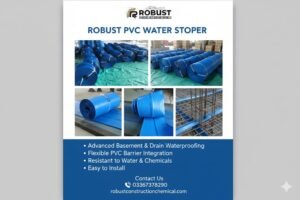
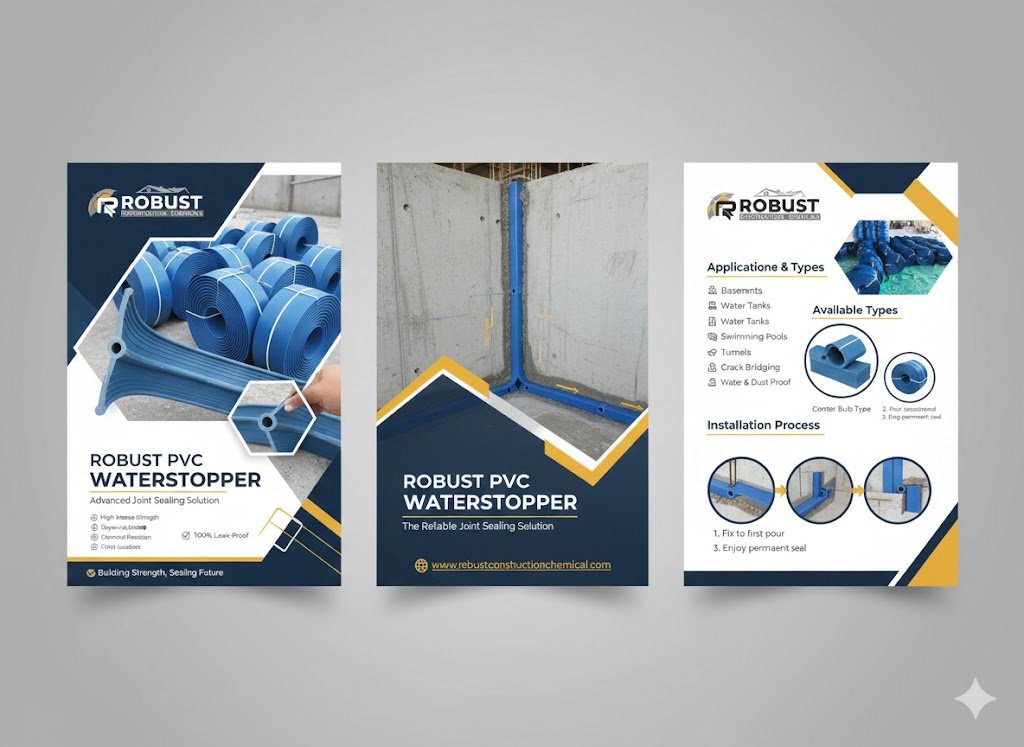
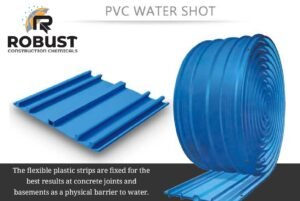
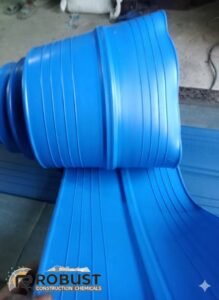
A PVC Water Stopper is a flexible thermoplastic profile installed within concrete joints to block the passage of water.
It is embedded in concrete during pouring and acts as a physical barrier that prevents water from traveling through construction, expansion, or contraction joints.
PVC Water Stoppers are manufactured from high-quality polyvinyl chloride compounds that provide excellent flexibility, tensile strength, and chemical resistance.
Unlike surface-applied waterproofing chemicals, PVC Water Stoppers work internally within the concrete joint.
This internal placement makes them highly effective even under constant water pressure or submerged conditions.
They are an essential component of comprehensive waterproofing systems in high-risk water exposure environments.
Importance of PVC Water Stoppers in Waterproofing Systems
Concrete by nature is porous and prone to cracking due to thermal movement, shrinkage, and structural loads.
Joints are unavoidable in concrete construction and are the most vulnerable points for water leakage.
PVC Water Stoppers address this vulnerability by sealing joints permanently and accommodating movement without losing waterproofing integrity.
In waterproofing chemical systems, PVC Water Stoppers provide a long-term solution that does not rely on surface coatings or maintenance.
They ensure water tightness even when external waterproofing layers fail or degrade over time.
This makes PVC Water Stoppers indispensable for critical structures where leakage is unacceptable.
Material Composition of PVC Water Stopper
PVC Water Stoppers are manufactured using premium-grade flexible polyvinyl chloride.
The material is compounded with plasticizers, stabilizers, and additives to achieve optimal performance.
This formulation provides high elasticity, durability, and resistance to environmental and chemical exposure.
The PVC material used in water stoppers is non-toxic, non-corrosive, and resistant to microbial growth.
It remains stable over a wide temperature range and does not become brittle with age.
These properties make PVC Water Stoppers suitable for long-term use in harsh construction environments.
Types of PVC Water Stoppers
Center Bulb PVC Water Stopper
Center bulb PVC Water Stoppers are designed for expansion joints where significant movement is expected.
The central hollow bulb allows the water stopper to expand and compress with joint movement.
This type is commonly used in basements, large slabs, retaining walls, and underground structures.
Dumbbell PVC Water Stopper
Dumbbell PVC Water Stoppers are used in construction joints where movement is limited.
They provide strong anchorage within concrete and effective water sealing.
This type is widely used in water tanks, sewage treatment plants, and foundation slabs.
External PVC Water Stopper
External PVC Water Stoppers are installed on the outside face of concrete joints.
They are suitable for structures exposed to external water pressure.
These water stoppers provide additional protection where internal installation is not feasible.
Ribbed PVC Water Stopper
Ribbed profiles enhance bonding with concrete and improve resistance to water pressure.
They are commonly used in high-pressure applications such as dams and tunnels.
Key Functions of PVC Water Stopper
PVC Water Stoppers act as a physical barrier to stop water migration through concrete joints.
They accommodate structural movement without tearing or cracking.
They maintain water tightness under positive and negative water pressure.
They enhance the durability and service life of concrete structures.
Advantages of PVC Water Stopper in Waterproofing Chemicals Systems
Permanent Waterproofing Solution
Once embedded in concrete, PVC Water Stoppers provide lifelong joint sealing.
They do not peel, crack, or delaminate like surface coatings.
High Flexibility and Movement Accommodation
PVC Water Stoppers can absorb expansion, contraction, and settlement movements.
This flexibility prevents joint failure and leakage.
Chemical and Water Resistance
PVC Water Stoppers resist acids, alkalis, salts, and wastewater chemicals.
They are ideal for industrial and sewage environments.
Cost-Effective Waterproofing
PVC Water Stoppers reduce long-term maintenance and repair costs.
They offer high performance at a relatively low installation cost.
Compatibility with Other Waterproofing Chemicals
PVC Water Stoppers work seamlessly with membranes, coatings, crystalline waterproofing, and admixtures.
They form a complete waterproofing system when combined with other products.
Applications of PVC Water Stopper
Basements and Foundations
PVC Water Stoppers prevent groundwater seepage in basement slabs and retaining walls.
They protect foundations from hydrostatic pressure and moisture damage.
Water Retaining Structures
Used extensively in water tanks, reservoirs, swimming pools, and dams.
They ensure leak-proof joints under constant water pressure.
Sewage Treatment Plants
Resistant to aggressive chemicals and wastewater exposure.
Ideal for joints in treatment tanks and channels.
Tunnels and Underground Structures
PVC Water Stoppers provide reliable waterproofing in tunnels and subways.
They prevent leakage that can compromise structural safety.
Bridges and Infrastructure Projects
Used in expansion joints and deck slabs.
They withstand vibration, load, and environmental stress.
Installation of PVC Water Stopper
Installation During Concrete Pouring
PVC Water Stoppers are installed at the center of joints before concrete placement.
Half of the profile is embedded in the first concrete pour, and the remaining half is embedded in the second pour.
Proper alignment is critical to ensure continuous water sealing.
Joint Preparation
Joints must be clean and free from debris.
Water stoppers should be securely fixed to prevent displacement during concreting.
Heat Welding of Joints
PVC Water Stoppers are joined using heat welding for continuity.
Proper welding ensures leak-proof joints and structural integrity.
Quality Standards and Compliance
High-quality PVC Water Stoppers comply with international standards for tensile strength, elongation, and water pressure resistance.
They are tested for durability, flexibility, and chemical resistance.
Using certified PVC Water Stoppers ensures reliability and project compliance.
Durability and Service Life
PVC Water Stoppers are designed for long-term performance.
They do not corrode, rot, or degrade in concrete.
When correctly installed, they last for the entire life of the structure.
Role of PVC Water Stopper in Sustainable Construction
PVC Water Stoppers reduce water leakage and structural damage.
They minimize repair work and material waste over time.
This contributes to sustainable and environmentally responsible construction practices.
Why Choose Professional-Grade PVC Water Stopper
Professional-grade PVC Water Stoppers offer consistent quality and reliable performance.
They are trusted by engineers, contractors, and waterproofing specialists worldwide.
Using high-quality water stoppers ensures peace of mind and long-term waterproofing success.
Conclusion
PVC Water Stoppers are an essential component of modern waterproofing chemical systems.
They provide permanent, flexible, and reliable joint sealing for concrete structures.
From basements and water tanks to tunnels and dams, PVC Water Stoppers ensure water tightness where it matters most.
Incorporating PVC Water Stoppers into construction projects significantly enhances durability, safety, and long-term performance.
Waterproofing Chemicals – PVC Water Stopper | Advanced Joint Sealing Solution for Concrete Structures
Introduction to Waterproofing Chemicals in Modern Construction
Waterproofing chemicals play a critical role in protecting concrete structures from water ingress, chemical attack, and long-term deterioration.
In modern construction, controlling water penetration is essential for maintaining structural integrity, durability, and safety.
Among the most effective waterproofing systems used in civil and infrastructure projects is the PVC Water Stopper, a proven solution for sealing construction and expansion joints in concrete structures.
PVC Water Stoppers are specially engineered waterproofing components that prevent water seepage through joints where concrete movement or shrinkage occurs.
They are widely used in basements, foundations, water tanks, dams, tunnels, bridges, sewage treatment plants, and underground structures.
As part of advanced waterproofing chemicals systems, PVC Water Stoppers provide long-lasting and reliable joint protection under hydrostatic pressure.
What Is a PVC Water Stopper?
A PVC Water Stopper is a flexible thermoplastic profile installed within concrete joints to block the passage of water.
It is embedded in concrete during pouring and acts as a physical barrier that prevents water from traveling through construction, expansion, or contraction joints.
PVC Water Stoppers are manufactured from high-quality polyvinyl chloride compounds that provide excellent flexibility, tensile strength, and chemical resistance.
Unlike surface-applied waterproofing chemicals, PVC Water Stoppers work internally within the concrete joint.
This internal placement makes them highly effective even under constant water pressure or submerged conditions.
They are an essential component of comprehensive waterproofing systems in high-risk water exposure environments.
Importance of PVC Water Stoppers in Waterproofing Systems
Concrete by nature is porous and prone to cracking due to thermal movement, shrinkage, and structural loads.
Joints are unavoidable in concrete construction and are the most vulnerable points for water leakage.
PVC Water Stoppers address this vulnerability by sealing joints permanently and accommodating movement without losing waterproofing integrity.
In waterproofing chemical systems, PVC Water Stoppers provide a long-term solution that does not rely on surface coatings or maintenance.
They ensure water tightness even when external waterproofing layers fail or degrade over time.
This makes PVC Water Stoppers indispensable for critical structures where leakage is unacceptable.
Material Composition of PVC Water Stopper
PVC Water Stoppers are manufactured using premium-grade flexible polyvinyl chloride.
The material is compounded with plasticizers, stabilizers, and additives to achieve optimal performance.
This formulation provides high elasticity, durability, and resistance to environmental and chemical exposure.
The PVC material used in water stoppers is non-toxic, non-corrosive, and resistant to microbial growth.
It remains stable over a wide temperature range and does not become brittle with age.
These properties make PVC Water Stoppers suitable for long-term use in harsh construction environments.
Types of PVC Water Stoppers
Center Bulb PVC Water Stopper
Center bulb PVC Water Stoppers are designed for expansion joints where significant movement is expected.
The central hollow bulb allows the water stopper to expand and compress with joint movement.
This type is commonly used in basements, large slabs, retaining walls, and underground structures.
Dumbbell PVC Water Stopper
Dumbbell PVC Water Stoppers are used in construction joints where movement is limited.
They provide strong anchorage within concrete and effective water sealing.
This type is widely used in water tanks, sewage treatment plants, and foundation slabs.
External PVC Water Stopper
External PVC Water Stoppers are installed on the outside face of concrete joints.
They are suitable for structures exposed to external water pressure.
These water stoppers provide additional protection where internal installation is not feasible.
Ribbed PVC Water Stopper
Ribbed profiles enhance bonding with concrete and improve resistance to water pressure.
They are commonly used in high-pressure applications such as dams and tunnels.
Key Functions of PVC Water Stopper
PVC Water Stoppers act as a physical barrier to stop water migration through concrete joints.
They accommodate structural movement without tearing or cracking.
They maintain water tightness under positive and negative water pressure.
They enhance the durability and service life of concrete structures.
Advantages of PVC Water Stopper in Waterproofing Chemicals Systems
Permanent Waterproofing Solution
Once embedded in concrete, PVC Water Stoppers provide lifelong joint sealing.
They do not peel, crack, or delaminate like surface coatings.
High Flexibility and Movement Accommodation
PVC Water Stoppers can absorb expansion, contraction, and settlement movements.
This flexibility prevents joint failure and leakage.
Chemical and Water Resistance
PVC Water Stoppers resist acids, alkalis, salts, and wastewater chemicals.
They are ideal for industrial and sewage environments.
Cost-Effective Waterproofing
PVC Water Stoppers reduce long-term maintenance and repair costs.
They offer high performance at a relatively low installation cost.
Compatibility with Other Waterproofing Chemicals
PVC Water Stoppers work seamlessly with membranes, coatings, crystalline waterproofing, and admixtures.
They form a complete waterproofing system when combined with other products.
Applications of PVC Water Stopper
Basements and Foundations
PVC Water Stoppers prevent groundwater seepage in basement slabs and retaining walls.
They protect foundations from hydrostatic pressure and moisture damage.
Water Retaining Structures
Used extensively in water tanks, reservoirs, swimming pools, and dams.
They ensure leak-proof joints under constant water pressure.
Sewage Treatment Plants
Resistant to aggressive chemicals and wastewater exposure.
Ideal for joints in treatment tanks and channels.
Tunnels and Underground Structures
PVC Water Stoppers provide reliable waterproofing in tunnels and subways.
They prevent leakage that can compromise structural safety.
Bridges and Infrastructure Projects
Used in expansion joints and deck slabs.
They withstand vibration, load, and environmental stress.
Installation of PVC Water Stopper
Installation During Concrete Pouring
PVC Water Stoppers are installed at the center of joints before concrete placement.
Half of the profile is embedded in the first concrete pour, and the remaining half is embedded in the second pour.
Proper alignment is critical to ensure continuous water sealing.
Joint Preparation
Joints must be clean and free from debris.
Water stoppers should be securely fixed to prevent displacement during concreting.
Heat Welding of Joints
PVC Water Stoppers are joined using heat welding for continuity.
Proper welding ensures leak-proof joints and structural integrity.
Quality Standards and Compliance
High-quality PVC Water Stoppers comply with international standards for tensile strength, elongation, and water pressure resistance.
They are tested for durability, flexibility, and chemical resistance.
Using certified PVC Water Stoppers ensures reliability and project compliance.
Durability and Service Life
PVC Water Stoppers are designed for long-term performance.
They do not corrode, rot, or degrade in concrete.
When correctly installed, they last for the entire life of the structure.
Role of PVC Water Stopper in Sustainable Construction
PVC Water Stoppers reduce water leakage and structural damage.
They minimize repair work and material waste over time.
This contributes to sustainable and environmentally responsible construction practices.
Why Choose Professional-Grade PVC Water Stopper
Professional-grade PVC Water Stoppers offer consistent quality and reliable performance.
They are trusted by engineers, contractors, and waterproofing specialists worldwide.
Using high-quality water stoppers ensures peace of mind and long-term waterproofing success.
Conclusion
PVC Water Stoppers are an essential component of modern waterproofing chemical systems.
They provide permanent, flexible, and reliable joint sealing for concrete structures.
From basements and water tanks to tunnels and dams, PVC Water Stoppers ensure water tightness where it matters most.
Incorporating PVC Water Stoppers into construction projects significantly enhances durability, safety, and long-term performance.
Waterproofing Chemicals – PVC Water Stopper | Advanced Joint Sealing Solution for Concrete Structures
Introduction to Waterproofing Chemicals in Modern Construction
Waterproofing chemicals play a critical role in protecting concrete structures from water ingress, chemical attack, and long-term deterioration.
In modern construction, controlling water penetration is essential for maintaining structural integrity, durability, and safety.
Among the most effective waterproofing systems used in civil and infrastructure projects is the PVC Water Stopper, a proven solution for sealing construction and expansion joints in concrete structures.
PVC Water Stoppers are specially engineered waterproofing components that prevent water seepage through joints where concrete movement or shrinkage occurs.
They are widely used in basements, foundations, water tanks, dams, tunnels, bridges, sewage treatment plants, and underground structures.
As part of advanced waterproofing chemicals systems, PVC Water Stoppers provide long-lasting and reliable joint protection under hydrostatic pressure.
What Is a PVC Water Stopper?
A PVC Water Stopper is a flexible thermoplastic profile installed within concrete joints to block the passage of water.
It is embedded in concrete during pouring and acts as a physical barrier that prevents water from traveling through construction, expansion, or contraction joints.
PVC Water Stoppers are manufactured from high-quality polyvinyl chloride compounds that provide excellent flexibility, tensile strength, and chemical resistance.
Unlike surface-applied waterproofing chemicals, PVC Water Stoppers work internally within the concrete joint.
This internal placement makes them highly effective even under constant water pressure or submerged conditions.
They are an essential component of comprehensive waterproofing systems in high-risk water exposure environments.
Importance of PVC Water Stoppers in Waterproofing Systems
Concrete by nature is porous and prone to cracking due to thermal movement, shrinkage, and structural loads.
Joints are unavoidable in concrete construction and are the most vulnerable points for water leakage.
PVC Water Stoppers address this vulnerability by sealing joints permanently and accommodating movement without losing waterproofing integrity.
In waterproofing chemical systems, PVC Water Stoppers provide a long-term solution that does not rely on surface coatings or maintenance.
They ensure water tightness even when external waterproofing layers fail or degrade over time.
This makes PVC Water Stoppers indispensable for critical structures where leakage is unacceptable.
Material Composition of PVC Water Stopper
PVC Water Stoppers are manufactured using premium-grade flexible polyvinyl chloride.
The material is compounded with plasticizers, stabilizers, and additives to achieve optimal performance.
This formulation provides high elasticity, durability, and resistance to environmental and chemical exposure.
The PVC material used in water stoppers is non-toxic, non-corrosive, and resistant to microbial growth.
It remains stable over a wide temperature range and does not become brittle with age.
These properties make PVC Water Stoppers suitable for long-term use in harsh construction environments.
Types of PVC Water Stoppers
Center Bulb PVC Water Stopper
Center bulb PVC Water Stoppers are designed for expansion joints where significant movement is expected.
The central hollow bulb allows the water stopper to expand and compress with joint movement.
This type is commonly used in basements, large slabs, retaining walls, and underground structures.
Dumbbell PVC Water Stopper
Dumbbell PVC Water Stoppers are used in construction joints where movement is limited.
They provide strong anchorage within concrete and effective water sealing.
This type is widely used in water tanks, sewage treatment plants, and foundation slabs.
External PVC Water Stopper
External PVC Water Stoppers are installed on the outside face of concrete joints.
They are suitable for structures exposed to external water pressure.
These water stoppers provide additional protection where internal installation is not feasible.
Ribbed PVC Water Stopper
Ribbed profiles enhance bonding with concrete and improve resistance to water pressure.
They are commonly used in high-pressure applications such as dams and tunnels.
Key Functions of PVC Water Stopper
PVC Water Stoppers act as a physical barrier to stop water migration through concrete joints.
They accommodate structural movement without tearing or cracking.
They maintain water tightness under positive and negative water pressure.
They enhance the durability and service life of concrete structures.
Advantages of PVC Water Stopper in Waterproofing Chemicals Systems
Permanent Waterproofing Solution
Once embedded in concrete, PVC Water Stoppers provide lifelong joint sealing.
They do not peel, crack, or delaminate like surface coatings.
High Flexibility and Movement Accommodation
PVC Water Stoppers can absorb expansion, contraction, and settlement movements.
This flexibility prevents joint failure and leakage.
Chemical and Water Resistance
PVC Water Stoppers resist acids, alkalis, salts, and wastewater chemicals.
They are ideal for industrial and sewage environments.
Cost-Effective Waterproofing
PVC Water Stoppers reduce long-term maintenance and repair costs.
They offer high performance at a relatively low installation cost.
Compatibility with Other Waterproofing Chemicals
PVC Water Stoppers work seamlessly with membranes, coatings, crystalline waterproofing, and admixtures.
They form a complete waterproofing system when combined with other products.
Applications of PVC Water Stopper
Basements and Foundations
PVC Water Stoppers prevent groundwater seepage in basement slabs and retaining walls.
They protect foundations from hydrostatic pressure and moisture damage.
Water Retaining Structures
Used extensively in water tanks, reservoirs, swimming pools, and dams.
They ensure leak-proof joints under constant water pressure.
Sewage Treatment Plants
Resistant to aggressive chemicals and wastewater exposure.
Ideal for joints in treatment tanks and channels.
Tunnels and Underground Structures
PVC Water Stoppers provide reliable waterproofing in tunnels and subways.
They prevent leakage that can compromise structural safety.
Bridges and Infrastructure Projects
Used in expansion joints and deck slabs.
They withstand vibration, load, and environmental stress.
Installation of PVC Water Stopper
Installation During Concrete Pouring
PVC Water Stoppers are installed at the center of joints before concrete placement.
Half of the profile is embedded in the first concrete pour, and the remaining half is embedded in the second pour.
Proper alignment is critical to ensure continuous water sealing.
Joint Preparation
Joints must be clean and free from debris.
Water stoppers should be securely fixed to prevent displacement during concreting.
Heat Welding of Joints
PVC Water Stoppers are joined using heat welding for continuity.
Proper welding ensures leak-proof joints and structural integrity.
Quality Standards and Compliance
High-quality PVC Water Stoppers comply with international standards for tensile strength, elongation, and water pressure resistance.
They are tested for durability, flexibility, and chemical resistance.
Using certified PVC Water Stoppers ensures reliability and project compliance.
Durability and Service Life
PVC Water Stoppers are designed for long-term performance.
They do not corrode, rot, or degrade in concrete.
When correctly installed, they last for the entire life of the structure.
Role of PVC Water Stopper in Sustainable Construction
PVC Water Stoppers reduce water leakage and structural damage.
They minimize repair work and material waste over time.
This contributes to sustainable and environmentally responsible construction practices.
Why Choose Professional-Grade PVC Water Stopper
Professional-grade PVC Water Stoppers offer consistent quality and reliable performance.
They are trusted by engineers, contractors, and waterproofing specialists worldwide.
Using high-quality water stoppers ensures peace of mind and long-term waterproofing success.
Conclusion
PVC Water Stoppers are an essential component of modern waterproofing chemical systems.
They provide permanent, flexible, and reliable joint sealing for concrete structures.
From basements and water tanks to tunnels and dams, PVC Water Stoppers ensure water tightness where it matters most.
Incorporating PVC Water Stoppers into construction projects significantly enhances durability, safety, and long-term performance.