Robust Polyurethane Liquid Rubber: Technical Specifications, BOQ Coverage, Installation Protocol & 2026 Price in Pakistan
Robust Polyurethane Liquid Rubber is a heavy-duty, single-component, moisture-curing elastomeric waterproofing membrane engineered to form a continuous, joint-free rubber barrier over flat roofs, terraces, sunken bathrooms, parapet junctions, water-retaining structures, and foundation walls. Formulated with high-solids polyurethane prepolymers, it cures upon exposure to atmospheric humidity into a tough, seamless, UV-stable rubber sheet that stretches up to 500%–600%—bridging active structural and thermal cracks across Pakistan’s extreme 45°C+ summer-to-winter climate cycles without peeling, blistering, or softening under stagnant monsoon rainwater.
1. Chemical Architecture & Core Engineering Advantages
Unlike bituminous roll membranes (torch-on sheets) whose heat-welded seams inevitably separate around AC stands and parapet corners, or rigid cementitious coatings that fracture when concrete slabs expand in peak summer heat, Robust Polyurethane Liquid Rubber provides complete monolithic protection:
-
Hyper-Elastic Crack-Bridging (≥ 500% – 600% Elongation): Accommodates dynamic structural movement and bridges hairline-to-medium slab cracks up to 2.5 – 3.0 mm wide without tearing or losing adhesion.
-
100% Seamless Monolithic Membrane: Cold-applied by roller, brush, or airless spray—eliminating open flames, gas cylinders, and weak overlapping seams around solar panel pedestals, rainwater outlets, and roof vents.
-
Standing Water (Ponding) & Hydrostatic Resistance: Cross-linked hydrophobic polyurethane chemistry will not re-emulsify, swell, or soften under continuous stagnant water ponding on poorly sloped roofs or inside wet areas.
-
Solar-Reflective & UV-Stable Finish (Heat-Reduction Benefit): Solar White and Light Grey formulations reflect up to 80%–85% of solar radiation, resisting UV chalking while reducing interior ceiling temperatures by 6°C to 10°C during peak May–August heatwaves.
-
Vapor-Permeable (“Breathable”) Matrix: Allows trapped moisture vapor inside damp concrete slabs to escape harmlessly without creating osmotic pressure bubbles, while blocking 100% of liquid water ingress from above.
-
Multi-Substrate Adhesion: Bonds tenaciously to RCC concrete, cement-sand screeds, brick masonry, existing aged bitumen felts, corrugated metal/GI roofs, timber, and PVC/metal flashings (with system primer).
2. Full Technical Specifications & ASTM / ETAG Benchmarks
| Property / Parameter | Specified Performance Range | Standard Test Method | Engineering Significance |
| Chemical Base | 1-Component Moisture-Curing Polyurethane (1K PU) | ETAG 005 / ASTM C836 | Ready-to-use straight from pail; zero two-part mixing errors |
| Volume Solids Content | 85% – 95% (High-Build Industrial Grade) | ASTM D2697 / ISO 3251 | High dry-film build per coat with minimal solvent shrinkage |
| Specific Gravity / Density | 1.30 – 1.42 kg/L (at 25°C) | ASTM D1475 | High-density elastomeric film build |
| Recommended Dry Film Thickness (DFT) | 1.2 mm – 1.5 mm (Standard) | 1.8 – 2.0 mm (Heavy Duty) | Wet/Dry Film Gauge | Delivers 15 to 25 years of maintenance-free service life |
| Elongation at Break | ≥ 500% – 600% | ASTM D412 / DIN 53504 | Absorbs severe thermal expansion without splitting |
| Tensile Strength | ≥ 2.2 – 3.5 N/mm² (320 – 510 psi) | ASTM D412 | High tear and puncture resistance under foot traffic |
| Dynamic Crack-Bridging Ability | Up to 2.5 – 3.0 mm (tested down to -10°C) | EN 1062-7 | Spans active concrete shrinkage cracks intact |
| Shore A Hardness | 45 – 60 | ASTM D2240 | Flexible rubber resilience with tough abrasion resistance |
| Pull-Off Adhesion to Primed Concrete | ≥ 1.5 – 2.2 N/mm² (concrete cohesive failure) | ASTM D4541 / EN 1542 | Zero wind-uplift or delamination under thermal shock |
| Water Vapor Transmission | Breathable (~15 – 25 g/m²/24h) | ISO 7783 / ASTM E96 | Prevents osmotic blistering over damp-prone slabs |
| Service Temperature Range | -30°C to +85°C (thermal shock peaks up to +120°C) | ETAG 005 | Stable from sub-zero northern winters to desert summers |
| Curing Schedule (at 25°C, 50% RH) | Touch Dry: 4–6 hrs | Recoat Window: 6–24 hrs | Full Cure: 7 days | Lab Standard | Rain-resistant within 4–6 hours of application |
| Standard Packaging & Colors | 5 kg, 15 kg & 20 kg Airtight Pails (White, Grey, Terracotta, Black) | Industry Standard | Factory-sealed moisture-barrier containers |
3. Polyurethane Liquid Rubber vs. Bitumen Membrane vs. Acrylic Coating (Comparison)
Use this engineering matrix to compare Robust Polyurethane Liquid Rubber against traditional Pakistani roof waterproofing methods:
| Performance Criterion | Robust Polyurethane Liquid Rubber | Torch-On Bitumen Membrane (3–4 mm) | Standard Acrylic Roof Coating |
| Joints & Seams | 100% Seamless (Zero joints) | Overlapping torch seams (high leak risk) | Seamless |
| Ponding (Standing Water) Resistance | Excellent (Permanent immersion rated) | Good (if seams stay sealed) | Poor (Re-emulsifies & peels in puddles) |
| Elongation & Crack Bridging | 500% – 600% (Bridges up to 3 mm cracks) | 30% – 50% (Tears if substrate cracks) | 150% – 250% (Brittle in winter cold) |
| Heat Reflection / Cool Roof Effect | High (Solar White reduces heat 6°C–10°C) | Poor (Black surface absorbs extreme heat) | High (White only, until dirt/water degrades it) |
| Application Safety | Safe Cold Liquid (Roller/Brush/Spray) | Fire Hazard (Open propane gas torch) | Safe Cold Liquid |
| Expected Service Life | 15 – 25 Years | 8 – 12 Years | 3 – 5 Years |
4. BOQ Material Consumption & Coverage Calculator
To achieve a certified 1.5 mm dry film thickness across a complete reinforced roofing or wet-area system:
| System Layer | Target Dry Thickness | Consumption (kg / m²) | Coverage per 20 kg Pail |
| 1. Penetrating PU / Epoxy Primer | 0.10 – 0.15 mm | 0.15 – 0.25 kg/m² | ~80 – 133 m² (860 – 1,430 sq. ft.) |
| 2. First PU Liquid Rubber Coat (+ Fiber Mesh) | 0.70 – 0.80 mm | 0.90 – 1.10 kg/m² | ~18 – 22 m² (195 – 235 sq. ft.) |
| 3. Second PU Liquid Rubber Finish Coat | 0.70 – 0.80 mm | 0.90 – 1.10 kg/m² | ~18 – 22 m² (195 – 235 sq. ft.) |
| Complete 1.5 mm Reinforced System Total | ~1.50 mm DFT | 1.95 – 2.45 kg/m² | ~8.5 – 10.0 m² (90 – 110 sq. ft.) |
(Note: On smooth, crack-free concrete slabs where Robust Fiber Mesh is applied only along parapet junctions and cracks rather than 100% full-surface, total PU consumption averages 1.50 – 1.75 kg/m², yielding 115 – 140 sq. ft. per 20 kg pail.)
5. Step-by-Step Professional Installation Protocol
-
Substrate Inspection & Mechanical Prep: Ensure concrete slabs or screeds are cured (≥ 28 days), clean, sound, and sloped toward rainwater drains (minimum 1:80 slope). Grind off weak cement laitance, curing compounds, oil, dust, and loose old paint, then industrial-vacuum thoroughly. Verify substrate moisture is below 5%.
-
Structural Crack & Parapet Cove Detailing: Chase structural cracks wider than 2 mm and apply a smooth 45° perimeter fillet (gola) along all parapet wall-to-roof junctions and pipe penetrations using Robust PU Tube Sealant (over Robust Backer Rod in expansion joints).
-
Priming Coat: Apply Robust PU Primer (or moisture-tolerant epoxy primer on damp-prone slabs) evenly at 0.15–0.25 kg/m² via short-nap roller. Allow 4 to 8 hours to dry to a tacky/tack-free state (do not exceed the 24-hour recoat window).
-
First PU Coat & Wet-on-Wet Fiber Mesh Embedment: Stir Robust Polyurethane Liquid Rubber slowly with a low-speed paddle mixer (300 RPM) for 1–2 minutes—never thin with water, diesel, or alcohol. Apply Coat 1 at 0.90–1.10 kg/m² via roller or airless spray, and immediately embed Robust Alkali-Resistant Fiber Mesh (60–75 GSM) wet-on-wet across parapet coves, cracks, drains, or the entire roof surface with 100 mm overlaps.
-
Second Coat & Aliphatic UV Topcoat: Within 6 to 24 hours, apply Coat 2 perpendicular (at 90°) to Coat 1 at 0.90–1.10 kg/m² until the fiber mesh is completely encapsulated. (If using a standard aromatic PU base membrane on an exposed sunlit roof, apply a thin final protective coat of Aliphatic PU UV Topcoat so the white finish stays chalk-free and color-stable for decades.)
-
Curing & Protection: Keep foot traffic off the membrane for 24–48 hours (full chemical cure in 7 days). If laying ceramic tiles or heavy paving over the membrane, broadcast clean dry quartz sand into the final wet PU coat to create a mechanical key for polymer-modified tile adhesive.
-
-
100% Seamless Monolithic Protection (Zero Weak Joints): Unlike torch-on bitumen sheets that rely on hundreds of overlapping heat-welded seams, Robust Polyurethane Liquid Rubber cures into a single continuous rubber sheet—completely eliminating leakage around AC stands, solar panel pedestals, parapet walls, and rainwater drain pipes.
-
Extreme Crack-Bridging Flexibility (500% – 600% Elongation): Concrete roof slabs in Pakistan expand and contract dramatically between 45°C+ summer afternoons and cold winter nights. This membrane stretches up to 5–6 times its original length, bridging active structural and thermal cracks up to 3.0 mm wide without splitting.
-
Permanent Standing Water (Ponding) Resistance: Water-based acrylic coatings soften, re-emulsify, and peel off when rainwater sits in puddles on uneven roofs. Robust Polyurethane Liquid Rubber is 100% hydrophobic and engineered to withstand continuous stagnant monsoon rainwater without blistering or losing adhesion.
-
Solar-Reflective “Cool Roof” Heat Reduction (6°C – 10°C Cooler): Applied in Solar White or Light Grey, the UV-stable aliphatic top surface reflects up to 85% of harsh solar radiation, reducing indoor top-floor room temperatures by 6°C to 10°C and cutting summer air-conditioning electricity bills.
-
Safe, Flameless Cold-Liquid Application: Requires no open propane gas torches, hot bitumen kettles, or heavy welding gear—making it completely safe for residential rooftops, occupied commercial plazas, hospitals, and factory sheds.
-
Breathable Vapor-Permeable Barrier: Blocks 100% of liquid rainwater from entering the roof slab while allowing trapped internal concrete moisture vapor to breathe out harmlessly—preventing hollow air bubbles and peeling.
-
15 to 25 Years Service Life with Easy Spot Repair: Delivers multi-decade durability under harsh UV exposure, hail, and maintenance foot traffic. If ever mechanically damaged by future plumbing or solar installations, a fresh coat bonds chemically to the existing membrane in minutes.
Where & How to Use Robust Polyurethane Liquid Rubber (Application Guide)
1. Primary Structural & Residential Uses
-
Flat RCC Roofs, Terraces & Balconies: Full-surface seamless waterproofing and solar heat reflection for homes, commercial plazas, and high-rise rooftops.
-
Parapet Wall Junctions (Gola / Coves) & Cracked Roof Screeds: Reinforces the #1 most common leak zone where vertical brick parapet walls meet horizontal concrete slabs.
-
Sunken Bathrooms, Wet Kitchens & Laundry Rooms: Creates a tough, flexible waterproof pan beneath floor tiles and shower walls (broadcast dry quartz sand into the wet final coat to ensure strong tile-adhesive grip).
-
Metal / Corrugated GI Factory Roofs & Gutters: Seals rusted screw fasteners, overlapping sheet seams, and valley gutters on industrial warehouses without adding heavy dead load.
-
Planter Boxes, Green Roofs & Retaining Walls: Resists root penetration, soil moisture, and foundation dampness (shora).
-
Refurbishing Old Failed Bitumen / Acrylic Roofs: Bonds directly over sound, well-adhered aged bitumen felts or old acrylic coatings (after cleaning and priming) without needing expensive demolition.
2. Step-by-Step Field Usage Summary
-
Clean & Dry Substrate: Grind off loose cement laitance, dust, oil, and flaky old paint; ensure the concrete slab is clean and dry (< 5% moisture).
-
Seal Cracks & Corners: Fill cracks (> 2 mm) and form a 45° fillet along parapet wall corners using Robust PU Tube Sealant.
-
Apply Primer: Roll on Robust PU Primer at 0.15–0.25 kg/m² and let it turn tack-free (4–8 hours).
-
Apply Coat 1 + Fiber Mesh: Stir gently with a low-speed mixer (do not add water). Roll on Coat 1 (0.9–1.1 kg/m²) and embed Robust Alkali-Resistant Fiber Mesh (60–75 GSM) wet-on-wet across parapet coves, drains, and cracks (or full roof surface).
-
Apply Coat 2 (Cross-Hatch): Within 6–24 hours, apply Coat 2 perpendicular to Coat 1 (0.9–1.1 kg/m²) until the fiber mesh is completely covered. Allow 24–48 hours before foot traffic and 7 days for full chemical cure.
-
-
100% Seamless Monolithic Protection (Zero Weak Joints): Unlike torch-on bitumen sheets that rely on hundreds of overlapping heat-welded seams, Robust Polyurethane Liquid Rubber cures into a single continuous rubber sheet—completely eliminating leakage around AC stands, solar panel pedestals, parapet walls, and rainwater drain pipes.
-
Extreme Crack-Bridging Flexibility (500% – 600% Elongation): Concrete roof slabs in Pakistan expand and contract dramatically between 45°C+ summer afternoons and cold winter nights. This membrane stretches up to 5–6 times its original length, bridging active structural and thermal cracks up to 3.0 mm wide without splitting.
-
Permanent Standing Water (Ponding) Resistance: Water-based acrylic coatings soften, re-emulsify, and peel off when rainwater sits in puddles on uneven roofs. Robust Polyurethane Liquid Rubber is 100% hydrophobic and engineered to withstand continuous stagnant monsoon rainwater without blistering or losing adhesion.
-
Solar-Reflective “Cool Roof” Heat Reduction (6°C – 10°C Cooler): Applied in Solar White or Light Grey, the UV-stable aliphatic top surface reflects up to 85% of harsh solar radiation, reducing indoor top-floor room temperatures by 6°C to 10°C and cutting summer air-conditioning electricity bills.
-
Safe, Flameless Cold-Liquid Application: Requires no open propane gas torches, hot bitumen kettles, or heavy welding gear—making it completely safe for residential rooftops, occupied commercial plazas, hospitals, and factory sheds.
-
Breathable Vapor-Permeable Barrier: Blocks 100% of liquid rainwater from entering the roof slab while allowing trapped internal concrete moisture vapor to breathe out harmlessly—preventing hollow air bubbles and peeling.
-
15 to 25 Years Service Life with Easy Spot Repair: Delivers multi-decade durability under harsh UV exposure, hail, and maintenance foot traffic. If ever mechanically damaged by future plumbing or solar installations, a fresh coat bonds chemically to the existing membrane in minutes.
Where & How to Use Robust Polyurethane Liquid Rubber (Application Guide)
1. Primary Structural & Residential Uses
-
Flat RCC Roofs, Terraces & Balconies: Full-surface seamless waterproofing and solar heat reflection for homes, commercial plazas, and high-rise rooftops.
-
Parapet Wall Junctions (Gola / Coves) & Cracked Roof Screeds: Reinforces the #1 most common leak zone where vertical brick parapet walls meet horizontal concrete slabs.
-
Sunken Bathrooms, Wet Kitchens & Laundry Rooms: Creates a tough, flexible waterproof pan beneath floor tiles and shower walls (broadcast dry quartz sand into the wet final coat to ensure strong tile-adhesive grip).
-
Metal / Corrugated GI Factory Roofs & Gutters: Seals rusted screw fasteners, overlapping sheet seams, and valley gutters on industrial warehouses without adding heavy dead load.
-
Planter Boxes, Green Roofs & Retaining Walls: Resists root penetration, soil moisture, and foundation dampness (shora).
-
Refurbishing Old Failed Bitumen / Acrylic Roofs: Bonds directly over sound, well-adhered aged bitumen felts or old acrylic coatings (after cleaning and priming) without needing expensive demolition.
2. Step-by-Step Field Usage Summary
-
Clean & Dry Substrate: Grind off loose cement laitance, dust, oil, and flaky old paint; ensure the concrete slab is clean and dry (< 5% moisture).
-
Seal Cracks & Corners: Fill cracks (> 2 mm) and form a 45° fillet along parapet wall corners using Robust PU Tube Sealant.
-
Apply Primer: Roll on Robust PU Primer at 0.15–0.25 kg/m² and let it turn tack-free (4–8 hours).
-
Apply Coat 1 + Fiber Mesh: Stir gently with a low-speed mixer (do not add water). Roll on Coat 1 (0.9–1.1 kg/m²) and embed Robust Alkali-Resistant Fiber Mesh (60–75 GSM) wet-on-wet across parapet coves, drains, and cracks (or full roof surface).
-
adhesion.100% Seamless Monolithic Membrane: Cold-applied by roller, brush, or airless spray—eliminating open flames, gas cylinders, and weak overlapping seams around solar panel pedestals, rainwater outlets, and roof vents. Standing Water (Ponding) & Hydrostatic Resistance: Cross-linked hydrophobic polyurethane chemistry will not re-emulsify, swell, or soften under continuous stagnant water ponding on poorly sloped roofs or inside wet areas. Solar-Reflective & UV-Stable Finish (Heat-Reduction Benefit):
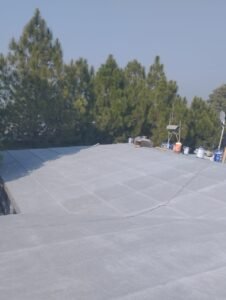
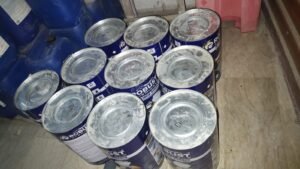
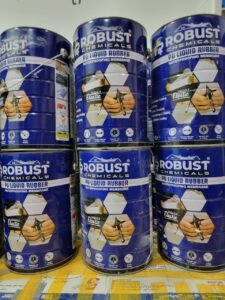
- robust
- robust
- robust
- robust
- robust
- robust
- robust
- robust
- robust
- robust
- robust
- robust
- robust
- robust
- robust
- robust
- robust
- robust
- robust
- robust
- robust
- robust
- robust
- robust
- robust
- robust
- robust
- robust
Robust PU Tube Sealant (supplied in 300 ml / 310 ml rigid cartridges and 600 ml foil sausages, listed in your catalog as Robust PU Joint Sealant) is a single-component, moisture-curing elastomeric polyurethane joint sealant engineered for structural expansion joints, industrial floor saw-cuts, precast concrete panels, roof parapet flashings, and facade glazing perimeters. Unlike standard silicone sealants that tear easily under foot or wheel traffic and reject paint, Robust PU Tube Sealant cures into a tough, high-elongation rubber that bonds tenaciously to porous masonry and metals and can be overpainted once cured.
1. Core Engineering & Performance Advantages
-
Dynamic Movement Accommodation (±25% to ±35%): Absorbs severe summer-to-winter thermal expansion, concrete slab shrinkage, and building vibration without splitting or detaching from joint walls.
-
High Tear, Puncture & Abrasion Resistance: Cures into a resilient polyurethane elastomer capable of withstanding warehouse pallet jacks, pedestrian foot traffic, and gravel deflection in horizontal floor joints.
-
Primerless Adhesion to Construction Substrates: Bonds strongly to concrete, cement mortar, brick, AAC blocks, fiber-cement boards, anodized/powder-coated aluminum, galvanized steel, timber, and rigid uPVC.
-
100% Overpaintable Finish: Accepts water-based acrylic, elastomeric, and polyurethane architectural coatings after curing (unlike silicone sealants, which cause paint fisheyes and peeling).
-
Non-Slump & Bubble-Free Cure: Thixotropic gun-grade paste holds cleanly in vertical and overhead joints without sagging, curing smoothly via atmospheric humidity without releasing corrosive acetic acid vapors.
2. Technical Specifications & ASTM / ISO Benchmarks
Property / Metric Typical Industrial & Construction Range Standard Test Method Functional Significance Chemical Base 1-Component Moisture-Curing Polyurethane (1K PU) ASTM C920 / ISO 11600 Ready-to-gun directly from cartridge/sausage; zero mixing errors Classification Grade Type S, Grade NS, Class 25 / Class 35 ASTM C920 / ISO 11600 F-25LM Certified for dynamic building & floor expansion joints Shore A Hardness 25 – 35 (Facade Grade) | 40 – 50 (Traffic Floor Grade) ASTM C661 / DIN 53505 Low-modulus for facades; high-modulus for warehouse floors Elongation at Break ≥ 500% – 650% ASTM D412 / DIN 53504 Stretches dramatically across opening joints without tearing Tensile Strength 1.3 – 2.2 N/mm² (190 – 320 psi) ASTM D412 Resists shear forces and wheel deflection Elastic Recovery ≥ 80% – 90% ISO 7389 Returns to original shape after repeated expansion cycles Tack-Free / Skin-Over Time 45 – 90 minutes (at 25°C, 50% RH) Lab Standard Generous tooling window before surface skin forms Full Curing Rate ~2.5 – 3.5 mm per 24 hours Lab Standard Standard 10 mm deep joint cures completely in 3–4 days Service Temperature -40°C to +80°C (short peaks up to +90°C) Thermal Cycling Stable across extreme Pakistani summer heat and winter cold Standard Packaging & Colors 300/310 ml Cartridge & 600 ml Sausage (Grey, White, Black) Industry Standard Fits manual, battery, or pneumatic caulking guns 3. PU Tube Sealant vs. Silicone vs. Polysulfide (Comparison Matrix)
Feature / Specification Robust PU Tube Sealant (Polyurethane) Standard Silicone Sealant 2-Part Polysulfide Sealant Mixing Requirement 1-Part Ready-to-Use (No mixing) 1-Part Ready-to-Use 2-Part Base + Hardener (Requires mixing) Adhesion to Porous Concrete Excellent (Primerless on sound concrete) Poor (Requires primer; peels easily) Good (Requires mandatory primer) Abrasion & Traffic Toughness Superior (Withstands floor & forklift traffic) Very Low (Tears easily un -
-