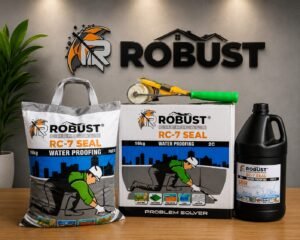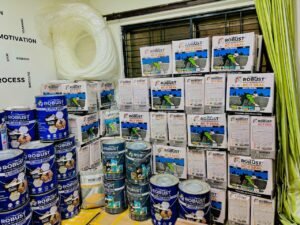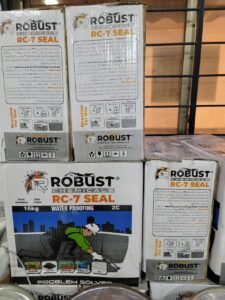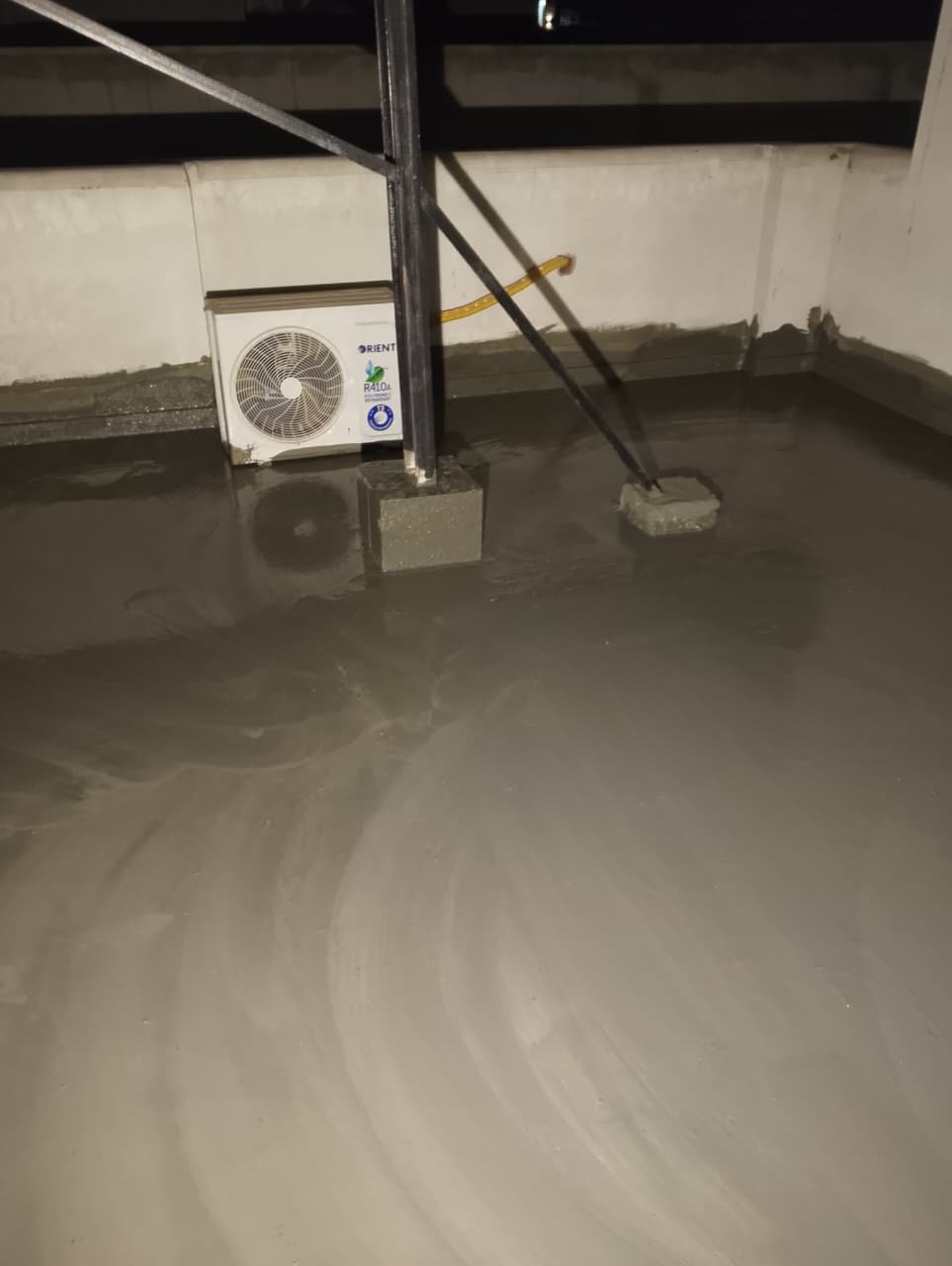
Robust RC-7 Seal – High-Strength Cementitious Waterproof Coating for Roof Heat & Water Protection
Introduction to Robust RC-7 Seal
Robust RC-7 Seal is a professional waterproofing product designed to help protect concrete and cement-based surfaces against water penetration, dampness, and moisture-related deterioration. It is intended for construction and renovation projects where reliable waterproofing is an important part of building protection.
Water leakage is a common problem in residential, commercial, and industrial buildings. Roof slabs, concrete walls, bathrooms, kitchens, water-retaining structures, and underground areas can develop moisture problems because of cracks, poor drainage, defective joints, or inadequate waterproofing. If these problems are not addressed correctly, they can damage paint, plaster, ceilings, flooring, and other building materials.
Robust RC-7 Seal provides a waterproofing option for suitable cementitious substrates when applied according to the product’s technical specifications. Proper surface preparation, correct mixing, appropriate application thickness, and sufficient curing are important for achieving reliable results.
For builders, contractors, architects, engineers, and property owners searching for a cementitious waterproofing coating in Pakistan, Robust RC-7 Seal offers a product to consider for suitable concrete waterproofing applications.
Explore more construction chemical solutions on the Robust Construction Chemicals website: https://robustconstructionchemical.com/
What Is Robust RC-7 Seal?
Robust RC-7 Seal is a waterproofing solution intended for use on suitable construction surfaces. Cementitious waterproofing products generally use cement-based binders combined with selected additives and, depending on the formulation, polymer modifiers to create a protective coating.
The exact composition, mixing ratio, number of coats, coverage rate, and suitability for particular applications should be confirmed from the official product datasheet for Robust RC-7 Seal. These details are important because different waterproofing formulations are designed for different exposure conditions.
A properly selected cementitious waterproofing coating can help reduce water absorption through porous concrete and cement-based surfaces. It may be used as part of a waterproofing system for roofs, bathrooms, balconies, concrete walls, and other appropriate structures.
Robust RC-7 Seal should be selected according to the project’s waterproofing requirements rather than simply by comparing product names. Areas exposed to standing water, movement, significant cracking, or extreme weather may require additional detailing or a different waterproofing system.
Why Roof Waterproofing Is Important
The roof is one of the most exposed parts of any building. It receives direct sunlight, rainfall, dust, changing temperatures, and seasonal weather conditions. Over time, these conditions can contribute to concrete deterioration and water leakage.
Without an appropriate waterproofing system, rainwater may enter through porous concrete, construction joints, cracks, and poorly sealed pipe penetrations. This moisture can cause damp patches, peeling paint, damaged plaster, and unpleasant indoor conditions.
Roof waterproofing helps create a protective barrier that reduces water penetration when the system is correctly designed and installed. It can also help protect the concrete substrate from repeated moisture exposure.
Robust RC-7 Seal may be considered for suitable cementitious roof waterproofing applications after confirming its compatibility with the roof’s condition and exposure. The roof must be inspected for cracks, weak concrete, existing coatings, drainage issues, and movement joints before application.
Key Benefits of Robust RC-7 Seal
1. Helps Reduce Water Penetration
One of the main purposes of a cementitious waterproofing coating is to reduce water penetration into suitable concrete and cement-based substrates. When the correct system is applied at the specified thickness, it can help protect surfaces against moisture ingress.
This protection is particularly important in areas exposed to rainfall, splashing water, and regular cleaning. However, the result depends on the product formulation, surface condition, and installation quality.
2. Protection for Concrete Surfaces
Concrete can absorb moisture through pores and small imperfections. Repeated water exposure may contribute to surface deterioration and damage to adjacent finishes.
A compatible waterproofing coating can help reduce moisture entry and protect the substrate as part of a properly designed building protection system.
3. Suitable for Selected Construction Applications
Cementitious waterproofing products are commonly used in construction and renovation work. Depending on the product’s approved applications, these systems may be suitable for bathrooms, concrete walls, balconies, foundations, and other cement-based surfaces.
Always verify the approved applications of Robust RC-7 Seal before using it in a particular location.
4. Useful for New Construction and Renovation
Waterproofing is important during new construction because it helps protect building elements before tiles, screeds, plaster, or other finishes are installed.
It is also important during renovation when moisture damage, damp patches, or recurring roof leakage need to be investigated. Existing leakage should be diagnosed before a new coating is applied.
5. Supports Long-Term Building Maintenance
An appropriately specified waterproofing system can reduce the likelihood of moisture-related maintenance problems. It may help protect finishes and building components from recurring water exposure.
Long-term performance is not determined by the product alone. Drainage, structural movement, workmanship, weather exposure, and regular inspections also influence the service life of a waterproofing system.
Robust RC-7 Seal for Roof Waterproofing
Roof waterproofing requires careful attention to surface preparation, drainage, cracks, parapet walls, and the areas surrounding outlets and service penetrations.
Robust RC-7 Seal can be evaluated for suitable cementitious roof applications where its technical specifications match the project requirements. Before starting work, the contractor should confirm whether the product is designed for exposed roofs, covered roofs, or a particular protective system.
A roof with standing water requires special attention. If the coating is not approved for prolonged ponding, another suitable waterproofing system may be necessary.
The roof should also have adequate drainage. Waterproofing material cannot compensate for defective drainage design, structural cracks, or improperly constructed joints.
Does Cementitious Waterproofing Provide Heat Protection?
Heat protection and waterproofing are two different building performance requirements. A waterproofing coating is primarily designed to control water penetration, while thermal protection reduces heat transfer into the building.
A conventional cementitious waterproofing coating should not automatically be considered a heat-insulating or heat-reflective product. Its ability to withstand temperature changes depends on its formulation and approved service conditions.
If your roof becomes excessively hot during summer, consider combining suitable waterproofing with a dedicated thermal protection solution. Options may include reflective roof coatings, XPS insulation boards, EPS insulation systems, or other engineered roof insulation assemblies.
Robust Construction Chemicals offers construction product categories that may help address different building protection requirements. Select each product according to its technical specifications and compatibility with the complete roof system.
Applications of Robust RC-7 Seal
Roof Slabs and Concrete Roofs
Concrete roofs are frequently exposed to rainwater and direct sunlight. A suitable waterproofing system can help reduce water penetration and protect the roof substrate.
Before application, inspect cracks, drainage outlets, parapet junctions, and areas around water tanks or service pipes. Repair defects using compatible materials and confirm that the chosen coating is approved for the intended roof exposure.
Bathrooms and Washrooms
Bathrooms are exposed to repeated splashing, cleaning water, and moisture. Waterproofing is especially important beneath tiled floors and around wall-to-floor junctions.
Where Robust RC-7 Seal is approved for wet-area applications, it may be considered as part of a suitable waterproofing assembly. Follow the manufacturer’s requirements for corners, pipe penetrations, curing, and tile adhesive compatibility.
Kitchens and Utility Areas
Kitchens and utility rooms may experience regular water spills and cleaning. Suitable waterproofing can help reduce the risk of moisture entering vulnerable cement-based substrates.
The correct waterproofing details should be selected according to the room’s water exposure and the type of floor and wall finishes.
Basements and Foundation Walls
Basement structures may be exposed to soil moisture, groundwater pressure, and water moving through cracks or construction joints.
Not every cementitious coating is suitable for negative-side water pressure or high hydrostatic pressure. Before selecting Robust RC-7 Seal for a basement, verify the product’s pressure resistance, approved application side, and suitability for below-ground use.
Where groundwater pressure is significant, a complete waterproofing design may require external membranes, drainage, waterstops, joint treatments, and structural repairs.
Concrete Walls
Concrete walls can develop dampness due to rain penetration, poor detailing, or moisture migration. A compatible waterproofing coating may help protect suitable wall surfaces.
The cause of dampness should be identified first. Rising damp, plumbing leaks, condensation, and external rainwater penetration require different solutions.
Balconies and Terraces
Balconies and terraces face changing weather conditions, water exposure, and potential movement at joints. Waterproofing systems for these areas must accommodate the actual substrate conditions and anticipated movement.
Confirm whether the selected product is suitable for exterior exposure, thermal cycling, and the intended finish. Movement joints require appropriate flexible detailing.
Water-Exposed Concrete Structures
Some cementitious waterproofing systems are used on selected water-retaining or water-exposed concrete structures. Such use requires confirmation of water-contact suitability and the relevant performance requirements.
For potable water tanks, swimming pools, reservoirs, or other specialized structures, use only a product specifically approved for the intended service.
How Robust RC-7 Seal Helps Protect Concrete
Concrete is strong under many structural conditions, but its pores and small defects can allow water to enter. Waterproofing helps reduce this pathway when the coating is compatible with the concrete and applied correctly.
The coating forms a protective layer over the prepared substrate. Depending on the product formulation, it may adhere to the cementitious surface and help resist water penetration.
The quality of this protection depends on several factors:
- The strength and condition of the existing concrete.
- Removal of dust, oil, loose material, and incompatible coatings.
- Correct treatment of cracks and construction joints.
- The specified coating thickness and number of coats.
- Suitable curing and protection during application.
- Compatibility with subsequent screeds, tiles, paints, or protective layers.
For the best outcome, follow the product datasheet and use trained waterproofing applicators for demanding projects.
Surface Preparation Before Application
Surface preparation is one of the most important stages of any cementitious waterproofing project. Even a suitable coating may perform poorly if it is applied over a weak, contaminated, or unsuitable surface.
Step 1: Inspect the Surface
Inspect the concrete or cement-based substrate for cracks, honeycombing, loose plaster, damaged concrete, efflorescence, and previous coatings.
Identify the source of any active leakage before beginning waterproofing work.
Step 2: Remove Loose Material
Remove dust, loose cement particles, dirt, grease, and other contaminants using appropriate mechanical or cleaning methods. The substrate must be strong enough to support the coating.
Oil-contaminated surfaces may require specialized cleaning or removal of the affected concrete.
Step 3: Repair Defects
Repair damaged concrete and suitable non-moving cracks with compatible repair materials. Active structural cracks and movement joints require assessment and appropriate detailing rather than simply covering them with a rigid coating.
Pipe penetrations, drains, corners, and wall-to-floor junctions should receive the specified waterproofing treatment.
Step 4: Prepare the Moisture Condition
Some cementitious waterproofing systems require a damp substrate without standing water, while others have different preparation requirements. Follow the instructions for Robust RC-7 Seal rather than assuming that all cementitious products are applied in the same way.
Step 5: Confirm Compatibility
If the surface contains an old membrane, bituminous coating, paint, or another waterproofing layer, verify compatibility before application. An incompatible layer may prevent proper adhesion.
General Application Guide for Cementitious Waterproofing
The following steps describe a general workflow for cementitious waterproofing products. The specific mixing ratio, application thickness, coverage, and curing requirements for Robust RC-7 Seal must be taken from its official technical datasheet.
Mixing the Product
Prepare the product using the specified mixing procedure. If the product is supplied in multiple components, combine them in the stated proportions.
Mix until the material reaches the recommended consistency. Avoid adding extra water or other materials unless expressly permitted by the manufacturer.
Applying the First Coat
Apply the material using the approved brush, roller, trowel, or other specified tool. Work the coating consistently over the prepared substrate, paying special attention to corners and detailed areas.
Avoid leaving pinholes, uncovered patches, or excessive buildup.
Applying Additional Coats
Where the product specification requires multiple coats, apply each coat at the recommended interval and in the specified direction or pattern.
Do not apply the next coat until the previous layer has reached the condition required by the manufacturer. Total thickness should remain within the approved range.
Curing and Protection
Protect the applied coating from rain, rapid drying, contamination, and physical damage during the specified curing period.
Curing requirements vary between cementitious products. Do not assume that every waterproofing coating can be flooded or tiled immediately after application.
Final Inspection and Testing
Inspect the completed surface for visible gaps, pinholes, damage, and insufficient coverage. Conduct a water test only when permitted by the product instructions and project specification.
A successful visual inspection alone does not guarantee that a waterproofing system will perform under every service condition.
Common Roof Waterproofing Problems
Water Leakage Through Cracks
Cracks may develop because of shrinkage, structural movement, thermal changes, or other causes. The correct repair depends on the crack’s size, movement, and location.
A rigid cementitious coating may not be suitable for active movement cracks unless the system specifically provides the required crack-bridging capability.
Water Pooling on the Roof
Standing water can increase exposure and place additional demands on a waterproofing system. Improve drainage and correct low areas where possible.
Check the product’s suitability for prolonged ponding before selecting it for a roof.
Poor Adhesion
Dust, weak concrete, oil, and incompatible old coatings can reduce adhesion. Proper preparation and adherence to application instructions help reduce this risk.
Leakage Around Pipes and Drains
Pipe penetrations and roof outlets are common weak points. These areas need compatible sealing materials and carefully detailed waterproofing transitions.
Dampness After Application
Persistent dampness may result from incomplete coverage, trapped moisture, defective plumbing, condensation, groundwater, or an unresolved source of leakage. Investigate the underlying cause instead of automatically applying another coat.
Robust RC-7 Seal Compared With Other Waterproofing Solutions
Different waterproofing materials serve different purposes. Choosing the correct solution depends on the structure, water pressure, exposure, movement, and final surface finish.
Cementitious waterproofing coatings: Commonly selected for suitable concrete and cement-based substrates, including some wet-area applications.
PU liquid waterproofing membranes: Often used where a flexible, seamless waterproofing layer is required, subject to product-specific exterior and ponding limitations.
Bituminous coatings: Used in selected below-ground and concrete protection systems, depending on formulation and compatibility.
Torch-applied membrane sheets: Used in suitable roof and foundation waterproofing systems where the substrate and installation conditions permit.
PVC waterstops: Installed within specified concrete joints to help control water leakage through construction and expansion joints.
XPS insulation boards: Used primarily for thermal insulation, not as a direct replacement for a waterproofing membrane.
These systems are not interchangeable in every situation. Robust RC-7 Seal should be compared with alternatives using its verified technical properties, approved uses, and project requirements.
Waterproofing for Residential Buildings
Residential buildings require waterproofing in areas such as roofs, bathrooms, balconies, water tanks, and foundations. Leakage in these locations may damage interior finishes and increase maintenance costs.
For homeowners, selecting the right waterproofing system begins with identifying the source of moisture and the condition of the substrate. Product selection should also account for the planned tiles, screed, protective layer, or exposed finish.
Robust RC-7 Seal may be considered for suitable residential applications when its product specifications match the site requirements.
Waterproofing for Commercial Buildings
Commercial buildings often contain large roof areas, washrooms, service rooms, terraces, and concrete structures that require dependable moisture protection.
A suitable waterproofing system can help protect building finishes and reduce disruption associated with recurring leaks. Contractors should assess drainage, joints, access, curing conditions, and the maintenance plan before choosing a product.
For large projects, prepare a method statement that defines surface preparation, application procedures, quality checks, and acceptance criteria.
Waterproofing for Industrial Projects
Industrial sites may expose concrete structures to water, cleaning chemicals, process liquids, and demanding operating conditions. Not every cementitious waterproofing product is compatible with every industrial environment.
Check chemical resistance, operating temperature, water-pressure limitations, and service compatibility before selecting Robust RC-7 Seal for industrial use.
Where chemical exposure or heavy mechanical wear is expected, a specialized protective lining or engineered coating system may be more appropriate.
Factors That Affect Waterproofing Performance
Product Selection
Choose a waterproofing product designed for the actual surface and exposure. Verify that the product can tolerate the anticipated water pressure, temperature changes, and substrate movement.
Workmanship
Incorrect mixing, uneven thickness, insufficient coverage, and poor detailing can compromise the entire system.
Weather Conditions
Temperature, humidity, wind, and rain affect application and curing. Work within the manufacturer’s permitted environmental conditions.
Drainage and Structural Design
A coating cannot resolve every structural or drainage defect. Proper slopes, functioning outlets, sound concrete, and correctly designed joints are essential.
Maintenance
Periodic inspections can identify blocked drains, damaged finishes, cracks, and other defects before they become major leakage problems.
Why Choose Robust Construction Chemicals?
Robust Construction Chemicals focuses on construction protection products for waterproofing, insulation, sealing, and related building applications.
When selecting a waterproofing material, contractors and property owners should look for clear technical information, application guidance, product compatibility, and support in choosing the right system.
Before purchasing Robust RC-7 Seal, request its latest technical datasheet, recommended application thickness, coverage information, curing requirements, and details of the surfaces for which it is approved.
These details allow buyers to estimate quantities accurately and select a system suited to their project.
Visit the website: https://robustconstructionchemical.com/
Connect with Robust Construction Chemicals on Facebook: https://www.facebook.com/profile.php?id=61555388654698
How to Estimate Waterproofing Material Requirements
Accurate material estimation helps reduce waste and supports better project planning.
First, calculate the total surface area in square metres. Measure each roof, wall, balcony, or other surface and add the individual areas together.
Next, obtain the product’s verified coverage rate per kilogram, litre, or package from the manufacturer. The actual consumption may vary with substrate porosity, surface profile, application thickness, and the number of coats.
Divide the total area by the stated coverage rate to estimate the required quantity, then account for any additional material required by the approved specification and site conditions.
For example, if a product’s verified coverage is 2 square metres per kilogram for the complete specified system, a 100-square-metre surface would require approximately 50 kilograms before any additional allowance. This is only an illustrative calculation, not a stated coverage rate for Robust RC-7 Seal.
Frequently Asked Questions About Robust RC-7 Seal
What is Robust RC-7 Seal used for?
Robust RC-7 Seal is a waterproofing product intended for suitable construction applications. Confirm its approved surfaces and service conditions from the product datasheet before use.
Can Robust RC-7 Seal be used on concrete roofs?
It may be suitable for a roof application if the product’s technical specifications approve that exposure. Check requirements for exposed sunlight, ponding water, substrate movement, and protective finishes.
Does Robust RC-7 Seal reduce roof heat?
Waterproofing and thermal insulation are different functions. Do not assume that RC-7 Seal provides significant heat insulation unless the manufacturer provides supporting technical data.
Can it be used in bathrooms?
Use it in bathrooms only if the product is approved for wet-area waterproofing and is compatible with the planned tile adhesive, screed, and finish.
Is it suitable for basements?
Basement use depends on the water pressure, application side, substrate condition, and the product’s approved performance. High groundwater pressure may require a specialized waterproofing system.
How many coats are required?
The number of coats depends on the product instructions and project specification. Follow the latest technical datasheet for Robust RC-7 Seal.
How much material is needed per square metre?
Consumption depends on the verified coverage rate, substrate porosity, application thickness, and number of coats. Obtain the manufacturer’s stated coverage before calculating the quantity.
Can it be applied over old waterproofing?
Compatibility must be checked first. Some existing coatings may need removal or a specified preparation system before a new product can be applied.
How long does the coating last?
Service life depends on the formulation, application quality, substrate movement, weather exposure, maintenance, and correct system design. Avoid assuming a fixed lifespan without supporting product data.
Where can I buy Robust RC-7 Seal in Pakistan?
Contact Robust Construction Chemicals through its website to ask about current availability, packaging, pricing, technical information, and delivery options.
Conclusion: Protect Your Building With the Right Waterproofing System
Robust RC-7 Seal can be considered for suitable cementitious waterproofing applications where its verified technical properties meet the requirements of the project. Correct product selection, substrate preparation, crack treatment, controlled application, and proper curing all contribute to successful waterproofing.
For roof heat reduction, combine waterproofing with a suitable thermal protection system when required. For basements, water tanks, movement joints, and areas exposed to high water pressure, confirm that the complete system is designed for those conditions.
Robust Construction Chemicals supports construction projects with waterproofing and building protection product categories. Contact the company to obtain current product information and choose a solution suited to your application.
Choose the right waterproofing system, follow the manufacturer’s instructions, and protect your building against preventable moisture damage.