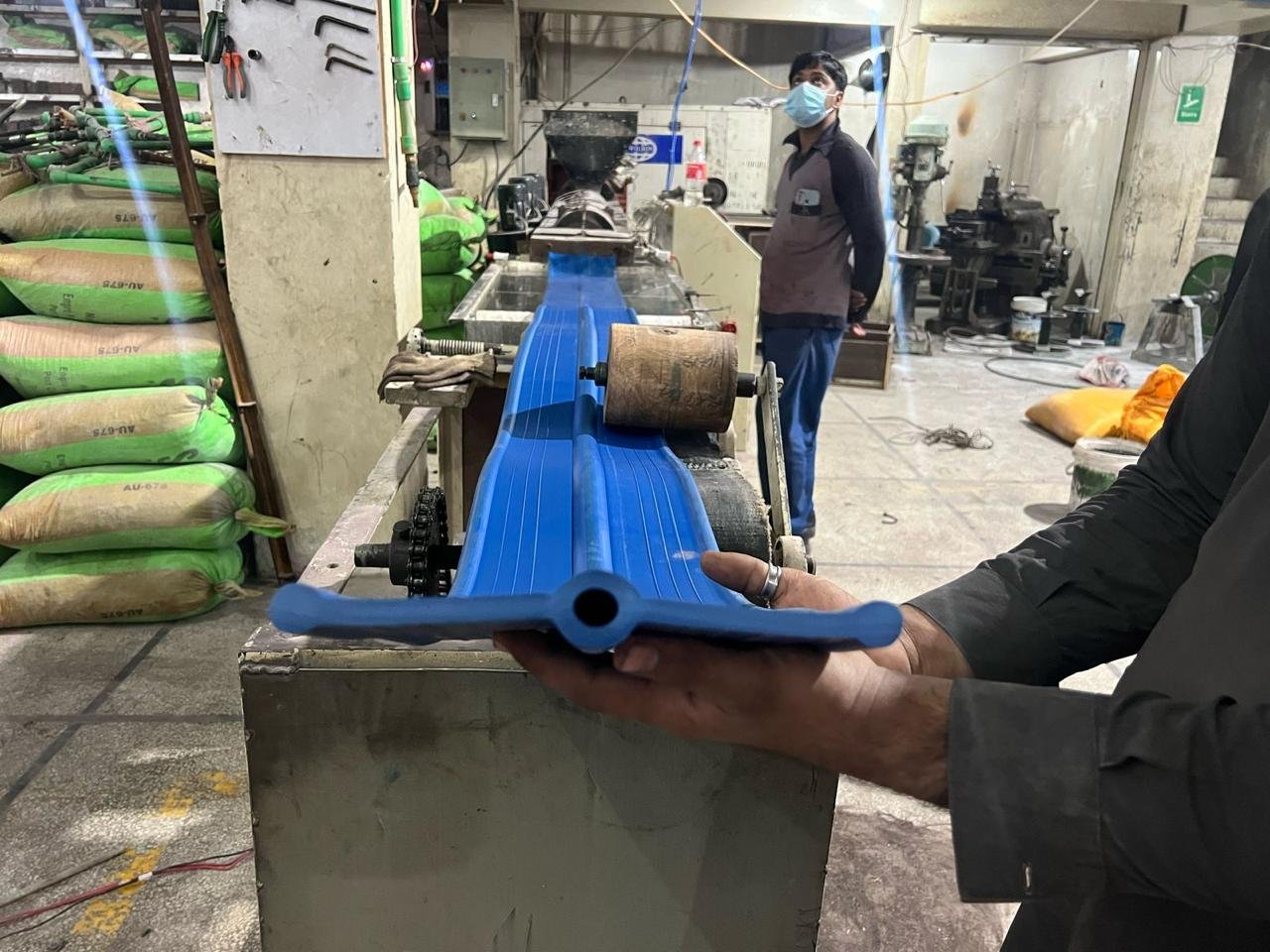
Robust Imperial Quality PVC Water Stopper is a premier, 100% virgin-grade flexible Polyvinyl Chloride (PVC) water-tight barrier embedded directly across concrete construction joints and structural expansion joints to permanently block hydrostatic water pressure. Unlike low-grade recycled “commercial” PVC waterstops that turn brittle, crack during winter concrete shrinkage, or fail under high water head, Robust Imperial Quality is compounded with heavy-duty plasticizers, UV/aging stabilizers, and multi-ribbed anchor bulbs—delivering ≥ 300% elongation, 14+ N/mm² tensile strength, and multi-decade watertight integrity in underground water tanks, deep basements, dams, canals, and sewage treatment plants.
1. Why “Imperial Quality” Virgin PVC Beats Recycled Commercial PVC
In Pakistan’s construction market, low-cost PVC waterstoppers made from reprocessed scrap plastic lose plasticizers within 2 to 3 years, becoming hard and snapping at the concrete joint. Robust Imperial Quality guarantees true civil-engineering compliance:
-
100% Virgin Compounded PVC Resin: Zero recycled filler or chalk—maintains permanent rubber-like flexibility across -30°C to +70°C without cracking or shrinking away from concrete.
-
Multi-Ribbed Anchor Fins + End Bulbs: Dual-sided serrated ribs and bulbous edges interlock mechanically with wet concrete, creating a tortuous labyrinth path that stops water from creeping around the profile even under 50+ meters (5 Bar) of hydrostatic head.
-
Reinforced Center Hollow Bulb (Expansion Grade): Absorbs three-dimensional structural settlement, shear displacement, and thermal expansion/contraction without tearing.
-
Heavy-Duty Brass / Steel Eyelets (Optional): Pre-punched outer flanges allow secure tie-wire fastening to steel reinforcement bars (rebar), preventing the waterstop from folding or floating during heavy concrete pours.
-
Superior Heat-Weldability: Melts cleanly at 180°C–200°C with a thermostatic welding blade to form monolithic, leak-proof butt, L-corner, T-junction, and X-cross intersections.
2. Full Technical Specifications & ASTM / BS / IS Standards
| Property / Metric | Robust Imperial Quality Specification | Standard Test Method | Civil Engineering Significance |
| Material Composition | 100% Virgin Flexible Polyvinyl Chloride (PVC-P) | BS 2571 / IS 15058 / CRD-C 572 | Non-toxic, potable-water safe & permanent elasticity |
| Specific Gravity / Density | 1.32 – 1.38 g/cm³ | ASTM D792 | High polymer purity (recycled grades exceed 1.50 g/cm³ due to chalk) |
| Tensile Strength | ≥ 13.5 – 16.0 N/mm² (1,950 – 2,320 psi) | ASTM D412 / IS 15058 | Withstands high hydrostatic water pressure & shear forces |
| Elongation at Break | ≥ 300% – 350% | ASTM D412 / BS 2782 | Stretches across opening expansion joints without splitting |
| Shore A Hardness | 65 – 75 | ASTM D2240 | Optimal balance of stiffness during concrete pour & flexibility in service |
| Tear Resistance | ≥ 45 – 55 N/mm | ASTM D624 | Resists aggregate impact during concrete vibration |
| Water Absorption (24 Hrs) | ≤ 0.15% – 0.25% | ASTM D570 | Zero swelling or softening under continuous water immersion |
| Low-Temperature Brittleness | Passes at -30°C (No cracking) | ASTM D746 | Remains flexible in northern winter climates |
| Alkali & Chemical Resistance | Unaffected by pH 13 wet concrete, sewage & mild acids | CRD-C 572 | Permanent durability inside concrete & STP tanks |
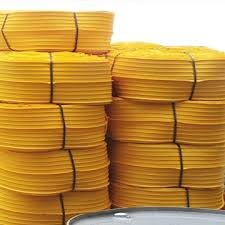
| Standard Roll Length & Color | 15 m, 20 m, 25 m & 30 m Coils (Blue, Black, Yellow, White) | Industry Standard | Continuous rolls minimize on-site jointing |
3. Profile Types & Imperial Size Selection Matrix (6″ to 12″)
Select the exact profile geometry and width based on concrete wall thickness and joint movement:
| Profile Type | Center Geometry | Structural Joint Application | Available Widths & Thicknesses |
| 1. Center-Bulb Profile (Internal Expansion) | Hollow or solid central expansion bulb + multi-ribbed wings | Active Expansion & Contraction Joints in basement retaining walls, water tanks, bridges & canals |
150 mm (6″), 200 mm (8″), 230 mm (9″), 250 mm (10″), 300 mm (12″) (Web thickness: 5 mm to 10 mm) |
| 2. Dumbbell / Plain Ribbed Profile (Internal Construction) | Flat ribbed web without center bulb (or solid dumbbell ends) | Non-Moving Construction / Cold Joints (wall-to-base slab kicker joints & lift joints) |
150 mm (6″), 200 mm (8″), 230 mm (9″), 250 mm (10″), 300 mm (12″) (Web thickness: 4 mm to 8 mm) |
| 3. Surface / External Rearguard Profile (Base Seal) | Flat base with tall T-ribs embedded into bottom concrete | Base Slabs & Foundation Rafts laid directly over lean concrete (PCC) blinding | 200 mm (8″), 230 mm (9″), 250 mm (10″), 300 mm (12″) |
Civil Engineering Width Selection Rule:
-
Concrete Wall / Slab Thickness 150 – 200 mm (6″–8″): Use 150 mm (6″) or 200 mm (8″) Water Stopper.
-
Concrete Wall / Slab Thickness 225 – 300 mm (9″–12″): Use 230 mm (9″) or 250 mm (10″) Water Stopper.
-
Thick Rafts, Deep Basements & Dams (> 300 mm / 12″+): Use 300 mm (12″) Heavy-Duty Water Stopper (Rule: Waterstop width should never exceed the concrete wall thickness).
4. Primary Civil & Commercial Construction Applications
-
Underground & Overhead Water Tanks (UGWT & OHWT): Installed at the base-slab-to-wall kicker joint and vertical wall construction joints to guarantee 100% zero-leakage potable water storage.
-
Deep Commercial Basements & Retaining Walls: Prevents high water-table groundwater seepage at raft-to-wall junctions and perimeter expansion joints.
-
Swimming Pools, Fountains & Cooling Tower Basins: Seals continuous hydrostatic water pressure in commercial and residential pools.
-
Irrigation Canals, Barrages, Dams & Culverts: Heavy-duty 230 mm (9″) and 300 mm (12″) center-bulb profiles accommodate thermal slab movement across long hydraulic channels.
-
Sewage Treatment Plants (STP), Tunnels & Underpasses: Resists aggressive wastewater gases, sulfates, and subterranean water pressure.
5. Step-by-Step Installation & Heat-Welding Protocol (Zero-Leakage Rules)
Over 80% of waterstop failures occur at poorly joined corners or folded profiles during concrete pouring. Follow this mandatory site protocol:
-
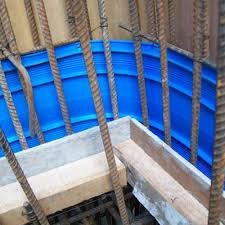
Centering at the Joint Plane: Position the Robust PVC Water Stopper symmetrically across the joint so exactly 50% of its width embeds into the first concrete pour and 50% protrudes for the second pour, with the center bulb aligned directly on the expansion joint line.
-
Secure Tying to Rebar (Prevent Folding): Tie the outer edge eyelets (or hog-rings clamped to the outer bulb—never puncture the inner ribs or center bulb with nails!) to the main steel reinforcement bars every 300 mm (12 inches) using 16-gauge binding wire so wet concrete cannot push or fold the waterstop flat.
-
Thermostatic Heat-Welding for Joints & Corners (Never Overlap Cold!):
-
Never simply lap or tape two PVC waterstop ends together—water will pass straight through the overlap.
-
Square-cut both ends cleanly with a sharp knife.
-
Heat a thermostatically controlled PVC welding knife/heater blade to 180°C – 200°C.
-
Press both PVC ends simultaneously against opposite sides of the heated blade until a uniform 3 mm molten bead forms along the entire profile (do not burn or char the PVC black).
-
Slide the blade out smoothly and press the two molten ends firmly together for 20–30 seconds until cooled and fused into a single monolithic piece. (For L, T, and X intersections, use factory-molded intersection pieces or miter-cut at 45° and heat-weld).
-
-
Thorough Concrete Vibration Around Ribs: During concrete pouring, vibrate carefully around both sides of the waterstop using a needle vibrator so dense cement paste completely encapsulates every anchor rib without honeycombing—while keeping the vibrator head 50 mm away from touching the PVC directly.
-
1. On-Site Quality Verification Tests (Imperial Virgin PVC vs. Recycled Scrap)
Low-grade recycled PVC waterstops often contain heavy calcium carbonate (chalk) fillers that lose flexibility within 2 to 3 years, turning brittle and snapping inside concrete joints. Use these four instant field tests to verify Robust Imperial Quality (100% Virgin PVC):
-
The 180° Fold & Crease-Whitening Test:
-
Fold a flap of the PVC waterstop sharply at 180° and press firmly with your thumb.
-
Imperial Virgin PVC: Bends smoothly like natural rubber, leaves zero white stress-whitening crease line, and springs back immediately when released.
-
Recycled Scrap PVC: Develops a pale white chalk crease line, feels stiff/boardy, or cracks along the fold.
-
-
The Stretch & Elastic Recovery Test:
-
Cut a 10 mm × 100 mm strip and pull both ends steadily by hand.
-
Imperial Virgin PVC: Stretches smoothly to 3× its length (≥ 300%) without tearing and snaps back close to its original length. Recycled PVC snaps abruptly at 80%–120% stretch.
-
-
Specific Gravity / Density Check:
-
Virgin plasticized PVC has a controlled density of 1.32 – 1.38 g/cm³, whereas chalk-filled recycled PVC exceeds 1.50 – 1.65 g/cm³, feeling noticeably heavier, harder, and duller in surface sheen.
-
-
Clean Smoke-Free Welding Test:
-
When pressed against a 190°C–200°C welding knife, genuine virgin PVC melts into a smooth, glossy, bubble-free bead. Recycled PVC blisters, chars black, and emits acrid burned-plastic smoke.
-
2. Fabricating Complex Joint Intersections (Flat L, Vertical L, T & X Junctions)
Waterproofing failures in underground water tanks and basements almost always occur at wall-to-floor corner intersections where straight runs meet. Never bend a PVC waterstop sharply at 90° without miter-welding:
3.Robust PVC Water Stopper vs. Hydrophilic Swellable Waterbar (Engineering Selection)
4. Imperial Profile Dimensions & Web Thickness Chart (3 mm to 12 mm)
5. Common Site Installation Failures & Prevention
-
Waterstop Folding Flat (“Flopping”) During Concrete Pour:
-
Cause: Tying only one edge or spacing tie-wires 1 meter apart allows heavy wet concrete to push the upper half of the waterstop flat against the rebar.
-
Fix: Secure both top and bottom outer flanges to steel reinforcement every 250–300 mm (10–12 inches) using 16-gauge binding wire or steel hog-rings.
-
-
Honeycombing / Air Voids Beneath Horizontal Waterstops:
-
Cause: Air pockets get trapped under the flat horizontal wing of a waterstop laid in a base slab.
-
Fix: Tilt horizontal waterstops slightly upward at a 10°–15° V-angle during concrete placement so trapped air bubbles escape freely upward during needle vibration.
-
-
Cold Overlapping Instead of Heat-Welding:
-
Cause: Laborers overlap two ends by 6 inches and wrap them with duct tape or binding wire.
-
Fix: Strictly ban cold laps. Every joint must be fused with a 190°C–200°C thermostatic welding knife and inspected by pulling firmly on the cooled weld.
-
-
Prolonged Direct Sunlight Exposure Before Second Concrete Pour:
-
Cause: Leaving the upper half of an installed PVC waterstop exposed to scorching 45°C+ summer sun for 3–6 months before casting the upper wall.
-
Fix: Cover protruding waterstops with damp burlap, timber boxing, or UV-protective sheeting if the second concrete lift is delayed beyond 30 days.
-
Which Robust product or technical section would you like to build next?
Robust Imperial Quality PVC Water Stopper: Heavy-Duty 100% Virgin Water-Tight Barrier for Concrete Joints
Robust Imperial Quality PVC Water Stopper is a precision-extruded, heavy-duty flexible Polyvinyl Chloride (PVC-P) water-retaining profile specifically engineered to form an impenetrable, permanent seal across construction joints and active structural expansion joints in cast-in-situ concrete. Designed for mission-critical civil engineering projects across Pakistan—including deep commercial basements, underground and overhead potable water tanks, swimming pools, sewage treatment plants, irrigation canals, and highway culverts—it prevents groundwater infiltration and stored-water exfiltration even under high hydrostatic pressure.
1. Product Overview & Engineering Design Philosophy
In any reinforced concrete (RCC) structure, concrete cannot be poured in a single continuous operation. Every pause in concrete placement creates a construction (cold) joint, while long walls and slabs require expansion/contraction joints to absorb thermal movement and structural settlement. Without an internal physical barrier, water inevitably penetrates these joints through capillary action and hydrostatic pressure—leading to rebar corrosion, damp basements (shora), and structural failure.
Robust Imperial Quality PVC Water Stopper solves this permanently through three precision-engineered features:
-
100% Virgin Compounded Resin Formula: Manufactured exclusively from first-grade virgin PVC polymer blended with high-permanence plasticizers and anti-aging stabilizers—completely free from reprocessed scrap, chalk fillers, or heavy metals. It retains rubber-like elasticity across extreme temperature swings (-30°C to +70°C) without hardening, shrinking, or cracking over decades of service.
-
Multi-Ribbed Labyrinth Anchor System: Both sides of the profile feature deep, serrated longitudinal anchor ribs paired with heavy bulbous edges. As wet concrete cures around these ribs, it locks them firmly in place, creating a long, tortuous path that blocks water from creeping around the profile under high water head.
-
Reinforced Central Expansion Bulb: Available in Center-Bulb profiles for moving expansion joints, the hollow/solid central bulb absorbs lateral shear, settlement, and thermal expansion/contraction without transferring destructive tensile stress to the surrounding concrete.
2. Core Advantages & Performance Benefits
-
Withstands High Hydrostatic Water Head: Engineered to resist continuous water pressures exceeding 50+ meters (5 Bar) in deep underground reservoirs, dams, and below-water-table basements.
-
100% Potable Water Safe & Non-Toxic: Inert, non-tainting virgin formulation suitable for drinking water reservoirs, municipal water treatment plants, and food-grade storage tanks.
-
Superior Chemical & Sewage Resistance: Impervious to high-pH wet cement alkalinity (pH 13), sulfates, chlorides, industrial effluents, and aggressive sewage gases (hydrogen sulfide).
-
Effortless On-Site Heat-Welding: Formulated for clean, bubble-free thermostatic fusion at 190°C–200°C, enabling installers to fabricate 100% monolithic butt joints, L-corners, T-junctions, and X-crossings on site.
-
High Tear & Impact Resistance During Concrete Pouring: Tough 65–75 Shore A compound resists damage from heavy coarse aggregates and high-frequency needle vibrators during concrete placement.
3. Available Profile Configurations & Imperial Dimensions
Robust Imperial Quality PVC Water Stopper is available in 15 m, 20 m, 25 m, and 30 m continuous coils in 6″ (150 mm), 8″ (200 mm), 9″ (230 mm), 10″ (250 mm), and 12″ (300 mm) widths across three specialized cross-sections:
-
Center-Bulb Internal Profile (Expansion & Contraction Joints):
-
Features a central expansion bulb flanked by multi-ribbed anchor wings.
-
Where Used: Active structural expansion joints in basement retaining walls, bridge abutments, long canal linings, and water-retaining walls subject to thermal movement or differential settlement.
-
-
Dumbbell / Plain Ribbed Internal Profile (Construction & Cold Joints):
-
Features a flat, heavy-ribbed central web without a hollow bulb.
-
Where Used: Non-moving construction joints, such as the critical base-slab-to-wall kicker joint and horizontal lift joints in water tanks and basements.
-
-
External / Rearguard Surface Profile (Base Slabs & Rafts):
-
Features a flat smooth base with tall vertical T-ribs embedded into the bottom concrete pour.
-
Where Used: Laid directly over lean concrete (PCC) blinding beneath foundation rafts, tunnel inverts, and ground-bearing slabs where internal rebar cages make center-placed waterstops difficult to install.
-
4. Key Application Areas
-
Underground & Overhead Water Tanks (UGWT & OHWT): Seals base-to-wall kicker joints and vertical wall construction joints against drinking water leakage.
-
Commercial & Residential Deep Basements: Protects below-grade retaining walls, lift pits, and foundation rafts against high water-table seepage.
-
Swimming Pools, Jacuzzis & Water Features: Guarantees zero-leakage concrete shells under constant hydrostatic load.
-
Dams, Barrages, Irrigation Canals & Culverts: Accommodates structural expansion in heavy hydraulic and civil infrastructure works.
-
Sewage Treatment Plants (STP) & Effluent Tanks: Resists corrosive wastewater chemicals and continuous hydrostatic pressure.
-
Subways, Tunnels, Underpasses & Retaining Walls: Prevents groundwater ingress through segmental concrete joints.
-
Robust Imperial Quality PVC Water Stopper: Heavy-Duty 100% Virgin Water-Tight Barrier for Concrete Joints
Robust Imperial Quality PVC Water Stopper is a precision-extruded, heavy-duty flexible Polyvinyl Chloride (PVC-P) water-retaining profile specifically engineered to form an impenetrable, permanent seal across construction joints and active structural expansion joints in cast-in-situ concrete. Designed for mission-critical civil engineering projects across Pakistan—including deep commercial basements, underground and overhead potable water tanks, swimming pools, sewage treatment plants, irrigation canals, and highway culverts—it prevents groundwater infiltration and stored-water exfiltration even under high hydrostatic pressure.
1. Product Overview & Engineering Design Philosophy
In any reinforced concrete (RCC) structure, concrete cannot be poured in a single continuous operation. Every pause in concrete placement creates a construction (cold) joint, while long walls and slabs require expansion/contraction joints to absorb thermal movement and structural settlement. Without an internal physical barrier, water inevitably penetrates these joints through capillary action and hydrostatic pressure—leading to rebar corrosion, damp basements (shora), and structural failure.
Robust Imperial Quality PVC Water Stopper solves this permanently through three precision-engineered features:
-
100% Virgin Compounded Resin Formula: Manufactured exclusively from first-grade virgin PVC polymer blended with high-permanence plasticizers and anti-aging stabilizers—completely free from reprocessed scrap, chalk fillers, or heavy metals. It retains rubber-like elasticity across extreme temperature swings (-30°C to +70°C) without hardening, shrinking, or cracking over decades of service.
-
Multi-Ribbed Labyrinth Anchor System: Both sides of the profile feature deep, serrated longitudinal anchor ribs paired with heavy bulbous edges. As wet concrete cures around these ribs, it locks them firmly in place, creating a long, tortuous path that blocks water from creeping around the profile under high water head.
-
Reinforced Central Expansion Bulb: Available in Center-Bulb profiles for moving expansion joints, the hollow/solid central bulb absorbs lateral shear, settlement, and thermal expansion/contraction without transferring destructive tensile stress to the surrounding concrete.
2. Core Advantages & Performance Benefits
-
Withstands High Hydrostatic Water Head: Engineered to resist continuous water pressures exceeding 50+ meters (5 Bar) in deep underground reservoirs, dams, and below-water-table basements.
-
100% Potable Water Safe & Non-Toxic: Inert, non-tainting virgin formulation suitable for drinking water reservoirs, municipal water treatment plants, and food-grade storage tanks.
-
Superior Chemical & Sewage Resistance: Impervious to high-pH wet cement alkalinity (pH 13), sulfates, chlorides, industrial effluents, and aggressive sewage gases (hydrogen sulfide).
-
Effortless On-Site Heat-Welding: Formulated for clean, bubble-free thermostatic fusion at 190°C–200°C, enabling installers to fabricate 100% monolithic butt joints, L-corners, T-junctions, and X-crossings on site.
-
High Tear & Impact Resistance During Concrete Pouring: Tough 65–75 Shore A compound resists damage from heavy coarse aggregates and high-frequency needle vibrators during concrete placement.
3. Available Profile Configurations & Imperial Dimensions
Robust Imperial Quality PVC Water Stopper is available in 15 m, 20 m, 25 m, and 30 m continuous coils in 6″ (150 mm), 8″ (200 mm), 9″ (230 mm), 10″ (250 mm), and 12″ (300 mm) widths across three specialized cross-sections:
-
Center-Bulb Internal Profile (Expansion & Contraction Joints):
-
Features a central expansion bulb flanked by multi-ribbed anchor wings.
-
Where Used: Active structural expansion joints in basement retaining walls, bridge abutments, long canal linings, and water-retaining walls subject to thermal movement or differential settlement.
-
-
Dumbbell / Plain Ribbed Internal Profile (Construction & Cold Joints):
-
Features a flat, heavy-ribbed central web without a hollow bulb.
-
Where Used: Non-moving construction joints, such as the critical base-slab-to-wall kicker joint and horizontal lift joints in water tanks and basements.
-
-
External / Rearguard Surface Profile (Base Slabs & Rafts):
-
Features a flat smooth base with tall vertical T-ribs embedded into the bottom concrete pour.
-
Where Used: Laid directly over lean concrete (PCC) blinding beneath foundation rafts, tunnel inverts, and ground-bearing slabs where internal rebar cages make center-placed waterstops difficult to install.
-
4. Key Application Areas
-
Underground & Overhead Water Tanks (UGWT & OHWT): Seals base-to-wall kicker joints and vertical wall construction joints against drinking water leakage.
-
Commercial & Residential Deep Basements: Protects below-grade retaining walls, lift pits, and foundation rafts against high water-table seepage.
-
Swimming Pools, Jacuzzis & Water Features: Guarantees zero-leakage concrete shells under constant hydrostatic load.
-
Dams, Barrages, Irrigation Canals & Culverts: Accommodates structural expansion in heavy hydraulic and civil infrastructure works.
-
Sewage Treatment Plants (STP) & Effluent Tanks: Resists corrosive wastewater chemicals and continuous hydrostatic pressure.
-
Subways, Tunnels, Underpasses & Retaining Walls: Prevents groundwater ingress through segmental concrete joints.
- Robust
- Robust
- Robust
- Robust
- Robust
- Robust
- Robust
- Robust
- Robust
- Robust
- Robust
- Robust
- Robust
- Robust
- Robust
- Robust
- Robust
- Robust
- Robust
- Robust
- Robust
- Robust
- Robust
- Robust
- Robust
- Robust
- Robust
- Robust
- Robust
- Robust
- Robust
- Robust
-
-