Robust Self Flow: High-Precision Self-Leveling Floor Compound (Technical Specifications, Usage & Benefits)
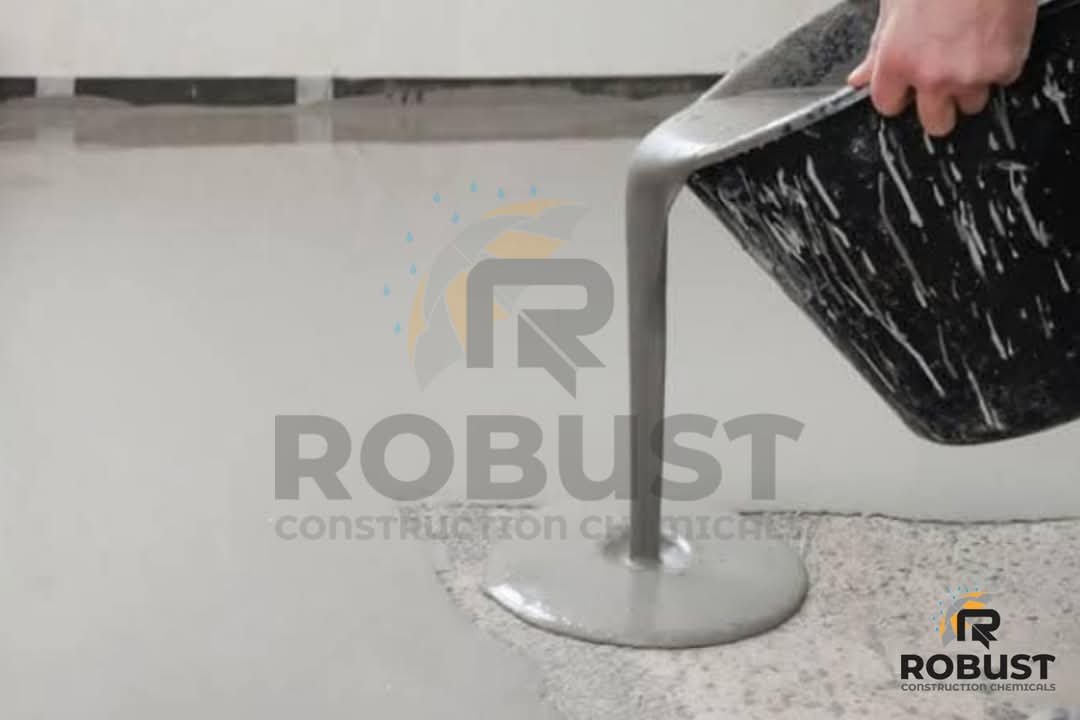
Robust Self Flow is a single-component, polymer-modified, free-flowing cementitious self-leveling floor underlayment and screed compound engineered to rapidly transform rough, uneven, or undulating concrete slabs into mirror-flat, smooth, and load-bearing floors. Formulated with a precision blend of specialty hydraulic cements, graded silica quartz aggregates, superplasticizers, and redispersible polymers, Robust Self Flow seeks its own level effortlessly when mixed with clean water—eliminating trowel ridges, birdbaths, and surface irregularities in a single pour before installing epoxy coatings, vinyl (LVT/PVC), parquet wood, carpet tiles, or large-format porcelain tiles.
1. Key Benefits of Robust Self Flow
-
Ultra-Flat, Mirror-Smooth Surface Finish: Eliminates undulating screed marks, trowel chatter, and surface depressions—achieving strict FF/FL (Flatness & Levelness) floor tolerances required for seamless epoxy floors, commercial vinyl, and large-format rectified tiles.
-
Rapid Strength Gain & Fast Track Commissioning: Walkable for light foot traffic within 3 to 4 hours and ready to receive floor coverings (vinyl, carpet, tiles) within 24 to 48 hours—drastically reducing project downtime in hospitals, malls, offices, and warehouses.
-
Zero-Shrinkage & Crack-Free Curing: Engineered with expansive shrinkage-compensating chemistry and high polymer reinforcement so the cured screed bonds monolithically to the base slab without curling, hollowing, or map-cracking.
-
High Compressive & Abrasion Strength (Commercial & Industrial Duty): Achieves ≥ 30–35 N/mm² compressive strength at 28 days, withstanding heavy rolling loads, hospital beds, retail trolleys, and office furniture without indenting.
-
Pumpable & Pourable High-Speed Application: Can be poured manually from mixing pails or pumped continuously over large commercial floor plates—covering 3× to 4× more area per day than traditional hand-troweled sand-cement screeds.
-
Featheredge to Deep-Fill Versatility: Applies smoothly from 2 mm thin skim layers up to 15 mm (and up to 30 mm when extended with graded quartz aggregate) in a single pass.
2. Full Technical Specifications & EN / ASTM Performance Benchmarks
| Property / Metric | Specified Performance Range | Standard Test Method | Engineering Significance |
| Material Composition | Polymer-Modified Hydraulic Cementitious Self-Leveling Compound | EN 13813 (CT-C30-F7) | Shrinkage-compensated, protein-free & casein-free |
| Appearance & Color | Free-flowing grey powder | Visual / Lab Spec | Smooth, uniform mineral finish |
| Water Mixing Ratio | 5.0 – 5.5 Liters clean water per 25 kg bag (20%–22%) | Lab Standard | Exact flow rheology without bleeding or segregation |
| Mixed Wet Density (at 25°C) | 1.95 – 2.10 kg/L | ASTM D1475 | High-density, void-free floor matrix |
| Application Thickness (Single Pour) |
2.0 mm to 15.0 mm (Neat)
15.0 mm to 30.0 mm (Extended with 1–3 mm quartz) |
EN 13813 | Handles both thin skim leveling and deep slab corrections |
| Flowability / Working Time (at 25°C) | 20 – 30 minutes | EN 12706 | Ample time for gauge-rake spreading & spike rolling |
| Compressive Strength (24 Hrs / 28 Days) | ≥ 12 N/mm² (24 Hrs) | ≥ 30 – 35 N/mm² (28 Days) | EN 13892-2 / ASTM C109 | Supports heavy commercial & light industrial point loads |
| Flexural Strength (28 Days) | ≥ 7.0 – 8.5 N/mm² | EN 13892-2 / ASTM C348 | Resists thermal flexing and dynamic rolling traffic |
| Tensile Adhesion / Pull-Off Strength | ≥ 1.5 – 2.0 N/mm² (Primed concrete substrate) | EN 13892-8 / ASTM D4541 | Permanent monolithic bond with zero delamination |
| Linear Shrinkage (28 Days) | ≤ 0.04% (Shrinkage-compensated) | ASTM C596 / EN 13454-2 | Eliminates edge curling and shrinkage cracking |
| Curing & Overcoating Schedule (at 25°C) | Foot Traffic: 3–4 hrs | Tiles/Carpet: 24 hrs | Vinyl/Epoxy: 48–72 hrs (< 3% moisture) | Lab Standard | Rapid project handover |
| Standard Packaging | 25 kg Moisture-Resistant Multi-Wall Bag | Industry Standard | Easy site handling & exact batch mixing |
3. Primary Usage & Structural Applications
-
Underlayment Beneath Vinyl (LVT, Homogeneous PVC & ESD Flooring): Mandatory leveling layer in hospitals, pharmaceutical corridors, IT offices, and schools where even a 1 mm concrete bump telegraphs visibly through flexible vinyl sheets.
-
Pre-Leveling Base for Seamless Epoxy & PU Flooring: Corrects rough, pitted, or uneven concrete slabs prior to applying Robust Self-Leveling Epoxy, drastically reducing expensive resin consumption and eliminating ponding.
-
Engineered Wood, Laminate Parquet & Carpet Tile Subfloors: Creates a dead-flat, squeak-free base for residential bedrooms, hotel lobbies, boardrooms, and auditoriums.
-
Large-Format Rectified Porcelain & Marble Tile Prep: Eliminates lippage (uneven tile edges) when installing oversized 4×2 ft or 6×3 ft porcelain slabs with thin-bed polymer tile adhesives.
-
Refurbishment of Rain-Damaged or Worn Concrete Slabs: Restores troweled concrete floors damaged by premature rain, scaling, or rough finishing during structural casting.
4. BOQ Material Consumption & Coverage Guide
| Target Leveling Thickness | Consumption Rate (kg / m²) | Coverage per 25 kg Bag |
| 2.0 mm (Fine Skim Leveling) | 3.2 – 3.5 kg/m² | ~7.1 – 7.8 m² (76 – 84 sq. ft.) |
| 3.0 mm (Standard Vinyl / Epoxy Underlayment) | 4.8 – 5.2 kg/m² | ~4.8 – 5.2 m² (52 – 56 sq. ft.) |
| 5.0 mm (Uneven Slab Correction) | 8.0 – 8.6 kg/m² | ~2.9 – 3.1 m² (31 – 33 sq. ft.) |
| 10.0 mm (Deep Screed Leveling) | 16.0 – 17.2 kg/m² | ~1.45 – 1.55 m² (15.5 – 16.7 sq. ft.) |
(Rule of Thumb: 1.65 kg of Robust Self Flow powder covers 1.0 m² at 1.0 mm thickness.)
5. Step-by-Step Professional Installation Protocol (6-Stage Standard)
-
Substrate Cleaning & Mechanical Preparation: The concrete base slab must be at least 28 days old, structurally sound (≥ M20), and free from dust, grease, paint, gypsum, and weak cement laitance. Grind or shot-blast rough slabs and vacuum thoroughly with an industrial dust extractor.
-
Moisture Check & Structural Joint Isolation: Ensure slab moisture is below 4%. Place compressible foam perimeter expansion strips (5–8 mm) around all walls, columns, and doorways, and honor all existing structural expansion joints through the leveling layer (seal later with Robust PU Tube Sealant).
-
Mandatory Acrylic / SBR Priming (Prevent Pinholes & Flash-Drying):
-
CRITICAL STEP: Never pour self-leveling compound onto unprimed porous concrete! Porous concrete sucks water out of the fresh slurry, causing premature stiffening, trowel marks, and air-bubble pinholes.
-
Prime the floor with Robust SBR Latex / Acrylic Floor Primer (diluted 1:2 with clean water for standard concrete, or 2 coats for highly porous screeds) and allow to dry to a tacky/clear film (1–3 hours).
-
-
Precision Water-to-Powder Mixing: Pour 5.0 to 5.5 liters of cool, clean potable water into a clean mixing barrel. Gradually add one 25 kg bag of Robust Self Flow while mixing with a heavy-duty helical paddle drill (500–600 RPM) for 2–3 minutes until a completely lump-free, creamy, fluid batter forms. Allow to slake for 1 minute and re-mix for 30 seconds. (Never add excess water, which weakens strength and causes surface chalking).
-
Pouring, Gauge-Raking & Spiked Roller De-Aeration:
-
Pour mixed Robust Self Flow onto the primed floor in continuous ribbons, keeping a wet edge at all times (mix 2–3 barrels continuously on large bays).
-
Spread to exact target depth using a pin gauge rake or notched spreader, and immediately roll in two perpendicular directions with a spiked aeration roller within 10–15 minutes to release entrapped air bubbles and blend pour lines seamlessly.
-
-
Curing & Floor Covering Installation: Protect from direct sunlight, hot drafts, and rain for 24 hours (do not pond-cure with water). Allow light foot traffic after 3–4 hours, install ceramic/porcelain tiles after 24 hours, and apply vinyl or Robust Epoxy Flooring after 48–72 hours (once residual moisture drops below 3%).
-
-
H1: Robust Self Flow: Polymer-Modified Cementitious Self-Leveling Floor Compound
-
H2: What Is Robust Self Flow & How Does It Level Uneven Concrete Floors?
-
H2: Key Benefits for Commercial, Hospital & Industrial Flooring Projects
-
H2: Primary Applications (Vinyl/LVT, Epoxy Flooring, Large-Format Tiles & Parquet)
-
H3: Pre-Leveling Subfloors for Hospital & Pharma Vinyl (PVC / ESD Sheets)
-
H3: Correcting Pitted Slabs Prior to Seamless Epoxy & PU Coatings
-
H3: Eliminating Lippage Beneath Large-Format Porcelain & Marble Slabs
-
-
H2: Technical Specifications & EN 13813 / ASTM Compliance Table
-
H2: Robust Self Flow vs. Traditional Hand-Troweled Sand-Cement Screed
-
H2: Coverage & Material Consumption Calculator (2 mm to 15 mm Thickness)
-
H2: Step-by-Step Application Protocol (Priming, Mixing, Gauge Raking & Spike Rolling)
-
H2: Deep-Fill Extension Guide (15 mm to 30 mm Using Graded Quartz Aggregate)
-
H2: Common Self-Leveling Floor Failures & Site Troubleshooting
-
H2: Frequently Asked Questions (FAQ Schema)
-
3. SEO Comparison Table: Robust Self Flow vs. Traditional Sand-Cement Screed
(Embedding structured HTML/Markdown comparison tables boosts Featured Snippet rankings for commercial contractors and architects).
4. Deep-Fill Extension Protocol (For Depressions Between 15 mm and 30 mm)
When repairing deeply sunken concrete bays, sloped floors, or old warehouse slabs requiring 15 mm to 30 mm buildup in a single pour:
-
Aggregate Extension Ratio: Mix 1 bag (25 kg) of Robust Self Flow with 5.2–5.5 liters of clean water first until smooth, then slowly fold in 10 kg to 12.5 kg (40%–50% by powder weight) of clean, washed, dry 1–3 mm silica quartz aggregate.
-
Two-Pass Alternative: Alternatively, pour a 15 mm base lift of Robust Self Flow, allow it to cure for 24 hours, prime with Robust SBR Latex primer, and pour a 3–5 mm neat top pass for a glass-smooth finish.
5. Troubleshooting Guide (Rich Long-Tail Keyword Content)
-
Pinholes & Crater Bubbles on the Cured Surface:
-
Root Cause: Pouring onto unprimed porous concrete (air escapes upward from open concrete capillaries) or skipping spiked-roller aeration.
-
Prevention: Always prime porous concrete with 2 coats of Robust SBR Latex / Acrylic Primer until sealed, and roll thoroughly with a spiked aeration roller within 10–15 minutes of pouring.
-
-
White Chalky / Powdery Surface Layer (“Laitance Bleed”):
-
Root Cause: Adding more than 5.5 liters of water per 25 kg bag or over-mixing at excessive RPM, causing fine cement/polymer to float to the surface.
-
Prevention: Measure mixing water strictly with a calibrated bucket (5.0–5.5 L per 25 kg bag); if soft surface laitance occurs, lightly abrade with a sanding screen and vacuum before gluing vinyl or applying epoxy.
-
-
Visible Pour Lines / Cold Joints Between Batches:
-
Root Cause: Mixing only one bucket at a time on a large room so the previous ribbon starts setting before the next bucket is poured.
-
Prevention: Maintain a continuous wet edge using a 2-barrel rotation system (while one worker pours and rakes, another mixes the next batch) and cross-roll seams immediately with a spiked roller.
-
-
Can Robust Self Flow Be Left Exposed as a Final Wearing Floor?
-
Engineering Clarification: Robust Self Flow is formulated primarily as a high-strength underlayment beneath vinyl, epoxy, PU coatings, tiles, or carpet. For bare industrial concrete warehouses requiring an exposed wearing surface, topcoat the cured Robust Self Flow with Robust Epoxy Flooring or a UV-stable Polyurethane Sealer.
-
6. High-Value FAQ Schema Block (Copy-Paste into CMS FAQ Module)
-
Q1: What is the minimum and maximum thickness of Robust Self Flow?
-
Robust Self Flow can be applied from a 2 mm featheredge up to 15 mm neat in a single pour, and up to 30 mm when extended with graded 1–3 mm washed silica quartz aggregate.
-
-
Q2: How soon can vinyl, tiles, or epoxy be installed over Robust Self Flow?
-
Light foot traffic is permitted in 3 to 4 hours. Ceramic and porcelain tiles can be installed after 24 hours, while moisture-sensitive PVC/LVT vinyl sheets and Robust Epoxy Flooring can be applied after 48 to 72 hours once slab moisture is below 3%.
-
-
Q3: Is primer mandatory before pouring self-leveling floor compound?
-
Yes. Priming the concrete slab with Robust SBR Latex / Acrylic Floor Primer is mandatory to seal concrete pores, prevent air-bubble pinholes, stop rapid water suction, and ensure maximum tensile bond strength.
-
-
Q4: Can Robust Self Flow be used over existing ceramic or terrazzo tiles?
-
Yes. Mechanically grind/abrade existing glazed ceramic or terrazzo tiles to remove gloss, degrease thoroughly, apply a specialized non-porous bonding primer, and pour Robust Self Flow at 3–5 mm thickness to create a seamless new subfloor without demolishing old tiles.
-
7. Internal Hub-and-Spoke Linking Strategy (Site Architecture)
To build topical authority across your construction chemicals catalog, link Robust Self Flow bidirectionally with these core pillar pages:
-
Upstream Subfloor Prep: Link to Robust SBR Latex (for priming porous concrete slabs prior to pouring).
-
Downstream Topcoat Systems: Link to Robust Epoxy Flooring & Robust Tile Adhesive (installed directly over cured Robust Self Flow).
-
Joint & Crack Detailing: Link to Robust PU Tube Sealant & Robust Backer Rod (for honoring structural expansion joints through the leveling layer).
-
Damp Ground-Floor Slabs: Link to Robust Damp Seal (for moisture diagnostics before flooring installation).
-
-
H1: Robust Self Flow: Polymer-Modified Cementitious Self-Leveling Floor Compound
-
H2: What Is Robust Self Flow & How Does It Level Uneven Concrete Floors?
-
H2: Key Benefits for Commercial, Hospital & Industrial Flooring Projects
-
H2: Primary Applications (Vinyl/LVT, Epoxy Flooring, Large-Format Tiles & Parquet)
-
H3: Pre-Leveling Subfloors for Hospital & Pharma Vinyl (PVC / ESD Sheets)
-
H3: Correcting Pitted Slabs Prior to Seamless Epoxy & PU Coatings
-
H3: Eliminating Lippage Beneath Large-Format Porcelain & Marble Slabs
-
-
H2: Technical Specifications & EN 13813 / ASTM Compliance Table
-
H2: Robust Self Flow vs. Traditional Hand-Troweled Sand-Cement Screed
-
H2: Coverage & Material Consumption Calculator (2 mm to 15 mm Thickness)
-
H2: Step-by-Step Application Protocol (Priming, Mixing, Gauge Raking & Spike Rolling)
-
H2: Deep-Fill Extension Guide (15 mm to 30 mm Using Graded Quartz Aggregate)
-
H2: Common Self-Leveling Floor Failures & Site Troubleshooting
-
H2: Frequently Asked Questions (FAQ Schema)
-
3. SEO Comparison Table: Robust Self Flow vs. Traditional Sand-Cement Screed
(Embedding structured HTML/Markdown comparison tables boosts Featured Snippet rankings for commercial contractors and architects).
4. Deep-Fill Extension Protocol (For Depressions Between 15 mm and 30 mm)
When repairing deeply sunken concrete bays, sloped floors, or old warehouse slabs requiring 15 mm to 30 mm buildup in a single pour:
-
Aggregate Extension Ratio: Mix 1 bag (25 kg) of Robust Self Flow with 5.2–5.5 liters of clean water first until smooth, then slowly fold in 10 kg to 12.5 kg (40%–50% by powder weight) of clean, washed, dry 1–3 mm silica quartz aggregate.
-
Two-Pass Alternative: Alternatively, pour a 15 mm base lift of Robust Self Flow, allow it to cure for 24 hours, prime with Robust SBR Latex primer, and pour a 3–5 mm neat top pass for a glass-smooth finish.
5. Troubleshooting Guide (Rich Long-Tail Keyword Content)
-
Pinholes & Crater Bubbles on the Cured Surface:
-
Root Cause: Pouring onto unprimed porous concrete (air escapes upward from open concrete capillaries) or skipping spiked-roller aeration.
-
Prevention: Always prime porous concrete with 2 coats of Robust SBR Latex / Acrylic Primer until sealed, and roll thoroughly with a spiked aeration roller within 10–15 minutes of pouring.
-
-
White Chalky / Powdery Surface Layer (“Laitance Bleed”):
-
Root Cause: Adding more than 5.5 liters of water per 25 kg bag or over-mixing at excessive RPM, causing fine cement/polymer to float to the surface.
-
Prevention: Measure mixing water strictly with a calibrated bucket (5.0–5.5 L per 25 kg bag); if soft surface laitance occurs, lightly abrade with a sanding screen and vacuum before gluing vinyl or applying epoxy.
-
-
Visible Pour Lines / Cold Joints Between Batches:
-
Root Cause: Mixing only one bucket at a time on a large room so the previous ribbon starts setting before the next bucket is poured.
-
Prevention: Maintain a continuous wet edge using a 2-barrel rotation system (while one worker pours and rakes, another mixes the next batch) and cross-roll seams immediately with a spiked roller.
-
-
Can Robust Self Flow Be Left Exposed as a Final Wearing Floor?
-
Engineering Clarification: Robust Self Flow is formulated primarily as a high-strength underlayment beneath vinyl, epoxy, PU coatings, tiles, or carpet. For bare industrial concrete warehouses requiring an exposed wearing surface, topcoat the cured Robust Self Flow with Robust Epoxy Flooring or a UV-stable Polyurethane Sealer.
-
6. High-Value FAQ Schema Block (Copy-Paste into CMS FAQ Module)
-
Q1: What is the minimum and maximum thickness of Robust Self Flow?
-
Robust Self Flow can be applied from a 2 mm featheredge up to 15 mm neat in a single pour, and up to 30 mm when extended with graded 1–3 mm washed silica quartz aggregate.
-
-
Q2: How soon can vinyl, tiles, or epoxy be installed over Robust Self Flow?
-
Light foot traffic is permitted in 3 to 4 hours. Ceramic and porcelain tiles can be installed after 24 hours, while moisture-sensitive PVC/LVT vinyl sheets and Robust Epoxy Flooring can be applied after 48 to 72 hours once slab moisture is below 3%.
-
-
Q3: Is primer mandatory before pouring self-leveling floor compound?
-
Yes. Priming the concrete slab with Robust SBR Latex / Acrylic Floor Primer is mandatory to seal concrete pores, prevent air-bubble pinholes, stop rapid water suction, and ensure maximum tensile bond strength.
-
-
Q4: Can Robust Self Flow be used over existing ceramic or terrazzo tiles?
-
Yes. Mechanically grind/abrade existing glazed ceramic or terrazzo tiles to remove gloss, degrease thoroughly, apply a specialized non-porous bonding primer, and pour Robust Self Flow at 3–5 mm thickness to create a seamless new subfloor without demolishing old tiles.
-
7. Internal Hub-and-Spoke Linking Strategy (Site Architecture)
To build topical authority across your construction chemicals catalog, link Robust Self Flow bidirectionally with these core pillar pages:
-
Upstream Subfloor Prep: Link to Robust SBR Latex (for priming porous concrete slabs prior to pouring).
-
Downstream Topcoat Systems: Link to Robust Epoxy Flooring & Robust Tile Adhesive (installed directly over cured Robust Self Flow).
-
Joint & Crack Detailing: Link to Robust PU Tube Sealant & Robust Backer Rod (for honoring structural expansion joints through the leveling layer).
-
Damp Ground-Floor Slabs: Link to Robust Damp Seal (for moisture diagnostics before flooring installation).
-
Robust RC-7 Seal is a high-performance liquid waterproofing chemical for roofs, walls & concrete. Get long-lasting leakage protection with Pakistan’s most trusted waterproofing solution.
-
-
-
Post Tags :
- cementitious self leveling underlayment
- commercial floor leveling compound
- epoxy underlayment compound
- floor leveling compound for epoxy
- floor leveling compound for vinyl
- floor screed compound
- hospital vinyl floor leveling chemical
- industrial floor underlayment
- polymer modified self leveling screed
- Robust construction chemicals Pakistan
- Robust Self Flow
- self leveling cement in Pakistan
- self leveling compound Islamabad
- self leveling compound Karachi
- self leveling compound Lahore
- self leveling floor compound
- self leveling floor screed
- self leveling mortar
- smooth floor leveler
- uneven concrete floor leveler