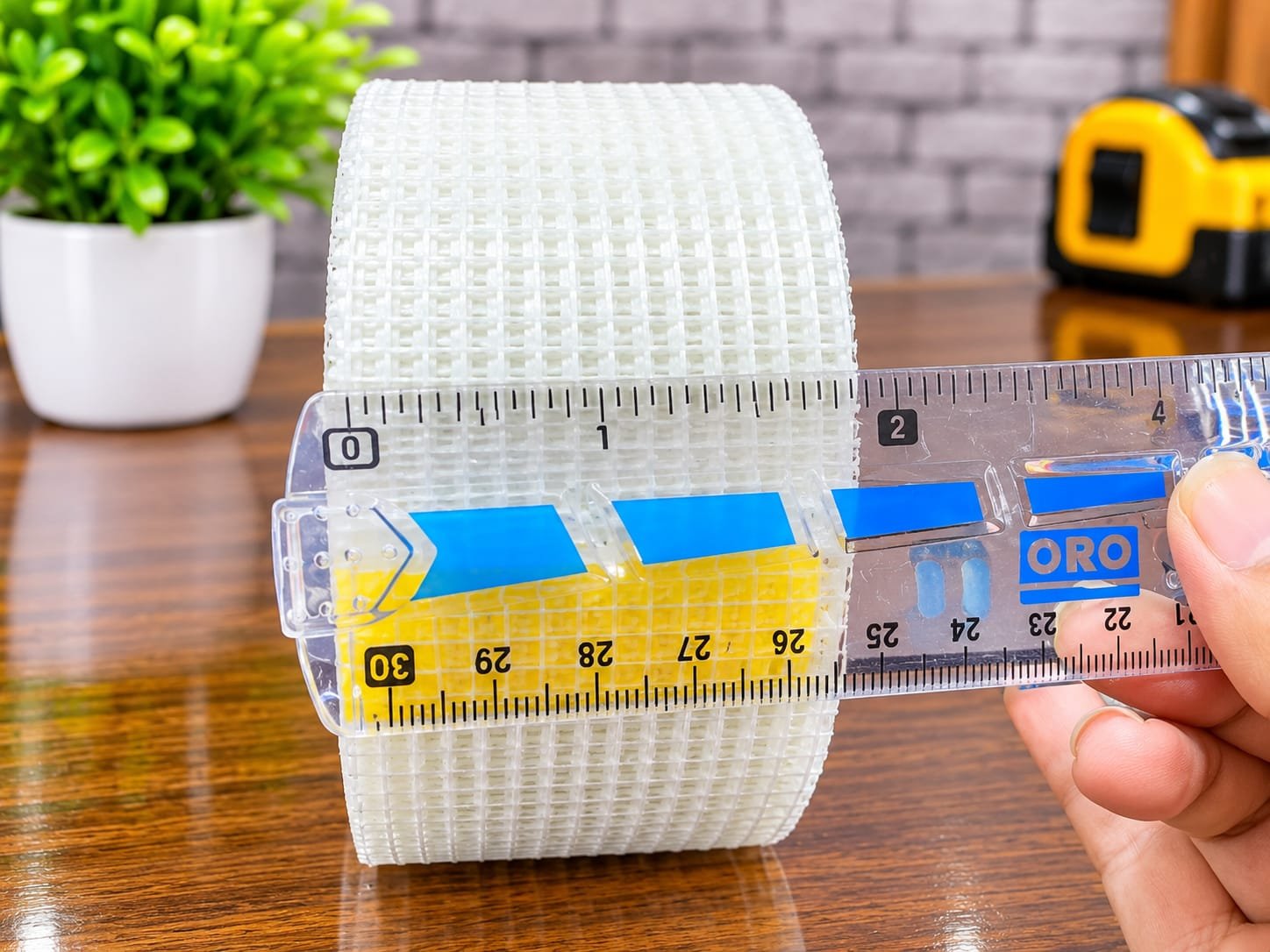
Robust Fiber Mesh Tape for Wall Cracks: Technical Specifications, Sizes, Usage & Installation Guide
Robust Fiber Mesh Tape for Wall Cracks is a high-tensile, alkali-resistant woven fiberglass joint reinforcement tape engineered to permanently repair and prevent hairline shrinkage cracks, plaster splits, brick-to-RCC column/beam junction cracks, and drywall/gypsum board seams. Coated with an alkali-resistant styrene-acrylic copolymer resin (and available in both Self-Adhesive Acrylic Glue and Non-Adhesive Heavy Plaster Embedment grades), Robust Fiber Mesh Tape distributes tensile and thermal stresses uniformly across thousands of glass filaments—stopping wall cracks from telegraphing back through wall putty and interior or exterior paint.
1. Why Wall Cracks Return After Putty—And How Robust Fiber Mesh Tape Stops Them
Simply filling a wall crack with ordinary gypsum putty (kacha putty) or cement paste fails within months because structural walls expand and contract daily under Pakistan’s extreme 45°C+ summer heat and winter cooling cycles. Without tensile reinforcement across the crack plane, the filler splits right down the middle again.
How Robust Fiber Mesh Tape Solves This Permanently:
-
High-Tensile Crack-Bridging Backbone: Interlocking leno-weave fiberglass yarns absorb lateral movement and thermal stress across the joint, preventing micro-cracks from opening or telegraphing through finished paint.
-
100% Alkali-Resistant & Rust-Free: Coated with ≥ 18%–22% alkali-resistant polymer resin, protecting the glass filaments from high-pH wet cement plaster (pH 12.5–13.5) and wall dampness for 25+ years—with zero rust stains.
-
Open Grid Aperture (2.8 × 2.8 mm / 4 × 4 mm): Allows joint compound, polymer-modified cement mortar, or wall putty to penetrate straight through the mesh openings, locking the tape monolithically into the wall surface without air pockets or bubbling.
-
Ultra-Thin Profile for Invisible Feathering: Lies flat against the wall so two thin skim coats of putty or plaster conceal the tape completely with zero raised bumps or ridges.
2. Available Grades & Standard Roll Sizes (Choose by Wall Substrate)
| Product Variant | Tape Widths Available | Standard Roll Lengths | Mesh Grid & Weight | Best Application & Substrate |
| 1. Self-Adhesive Drywall & Putty Crack Tape (Pressure-Sensitive Acrylic Adhesive) | 50 mm (2″), 75 mm (3″), 100 mm (4″) | 20 m, 45 m, 90 m (65 ft, 150 ft, 300 ft) | 2.8 × 2.8 mm (65 – 75 GSM) | Interior plaster hairline cracks, gypsum board / drywall joints, ceiling seams & putty crack repairs. |
| 2. Heavy-Duty Cement Plaster & Column Joint Strip Roll (Alkali-Resistant AR Grade) | 100 mm (4″), 150 mm (6″), 200 mm (8″), 300 mm (12″) | 50 meters (164 running feet) | 4.0 × 4.0 mm (110 – 145 GSM) | Brick-to-RCC column/beam joints, electrical/plumbing conduit chases (jhirri), and exterior cement plaster cracks. |
3. Technical Specifications & ASTM / ETAG Compliance
| Property / Metric | Specified Performance Range | Standard Test Method | Engineering Significance |
| Base Fiber Material | High-Tensile E-Glass / C-Glass Continuous Yarn | ISO 2078 | Zero thermal shrinkage; high dimensional stability |
| Protective Polymer Coating | ≥ 18% – 22% Alkali-Resistant Styrene-Acrylic Resin | Loss on Ignition / ETAG 004 | Prevents alkaline cement & putty from degrading fibers |
| Weave Construction | Interlocking Leno Weave | Textile Standard | Prevents yarn slippage under steel trowel pressure |
| Adhesive Backing (Self-Adhesive Grade) | High-Tack Water-Resistant Acrylic Pressure-Sensitive Glue | ASTM D3330 | Sticks firmly to vertical walls & overhead ceilings without peeling |
| Tensile Strength (Warp / Weft) |
≥ 600 – 850 N/50 mm (65–75 GSM Drywall Tape)
≥ 1,250 – 1,650 N/50 mm (110–145 GSM Plaster Strip) |
ISO 4606 / ASTM D579 | High crack-arresting strength across moving wall seams |
| Elongation at Break | ≤ 3.5% – 4.5% | ISO 4606 | Arrests cracks before they become visible to the naked eye |
| Alkali-Aged Strength Retention | ≥ 50% – 65% after 28-day NaOH immersion | ETAG 004 | Multi-decade durability inside wet cement plaster |
| Application Temperature | +5°C to +45°C | Field Standard | Reliable tack and workability year-round |
4. Primary Usage & Structural Repair Applications
-
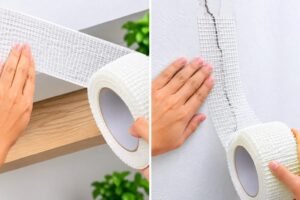
Interior Painted Wall & Plaster Cracks: Permanently repairs vertical, horizontal, and diagonal shrinkage cracks in bedrooms, lounges, stairwells, and boundary walls.
-
Brick-to-RCC Concrete Column & Beam Joints: Bridges the dissimilar-material junction between clay brick/AAC block walls and concrete columns/lintels using 150 mm – 300 mm wide heavy-duty AR strips embedded wet-on-wet in cement plaster.
-
Electrical & Plumbing Conduit Chases (Jhirri): Reinforces filled pipe grooves so plaster never splits along concealed wiring or water lines.
-
Gypsum Board, Drywall & False Ceiling Joints: Seals tapered and butt seams between gypsum boards and cement fiber boards without paper-tape blistering or air bubbles.
-
Window & Door Corner Stress Cracks: Applied across 45° diagonal cracks radiating from the corners of window frames, door lintels, and AC sleeves.
5. Step-by-Step Installation Guide (Two Methods by Crack Depth)
Method A: Repairing Existing Cracks in Painted / Plastered Walls (Self-Adhesive 2″–4″ Tape)
-
V-Groove & Clean the Crack: Open hairline or medium plaster cracks into a shallow 5 mm × 5 mm V-groove using a triangular scraper or putty knife. Brush and vacuum away all loose plaster dust, flaking paint, and chalky residue. (If dampness/shora is present, treat first with Robust Damp Seal).
-
Fill the Groove Flush: Press polymer-modified crack filler / white cement wall putty (or 1:3 cement-sand mortar gauged with Robust SBR Latex for deeper masonry cracks) firmly into the V-groove and strike off flush. Allow to dry.
-
Apply Robust Self-Adhesive Fiber Mesh Tape: Center the 50 mm – 100 mm (2″–4″) Robust Fiber Mesh Tape directly over the filled crack line and press firmly along its entire length with a steel putty knife so it lies flat with zero wrinkles. (Overlap tape intersections by at least 50 mm).
-
First Skim Coat (Embedment Pass): Trowel a thin, smooth layer of water-resistant white cement or acrylic wall putty directly over the tape, pressing firmly so the putty squeezes through every 2.8×2.8 mm grid opening. Feather the edges outward 75–100 mm on both sides.
-
Second Finish Coat, Sand & Paint: Once Coat 1 dries (4–6 hours), apply a second wide feathering skim coat so the mesh grid is completely invisible. Sand lightly with 220–320 grit sandpaper, prime with alkali-resistant primer, and apply finish paint.
Method B: New Construction Brick-to-RCC Column Joints (Heavy-Duty 6″–12″ Plaster Strip)
-
Pre-Wet Wall (SSD): Dampen the brick wall and hacked RCC column with clean water.
-
Apply First Plaster Coat (6–8 mm): Trowel on the base coat of cement-sand plaster (ideally gauged with Robust SBR Latex).
-
Embed Mesh Strip Wet-on-Wet: Immediately press 150 mm – 300 mm wide Robust Fiber Mesh Strip flat into the wet mortar (centered 50% on concrete, 50% on brick) and apply the top plaster finish coat immediately wet-on-wet.
-
Robust Fiber Mesh Tape for Wall Cracks: Technical Specifications, Sizes, Usage & Installation Guide
Robust Fiber Mesh Tape for Wall Cracks is a high-tensile, alkali-resistant woven fiberglass joint reinforcement tape engineered to permanently repair and prevent hairline shrinkage cracks, plaster splits, brick-to-RCC column/beam junction cracks, and drywall/gypsum board seams. Coated with an alkali-resistant styrene-acrylic copolymer resin (and available in both Self-Adhesive Acrylic Glue and Non-Adhesive Heavy Plaster Embedment grades), Robust Fiber Mesh Tape distributes tensile and thermal stresses uniformly across thousands of glass filaments—stopping wall cracks from telegraphing back through wall putty and interior or exterior paint.
1. Why Wall Cracks Return After Putty—And How Robust Fiber Mesh Tape Stops Them
Simply filling a wall crack with ordinary gypsum putty (kacha putty) or cement paste fails within months because structural walls expand and contract daily under Pakistan’s extreme 45°C+ summer heat and winter cooling cycles. Without tensile reinforcement across the crack plane, the filler splits right down the middle again.
How Robust Fiber Mesh Tape Solves This Permanently:
-
High-Tensile Crack-Bridging Backbone: Interlocking leno-weave fiberglass yarns absorb lateral movement and thermal stress across the joint, preventing micro-cracks from opening or telegraphing through finished paint.
-
100% Alkali-Resistant & Rust-Free: Coated with ≥ 18%–22% alkali-resistant polymer resin, protecting the glass filaments from high-pH wet cement plaster (pH 12.5–13.5) and wall dampness for 25+ years—with zero rust stains.
-
Open Grid Aperture (2.8 × 2.8 mm / 4 × 4 mm): Allows joint compound, polymer-modified cement mortar, or wall putty to penetrate straight through the mesh openings, locking the tape monolithically into the wall surface without air pockets or bubbling.
-
Ultra-Thin Profile for Invisible Feathering: Lies flat against the wall so two thin skim coats of putty or plaster conceal the tape completely with zero raised bumps or ridges.
2. Available Grades & Standard Roll Sizes (Choose by Wall Substrate)
Product Variant Tape Widths Available Standard Roll Lengths Mesh Grid & Weight Best Application & Substrate 1. Self-Adhesive Drywall & Putty Crack Tape (Pressure-Sensitive Acrylic Adhesive) 50 mm (2″), 75 mm (3″), 100 mm (4″) 20 m, 45 m, 90 m (65 ft, 150 ft, 300 ft) 2.8 × 2.8 mm (65 – 75 GSM) Interior plaster hairline cracks, gypsum board / drywall joints, ceiling seams & putty crack repairs. 2. Heavy-Duty Cement Plaster & Column Joint Strip Roll (Alkali-Resistant AR Grade) 100 mm (4″), 150 mm (6″), 200 mm (8″), 300 mm (12″) 50 meters (164 running feet) 4.0 × 4.0 mm (110 – 145 GSM) Brick-to-RCC column/beam joints, electrical/plumbing conduit chases (jhirri), and exterior cement plaster cracks. 3. Technical Specifications & ASTM / ETAG Compliance
Property / Metric Specified Performance Range Standard Test Method Engineering Significance Base Fiber Material High-Tensile E-Glass / C-Glass Continuous Yarn ISO 2078 Zero thermal shrinkage; high dimensional stability Protective Polymer Coating ≥ 18% – 22% Alkali-Resistant Styrene-Acrylic Resin Loss on Ignition / ETAG 004 Prevents alkaline cement & putty from degrading fibers Weave Construction Interlocking Leno Weave Textile Standard Prevents yarn slippage under steel trowel pressure Adhesive Backing (Self-Adhesive Grade) High-Tack Water-Resistant Acrylic Pressure-Sensitive Glue ASTM D3330 Sticks firmly to vertical walls & overhead ceilings without peeling Tensile Strength (Warp / Weft) ≥ 600 – 850 N/50 mm (65–75 GSM Drywall Tape)
≥ 1,250 – 1,650 N/50 mm (110–145 GSM Plaster Strip)
ISO 4606 / ASTM D579 High crack-arresting strength across moving wall seams Elongation at Break ≤ 3.5% – 4.5% ISO 4606 Arrests cracks before they become visible to the naked eye Alkali-Aged Strength Retention ≥ 50% – 65% after 28-day NaOH immersion ETAG 004 Multi-decade durability inside wet cement plaster Application Temperature +5°C to +45°C Field Standard Reliable tack and workability year-round 4. Primary Usage & Structural Repair Applications
-
Interior Painted Wall & Plaster Cracks: Permanently repairs vertical, horizontal, and diagonal shrinkage cracks in bedrooms, lounges, stairwells, and boundary walls.
-
Brick-to-RCC Concrete Column & Beam Joints: Bridges the dissimilar-material junction between clay brick/AAC block walls and concrete columns/lintels using 150 mm – 300 mm wide heavy-duty AR strips embedded wet-on-wet in cement plaster.
-
Electrical & Plumbing Conduit Chases (Jhirri): Reinforces filled pipe grooves so plaster never splits along concealed wiring or water lines.
-
Gypsum Board, Drywall & False Ceiling Joints: Seals tapered and butt seams between gypsum boards and cement fiber boards without paper-tape blistering or air bubbles.
-
Window & Door Corner Stress Cracks: Applied across 45° diagonal cracks radiating from the corners of window frames, door lintels, and AC sleeves.
5. Step-by-Step Installation Guide (Two Methods by Crack Depth)
Method A: Repairing Existing Cracks in Painted / Plastered Walls (Self-Adhesive 2″–4″ Tape)
-
V-Groove & Clean the Crack: Open hairline or medium plaster cracks into a shallow 5 mm × 5 mm V-groove using a triangular scraper or putty knife. Brush and vacuum away all loose plaster dust, flaking paint, and chalky residue. (If dampness/shora is present, treat first with Robust Damp Seal).
-
Fill the Groove Flush: Press polymer-modified crack filler / white cement wall putty (or 1:3 cement-sand mortar gauged with Robust SBR Latex for deeper masonry cracks) firmly into the V-groove and strike off flush. Allow to dry.
-
Apply Robust Self-Adhesive Fiber Mesh Tape: Center the 50 mm – 100 mm (2″–4″) Robust Fiber Mesh Tape directly over the filled crack line and press firmly along its entire length with a steel putty knife so it lies flat with zero wrinkles. (Overlap tape intersections by at least 50 mm).
-
First Skim Coat (Embedment Pass): Trowel a thin, smooth layer of water-resistant white cement or acrylic wall putty directly over the tape, pressing firmly so the putty squeezes through every 2.8×2.8 mm grid opening. Feather the edges outward 75–100 mm on both sides.
-
Second Finish Coat, Sand & Paint: Once Coat 1 dries (4–6 hours), apply a second wide feathering skim coat so the mesh grid is completely invisible. Sand lightly with 220–320 grit sandpaper, prime with alkali-resistant primer, and apply finish paint.
Method B: New Construction Brick-to-RCC Column Joints (Heavy-Duty 6″–12″ Plaster Strip)
-
Pre-Wet Wall (SSD): Dampen the brick wall and hacked RCC column with clean water.
-
Apply First Plaster Coat (6–8 mm): Trowel on the base coat of cement-sand plaster (ideally gauged with Robust SBR Latex).
-
Embed Mesh Strip Wet-on-Wet: Immediately press 150 mm – 300 mm wide Robust Fiber Mesh Strip flat into the wet mortar (centered 50% on concrete, 50% on brick) and apply the top plaster finish coat immediately wet-on-wet.
-
-
-